

The clearest guide is your pet’s overall comfort and day-to-day experience, not one difficult moment alone. Knowing how to decide on pet euthanasia means looking at pain, favorite activities, appetite, mobility, and whether treatment is helping. Euthanasia may be considered when a pet is suffering or unlikely to recover, and your veterinarian can help you understand the medical outlook and options.
It’s understandable to hope for more time while worrying that your beloved companion may be struggling. This decision is deeply personal, and you don’t have to weigh the signs alone. Learn how to assess changes in quality of life, recognize when pain or other symptoms affect comfort, and consider medical needs and access to urgent care. Your veterinarian can help you think through timing with care and compassion.
Key Takeaways
- Track changes in comfort, appetite, mobility, and daily behavior over time to see whether your pet’s quality of life is improving or declining.
- Notice whether your pet still enjoys favorite activities, welcomes family company, and responds to familiar routines.
- Look beyond vocalizing for signs of pain or distress, since pets may show discomfort through changes in behavior, rest, or breathing.
- Discuss your pet’s condition, treatment options, and likely recovery with your veterinarian to understand what care may help.
- Consider how a sudden decline and the distance to emergency care could affect your pet’s comfort and your family’s decisions.
Using daily or weekly quality-of-life assessments
Daily or weekly notes can reveal changes in your pet’s comfort and routine more clearly than relying on one difficult day. Compare what you observe with your pet’s usual behavior, and discuss persistent changes with your veterinarian.
Tracking Quality of Life Over Time
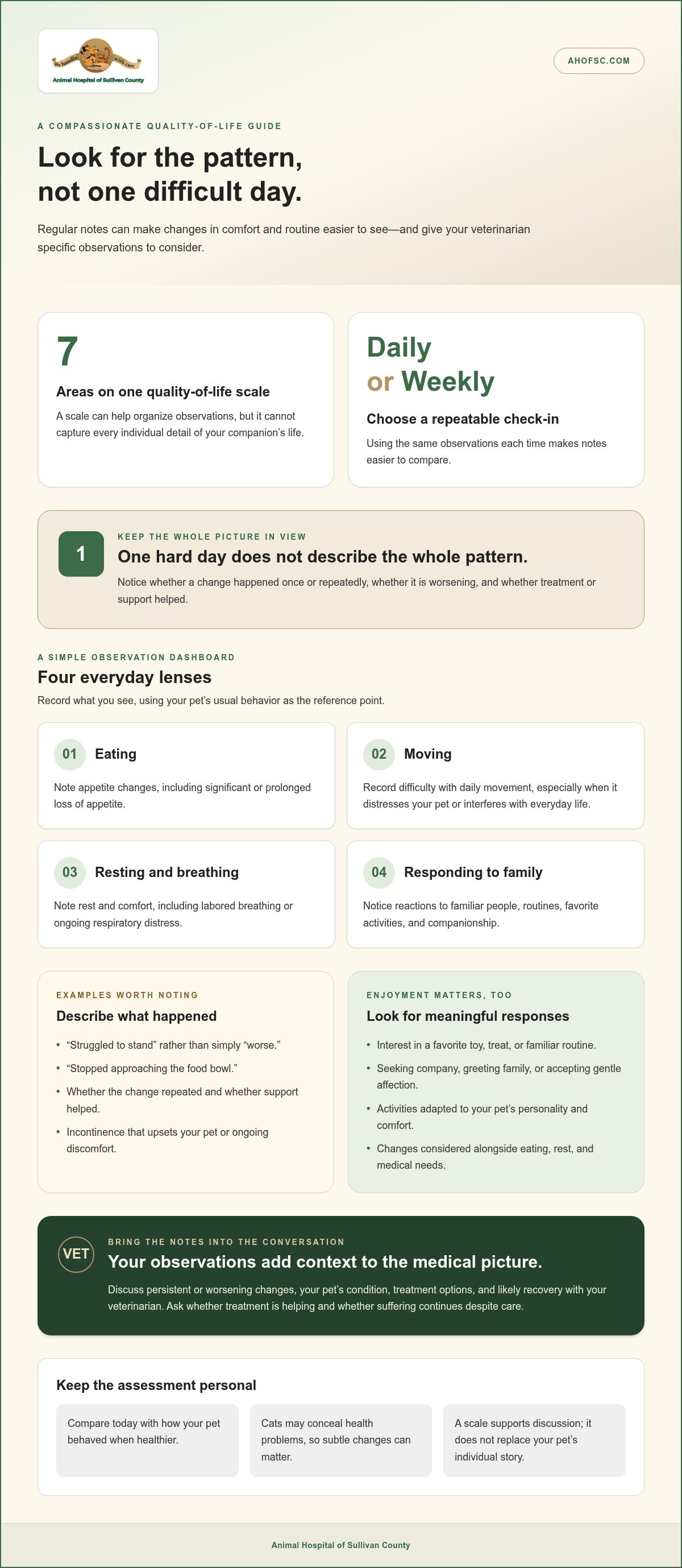
A quality-of-life assessment is a regular record of how your pet manages everyday activities and symptoms. Choose a daily or weekly routine, then note specific observations such as eating, moving, resting, and responding to family. Written notes help you recognize patterns that can blur together during stressful days and give your veterinarian concrete examples to consider alongside the medical picture.
Signs of Suffering and Decline
Suffering and reduced quality of life may involve ongoing discomfort or difficulty with essential parts of daily life. Record changes such as labored breathing, prolonged appetite loss, distressing mobility problems, or incontinence that upsets your pet. Note whether prescribed treatment is helping or suffering continues despite care. One hard day doesn’t describe the whole pattern, but repeated or worsening signs deserve attention and discussion.
Considering Quality of Life Early
Thinking about quality of life before a decision feels urgent means noting your pet’s usual behavior while routines are familiar. Compare current behavior with how your pet acted when healthier, especially if subtle changes are easy to overlook. Cats, for example, may conceal health problems. Early notes help you remember what changed and make later conversations less dependent on stressful, last-minute recollection.
Use the same observations each time to make your notes easier to compare. A quality-of-life scale can help organize them; one such scale evaluates seven areas of a pet’s experience. Consider your pet’s condition, personality, and your family’s beliefs when interpreting the results. A scale can support a broader discussion, but it cannot capture every individual detail of your companion’s life.
Look for patterns in comfort, eating, movement, breathing, and response to care. Chronic pain that medication cannot adequately control may indicate suffering or reduced quality of life. Significant, prolonged appetite loss can lead to weight loss and weakness. Severe mobility problems matter when they distress your pet or interfere with daily life. Labored breathing and ongoing respiratory distress can also undermine comfort.
Record examples, not just labels. Instead of writing “worse,” note that your dog struggled to stand or your cat stopped approaching the food bowl. Record whether the change happened once or repeatedly, and whether treatment or support helped. If your pet continues to suffer despite treatment, these observations can help your veterinarian assess the pattern and discuss whether euthanasia should be considered.
Enjoyment of favorite activities and family company
Your pet’s enjoyment of familiar activities can help show whether daily life still feels rewarding. Look for meaningful responses, not just whether your companion can perform an activity. A dog who once loved a gentle walk may now seem content sniffing in the yard. A cat who no longer jumps onto a favorite chair might still enjoy a sunny window or quiet time beside you. These changes offer context about comfort and happiness.
Notice how your pet responds to familiar people and animals. Does your dog still greet you at the door, or does your cat seek a familiar lap? Does your companion show interest in a favorite toy, treat, or routine? Behavioral changes can reflect illness or discomfort, so consider them alongside eating, rest, and medical needs. One missed greeting or game doesn’t determine quality of life; look at what your pet enjoys across ordinary days.
Choose a few personal signs of enjoyment and consider them in context. A family might note whether their dog still chooses to sit nearby, accepts gentle affection, or enjoys a favorite chew. For a cat, it could be purring during brushing or watching birds from a window. Adapt the examples to your pet’s personality. A naturally independent animal may show happiness differently from a companion who usually seeks constant company.
Family members may notice different details. One person might see that a pet still eats eagerly, while another notices less play or interaction with a household companion. Share specific examples rather than debating whether the pet seems “fine.” If children are involved, give them a gentle, age-appropriate way to express what they observe and feel. Their attachment matters, but your pet’s comfort and medical condition remain central to the decision.
Emotional readiness can differ within a household. One family member may hope to wait for a meaningful event, while another worries that waiting could prolong distress. Talk about what each person sees, hopes for, and considers a warning sign for the pet’s comfort. Friends, relatives, or a supportive group can offer space to process grief without deciding for you. Veterinary hospice care aims to maintain comfort, quality of life, and the human-animal bond.
Consider discussing changes in your pet’s behavior with a veterinarian, especially when favorite activities fade or companionship no longer brings visible interest. Medical care for pets can help families understand health needs while weighing comfort and daily enjoyment. A shared conversation can help bring each family member’s observations together and focus attention on the pet’s experience.
Recognizing illness and pain in individual pets
During euthanasia, a veterinarian gives medication, often through a vein, and may first use a mild sedative if a pet is anxious or in pain. The euthanasia injection itself isn’t painful; after the final medication, a pet typically becomes unconscious within seconds.
Illness, Pain, and Anxiety
Illness can affect each pet differently, so compare physical changes with that animal’s usual behavior. Cats may hide health problems for years, making subtle changes in activity or social habits important clues. A dog with end-stage arthritis might pant, pace, whine, or cry from anxiety linked to pain. These signs deserve attention even if your pet doesn’t show obvious distress throughout the day.
Keep in mind that pets with chronic pain generally don’t vocalize unless the pain is sudden and intense. A quiet pet may still struggle to move, settle, or rest comfortably. Anxiety near the end of life can worsen at night, so note whether pacing or unease follows a pattern. These observations can help distinguish a brief change from ongoing physical or emotional distress.
Managing Pain
Pain management means using veterinary care to reduce discomfort and support day-to-day comfort. An older Labrador retriever with arthritis may remain at home for an extended period when pain is adequately managed. This illustrates why a diagnosis alone doesn’t determine whether a pet is suffering or whether euthanasia should be considered.
Track whether treatment improves practical signs, such as your pet’s ability to rest, rise, or move without distress. If pain remains uncontrolled despite medication, or anxiety continues to interfere with daily life, discuss the changes with your veterinarian. Anti-anxiety medication may sometimes help pets with end-stage anxiety symptoms. What matters is whether care meaningfully eases your companion’s discomfort, not simply whether a treatment has been tried.
For someone who has shared years of routines with a pet, recognizing decline can be painful. Focus on observable changes: a dog who now struggles to stand, a cat who hides more, or a pet who pants and paces at night. These signs can guide a clear conversation about illness, comfort, and possible next steps. They don’t diminish the love behind a goodbye; they help keep your pet’s physical experience in view.
If your pet continues to suffer and treatment no longer provides adequate relief, euthanasia may be the most humane option. A veterinarian can assess the illness, response to pain management, and remaining care options with you. Ask which symptoms to watch for and what changes could signal worsening comfort. This discussion can help your family consider a peaceful passing based on your pet’s needs, rather than waiting for a crisis.
Veterinary guidance on euthanasia decisions
A veterinarian can assess your pet’s health, explain treatment options, and help you weigh comfort against further medical care. Knowing how to decide on pet euthanasia means considering the medical outlook alongside what your pet is experiencing.
The period when euthanasia may be appropriate can range from hours to months. A veterinarian considers the illness, its likely course, current symptoms, and whether treatment can relieve suffering. A pet with a progressive condition may still have comfortable days, while another may face distressing symptoms sooner. Ask what changes to expect and which signs could mean your pet’s comfort is worsening.
Being within a possible euthanasia window doesn’t mean you must act immediately. Families may be in that window for days, weeks, or months, and staying in touch with the veterinarian can help them make space for the decision. Discuss what additional time might involve for your pet, including likely symptoms and available care. This can help you avoid treating the word “window” as a deadline.
Timing involves weighing different risks and benefits. Choosing earlier may reduce the chance of an emergency or prolonged discomfort, while giving you more control over timing and setting. Waiting may provide more time with your pet, but could bring a sudden decline. Neither an earlier nor a later decision within the window is inherently right or wrong. Consider the medical outlook alongside what your pet is experiencing now.
For example, euthanasia may need to be considered for a Yorkshire terrier with congestive heart failure before painful difficulty breathing develops. Ask the veterinarian to explain the likely progression and symptoms that may signal distress. A peaceful natural death is rare in pets, and the dying process can be difficult for owners to witness. Understanding how to decide on pet euthanasia can help families discuss timing before a crisis forces a rushed choice.
Are there legal rules for pet euthanasia and home burial in your state? Discuss euthanasia with a veterinarian. Before burying a pet at home, check local ordinances, as rules may depend on where you live.
How much does pet euthanasia cost in the United States, including at-home services? The price depends on the case and is provided after a quote request; factors include the services involved and the circumstances of care.
To prepare for a veterinary conversation, bring notes about symptoms, treatments, and changes in daily comfort. Ask what further interventions could achieve, how your pet may respond, and what signs could make waiting more difficult. If family members disagree, sharing the veterinarian’s explanation can keep the discussion focused on your pet’s needs. Clear medical information can help you concentrate on the care your companion needs now.
Medical factors and access to emergency care
The medical outlook and access to urgent care can shape end-of-life decisions. Consider whether treatment is likely to help, how your pet handles further interventions, and what might happen if their condition changes suddenly.
Start by asking what benefit another treatment is likely to offer. A procedure may provide a meaningful chance of recovery, or add stress without easing suffering. Ask the veterinarian to explain the expected outcome, possible discomfort, and care involved. Consider treatment costs alongside your pet’s comfort and chance of recovery. The question isn’t simply whether treatment exists, but what it may offer this particular animal.
Distance to emergency care changes the practical choices. A family ten minutes from a 24-hour emergency clinic faces different circumstances from one an hour away. If emergency care is more than an hour away, traveling with a pet in distress may become part of the end-of-life decision. Think about how a sudden decline could affect your pet during that journey, especially if breathing or mobility is already difficult.
Consider what delaying a decision could mean for your household. Could a sudden, traumatic decline happen before planned veterinary care? Might your pet need a rushed trip to an unfamiliar emergency clinic? These aren’t predictions, but practical possibilities to discuss while your pet is stable enough for a thoughtful conversation. Access and distance don’t determine the right choice on their own; they help clarify the risks of waiting and the care available nearby.
A useful discussion can compare three factors: the likelihood of recovery, your pet’s comfort with further interventions, and access to urgent care. A treatment with a realistic path to recovery may be worth considering if your pet can tolerate it. If treatment is unlikely to help and distress could worsen during a long trip, planning ahead may reduce the chance of a crisis. Ask the veterinarian which changes would make the situation urgent and what options are available.
Emergency care availability also has limits. Animal Hospital of Sullivan County provides emergency treatment during business hours, so urgent concerns during those hours can be discussed with its veterinary team. For a time-sensitive health concern, seek emergency treatment during business hours. Planning for urgent needs is part of caring for your pet, not a decision that requires you to say goodbye before you’re ready.
Animal Hospital of Sullivan County: Preventive Care
Animal Hospital of Sullivan County provides preventive care, medical care, and diagnostics to help you understand changes in your pet’s health. If you notice shifts in appetite, movement, or daily behavior, these services can help assess your pet’s needs and inform a conversation about care. Surgical care may also be an option when a treatment fits your pet’s medical situation.
Bring specific observations and questions to the veterinary team, such as which changes concern you most and what treatment could achieve. Clear information can help you weigh your companion’s comfort and medical needs as you consider next steps.
Contact Animal Hospital of Sullivan County to discuss your pet’s care.
Take the next step with care and support
The question of how to decide on pet euthanasia can bring love, grief, and uncertainty together. You don’t have to resolve every feeling before taking a practical next step. Write down what you’re seeing, what worries you, and what you most want to understand about your companion’s care. Sharing these thoughts can help make a conversation with your veterinarian more focused and personal.
Animal Hospital of Sullivan County offers Preventive Care, Medical Care, and Surgical Care. These services can support conversations about your pet’s health and possible care options. If you’re unsure what to discuss, start with the changes that prompted concern and the questions weighing most heavily on your family.
Reach out when you’re ready to talk about your pet’s needs. Contact Animal Hospital of Sullivan County to take that next step with care. Your love for your companion can guide the conversation, one thoughtful decision at a time.
Frequently Asked Questions
How Do You Know If You're in the Window?
You may be in the euthanasia window when an illness is causing suffering, recovery is unlikely, or comfort is becoming difficult to maintain. The timing can range from hours to months, so the phrase doesn’t set a fixed deadline. Ask your veterinarian what changes are likely and which symptoms could mean your pet’s condition has worsened. This can help you plan thoughtfully rather than interpreting each difficult day as a final answer.
How Will I Know It’s Time to Say Goodbye?
It may be time to consider goodbye when suffering continues and treatment can’t provide adequate relief. Consider whether your pet can rest comfortably and whether medical care is still helping, rather than waiting for one unmistakable sign. Write down the changes that concern you and ask your veterinarian what they suggest about your pet’s outlook. A focused conversation can help you weigh your pet’s needs alongside your family’s feelings.
What Is The Euthanasia Window?
The euthanasia window is the period when euthanasia may be an appropriate option based on a pet’s condition and comfort. It can range from hours to months, depending on the illness and its progression. Being within that window doesn’t mean your family must act immediately. Instead, it can prompt a conversation about expected changes, treatment choices, and what matters most for your pet’s wellbeing as the condition develops.
What about a natural death?
A peaceful natural death is rare in pets, and the dying process may be difficult for families to witness. Ask your veterinarian what to expect from your pet’s specific illness, including which changes could signal distress. Understanding the likely course can help you consider comfort-focused care and make plans before symptoms become overwhelming. Your pet’s condition, not an idealized expectation of a natural passing, should guide the discussion.
How do I know when it may be time to euthanize a pet?
Consider euthanasia when your pet continues to suffer, is unlikely to recover, or no longer benefits from available treatment. Ongoing distress despite care, for instance, can be more telling than a diagnosis alone. Ask your veterinarian what treatment might realistically achieve and what decline could look like. Your observations at home, combined with the medical outlook, can help you decide what best protects your companion’s comfort.
What signs indicate a pet has poor quality of life?
Signs can include persistent pain, labored breathing, severe mobility problems, prolonged appetite loss, or distressing incontinence. Consider how these changes affect your pet throughout the day. A mobility issue may be especially concerning if it prevents your pet from reaching food or settling comfortably. One symptom doesn’t tell the whole story, so note how often it occurs and whether treatment improves your pet’s experience.
How can I use a pet quality-of-life scale or checklist?
Use a quality-of-life scale to organize observations, not as a stand-alone decision. One scale assesses seven areas of a pet’s experience. Complete it consistently and add examples that reflect your companion’s personality, such as whether they still seek a familiar resting place. Bring your notes to your veterinarian and discuss changes over time. They can make subtle shifts easier to describe during an emotional conversation.
Can a veterinarian help assess whether euthanasia is appropriate?
Yes. A veterinarian can assess your pet’s health, discuss treatment options, and explain end-of-life care. Bring a concise record of symptoms, treatments tried, and how your pet responds at home. Ask what recovery could reasonably involve and which signs might indicate continued suffering. This gives the conversation a practical focus while leaving room for your family’s concerns and your bond with your pet.


