

You can begin coping by recognizing anticipatory grief, making room for your feelings, and focusing on your pet’s comfort one day at a time. Learning how to cope with a terminal pet diagnosis doesn’t mean setting your emotions aside or knowing exactly what comes next. Anticipatory grief is the sorrow and other emotions that may arise before a pet dies, when you know a loss could be coming.
It’s understandable to feel sadness, fear, anger, guilt, or uncertainty as you care for a beloved companion. These feelings can come in waves, and there’s no single right way or timeline for experiencing them. This guide offers practical ways to process the diagnosis while staying attentive to your pet’s needs. You’ll learn how to seek support, share caregiving, prepare for changes, and consider quality of life and end-of-life decisions with compassion. You can’t make this time painless, but gentle planning and support can help you feel less alone and make room for meaningful moments together.
Key Takeaways
- Share caregiving tasks with trusted people, and make room to talk honestly about what you’re feeling.
- Ask your veterinarian how the illness may progress, what changes to watch for, and which care options can support your pet’s comfort.
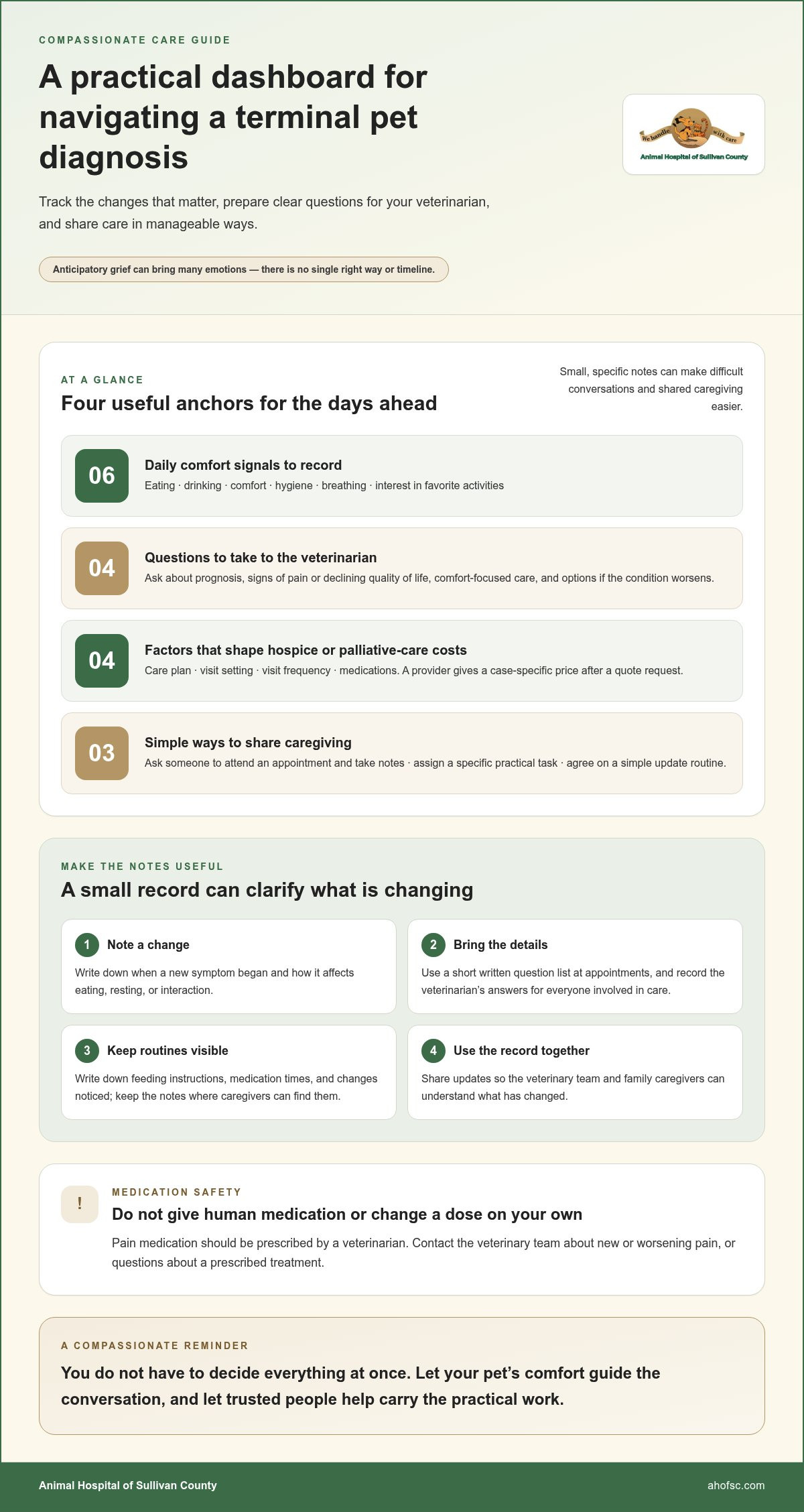
- Keep a simple record of your pet’s eating, drinking, comfort, hygiene, breathing, and interest in favorite activities to help you notice changes.
- Ease daily caregiving strain by accepting practical help and taking brief moments to rest and reset.
- Give yourself permission to experience grief in your own way, and make end-of-life decisions with your pet’s comfort and dignity in mind.
1. Seeking support from trusted people and sharing caregiving
A terminal diagnosis can bring practical demands as well as anticipatory grief. Ask someone you trust to attend a veterinary appointment, take notes, and help remember your questions. Another person might prepare meals or sit with your pet while you rest. Naming a specific task makes it easier for loved ones to offer useful support instead of saying, “Let me know if you need anything.”
In the United States, pet hospice and palliative-care costs depend on the care plan, visit setting, visit frequency, and medications; a provider gives a case-specific price after a quote request.
When talking with children or family members, use clear, age-appropriate language and invite questions. You might say, “The veterinarian has found a serious illness, and we’re helping Bella feel comfortable.” Avoid promising a timeline or saying a pet is “going to sleep,” which may confuse children. Let each person respond in their own way, and agree on practical ways to help, such as refilling the water bowl or choosing a favorite activity.
Sharing care can protect your energy and help your pet receive consistent attention. Write down the routine, including feeding instructions, medication times, and changes you’ve noticed, then keep the notes somewhere caregivers can find them. Divide tasks according to what each person can manage. One family member might take appointment notes, while another sits quietly with the pet. Agree on how to share updates so everyone knows what has changed.
- Ask someone to accompany you to an appointment and record the veterinarian’s guidance.
- Give a helper a defined task, such as preparing a meal or picking up supplies.
- Set a simple update routine so caregiving details don’t rely on memory alone.
Animal hospice and palliative-care providers can offer a supportive space to express emotions and help caregivers name, acknowledge, normalize, and validate them. Hospice care may also help keep a pet comfortable in their final days. You can seek emotional support from trusted friends, family, pet loss support groups, or your veterinarian. Choose someone who will listen without rushing you toward a decision.
Support may still matter after a pet dies. A pet loss support group can give you space to talk about your bond, daily routines, and changes at home. You might ask a friend to check in on a difficult day or share a photo and favorite memory with family. Giving yourself room to grieve is part of honoring the relationship you shared.
If you or someone close to you is in crisis or thinking about self-harm, call or text 988 in the United States, according to the 988 Suicide & Crisis Lifeline.
2. What is Anticipatory Grief?
Anticipatory grief begins before a death, when someone knows a loss may be coming. A pet owner may feel sorrow, dread, anger, fear, guilt, confusion, or difficulty concentrating. These emotions can start when a pet is elderly or receives a poor prognosis, and they don’t follow a set timeline. Your bond with your companion can make the illness feel overwhelming, even when symptoms seem manageable.
A veterinarian can help turn uncertainty into specific questions and a practical care plan. Ask how the illness typically progresses, which symptoms may signal discomfort, and what changes should prompt a call. You can also discuss the treatment routine, including medication instructions, follow-up visits, and the purpose of each treatment. For example, ask what improvement or side effect to watch for after a prescribed medicine.
Bring a short written list to appointments so difficult conversations are easier to follow. Consider asking:
- What is the prognosis, and what factors could change it?
- Which signs suggest pain, distress, or a decline in quality of life?
- What comfort-focused care or hospice support may be appropriate?
- What options should we discuss if my pet’s condition worsens?
Understanding the prognosis can help you make informed choices without deciding everything at once. Write down the veterinarian’s answers and share them with family members involved in care. If a new symptom appears, note when it began and how it affects eating, resting, or interaction. These details help the veterinarian assess what has changed.
When pain is part of a terminal illness, it should be managed with medication prescribed by a veterinarian. Depending on your pet and their condition, a veterinarian may prescribe anti-inflammatory medication, nerve pain medication, injectable therapies, or joint support treatments. Don’t give your pet human medication; common drugs can be toxic to animals. Call the veterinary team about new or worsening pain rather than changing a dose yourself.
You can also ask how hospice or palliative care may support comfort and dignity, and what humane options may be available if suffering continues. A veterinarian can help families consider euthanasia if a pet’s bad days begin to outnumber good days. Track comfort, rest, appetite, and interest in familiar activities to make that conversation more specific.
If your pet’s symptoms change suddenly or seem urgent, seek emergency treatment during business hours. Clear guidance can help you respond to the immediate concern while staying focused on your pet’s comfort.
3. Preparing for a pet’s illness progression and end of life
A terminal diagnosis doesn’t always mean an immediate decline. With supportive care, pets may live for weeks, months, or even longer. Ask your veterinarian how the illness may progress and what that could mean for your pet’s comfort and quality of life. Knowing what changes to expect can help you prepare without treating every difficult day as a sign that the end is near.
Make your home easier to move through and rest in. Put soft bedding in a familiar, quiet spot, and keep food and water close by. Clear slippery rugs or obstacles from the route to the resting place. If standing or walking becomes difficult, ask the veterinarian how to help your pet move safely.
Track quality-of-life cues in a notebook or calendar. Note whether your pet is eating and drinking, managing hygiene, resting comfortably, breathing easily, and showing interest in their surroundings. Include examples of favorite activities, such as greeting friends or enjoying a familiar toy. Changes from your pet’s normal routine are easier to recognize when you compare notes across days.
- Record appetite, water intake, comfort, and breathing.
- Notice whether your pet can rest and keep clean.
- Write down activities your pet still enjoys and changes you observe.
Use these notes to guide conversations about care and decisions. Quality of life involves more than appetite alone; pain, rest, hygiene, and engagement matter, too. Look at the overall pattern rather than expecting every day to feel the same. Share your observations with the veterinarian, including what seems to bring comfort and what appears difficult.
Practical planning can reduce last-minute decisions. List likely needs, such as medication, veterinary visits, help with mobility, and transportation. Discuss an estimate and care priorities with your veterinarian, then decide which trusted friends could help with specific tasks. For aftercare, consider in advance whether you would want your pet’s ashes returned or prefer burial beneath a favorite tree.
Make room for meaningful time as well as care tasks. Choose special activities and treats suited to your pet’s condition, and take photos or videos when it feels right. A quiet cuddle or time together in a familiar place can become a memory to cherish. Adapt activities to your pet’s energy and comfort rather than trying to recreate a normal day.
If your pet’s quality of life is suffering, discuss humane end-of-life options with the veterinarian. Euthanasia is intended to be peaceful and painless, and you may choose to be present to offer comfort and reassurance. Planning the setting and who will be there can help create a calm, loving environment for your pet’s final moments.
4. Caregiving stress, exhaustion, and sleep disruption
Caring for a seriously ill pet can become exhausting as daily tasks and worry build up. Approximately one-half of pet caregivers experience caregiver burden when caring for a pet with a serious illness. That burden may show up as changes in appetite, weight, or sleep while you try to keep up with your pet’s needs. Notice these changes in yourself, too. They can signal that it’s time to adjust the care routine and include your own well-being in the conversation.
Sleep may be interrupted by medication schedules, nighttime symptoms, or fear that your pet might worsen while you rest. In one study, some owners described giving kidney medication every eight hours and losing sleep from worry. If your pet’s treatment involves overnight care, write down the schedule and ask the veterinarian whether adjustments are appropriate. Don’t change a medication routine on your own.
Plan rest as part of caregiving, rather than treating it as something you earn only after every task is done. Taking five to ten minutes to relax can help you support your pet for the rest of the day. Use that pause to breathe slowly, stretch, drink water, or step outside while someone you trust stays nearby. A short reset won’t erase difficult feelings, but it can make the next care task feel more manageable.
Sharing responsibility can prevent one person from carrying every appointment, medication, and household decision. Write down specific jobs, then ask family members or friends to take a shift, prepare supplies, or handle routine updates. One survey found nearly three in four owners of senior dogs said their veterinarian had never asked how caring for their dog affected them. You can raise the subject directly: explain what feels hardest, including sleep loss or worry about saying goodbye.
- Keep a written care schedule where everyone involved can see it.
- Choose a backup person for a task that happens regularly.
- Tell the veterinarian how caregiving is affecting your sleep and daily routine.
Notice when stress is changing how you cope. Skipping meals, feeling constantly on edge, or struggling to focus on familiar tasks can signal that you need more support. Choose someone to check in with and make a clear request, such as covering an appointment or sitting with your pet while you rest. Talking about your feelings doesn’t mean you love your companion any less.
Caregiving may bring grief before goodbye, especially as your pet’s needs change. Give yourself room to feel sadness, frustration, or uncertainty without expecting every moment to be peaceful. If family members are involved, agree on a simple way to share updates and decisions. This can reduce repeated conversations and help everyone understand what support your pet needs today.
When you’re overwhelmed, identify the next essential task instead of trying to solve every future concern at once. Focus on the next medication, meal, or veterinary conversation, then pause. Someone you trust can help you keep track of what remains. Small, shared steps can make an emotionally demanding routine more sustainable for you and your pet.
5. Processing and accepting a terminal diagnosis
A terminal diagnosis can make the future feel suddenly smaller. Give yourself time to absorb the veterinarian’s words before expecting yourself to make every decision. Write down what you heard, what remains unclear, and the next step in your pet’s care. A follow-up conversation can turn an overwhelming diagnosis into manageable questions about treatment, comfort, and daily life.
Acceptance doesn’t mean feeling calm or approving of the illness. You can feel angry during a medication routine, afraid while watching symptoms, and grateful during a quiet moment together. These feelings can exist side by side. Try naming what you’re feeling without judgment: “I’m scared about what comes next,” or “I’m glad we had this afternoon together.”
Grief before a death can feel especially profound when a pet is connected to someone or another animal who has already died. A familiar place, shared routine, or anniversary can bring an earlier loss into the present. Notice what seems to intensify your feelings, then choose a specific source of support, such as talking with someone you trust or writing down a memory. Anticipatory grief has no set timetable.
A Danish study of more than 2,000 caregivers found that severe grief before a death strongly predicted complicated grief six months later. This finding isn’t a reason to suppress sadness or criticize yourself for grieving. Instead, use it as a prompt to seek support when grief feels difficult to carry alone. A UK survey found that about 7.5% of people whose hardest loss had been a pet had symptoms of prolonged grief disorder. If distress disrupts daily life, speaking with a qualified mental health professional or working with a practice like Mindbender Counseling can be a practical next step.
Try a short reflection after a hard day. Write down one thing that was difficult, one thing you did for your pet, and one moment you want to remember. You might note that your pet rested comfortably after medication or enjoyed sitting beside you. This practice makes room for honest pain and positive moments without pretending the terminal illness is easy.
Some days, acceptance may mean focusing only on the next caring task. On other days, it may mean discussing what your pet’s changing comfort tells you. If you’re unsure what a change means, write down what you observed and bring it to the veterinarian. You don’t have to feel ready for every future choice to make a thoughtful decision today.
For support with your pet’s medical needs and care decisions, schedule a medical care appointment to discuss the diagnosis and your questions.
Animal Hospital of Sullivan County: Preventive Care
Animal Hospital of Sullivan County can help you discuss your pet’s changing needs through medical care and diagnostics. If a terminal diagnosis raises questions about symptoms, medication, or comfort, a veterinary conversation can help you understand care options and what to monitor at home. Preventive care can also help you stay attentive to the health needs of other pets in your family.
Bring notes about changes you’ve observed, questions about the diagnosis, and concerns about your pet’s daily comfort. Clear details can guide a focused conversation about next steps. The hospital also provides surgical care when it suits a pet’s needs. Each conversation can center on your animal’s condition and the decisions your family is facing.
Contact Animal Hospital of Sullivan County to discuss your pet’s care.
Take the Next Step With Care
Learning how to cope with a terminal pet diagnosis can start with one manageable choice: deciding what would help your pet today. You don’t have to settle every question about the future before taking that step. Keep noticing what brings comfort, and let your next conversation focus on the concern that feels most important now.
As your pet’s needs change, Animal Hospital of Sullivan County can support your family with medical care, diagnostics, preventive care, and surgical care. These services can help address health questions and guide conversations about your pet’s care. Share what you’ve observed and discuss the decisions ahead with a veterinary team.
Contact Animal Hospital of Sullivan County to discuss your pet’s needs and possible next steps. Your love is already present in the care you’re giving. Keep taking this journey one thoughtful decision at a time.
Frequently Asked Questions
What is Anticipatory Grief?
Anticipatory grief is the emotional response to knowing a beloved pet may die, before the loss happens. It can include sadness, fear, guilt, anger, or difficulty concentrating, and those feelings may change from day to day. You might feel hopeful after a comfortable afternoon, then anxious when your pet’s condition changes. Naming the emotion can help you explain what you need from family or friends.
Will Grieving Now Make It Easier Later?
Grieving now doesn’t make later grief predictable. Anticipatory grief isn’t a rehearsal that lets you finish grieving in advance; your feelings can shift as your pet’s health changes and after a loss. Instead of measuring whether you’re grieving “enough,” notice what helps you get through the present day. A meaningful routine, a conversation with someone you trust, or time to remember your pet can offer support now.
What questions should I ask the veterinarian about my pet’s prognosis and treatment options?
Ask what the diagnosis means for your pet’s expected course and which changes might alter the care plan. Clarify the goal of each treatment, how to give medication, what side effects to watch for, and whom to contact about a new symptom. You can also ask which options focus on comfort if treatment goals change. Taking notes or bringing someone you trust can help you remember the answers afterward.
How can I assess my pet’s quality of life and signs of suffering?
Look for patterns across everyday activities, not just one isolated moment. Note whether your pet can rest, breathe comfortably, eat and drink, stay clean, and show interest in familiar people or surroundings. For example, record whether a normally social cat repeatedly withdraws or a dog struggles to settle. Share the pattern and timing with your veterinarian, especially if you notice hiding, panting, trembling, appetite loss, or avoiding touch.
What palliative and hospice care options are available for terminally ill pets?
Palliative care focuses on comfort and dignity rather than curing the disease; hospice may support comfort near the end of life. The care plan depends on your pet’s illness and needs, and may include veterinarian-prescribed pain management and changes to the home routine. Ask which signs should prompt an update, what support is appropriate, and how the plan may change if your pet’s comfort declines.
What grief counseling and pet-loss support resources are available in the United States?
In the United States, support can come from trusted friends or family, pet-loss support groups, your veterinarian, or a grief counselor. In New York, Connecticut, New Jersey, and Pennsylvania, you can ask your veterinary team about emotional support options and search for a counselor experienced with pet loss. If you’re in crisis or thinking about harming yourself, call or text 988 at any time, according to the 988 Suicide & Crisis Lifeline.


