

If you’re wondering how to afford an unexpected vet bill, emergency grants may help, but they’re unlikely to provide same-day funding. Nonprofits such as RedRover and The Pet Fund may assist with veterinary costs. If delaying treatment could put your pet at risk, seek veterinary care rather than waiting for an application decision.
A sudden bill can feel overwhelming, especially when you’re focused on helping a beloved pet feel safe and well. It’s reasonable to look for financial support while making timely care the priority.
This guide explains where to look for emergency veterinary aid and how payment plans, pet insurance, help from family, crowdfunding, and financing may fit your situation. You’ll also learn what to weigh with each option so you can make a clearer plan for your pet’s care.
First, learn how to discuss costs with a veterinary team. Then explore assistance programs and other resources that may help you manage the bill.
Key Takeaways
- Discuss your budget with the veterinary team and ask about lower-cost treatment approaches or splitting payments.
- Review your pet insurance deductible, exclusions, and reimbursement process to understand what you may need to pay upfront.
- Explore veterinary assistance programs early, since applications can take time and funding may be limited.
- Make it easier for family and friends to help by sharing a clear estimate and a specific way to contribute.
- Compare financing terms carefully, especially deferred-interest deadlines that can affect what you owe.
Negotiating in-house payment plans with a veterinarian
If you’re trying to understand how to afford an unexpected vet bill, start by asking for a clear estimate. Since the care needed affects the total, request an itemized estimate before agreeing to nonurgent services.
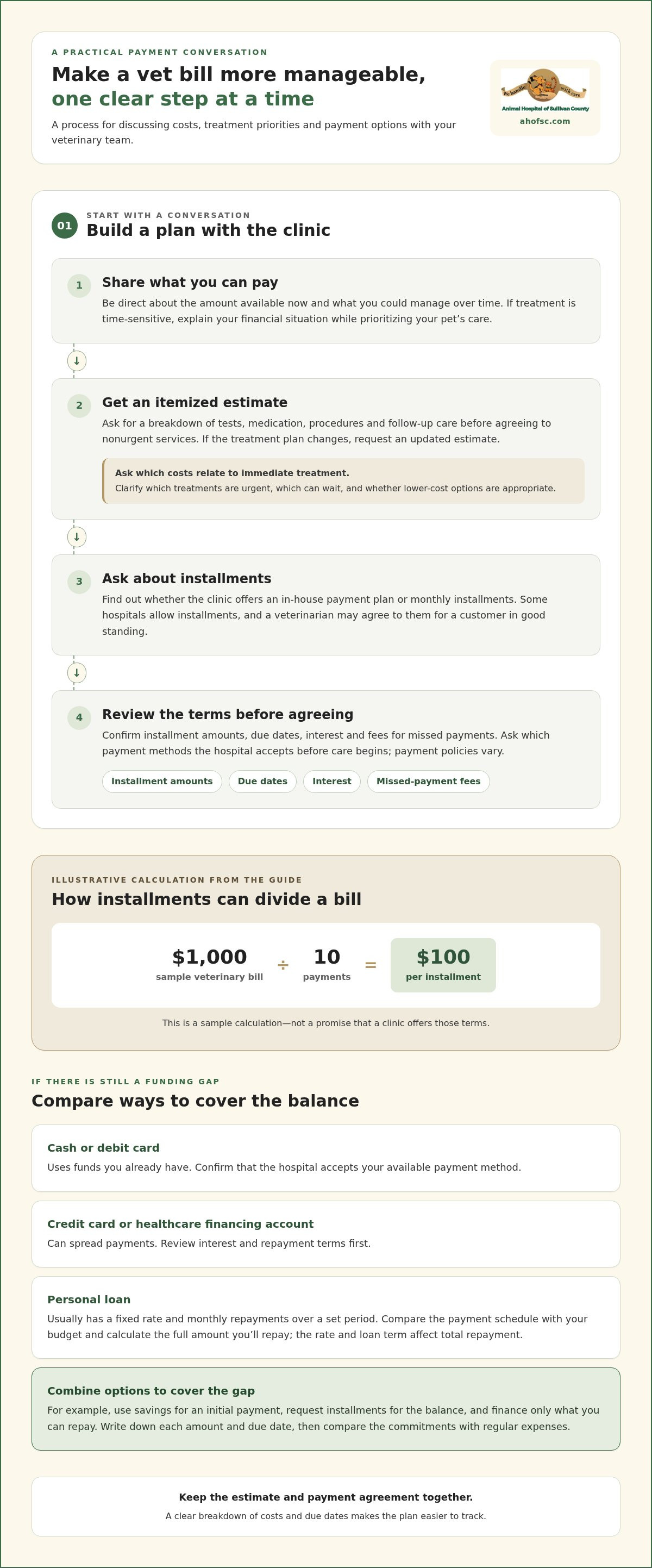
Be direct about your budget. Ask the veterinarian which treatments are urgent, which can wait, and whether lower-cost options are appropriate. An itemized estimate shows costs for tests, medication, procedures, and follow-up care. If the treatment plan changes, ask for an updated estimate. These details will help you explain what you can pay now.
Use these steps to make the conversation practical:
- Share the amount you can pay now and what you could manage over time.
- Request an itemized estimate and ask which costs relate to immediate treatment.
- Ask whether the clinic offers an in-house payment plan or monthly installments.
- Review installment amounts, due dates, interest, and fees for missed payments before agreeing.
A payment plan can spread a bill across installments instead of requiring the full balance at once. For example, a $1,000 veterinary bill split into 10 payments means installments of $100. This is a sample calculation, not a promise that a clinic offers those terms. Some veterinary hospitals allow monthly installments, and a veterinarian may agree to them for a customer in good standing.
When time allows, ask which payment methods the hospital accepts before care begins. Payment policies vary, so confirm whether your available method is accepted. Cash or a debit card uses funds you already have. A credit card or healthcare financing account can spread payments, but review the interest and repayment terms first. Keep the estimate and payment agreement together.
A personal loan is another way to cover major treatment expenses. These loans usually have a fixed rate and monthly repayments over a set period. Compare the payment schedule with your budget and calculate the full amount you’ll repay. The first installment alone doesn’t show the total commitment. The rate and loan term affect the total repayment.
Combining options can help cover a funding gap. For example, use savings for an initial payment, request installments for the balance, and finance only what you can repay. Write down each amount and due date. To decide how to afford an unexpected vet bill, compare these commitments with your regular expenses. If treatment is time-sensitive, explain your financial situation while prioritizing your pet’s care.
Pet insurance coverage, reimbursement, and exclusions
Pet insurance may offset eligible veterinary expenses, but it may not reduce what you owe at the appointment. Most policies require you to pay the bill upfront and then submit a claim for reimbursement. In an emergency, treat insurance as a way to recover eligible costs, not as automatic same-day payment.
Before estimating reimbursement, find your policy declarations page. It summarizes the deductible, reimbursement terms, annual limit, waiting periods, and exclusions. Your deductible is the amount you must meet before the insurer pays toward covered expenses. Your monthly premium keeps the policy active, but doesn’t mean every treatment is covered.
Preexisting conditions are generally excluded. For example, if your pet had symptoms or a diagnosis before coverage began, treatment for that condition may not qualify. Waiting periods can also affect when coverage starts. Review the policy wording for the dates and conditions that apply, rather than assuming a new policy will cover an existing problem.
Use this claim-preparation checklist after receiving care:
- Itemized invoice: Keep the clinic’s breakdown of examinations, tests, medication, and treatment.
- Medical records: Gather relevant notes that explain the diagnosis and care provided.
- Claim portal or form: Submit the insurer’s required documents and save a copy of your submission.
- Policy details: Compare the claim with your deductible, reimbursement terms, annual limit, and exclusions.
A policy may cover treatment after you meet the deductible, but reimbursement still depends on its rules and remaining annual limit. An excluded condition or treatment during a waiting period can change the outcome. Keep the insurer’s explanation of benefits with the invoice to see how the claim was calculated.
Planning ahead makes these details easier to use. Compare policies before your pet develops a chronic condition, and consider how premiums fit your regular budget. Read exclusions alongside the covered-care section. A lower premium may come with different limits or exclusions, so compare the whole policy rather than one feature.
If you already have insurance, call the insurer or use its claim portal to ask which documents are required and how reimbursement works. If you’re choosing a policy, compare its deductible and annual limit against the veterinary costs you could manage upfront. For care that requires a veterinary assessment, veterinary medical care can help establish the diagnosis and document treatment for your records.
Are there programs and grants for veterinary emergencies?
Veterinary assistance programs may reduce the amount a family must cover, but applications take time. Nonprofits such as RedRover and The Pet Fund may help with veterinary bills during financial hardship. Funding is limited, and programs may restrict assistance to particular situations.
The American Veterinary Medical Association can help you locate accredited veterinary schools that sometimes treat pets at reduced cost. Local shelters and humane societies may point you to nearby assistance resources, and some offer veterinary loans or grants.
Whenever possible, start searching before a planned procedure. Some aid organizations are less likely to pay for care that has already been provided. For urgent treatment, don’t wait for a grant decision if delaying care could put your pet at risk. Seek care promptly and pursue financial assistance alongside treatment.
Use these steps to find programs that fit your situation:
- Ask the treating hospital: Find out whether it has a foundation, internal fund, or assistance program.
- Contact several sources: Ask about eligibility, application requirements, covered expenses, and processing time.
- Ask local veterinarians or shelters: They may know nearby programs relevant to your pet’s needs.
- Search by diagnosis or breed: Some aid is limited to specific circumstances, so targeted searches can surface relevant options.
For breed- or illness-specific grants, search using your pet’s diagnosis or breed, then compare each program’s eligibility rules with your circumstances. A program focused on one condition may not cover unrelated treatment. Prepare the veterinary estimate and medical details required by each application, and keep copies together to simplify submissions.
Grant applications often require forms and take time to process, so same-day funding is unlikely. Nonprofit programs typically have limited funds and may restrict aid to certain situations. Contacting multiple organizations can help you identify applications that match the procedure and timing. If your pet is being treated at a hospital with its own foundation or assistance program, ask about that support before applying to Frankie’s Friends.
Veterinary schools, low-cost clinics, and humane societies can be useful starting points, though their roles differ. The American Veterinary Medical Association can help locate accredited veterinary schools that sometimes provide reduced-cost treatment. Shelters and humane societies may connect families with local aid, while some offer loans or grants. Call with your pet’s condition and location to identify a relevant resource.
Keep a simple application record with each organization’s name, submission date, requested documents, and response. This helps you follow up while coordinating care. During an emergency, continue discussing immediate treatment and payment options with the veterinary team while applications are pending.
Family help and crowdfunding
Family contributions and crowdfunding can help cover the gap between available funds and a veterinary estimate. Make your request specific: explain the treatment, what support you need, and how people can contribute. A clear request helps relatives and friends decide whether they can give, lend, or share the fundraiser.
Before asking family for help, decide whether you’re requesting a gift or a loan. If it’s a loan, agree in writing on the amount, repayment schedule, and method. For example, a text message can record that a relative is lending money and when you plan to repay it. This reduces confusion while you focus on your pet’s care.
A crowdfunding page can organize contributions from people beyond your immediate circle. Briefly explain your pet’s condition, the planned care, and the amount you’re trying to raise. Include an itemized estimate if available, and remove any personal details you don’t want shared publicly. A clear photo can help people recognize the pet the fundraiser supports.
Use these tools to make fundraising easier to manage:
- Crowdfunding page: Collect contributions and share one central explanation of the need.
- Group text or email: Send a direct request to family and friends without posting publicly.
- Shared spreadsheet: Track promised contributions, received funds, and related expenses.
- Social media post: Share the fundraiser with your community and provide updates in one place.
Keep the fundraiser factual. Explain what the veterinarian recommended, what the funds will support, and how people can contribute. If the estimate changes, update the page and explain why, such as a newly recommended test. Save receipts and share progress updates, including when treatment is complete or the fundraising goal changes.
A yard sale can also involve neighbors and friends. Share the date and purpose through local community groups, and label items clearly so buyers know proceeds support veterinary expenses. Pairing the sale with an online fundraiser gives people another way to help.
Combine contributions carefully. For example, family may cover an initial payment while crowdfunding gathers support for follow-up care. Keep a running total so you know what funds are available before making commitments. If donations exceed the immediate need, tell contributors how you’ll use the remainder, such as for related treatment or follow-up expenses.
For a time-sensitive emergency, don’t let fundraising delay care your pet needs. Share the request while arranging veterinary attention, and keep supporters informed as plans develop.
Buy now, pay later services and fundraising
Buy now, pay later options and healthcare financing can divide an eligible expense into scheduled payments. Before choosing one, compare the payment dates with your income, existing bills, and any other veterinary payment arrangement. A smaller first payment doesn’t show the full amount you may owe.
Healthcare credit cards may offer promotional financing, but approval depends on credit approval. With deferred-interest financing, interest accrues from the purchase date and is charged if you don’t pay the promotional balance in full by the deadline. Before accepting, read the promotional period, required minimum payments, and terms for missed payments.
Payday loans create a separate debt obligation. Consider whether the repayment date fits your budget after essential expenses and other bills. If repaying the loan would leave too little for those costs, compare other options before borrowing. A loan can cover an immediate payment gap while adding pressure later.
Compare financing tools using the same questions:
- Buy now, pay later service: Review installment dates, payment amounts, and consequences of a missed payment.
- Healthcare credit card: Check the promotional deadline and whether deferred interest applies.
- Personal loan: Compare its fixed rate and monthly repayment schedule with your available budget.
- Payment calendar: Record each due date so financing payments don’t overlap unnoticed.
Crowdfunding differs because contributions come from supporters rather than a lender. It doesn’t create scheduled loan payments, but managing a fundraiser takes organization. Track donations and treatment expenses separately, and post clear updates if the care plan changes. Use one main fundraiser page to keep information and updates together.
Each funding option has trade-offs. Financing creates repayment obligations, promotional terms can make deferred interest costly, and crowdfunding involves sharing information about your pet’s care. Payday loans can add pressure alongside regular expenses. These are the main risks of financing a veterinary bill, payday loans, and crowdfunding.
Before accepting financing, write down the total repayment amount, due dates, promotional deadline, and missed-payment terms. Compare them with your available cash and other commitments. For crowdfunding, state clearly what donations will support and keep receipts so supporters can follow how funds relate to care.
If your pet needs urgent assessment, prioritize veterinary attention while choosing a payment approach. Connect with a veterinary team about urgent care and explain your concerns as you discuss the next steps for your pet.
Animal Hospital of Sullivan County: Preventive Care
Animal Hospital of Sullivan County provides Preventive Care to support your pet’s ongoing health. Routine visits also give you a chance to discuss concerns before they become harder to manage financially. If your pet needs evaluation or treatment, the hospital also provides Diagnostics, Medical Care, and Surgical Care.
After an unexpected bill, consider how regular veterinary care fits your pet’s future needs. Share any changes in your pet’s health and ask about appropriate next steps during a visit. If a concern is new or worsening, a veterinary assessment can help guide care decisions.
Contact Animal Hospital of Sullivan County to discuss your pet’s care.
Make a steadier plan for your pet’s care
Financial pressure can make it difficult to think beyond today’s decision. Once the immediate concern is addressed, consider setting aside a small, regular amount for future pet expenses. A simple note of upcoming care needs and available savings can help you feel more prepared when plans change.
Knowing how to afford an unexpected vet bill starts with support to discuss your pet’s health and next steps. Animal Hospital of Sullivan County provides Preventive Care, Medical Care, and Surgical Care for pets’ changing needs. A conversation about your pet’s care can help you plan what comes next with greater clarity.
Contact Animal Hospital of Sullivan County to discuss care for your pet. Taking one thoughtful step at a time can help you move forward with care and confidence.
Frequently Asked Questions
How can I financially prepare for the emergency vet?
Set aside money for pet care from each pay period, especially if your pet has a known condition or you care for multiple pets. A separate savings account can keep those funds apart from household spending. Keep your pet’s medical records and insurance details together, too. During an urgent visit, having the policy information and care history ready can make it easier to discuss treatment choices and follow-up needs.
Should I still go to the emergency vet if I have no money?
If delaying treatment could put your pet at risk, seek veterinary care promptly rather than waiting until you have funds. Tell the veterinary team that payment is a concern and explain what you can manage. Ask which care is urgent and discuss payment methods. For a condition that is not life-threatening or complex, urgent care may be a less expensive alternative to an emergency room.
What If I Can’t Afford My Emergency Vet Bill?
Ask the veterinary team to explain the bill and distinguish immediate needs from other recommendations. To figure out how to afford an unexpected vet bill, list the resources available to you, such as family help, insurance reimbursement, or an assistance application. If your pet needs urgent treatment, don’t delay care while seeking aid. Keep estimates and receipts together.
What are the payment options at an emergency vet?
Payment methods vary between emergency hospitals, so ask which options the hospital accepts. Depending on its policies, these may include direct payment, a credit card, or a financing product. If you have pet insurance, reimbursement usually follows your upfront payment. Before using credit, compare the repayment schedule with your other upcoming bills and consider whether the due dates fit your budget.
Do veterinary clinics offer payment plans or in-house financing for emergency bills?
Some veterinary hospitals let clients pay in monthly installments through an in-house plan. Ask whether the clinic offers one, how payments are scheduled, and what happens if you miss an installment. Some clinics charge interest or fees for missed payments. Before agreeing, compare the payment with your regular income and essential expenses, and make sure you understand the full repayment terms.
What pet emergency grants, charitable funds, or nonprofit programs help pay vet bills?
RedRover and The Pet Fund are nonprofit organizations that may help with veterinary bills during financial hardship. Assistance programs often have limited funds, application requirements, and eligibility restrictions. Match an application to your pet’s diagnosis and requested care, then prepare the estimate and relevant records. Local shelters and veterinarians may also recommend nearby resources. Grant applications can take time, so don’t rely on one for immediate emergency funding.
Can pet insurance cover an unexpected vet bill, and what are waiting periods and exclusions?
Pet insurance may reimburse eligible care, but policies generally require you to pay the veterinary bill first. Coverage depends on your policy’s deductible, annual limit, waiting periods, and exclusions. Preexisting conditions are generally excluded, so coverage purchased after symptoms begin won’t cover that existing condition. Review your policy details and keep invoices and medical records ready when preparing a claim.
What should I do if I cannot afford my pet’s recommended treatment right away?
If you’re deciding how to afford an unexpected vet bill, ask which recommended treatment is time-sensitive and whether care can be staged. Request a written estimate, then discuss lower-cost options that still address your pet’s needs. If waiting could endanger your pet, prioritize prompt veterinary attention while exploring payment resources. For less urgent care, use the written plan to see what needs attention first and what may be scheduled later.


