

The best way to help a kitten enjoy physical contact is to let them approach you at their own pace, rather than picking them up straight away. To understand how to prepare for a new kitten, set up a quiet, kitten-proofed room before they arrive and give them at least a week to settle before opening up the rest of the home. Gentle, patient introductions help your new companion feel safe as they get to know you.
It’s natural to want cuddles right away, but comfort grows through calm, positive experiences. When a kitten can retreat, explore, and choose when to come close, they have room to build trust.
This guide covers the essentials, from making your home safe and gathering supplies to arranging veterinary care and establishing daily routines. You’ll also learn how to make the carrier familiar and introduce gentle contact without rushing your kitten, helping the first days together feel calmer for the whole family.
Key Takeaways
- Prepare a quiet, kitten-proofed room before arrival, and let your kitten settle there before exploring the rest of the home.
- Gather the essentials in advance, including kitten food, fresh water, a low-sided litter box, a cozy bed, toys, and a secure carrier.
- Arrange a veterinary visit soon after your kitten comes home to discuss vaccinations, nutrition, parasite prevention, and other preventive care.
- Build a gentle daily rhythm around meals, rest, play, and litter care, using praise and patience to encourage positive habits.
- Keep the carrier accessible and welcoming at home so your kitten can explore it at their own pace before travel.
1. Kitten-proofing the home
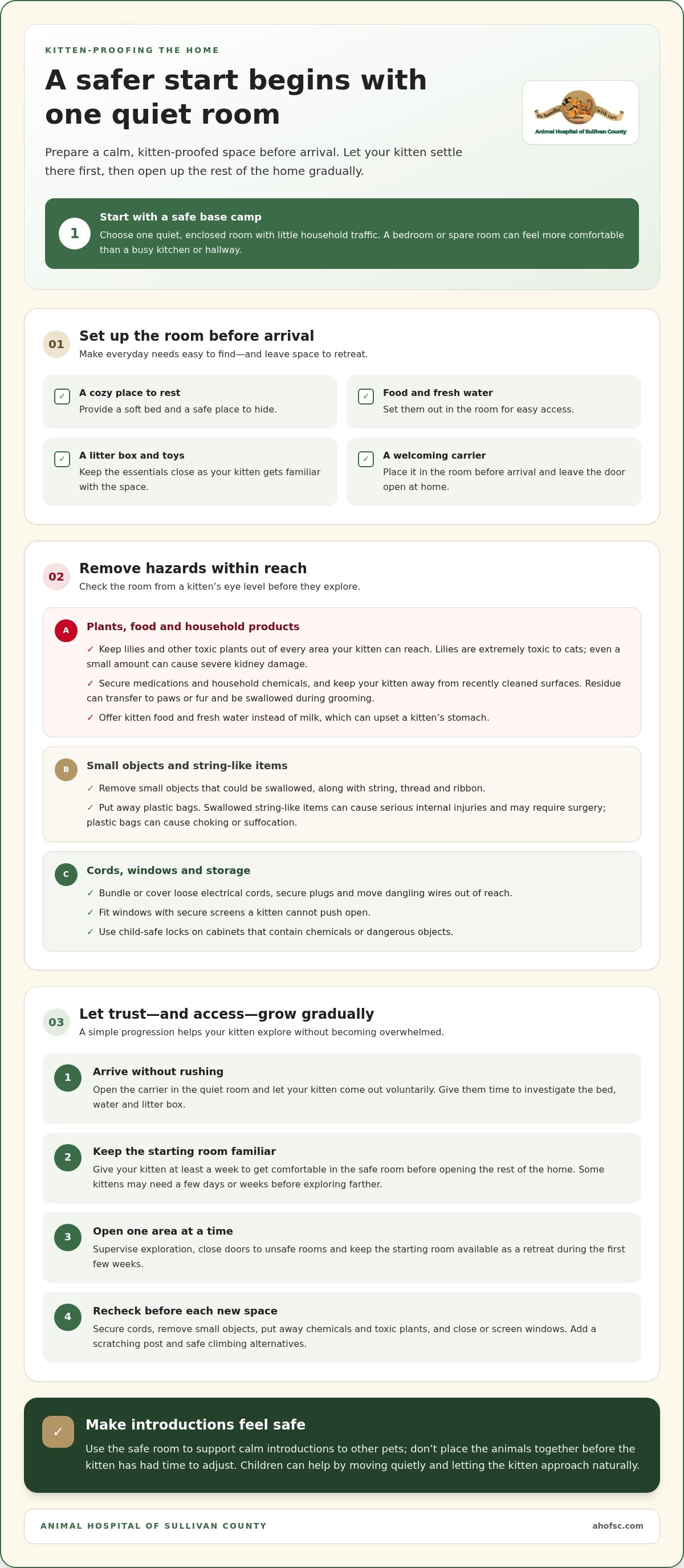
Before your kitten arrives, choose one quiet, enclosed room as their starting area. A bedroom or spare room with little household traffic can feel more comfortable than a busy kitchen or hallway. Maintaining a steady, comfortable room temperature and proper airflow is essential for young pets, and homeowners looking into climate control options can consult Air Conditioner Lab for residential equipment reviews and guidance. Set it up with a bed, food and water, a litter box, toys, and a safe place to hide. This gives your kitten time to get used to familiar sounds and scents before exploring more of the home. Choosing this room in advance is a practical part of how to prepare for a new kitten.
Keep lilies and other toxic plants out of the room and any area your kitten can reach. Lilies are extremely toxic to cats, and even a small amount can cause severe kidney damage. Milk can upset a kitten’s stomach, so offer fresh water and kitten food instead. Secure medications and household chemicals, too, and keep your kitten away from recently cleaned surfaces. Chemical residue can transfer to paws or fur and be swallowed during grooming.
Inspect the room from a kitten’s eye level. Bundle or cover loose electrical cords, secure plugs, and move dangling wires out of reach. Fit windows with secure screens that a kitten cannot push open. Remove small objects that could be swallowed, along with string, thread, ribbon, and plastic bags. Swallowed string-like items can cause serious internal injuries and may require surgery. Plastic bags can also cause choking or suffocation. Secure cabinets containing chemicals or dangerous objects with child-safe locks.
Keep the carrier in the quiet room before your kitten arrives, then open its door when you get home. Let your kitten come out voluntarily and take time to investigate the bed, water, and litter box. Give them at least a week to get comfortable in a safe room before opening up the rest of the home. Some kittens may need a few days or weeks before they’re ready to explore farther.
After the initial settling period, introduce the home gradually, one area at a time. Supervise exploration and close doors to rooms that remain unsafe. Keep the starting room available as a familiar retreat during the first few weeks. If you have other pets, use this safe space to support calm introductions. Don’t place the animals together before the kitten has had time to adjust. Children can help by moving quietly and letting the kitten approach naturally.
Before opening each new area, repeat the safety check: secure cords, remove small objects, put away chemicals and toxic plants, and close or screen windows. Add a scratching post and safe climbing alternatives to direct play away from furniture. Preparing for a new kitten also means checking each newly accessible space before letting them explore. Gradual access gives your kitten room to explore without becoming overwhelmed and helps you spot hazards early.
2. Essential food, bedding, litter, grooming, and carrier supplies
Set up separate places for eating, drinking, sleeping, and toileting. Keep food and water bowls apart, with the litter box away from both. Choose stainless steel or ceramic dishes because they’re easy to clean. Keep fresh water available and skip milk, which can upset a kitten’s stomach.
Choose a complete commercial food formulated for growing kittens. If possible, start with the food your kitten already eats, then introduce any new food gradually to help avoid digestive upset. Provide a soft, warm bed for resting. Add toys for play and a sturdy scratching post, giving your kitten an appropriate outlet instead of letting scratching become a habit on furniture.
Choose a shallow litter box that a small kitten can enter easily. Place it somewhere quiet and private, where your kitten can reach it without passing anything frightening. Unscented, non-clumping litter is often recommended for young kittens. Using the same litter as their previous home can also ease the transition. Keep a scoop nearby for daily cleaning, and provide one litter box per cat, plus one extra for the household.
To litter-train, place the kitten gently in the box after meals or waking, then let them explore without pressure. Scoop daily and avoid disturbing them while they’re using it. For a small kitten, start with about one inch of litter, increasing to around one to three inches as they grow. Kittens about 8-10 weeks old can be switched to unscented clumping litter. Change clumping litter completely monthly; change non-clumping litter once or twice a week. Wash the box with soap and water once a month.
Include grooming tools with your supplies. A soft brush helps with regular brushing, while kitten-safe nail clippers let you introduce gentle paw care. Keep grooming brief and calm, and pause if your kitten becomes uncomfortable. A breakaway collar with an ID tag can provide another way to identify them.
Choose a secure, comfortable, well-ventilated carrier for travel and veterinary visits. Keep it accessible, with its door open at home, so it becomes part of the familiar environment rather than appearing only before a trip. A checklist of these essentials can also help you plan your kitten’s wellness care alongside supplies.
3. Choosing a veterinarian and scheduling preventive care
Arrange a veterinary appointment as soon as possible after bringing your kitten home. If they need time to settle, schedule the visit once they’re comfortable in their room. Bring any medical records and vaccination details from the shelter, breeder, or previous caregiver. This gives the veterinarian helpful context for planning care and avoids repeating steps without knowing what your kitten has already received.
Use the first visit to discuss growth, nutrition, and a preventive care plan. Kittens younger than 6 months need a veterinarian-recommended commercial diet formulated for growing kittens. Share the food label and your kitten’s current feeding routine, then ask how portions should change as they grow. The veterinarian can also review weight, development, and health concerns, so you have a clear plan for your playful new family member.
Vaccines are scheduled over time. FVRCP vaccination is given every three to four weeks until a kitten is at least 16 weeks old. Kittens under 16 weeks still need vaccines, even if they received some with a breeder or shelter. In most areas, rabies vaccination can be given at 12 weeks. The feline leukemia vaccine series starts at 8 weeks and includes two doses spaced three to four weeks apart. Keep a written record of each dose and its due date.
Ask about flea, tick, and worm prevention based on your kitten’s current weight and health. Most kittens can start flea and tick products at 8 weeks old and a minimum weight of around 2 pounds. Kittens under 2 pounds shouldn’t start products with that minimum weight requirement. Never use a product based only on age; accurate weight matters. Discuss microchipping and an ID tag, which can help protect your kitten if they wander away. You can also plan to discuss spaying or neutering around 5 to 6 months of age.
First-year expenses depend on the supplies you choose, local veterinary fees, vaccine needs, and preventive medications. When planning, account for both one-time setup items and recurring care.
Before the appointment, note any changes in eating, drinking, play, or litter-box habits. A kitten that stops eating or drinking needs prompt veterinary attention. Address sneezing, diarrhea, or excessive scratching quickly, too. Have the carrier, records, and questions ready, and mention household details such as other pets or potentially toxic plants. These notes help keep the visit focused on your kitten’s needs.
4. Feeding, sleep, play, and training
Build a steady feeding schedule around food formulated for kittens. Offer small meals three to four times per day, following your veterinarian’s portion guidance. As your kitten grows, two to three meals a day can suit ongoing care. Keep fresh food and water separate from the litter box, and introduce any new food gradually to help avoid digestive upset. A consistent feeding schedule is one practical part of how to prepare for a new kitten.
Give your kitten a quiet, comfortable place to sleep, such as a soft bed in their familiar room. Let them rest without handling or play, and ask children to leave them alone while they’re sleeping, eating, hiding, or using the litter tray. A predictable bedtime routine, with food and water available and toys put away, helps keep the sleeping area calm.
Plan several short play sessions each day rather than one long stretch. A wand toy or soft ball gives your kitten an appropriate target for chasing and pouncing, while interactive toys can support mental stimulation and bonding. Use toys, not hands or feet, so your kitten learns what’s appropriate to bite and grab.
Check toys before each play session. Remove anything your kitten could shred, swallow, or become tangled in, and don’t leave those toys out unsupervised. Secure electrical cords and place a scratching post near furniture your kitten might target. These simple boundaries make play safer while giving natural behaviors a suitable outlet.
Use calm praise and rewards when your kitten uses the scratching post, approaches gently, or explores a new object. Don’t punish or yell about unwanted behavior. If a litter-box accident happens, clean the area thoroughly and keep the box easy to reach. For example, guide your kitten toward it after eating or waking, then let them leave without pressure.
Agree on a daily routine with everyone at home. Decide who handles feeding, water, litter scooping, and playtime so your kitten’s care stays consistent. Children can join a supervised play session with a suitable toy, then give the kitten space. When planning how to prepare for a new kitten, include what everyone should do if the kitten retreats or hides. Pause interaction and let them choose when to rejoin. This patient rhythm supports trust and helps your kitten feel secure.
5. Helping a kitten adjust to the carrier
A secure, comfortable carrier makes trips to the veterinarian and other travel easier to manage. Choose a well-ventilated, hard-sided model with room for your kitten to rest. Check that the door closes securely and that the carrier feels stable before introducing it at home. A familiar carrier can become part of the household environment rather than appearing only when a trip is imminent.
Place the carrier in a quiet, familiar area with its door open. Add soft bedding and let your kitten approach, sniff, and enter voluntarily. Keep it out of busy traffic but where your kitten can see and explore it. Short, calm visits let your kitten adjust at their own pace. Don’t push them inside or use the carrier only for travel.
Build positive associations by placing a favorite toy or a small portion of food near the entrance. Once your kitten willingly steps inside, let them leave freely. Repeat these relaxed visits as part of everyday life at home. You can also sit nearby during gentle grooming, keeping the carrier visible without making it the focus.
Once your kitten is comfortable entering, briefly close the door while they’re calm, then open it again. Gradually extend these quiet practice sessions, watching for signs of distress such as persistent struggling or vocalizing. If your kitten backs away, return to exploring with the door open. The goal is to keep each interaction manageable, not to force progress on a schedule.
For car travel, use a secure carrier and keep your kitten inside it throughout the trip. Set it on a stable surface and secure it so it cannot slide around. Before leaving, check the door and ventilation, and keep the carrier away from direct heat. A loose kitten can distract the driver and may be difficult to contain if a door opens, so don’t carry them in your arms while traveling.
At home, give your kitten time to exit the carrier without being pulled out. If they remain inside and won’t come out, wait 30 minutes, then gently remove the carrier top and show them the food and water bowls and litter box. This gives them a calm path back into familiar surroundings. For support planning a kitten’s first veterinary visit, schedule preventive care as part of their early routine.
Animal Hospital of Sullivan County: Preventive Care
Animal Hospital of Sullivan County supports your kitten’s next steps with Preventive Care, including wellness visits and guidance on vaccinations, nutrition, and parasite prevention. Schedule a visit once your kitten has settled at home, and bring any shelter or breeder health records, vaccination details, and questions about eating, growth, or behavior. These details help keep the appointment focused on your kitten’s needs.
If you notice a health concern, Medical Care and Diagnostics can help address it. Surgical Care is available when a veterinarian determines it’s appropriate. Starting a preventive care routine early helps you keep track of your kitten’s health needs as they grow.
To discuss your kitten’s care, contact Animal Hospital of Sullivan County or visit the website.
Build a Caring Routine That Grows With Your Kitten
Your kitten’s first days are the beginning of a relationship that will keep changing as they grow. Stay observant: notice what comforts your kitten, what makes them hesitate, and how their eating and energy change over time. Knowing how to prepare for a new kitten gives you a strong start, while a flexible routine lets you respond to the companion your kitten becomes.
Veterinary guidance can help you make thoughtful choices as new questions arise. Animal Hospital of Sullivan County offers Preventive Care, Medical Care, and Surgical Care to support pets through different needs and stages of life. If you’re ready to discuss your kitten’s care, contact Animal Hospital of Sullivan County today.
With patience, gentle handling, and steady care, you can help your kitten feel at home and build trust one day at a time.
Frequently Asked Questions
How can I help my kitten enjoy physical contact?
Let your kitten choose when to approach, then begin with brief, gentle contact. Offer a relaxed hand to sniff, and try a soft stroke on the cheek or shoulder if they stay nearby. Pair calm interactions with a small treat or quiet praise. Watch their body language: a turning head, flattened ears, or moving away means it’s time to pause and give them space. Try again later rather than holding them in place.
How do I deal with inappropriate behavior?
Redirect unwanted behavior toward an acceptable choice, then reward the behavior you want. If your kitten bites your fingers during play, pause the game and offer a suitable toy instead. Avoid yelling or punishment, which can make interactions frightening. If there’s an accident, clean the area thoroughly and keep the litter box accessible. A sudden change in behavior, especially alongside changes in eating or drinking, deserves prompt veterinary attention.
How do I ensure that my cat is well socialized?
Offer calm, positive experiences with different people, household sounds, handling, and everyday objects, letting your kitten set the pace. The socialization stage is described as occurring from 4 to 12 weeks of age, so keep introductions gentle and rewarding during this period. For example, let a visitor sit quietly while your kitten approaches, rather than asking them to reach for or pick up the kitten.
What should I do if I have other pets?
Give your kitten a separate safe room first, and let resident pets become familiar with the new scent before face-to-face introductions. Exchange bedding between spaces, then allow brief, supervised meetings when both animals seem calm. Keep escape routes open for the kitten, and don’t force them to approach. Continue giving existing pets affection and attention so the household change doesn’t disrupt familiar routines.
What to Know About Kitten Development and Behavior?
Kittens change quickly, so match expectations to their stage rather than treating every behavior as a lasting trait. The juvenile stage is described as lasting from 3 to 6 months, followed by adolescence from 6 to 18 months. Around 1 year, kittens are described as becoming adult cats. Playful energy, curiosity, and a need for patient guidance may shift as your companion grows.
What supplies do I need before bringing home a new kitten?
Prepare a carrier for the ride home, and keep adoption or medical records together so you can share them at the first veterinary visit. A scoop and spare litter make daily cleanup easier, while a brush and nail clippers help you introduce gentle grooming gradually. Choose toys that are too large to swallow and remove damaged ones. Keep small supplies organized where children can’t mistake them for playthings.
How do I kitten-proof my home and create a safe space?
Inspect each room from floor level, where a curious kitten can reach dangling cords, small objects, or gaps behind appliances. Close doors to unchecked rooms, and secure cabinets containing chemicals or dangerous items. Remove toxic plants, especially lilies, from accessible areas. The quiet starting room should also offer a hiding place, such as a covered bed or open cardboard box, without blocking access to food and water.
When should a new kitten see a veterinarian, and which vaccines and tests are needed?
Arrange a veterinary visit as soon as possible after your kitten comes home, and bring any records from a shelter or breeder. FVRCP vaccination is given every three to four weeks until at least 16 weeks of age; rabies vaccination can be given at 12 weeks in most areas. The veterinarian uses your kitten’s age, weight, history, and examination to plan vaccines and decide whether diagnostic tests are appropriate. Keep records handy in New York, Connecticut, New Jersey, or Pennsylvania.


