

A sudden change in your pet’s appetite, behavior, or energy deserves attention, and trouble breathing calls for prompt veterinary care. If you’re asking, “how do I know if my pet’s illness is serious,” watch for new or worsening symptoms, especially vomiting or diarrhea that lasts more than 24 hours. You know your pet’s usual routines, and that can help you notice when something feels different.
It’s natural to hope a pet who seems unwell will feel better soon. This guide answers “how do I know if my pet’s illness is serious” by explaining which changes in eating, drinking, behavior, energy, vomiting, or diarrhea may warrant a call to your veterinarian. You’ll learn which signs need prompt attention, how tracking changes at home can help, and what details to share when seeking care.
Key Takeaways
- Track changes in appetite, thirst, weight, and bathroom habits so you can describe what’s different from your pet’s normal routine.
- Hiding, unusual aggression, increased vocalizing, or anxiety can be clues that your pet is uncomfortable or unwell.
- Difficulty breathing, sudden severe lethargy, or rapidly worsening symptoms call for prompt veterinary attention.
- Vomiting or diarrhea lasting more than 24 hours needs immediate veterinary care; note how often it occurs and any changes in appearance.
- Keep a simple record of symptoms and when they began to help your veterinarian assess what care your pet may need.
1. Changes in appetite and thirst
A change in how much your pet eats or drinks can be an early clue that something is wrong. Notice whether your dog leaves food untouched, your cat suddenly asks for more meals, or the water bowl empties faster than usual. A sudden drop in appetite can accompany dental problems or other health issues, while increased thirst may point to kidney disease or diabetes.
Look for patterns, not just one unusual meal. A dog that suddenly eats more than usual, for example, may have diabetes or thyroid problems. A pet that drinks more while losing weight also needs attention. Gradual weight loss can occur with chronic illness, and unexplained weight gain can signal a health concern too. Record changes alongside your pet’s usual eating and drinking habits.
To spot other subtle warning signs, watch this veterinary overview:
Duration matters. A dog that refuses food or water for more than 24 hours may have a serious health issue. Contact your veterinarian rather than relying on a food topper or hand-feeding to resolve a persistent change. Warming food or offering a topper may help temporarily, but it doesn’t explain why appetite changed or replace veterinary care.
Watch the whole picture, too. Appetite changes alongside vomiting, diarrhea, or constipation can suggest digestive trouble. Note when symptoms began, how often they occur, and whether your pet can keep water down. Vomiting or diarrhea that persists for more than 24 hours calls for immediate veterinary care. If symptoms appear together or worsen, share that detail when you call.
Weight can reveal a gradual shift that a single meal won’t. Weigh your pet consistently when practical, and note changes in body shape or how clothing, collars, or harnesses fit. In cats, significant, rapid weight loss may create a hollow-looking face. Report this visible change promptly, especially if your cat is also eating less.
Keep a simple daily log of food offered and eaten, changes in drinking, vomiting or bowel movements, and weight observations. Include recent diet changes, since a new food may coincide with appetite or stool changes. These details help a veterinarian assess the pattern and decide whether an examination, testing, or treatment is appropriate. Don’t wait for a dramatic symptom if your pet’s normal eating or drinking has clearly changed.
2. Behavioral changes
Pain or distress can appear as behavior that differs from your pet’s routine. A usually sociable cat that starts hiding, a dog that becomes unusually aggressive, or a pet that vocalizes more may be reacting to discomfort. Sudden anxiety or withdrawal also deserves attention, especially alongside changes in movement, eating, or sleep.
Dogs’ and cats’ normal temperature, breathing, and heart rates vary with factors such as species, age, size, activity, and stress. Use a veterinarian-guided baseline for your pet rather than applying one number to every animal. Rapid, shallow, difficult, or unusually labored breathing needs prompt veterinary attention.
At home, observe your pet quietly before handling them. If it’s safe, gently lift the lip to check gum color and moisture, and note any change from your pet’s usual appearance. Watch the chest rise and fall while your pet rests, noting effort, wheezing, or coughing. Don’t force an examination if your pet resists. Record what you observe and share it with a veterinarian.
Breathing changes can be especially important. A pet that is short of breath, wheezing, or breathing rapidly and shallowly needs timely care. Slow, labored breathing can also accompany pain or discomfort. Keep your pet calm while arranging veterinary attention, and don’t delay because the change seems brief.
Changes in color or temperature may add to the picture. A sudden change in gum color or unusually cool paws alongside weakness or difficult breathing, for example, warrants prompt attention. Touch alone cannot identify the cause, so describe the change and any accompanying signs rather than trying to diagnose poor circulation at home.
Behavior is one part of a broader wellness picture. Check for changes in coat condition, new lumps, weight shifts, and eye appearance. Redness, squinting, cloudiness, unusual discharge, or pupils that look different from each other can signal health issues. Note when each change began and whether it is getting worse.
A simple routine makes subtle signs easier to spot. Compare today’s behavior with familiar examples: greeting you at the door, settling in a usual sleeping place, or walking comfortably. Write down new hiding, restlessness, increased panting, shaking, or unusual vocalizing. If several changes appear together, share the full pattern when you call for veterinary care.
3. When to consult a veterinarian
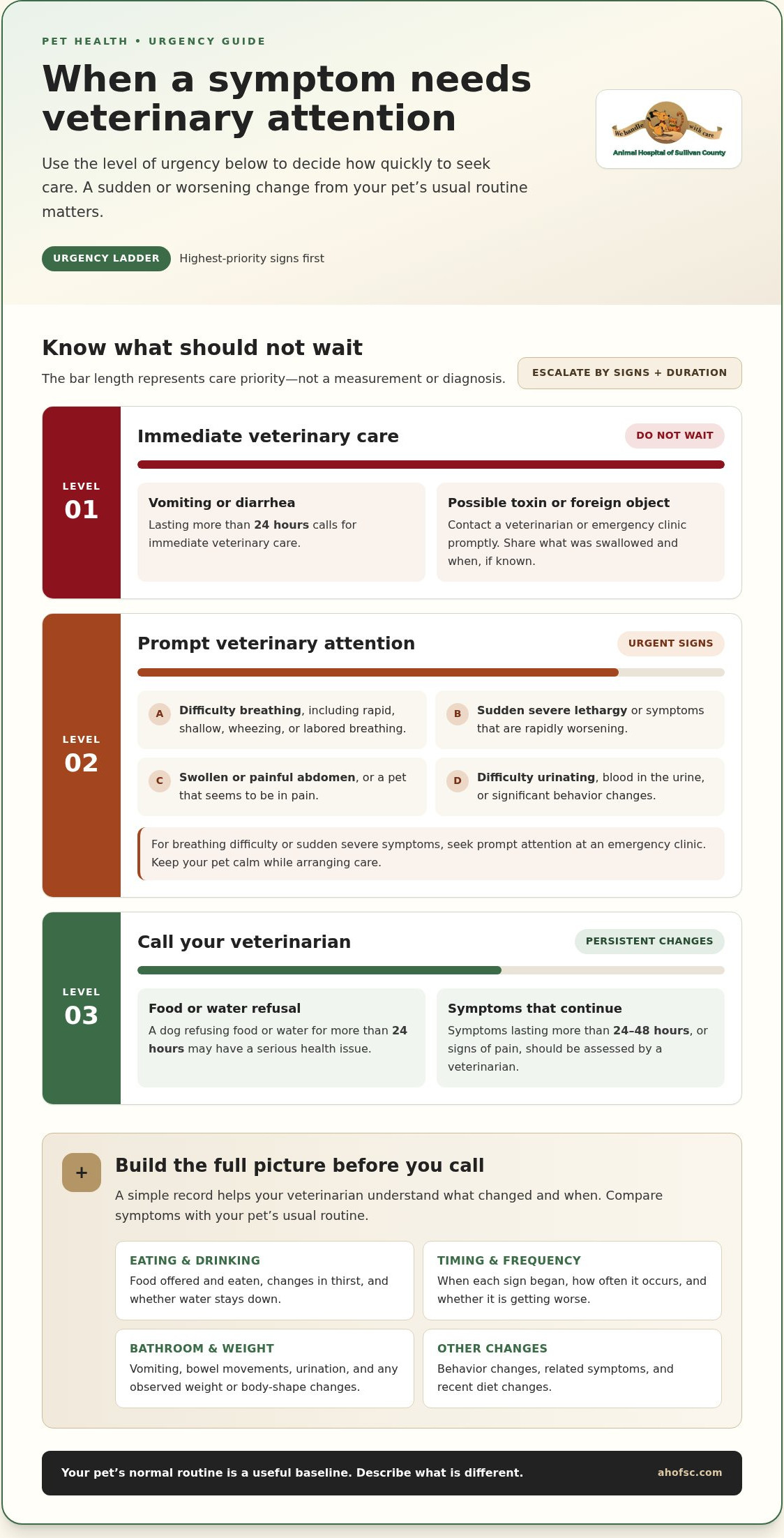
If you’re asking, “how do I know if my pet’s illness is serious?” start with the speed and severity of the change. Difficulty breathing, sudden lethargy, persistent vomiting, or a swollen, painful abdomen warrants prompt veterinary attention. A pet with symptoms lasting more than 24-48 hours, or that seems to be in pain, should be seen by a veterinarian.
Should I call my regular veterinarian, an emergency clinic, or animal poison control? For a stable new concern, call your regular veterinarian. Difficulty breathing or sudden severe symptoms need prompt attention at an emergency clinic. If your pet may have eaten something toxic, promptly contact a veterinarian or emergency clinic and describe the substance, if known.
What symptoms in dogs and cats should prompt a same-day vet visit? Breathing difficulty, sudden lethargy, significant behavior changes, a bloated or painful abdomen, blood in the urine, or difficulty urinating warrant prompt veterinary care. Vomiting or diarrhea lasting more than 24 hours also requires immediate attention.
What should I do if my pet eats something toxic or a foreign object? Call a veterinarian or emergency clinic promptly, and share what your pet swallowed and when. Don’t wait for symptoms before seeking guidance, and don’t try to make your pet vomit unless a veterinary professional directs you to.
Before calling, gather useful details: when symptoms began, how often they occur, and whether they’re worsening. Note changes in eating, drinking, urination, bowel movements, weight, energy, or behavior. Share your pet’s medications, diet, past illnesses, surgeries, and recent changes at home. If you’re still wondering, “how do I know if my pet’s illness is serious?” describe the whole pattern, not just the most obvious sign.
For milder changes, keep a written symptom record while arranging veterinary advice. Include examples such as a new cough, unusual bathroom habits, or repeated vomiting. If symptoms worsen while you’re observing your pet, call again rather than waiting for a planned appointment. A pet acting unusually may need care even without an obvious physical sign.
When scheduling, describe the most concerning symptom first and explain whether it’s new or worsening. Ask for an appointment promptly if your pet is in pain or symptoms persist beyond 24-48 hours. For breathing problems, difficulty urinating, or sudden severe changes, make the urgency clear during your call.
Pet insurance may affect how you prepare for veterinary expenses, but coverage and claim processes depend on the policy. Review your plan documents for requirements, exclusions, and claim steps. Keep medical records and receipts together, and follow your insurer’s process. Don’t delay urgent veterinary care while organizing paperwork.
4. Lethargy and reduced activity
A pet who sleeps more or loses interest in familiar activities may have low energy. Compare today’s behavior with their usual routine: does your dog skip a favorite walk, or does your cat stop greeting you? A clear change from their normal activity matters more than simply being a quiet pet.
Lethargy can accompany infections, internal pain, or chronic illness. A sick dog or cat may lack enthusiasm and spend much of the day sleeping. Notice whether your pet also avoids stairs, struggles to stand, or seems less interested in play. These examples help you describe the change to a veterinarian.
Pay attention to how the change began. Sudden lethargy is more concerning than a gradual shift, particularly if your pet becomes weak or difficult to rouse. A dog who abruptly refuses a usual walk or a cat who stays in one hiding place may need prompt veterinary attention.
Make your observations more useful by recording specific examples. Note when your pet last played, ate, walked comfortably, or responded normally to familiar people. Include whether reduced activity lasts all day or comes and goes. This record can help distinguish an isolated quiet period from a persistent pattern.
Look for signs of discomfort alongside low energy. A pet may move stiffly, avoid being touched, hold an unusual posture, or withdraw from family interaction. Lethargy paired with apparent pain or worsening symptoms should prompt a veterinary visit, rather than waiting for your pet’s energy to return on its own.
Breathing difficulty, persistent vomiting, or a sudden major behavior change alongside lethargy raises the urgency. Seek immediate veterinary attention for these red flags. If your pet’s symptoms persist for more than 24-48 hours, or your pet seems to be in pain, arrange veterinary care.
While preparing to call, keep your pet somewhere calm and comfortable, with easy access to their usual resting place. Don’t encourage exercise if a normally active dog seems weak or unsteady. Note recent changes in medication, diet, or surroundings, along with coughing, shaking, or altered bathroom habits.
Don’t rely on a single sign to explain low energy. A veterinarian considers how long lethargy has lasted, its severity, your pet’s history, and accompanying changes. Describe what your pet can no longer do, such as jumping onto a familiar chair or finishing a usual walk. Clear examples can help guide the next steps in care.
5. Vomiting and diarrhea
One episode of vomiting or a loose stool can be different from repeated symptoms. Track each episode, its timing, and any change in your pet’s usual physical condition. Frequent vomiting or diarrhea can indicate gastrointestinal problems, infections, or poisoning. A dog or cat with either symptom persisting for more than 24 hours needs immediate veterinary care.
Look at the pattern, not just the mess. Note whether vomiting happens after drinking, whether diarrhea recurs, and whether your pet can keep water down. Changes in stool frequency, consistency, or color are useful details to report. Also record changes in urination or accidents, since altered bathroom habits can point to other health issues, including kidney disease.
Dehydration is a concern when fluid loss continues. Keep fresh water available for a pet with vomiting or diarrhea, but don’t force them to drink. If they cannot keep water down, seem weak, or develop breathing difficulty, seek veterinary attention promptly. Avoid giving human medication or changing prescribed treatment without veterinary direction.
When you call, share when symptoms started, how often they occur, and what your pet ate or may have reached. Mention medications, known conditions such as kidney disease, and recent changes in food or routine. A brief written log can help you describe whether symptoms are improving, recurring, or worsening.
Keep your pet in a calm, easy-to-clean area while arranging care. Separate them from other pets if they need quiet observation, and save a photo of unusual stool or vomit if it helps explain what you saw. Don’t delay a call to collect a sample if your pet’s symptoms are severe or persistent.
Repeated vomiting or diarrhea can have different causes, so treatment depends on the examination and the pattern of signs. A veterinarian may ask about appetite, drinking, urination, recent meals, and possible exposure to harmful substances. Be specific: “vomited after drinking” gives clearer information than “seems sick.” If symptoms last beyond 24 hours, follow through with immediate veterinary care.
For ongoing vomiting or diarrhea, contact a veterinarian for guidance and seek veterinary emergency treatment when symptoms are urgent. Describe any breathing difficulty, weakness, or inability to keep water down clearly. Your observations help the veterinary team assess what care your pet needs.
A clear record can make changes easier to recognize. Note shifts in urination and bowel movements, including their frequency, consistency, or color. Even small differences are useful to mention when seeking veterinary advice. If your dog has vomiting or diarrhea, keep fresh water available to help prevent dehydration, but don’t force them to drink.
Vomiting or diarrhea that lasts more than a day or recurs frequently may signal a problem that needs prompt veterinary care. If symptoms continue or return, contact a veterinarian rather than relying only on observation at home.
Animal Hospital of Sullivan County: Preventive Care
Animal Hospital of Sullivan County can help when changes in your pet’s health call for veterinary attention. Medical Care and Diagnostics support the evaluation of concerning symptoms, while Preventive Care helps keep wellness needs on track. Emergency Treatment for urgent concerns is available during regular office hours.
Bring clear observations to your pet’s visit, including when symptoms began, changes in appetite or activity, and whether vomiting or diarrhea has continued. These details can help guide the assessment and next steps. If your pet has difficulty breathing or suddenly becomes severely lethargic, seek prompt veterinary attention rather than waiting for a routine appointment.
For help with your pet’s care, contact Animal Hospital of Sullivan County or visit ahofsc.com.
Make Your Next Step a Caring One
Noticing a change is the beginning of helping your pet, not a demand that you diagnose it alone. If you’re asking, “How do I know if my pet’s illness is serious?” focus on sharing what you’ve observed and asking for guidance. A clear description of what feels different can turn worry into a practical next step.
Animal Hospital of Sullivan County offers Medical Care and Preventive Care to support pets’ health, as well as Surgical Care when surgery is needed. Keeping your pet’s health information organized can make future conversations more useful. Store medication details, past diagnoses, and notes about new concerns together, so you can find them when needed.
When you’re ready to discuss your pet’s care, contact Animal Hospital of Sullivan County. Your attentiveness matters, and reaching out is a thoughtful way to support the family member who depends on you.
Frequently Asked Questions
Can internal issues be detected during a routine checkup?
Yes, a routine veterinary exam can reveal clues to internal health problems, though some conditions need additional testing. The veterinarian can assess your pet’s abdomen, heart, lungs, movement, and overall condition, then decide whether blood work, urinalysis, X-rays, or ultrasound may help investigate further. For pet families in New York, Connecticut, New Jersey, and Pennsylvania, sharing changes noticed at home can make a routine visit more informative.
How Do You Know If Your Pet Is Sick?
Look for changes across your pet’s normal day, not just one symptom. A cat that stops grooming, a dog that develops a persistent cough, or a pet with new lumps, itchy skin, or eye discharge may need assessment. Changes in urination or defecation can also signal health issues. Write down what changed and when, then share those observations with your veterinarian, especially if several signs appear together.
How do I know if it's urgent?
Consider how quickly the change began and how severe it is. Difficulty breathing, sudden collapse, inability to urinate, or a painful, swollen abdomen needs prompt veterinary attention. A new symptom that worsens quickly is more concerning than a mild change that has resolved. If you’re unsure about urgency, call a veterinary clinic and describe the symptom plainly, including when it began and what has changed since.
How do I know if my pet’s symptoms are serious?
If you’re asking, “How do I know if my pet’s illness is serious?” consider whether symptoms are persistent, worsening, or affecting basic activities such as breathing, walking, eating, or urinating. Blood in urine, repeated coughing, or a sudden behavior change can add to the concern. Describe the full pattern to your veterinarian rather than judging each sign alone. Several modest changes together may matter more than one isolated symptom.
What signs mean a pet needs emergency veterinary care immediately?
Breathing difficulty, sudden severe lethargy, persistent vomiting, and a bloated or painful abdomen are urgent warning signs. Difficulty urinating or blood in the urine also warrants prompt care. Call a veterinary clinic and state the most serious symptom first, then follow its directions about where to go. Emergency treatment availability and hours vary, so don’t assume every facility provides care around the clock.
Which symptoms can safely be monitored at home, and for how long?
Only mild, brief changes without pain, breathing trouble, or worsening signs are suitable for close observation at home. Record appetite, activity, bathroom habits, and symptom timing, then contact your veterinarian if anything changes. Symptoms lasting more than 24-48 hours, or signs of pain, warrant a veterinary visit. Vomiting or diarrhea lasting more than 24 hours requires immediate veterinary care, not continued home monitoring.


