
A pet wellness exam in Sullivan County is an opportunity to review your pet’s overall health, discuss preventive care, and ask about changes you’ve noticed. It looks at the whole picture, not just one symptom. Ratings and recommendations may describe other people’s experiences, but they are personal impressions, not a measure of what your pet needs.
It’s natural to want a clear idea of what to expect before bringing a cherished family member in. This guide explains the common subject areas of a wellness visit and how to read viewer ratings and recommendations with care. You’ll find a straightforward overview of health history, physical condition, and preventive care discussions, followed by practical context for interpreting feedback about the experience. That way, you can arrive with a better sense of what may be discussed and which questions matter most for your pet.
Key Takeaways
- See which parts of your pet’s health may be discussed during a wellness exam, from their history to your questions and concerns.
- Learn what can shape the timing of routine visits for dogs and cats, and why one schedule may not fit every pet.
- Get a clearer idea of the steps involved in arranging an appointment and the details to have ready.
- Prepare useful records and observations so you can make the most of your pet’s time with the veterinary team.
- Understand how viewer ratings and recommendations can describe an experience without replacing advice about your own pet.
Exam subject areas
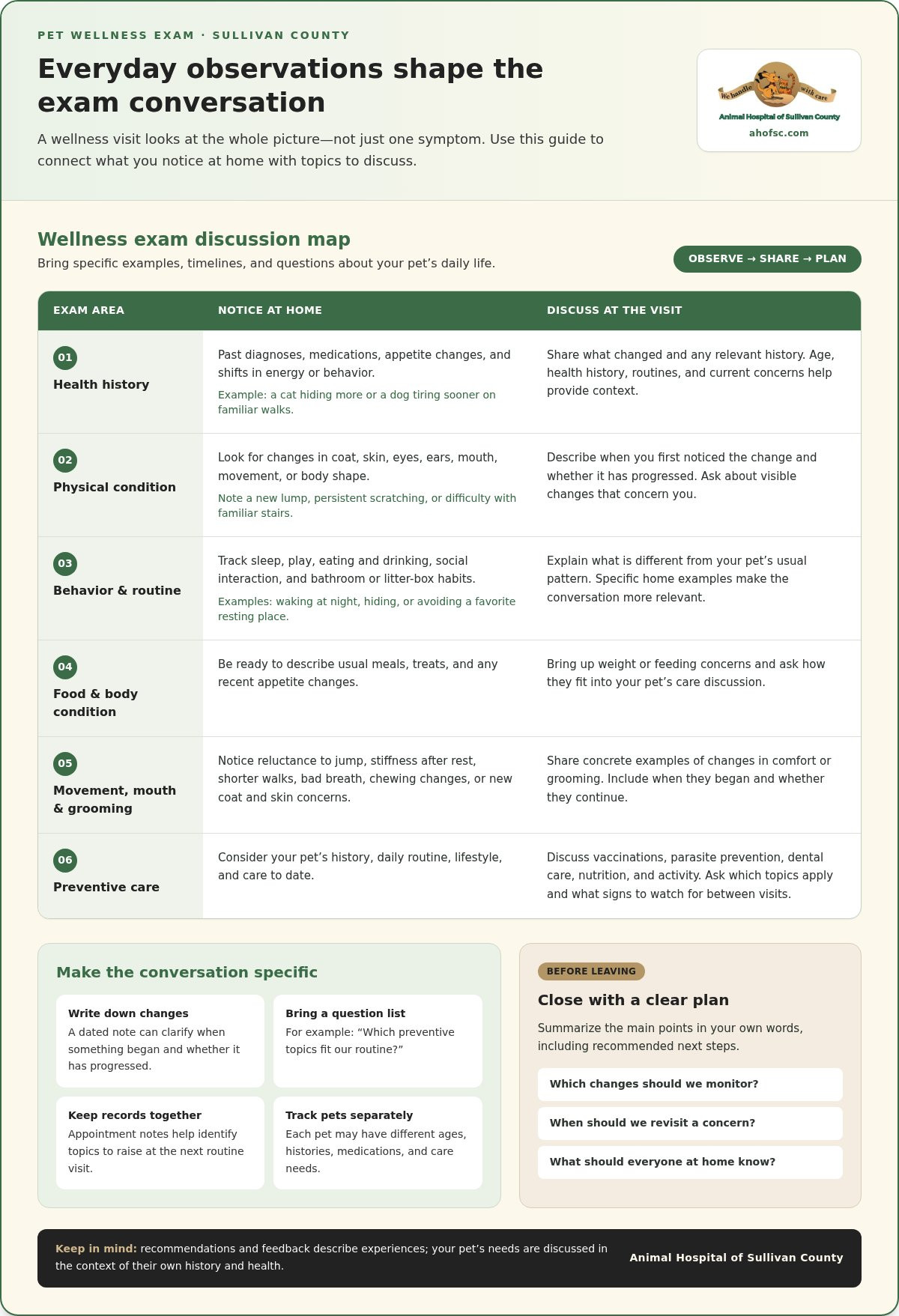
A wellness exam is a scheduled assessment and conversation about your pet’s overall health. During a pet wellness exam in Sullivan County, share your observations and discuss what matters in your animal’s daily life. Your pet’s age, history, routines, and current concerns provide useful context for the conversation.
A health history review summarizes your pet’s past and present health. Share previous diagnoses, medications, appetite changes, and differences in energy or behavior. For example, mention if your cat has started hiding more or your dog tires sooner on familiar walks. Even small changes can help frame the discussion.
The American Veterinary Medical Association video, “In the Exam Room: Preventive Care Visits,” offers a look at routine veterinary visits:
A physical review is an opportunity to discuss visible changes in your pet’s condition. Ask about areas you’ve noticed, such as the coat, skin, eyes, ears, mouth, movement, or body shape. Describe a new lump, persistent scratching, or difficulty climbing familiar stairs. Include when you first noticed the change and whether it has progressed.
Behavior and daily routine describe how your pet acts at home. Note sleep, play, eating and drinking habits, and bathroom routines. For example, mention if your dog now wakes during the night or your cat avoids a favorite resting place. These observations make the visit relevant to your pet’s everyday life.
Preventive care is planning to support your pet’s health over time. Discuss topics such as vaccinations, parasite prevention, dental care, nutrition, and activity. The right questions depend on your pet’s history and routine. Ask which topics apply and what signs or changes to watch for between visits.
- Food and body condition: Describe your pet’s usual meals, treats, and any recent appetite changes. Ask how to discuss weight or feeding concerns.
- Movement and comfort: Share examples such as reluctance to jump, stiffness after rest, or shorter walks.
- Mouth and grooming: Mention bad breath, chewing changes, or new coat and skin concerns.
- Home behavior: Note changes in sleep, play, social interaction, or litter-box and bathroom routines.
Follow-up planning records what to do after the discussion. Before leaving, summarize the main points in your own words, including recommended next steps. Ask which changes to monitor and when to revisit a concern. Writing down the plan helps everyone in your household follow the same guidance.
Bring a short list of questions, such as “Has the new scratching changed the exam priorities?” or “Which preventive topics fit our routine?” A dated note about a change can clarify its timeline. These details keep the conversation focused on the pet you know best.
How often should dogs and cats have wellness exams?
A wellness exam interval is the planned gap between routine visits for one pet. Set it according to your animal’s life stage, health history, current needs, and preventive care plan. Dogs and cats don’t necessarily share a schedule just because they live together. A young pet’s needs may differ from an older companion’s, while ongoing concerns can affect follow-up timing.
Life stage describes where a pet is in its growth and aging. A puppy or kitten may need discussions about growth, behavior, nutrition, and preventive care. An adult dog or cat may have different priorities, such as maintaining healthy routines and reviewing changes over time. For an older pet, note changes in movement, appetite, sleep, or social behavior when planning a visit.
Health history records past and current conditions, treatments, and changes. A pet with an ongoing medical concern may need a different follow-up plan from one without current concerns. Bring details about previous diagnoses, medications, and recommendations. If your cat’s appetite changed after treatment began, for example, note when you noticed it and discuss it while planning the next visit.
A preventive care calendar is a plan for reviewing health needs over time. Timing can reflect your pet’s age, lifestyle, medical background, and care to date. Vaccination discussions, parasite prevention, dental concerns, and nutrition can all inform the plan. Keep appointment notes together so you can identify topics to raise at the next routine visit.
A change-led visit is an appointment prompted by a new concern between planned exams. A routine schedule is not a reason to wait until the next appointment to raise a question. Examples include a dog becoming reluctant to climb familiar stairs or a cat drinking differently than usual. Record what changed, when it began, and whether it continues, then share your observations when seeking veterinary guidance.
For dogs, describe activities that show how they’re doing at home. Changes in enthusiasm for walks, play, or jumping onto a familiar seat can make the discussion more specific. For cats, note differences in litter-box habits, grooming, hiding, or interaction. These examples help distinguish a long-standing routine from a new pattern worth discussing.
Multi-pet planning means tracking each animal’s visits and needs separately. Two cats in one home may have different histories, ages, and preventive care needs. Keep separate notes for each pet, including appointment dates, medications, and questions. If you care for both a dog and a cat, don’t assume one animal’s plan automatically applies to the other.
To plan the next routine appointment, review your pet’s most recent notes, list any changes, and identify unfinished care discussions. Then use those details to talk through suitable timing and follow-up priorities. Keeping a clear record makes it easier to revisit the plan as your pet’s needs change. For help arranging routine care, explore wellness visit planning at the Animal Hospital of Sullivan County.
Establishing a consistent routine exam schedule helps veterinarians in Sullivan County catch subtle health shifts early, ensuring your pets maintain optimal vitality throughout every stage of life, whether they are active young adults or graceful seniors.
Keep each pet’s appointment notes and health history separate, even if visits are arranged together. At routine visits, review that animal’s life stage, care needs, and preventive plan. If a new change appears between exams, note what changed, when it began, and whether it continues, then share those details when seeking veterinary guidance. This keeps the discussion focused on the individual pet rather than assuming another animal’s schedule applies.
How can I book a pet wellness exam in Sullivan County?
A booking request is a request to arrange a routine veterinary appointment for your pet. Identify which pet needs the visit and the main reason for scheduling. For example, note whether you’re seeking a routine wellness review or follow-up on an existing care plan. This makes your request clear and focused.
Appointment details help the practice understand your request. Be ready to give your pet’s name, species, age, and a brief reason for the visit. Mention if you’ve visited the practice before. If your pet is new, say so and ask how to share relevant records from a previous veterinary practice.
A scheduling preference is a day or time that works for your household. Consider your availability and your pet’s usual routine when making a request. If your dog becomes unsettled in busy settings, mention that when discussing possible times. Explain practical needs, such as bringing more than one pet, so the appointment can be planned appropriately.
Use these steps to prepare a straightforward request:
- Identify the visit’s purpose. Say that you’re looking to arrange a routine wellness exam, then briefly mention any related concern.
- Gather your pet’s details. Have their name, species, age, and relevant health history ready.
- Share useful records. Note previous diagnoses, medications, or care records you can provide.
- Discuss timing. Explain your scheduling preferences and any needs that could affect the visit.
- Record the appointment information. Save the date, time, and any preparation instructions you receive.
A health concern is a new or changing issue that may affect the type of appointment needed. Describe what you’ve observed rather than trying to diagnose it. For example, say your cat has been eating less or your dog is reluctant to climb stairs. Include when the change began and whether it continues. If the concern feels urgent, say so clearly rather than presenting it as a routine request.
Medical records summarize your pet’s previous care. Useful examples include vaccination details, medication information, test results, and notes about past conditions. If you don’t have every record, share what you do know, such as the medication name or approximate treatment period. Accurate details help the veterinary team understand your request.
An appointment confirmation records the agreed visit details. Review the date, time, and any instructions for bringing your pet or sending records. Keep the information somewhere easy to find, such as a household calendar. If you’re arranging visits for a dog and a cat, make sure each appointment is identified by pet.
For a pet wellness exam in Sullivan County, provide your pet’s details, the reason for the visit, and any scheduling needs. Keep your questions close at hand, too. A short note about what you want to discuss can help you make the most of the appointment.
What should I bring or prepare for my pet's wellness exam?
A preparation checklist is a short list of items and notes to gather before leaving home. For your dog or cat, start with appointment details, health records, current medications, and questions. Put them together the evening before the visit. A folder or phone note keeps important information easy to find when you arrive.
Health records describe your pet’s previous care. Gather vaccination details, test results, and notes about past diagnoses if available. Records from another veterinary practice can provide helpful context. If you have only partial information, bring what you can and note which details are uncertain.
A medication list records what your pet currently receives. Write down each medication’s name and how you give it. Include supplements and other products. Bring the original packaging or a clear photo of the label if you can. Don’t rely on memory for names that look or sound alike.
An observation log briefly records changes you’ve noticed at home. Write down what changed and when you first noticed it. Examples include a dog hesitating before stairs, a cat grooming less, or a change in appetite. Note whether it happens at a particular time or during a specific activity. These details make your description clearer.
A question list reminds you which topics to discuss. Keep it short and put the most important concern first. You might ask about activity, feeding habits, or preventive care. If several people care for your pet, invite them to share questions before the appointment. This can capture observations from different parts of the daily routine.
- For a dog: Bring a leash and collar or harness, plus any records and medication details.
- For a cat: Prepare a secure carrier and place records or notes alongside it.
- For either pet: Pack appointment information, your question list, and any relevant care documents.
A travel setup is how you safely contain your pet during the trip. Use a leash or carrier suited to your pet’s usual routine, and place it where it’s easy to reach before leaving. If your pet becomes uneasy during travel, note what you observe, such as vocalizing or refusing to enter the carrier. Share that context during the visit.
A pre-visit routine is the familiar sequence you follow before leaving home. Keep the departure calm and allow time to gather the leash, carrier, records, and notes. Avoid a last-minute search by placing everything together beforehand. If more than one pet is attending, label each folder or note with that pet’s name.
A final review is a quick check that your essentials are ready. Before leaving, confirm you have the appointment details, health records, medication information, and questions. Add a note about any new change since you prepared your list. To arrange a visit and discuss your pet’s care, request a wellness exam.
You can also review how well your preparation worked after the visit. Exam wrappers can prompt students to reflect on whether their preparation time and study strategies were appropriate. For a pet appointment, use a similar reflection to consider whether the records, medication details, observations, and questions you gathered helped you explain your concerns clearly. Note any information you had difficulty finding or describing, and keep that in mind when preparing for a later visit. This is not about making the visit perfect; it gives you a practical way to adjust your routine. If something important was missing, add a reminder to your existing folder or phone note while the experience is fresh. A brief review can help make your next departure feel more organized and support clear communication during the visit.
Animal Hospital of Sullivan County: Preventive Care
Animal Hospital of Sullivan County provides Preventive Care for families seeking a pet wellness exam in Sullivan County. Bring questions and observations about changes at home to guide the conversation. The visit can cover your pet’s everyday health and ongoing preventive needs.
If a wellness discussion raises concerns that need more attention, Medical Care and Diagnostics can help address them. Surgical Care is also available when your pet’s needs call for it. These services offer a next step when routine care points to additional needs.
When you’re ready to discuss a pet wellness exam in Sullivan County, visit Animal Hospital of Sullivan County to learn more. Your questions can help start a thoughtful conversation about your companion’s care.
Make your pet’s next care decision with confidence
Reviews and recommendations can offer a glimpse of someone else’s experience, but every pet’s needs are personal. Use what you’ve learned to start a thoughtful conversation about care that fits your companion and household. A pet wellness exam in Sullivan County is a practical next step for discussing your pet’s ongoing health and preventive needs.
Animal Hospital of Sullivan County offers Preventive Care, Medical Care, and Surgical Care, so families can discuss their pet’s needs as they arise. Share what you’ve noticed and what you hope to understand. Clear questions can make the conversation more useful for you and your pet.
Contact Animal Hospital of Sullivan County to discuss your pet’s care. Your attentiveness is an important part of supporting a healthier, happier life together.
Frequently Asked Questions
What is included in a routine dog or cat wellness exam?
A routine exam can include a nose-to-tail review of your pet’s physical condition. During a pet wellness exam in Sullivan County, areas may include the eyes, ears, nose, mouth, skin, abdomen, joints, heart, lungs, and gait. This gives the veterinary team an opportunity to assess changes such as altered movement or oral health. Mention specific concerns, such as limping or difficulty chewing, to guide the discussion.
Are vaccinations, blood tests, or parasite screenings included in the exam fee?
Vaccinations, blood tests, and parasite screenings are not automatically included as a single set in every wellness exam. The care plan depends on your pet’s health history and needs: vaccinations and parasite prevention are preventive care topics, while blood, urine, and fecal tests are diagnostic options. The total depends on which services are appropriate, and pricing is provided after a quote request. Families in Sullivan County and nearby New York, Connecticut, New Jersey, and Pennsylvania can discuss these needs.


