

If you can’t pay a veterinary bill, tell the veterinarian what you can afford and ask about treatment options. The veterinarian may discuss your budget and explain more cost-effective options alongside the recommended care, helping you understand the next steps for your pet.
It’s hard to think clearly when a beloved pet needs help and money is tight. Paying for vet bills without insurance may mean weighing several options, from discussing a payment arrangement to seeking nonprofit assistance or raising funds with support from people you trust.
This guide explains what to discuss with a veterinarian, where to look for local financial assistance, and how to approach fundraising and future savings. It also explains why grant applications may not provide funds in time for urgent treatment, so you can focus first on the care your pet needs now.
Key Takeaways
- Tell your veterinarian what you can afford and ask about lower-cost treatment options alongside the recommended plan.
- Explore nonprofit grants, local animal welfare groups, and veterinary college programs, keeping in mind that applications and wait times can make assistance unsuitable for urgent bills.
- For immediate expenses, consider a clear payment arrangement, help from people you trust, or a fundraiser that explains your pet’s needs and how funds will be used.
- Build a dedicated pet-care savings fund with regular contributions to prepare for future expenses.
- Before using buy now, pay later financing, understand when interest applies and what happens if the promotional balance isn’t paid off on time.
1. Where can I find financial assistance for my pet’s care?
For families paying for vet bills without insurance, an itemized estimate can show which tests, treatments, and follow-up care contribute to the total.
Tell the veterinarian what you can afford and ask which care is urgent. Veterinarians may explain more cost-effective options alongside their top recommendation. Ask what each option includes, how it addresses your pet’s needs, and whether treatment can be staged. These details help you compare estimates and understand the tradeoffs.
For a practical overview of ways to plan for veterinary expenses, watch this video:
Compare estimates by checking whether each includes the same diagnostics, medications, and follow-up visits. Ask the veterinary team to explain differences and identify what needs attention first. Personal loans, credit cards, and crowdfunding can help cover a bill, but loans and cards must be repaid and may add interest or fees. Crowdfunding depends on donations, so the amount raised can vary.
National organizations offer another option. The Pet Fund, Brown Dog Foundation, and Frankie’s Friends Charitable Pet Foundation require applications, use income-based eligibility, and don’t provide emergency care. Many nonprofit veterinary assistance programs offer grants or donations that don’t require repayment. Because applications and processing take time, these programs are unlikely to provide same-day funding.
Red Rover, The Pet Fund, and local animal welfare groups may help after hardships such as job loss or displacement. When paying for vet bills without insurance, explain the hardship and ask what records the organization requires. Keep the estimate and medical information together so you can complete applications with the relevant details.
Veterinary colleges may offer emergency assistance programs, and some run low-cost clinics for clients with limited incomes. Shelters and community clinics sometimes provide emergency veterinary care on a limited basis. Low-cost clinics may not be equipped to treat serious health issues, so match the resource to your pet’s medical needs.
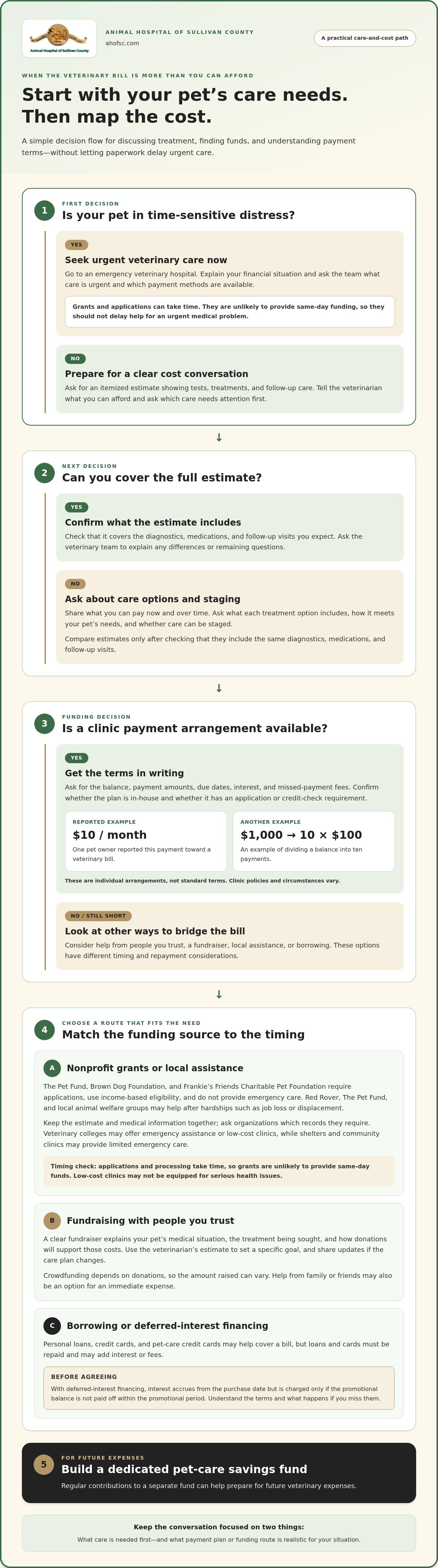
If your pet is in time-sensitive distress, seek care at an emergency veterinary hospital and explain your financial situation. Ask about immediate care priorities while the team assesses your pet. Grants and applications can support longer-term planning, but shouldn’t delay help for an urgent medical problem.
2. How do I get help with vet bills near me?
Some veterinarians offer weekly or monthly payment plans, particularly for clients in good standing. In-house plans can divide a bill into installments, while some hospitals offer interest-free terms based on the bill amount and how long you’ve used the clinic. If you’re paying for vet bills without insurance, ask which arrangement could fit your budget.
Start the conversation before treatment whenever possible. Explain what you can pay now and over time, then ask for the balance, due dates, interest, and missed-payment fees in writing. A written agreement helps you compare the total commitment with borrowing options and avoid confusion about when each installment is due.
Examples vary. One pet owner reported a plan allowing payments of $10 per month toward a veterinary bill. Another example divides a $1,000 balance into 10 payments of $100. These are individual arrangements, not standard terms. A clinic’s plan may depend on its policies and your circumstances.
Ask whether the hospital offers in-house installments, discounts, or interest-free financing. Some clinics don’t run a credit check or require an application for their own payment plans. Others may charge interest or fees if an installment is missed. Before agreeing, make sure you understand the payment amount, schedule, and consequences of falling behind.
Emergency hospitals may accept debit cards, credit cards, or pet-care credit cards. Some clients also use personal loans or help from family. Borrowing can provide funds for urgent care, but interest and repayment obligations may increase what you owe. With deferred-interest financing, interest accrues from the purchase date but is charged only if the promotional balance isn’t paid off within the promotional period.
Local help may come from animal welfare groups, shelters, community clinics, and veterinary colleges. Some colleges offer emergency assistance programs or low-cost clinics for clients with limited incomes. Shelters and community clinics may provide emergency veterinary care on a limited basis. In New York, Connecticut, New Jersey, and Pennsylvania, local organizations can be a useful source of information about community resources. Paying for vet bills without insurance may involve several funding sources, so keep estimates and application details organized.
Grant programs can require applications and wait times, so they’re unlikely to provide same-day funds. If your pet is in time-sensitive distress, go to an emergency veterinary hospital and explain your financial situation. Ask the team what care is urgent and what payment methods are available. For emergency treatment, emergency veterinary care can be the starting point for discussing your pet’s immediate needs.
3. Crowdfunding and fundraising for pet bills
A crowdfunding app can help friends, relatives, and community members contribute toward veterinary care. A clear fundraiser explains the animal’s medical situation, the treatment being sought, and how donations will support those costs. Use the veterinarian’s estimate to set a specific fundraising goal, then share updates if the care plan changes.
Make the request easy to understand. Include your pet’s name, a brief account of the health problem, and the next treatment step. Explain what you can contribute yourself and what help with vet expenses you need. If you’re comfortable sharing them, include relevant records or an estimate while keeping personal details private. A direct, factual appeal helps supporters understand where their contribution may go.
Help from family can complement online fundraising. Ask trusted relatives or friends whether they can contribute, lend money, or share the fundraiser with their networks. A specific request, such as help covering part of the estimate, gives people a clear way to respond. Keep a simple record of donations and expenses so you can explain how funds were used.
Offline events can raise money, too. Choose items you can part with, set aside the proceeds for the veterinary bill, and explain the fundraiser’s purpose to visitors. One person described selling or giving away plants and earmarking donations for veterinary bills. That approach may suit someone with plants to share and a local network of supporters.
- Prepare: Gather the estimate and summarize the care your pet needs.
- Set up: Create a crowdfunding page or choose a local fundraiser, such as a yard sale.
- Share: Send the appeal to people you know and invite them to pass it along.
- Update: Post meaningful changes to the treatment plan and fundraising goal.
Fundraising can be combined with other options rather than treated as the only source of money. A rescue worker suggested looking for an organization that helps with veterinary bills, selling something, borrowing from family or friends, or contacting a rescue group about surrender when care is unaffordable. These choices have different consequences: borrowing means repayment, while surrender changes who provides the pet’s care. Consider what each option means for your household and your animal before deciding.
Some people also consider credit or a pet-care credit card while donations come in. Compare repayment terms and interest with your budget before borrowing. Grants and donations generally don’t require repayment, but a fundraiser’s timing depends on when supporters contribute. For urgent treatment, fundraising may need to accompany a prompt conversation with the veterinary team about immediate care.
4. Building an emergency savings fund
A dedicated pet savings account can make future veterinary expenses easier to manage. Choose an account separate from everyday spending, then set a recurring monthly transfer that fits your household budget. Even a modest, consistent contribution builds a reserve over time. If your bank allows automatic transfers, schedule one after income arrives so saving becomes part of your routine.
The need is real: 37% of U.S. adults don’t have cash or an equivalent available for a $400 emergency expense. That statistic reflects how quickly an unexpected bill can compete with rent, groceries, utilities, and other needs. A pet fund won’t remove every financial strain, but setting money aside specifically for animal care gives you a resource to draw on.
Choose a starting contribution by reviewing your current spending, not by borrowing to save. Look at recurring bills and flexible expenses, then decide what you can set aside without missing essential payments. If your budget changes, adjust the transfer rather than abandoning the habit. A calendar reminder can prompt a manual deposit when automatic transfers aren’t practical.
Give the account a clear purpose. Use it for veterinary expenses such as routine visits, medication, diagnostics, or an unexpected need for emergency care. Keep a simple record of deposits and withdrawals. After using the fund, restart contributions when your budget allows. This keeps the balance useful without treating one withdrawal as a reason to stop saving.
A separate fund can also help you plan alongside other resources. If a future estimate exceeds your savings, compare the remaining amount with your monthly budget before discussing a payment plan. Friends or family may be willing to help, and assistance organizations can have application timelines. Building savings gives you more flexibility as you explore those options.
Review your plan when your pet’s needs change. For example, a new medication or recurring veterinary appointment may affect how much you can save each month. Add predictable expenses to your household budget, then decide what contribution remains manageable. If your income is irregular, deposit money when it’s available instead of relying on a fixed transfer.
Keep the account accessible for genuine pet-care needs, but separate from daily spending. A distinct balance makes it easier to see what’s available before an appointment or urgent treatment. Review your budget regularly, especially after a major household expense, and adjust your savings routine to match your current situation.
5. Buy now, pay later services
Buy now, pay later financing can divide a veterinary bill into scheduled payments, but the terms matter as much as the first installment. Before using it, compare the full repayment schedule with your monthly budget and other funding options. A payment that looks manageable today can become difficult if it overlaps with rent, utilities, or other pet expenses.
Pay close attention to deferred interest. Interest accrues from the purchase date but is charged only if you don’t pay off the promotional balance within the promotional period. If a balance remains when that period ends, accrued interest may be added. Read the agreement to understand the payoff deadline and how payments are applied.
Before accepting financing for a vet bill, write down the total amount financed, each required payment, the due dates, and the interest terms. Compare that schedule with your expected income and existing bills. Check for late-payment fees, consequences for missed payments, and whether paying early changes the amount owed. These details show whether the plan fits your situation.
- Confirm the promotional terms: Identify the exact payoff deadline and what happens when a balance remains.
- Check the repayment schedule: Match payment dates against income and household expenses.
- Review the agreement: Understand fees, interest, and how payments reduce the balance.
- Compare alternatives: Consider savings, donations, financial assistance, or a veterinary payment plan.
Financing is borrowing, not a grant. A financed balance must be repaid under its terms, unlike assistance from organizations. If you’re also considering a credit card or personal loan, compare interest, fees, due dates, and total repayment obligations. Don’t choose based only on the smallest initial payment.
Separate urgent treatment from planned wellness expenses when weighing financing. An unexpected medical need may call for a timely decision, while routine care can often be included in future budgeting. In either case, ask the veterinary team to explain the recommended care and provide an estimate before deciding how to fund it. Make sure both the treatment plan and repayment terms are clear.
If the payments would strain your budget, discuss the estimate and other care options with the veterinary team before agreeing to financing. You can also explore a dedicated pet savings fund for future expenses, while remembering that savings won’t cover an immediate emergency unless funds are already available.
To talk through your pet’s medical needs and care options, discuss your pet’s care with the veterinary team.
Animal Hospital of Sullivan County: Preventive Care
Animal Hospital of Sullivan County provides Preventive Care to help you plan for your pet’s ongoing health needs. Routine veterinary visits also give you an opportunity to discuss your budget, ask about recommended care, and understand which needs deserve attention first.
If your pet is unwell, Medical Care and Diagnostics can help address health concerns. Surgical Care is available when a procedure is needed. For an urgent situation, the hospital offers Emergency Treatment during regular business hours. Sharing your financial concerns during the conversation can help you understand the care being considered and make informed decisions for your pet.
For compassionate veterinary care and guidance about your pet’s needs, contact Animal Hospital of Sullivan County.
Take the Next Step Toward Confident Pet Care
Financial pressure can make it difficult to focus on what your pet needs next. Start by writing down your questions, the care you’re considering, and what feels manageable for your household. That preparation can make a conversation about paying for vet bills without insurance more focused and useful.
Animal Hospital of Sullivan County offers Preventive Care, Medical Care, and Surgical Care. Whether you’re planning ahead or responding to a health concern, the veterinary team can help you discuss your pet’s care needs and understand the next steps. Each conversation can begin with your pet’s wellbeing and the questions that matter to your family.
Reach out to Animal Hospital of Sullivan County to discuss your pet’s care. Taking one thoughtful step can help you move forward with greater clarity and care for the companion who depends on you.
Frequently Asked Questions
What will a vet do if you can’t pay your bill?
A veterinarian can explain recommended care and discuss options that fit your budget. Ask for an itemized estimate and a clear distinction between urgent needs and care that may be scheduled later. If treatment has already started, contact the clinic’s billing team to discuss the balance and payment timing. Sharing what you can pay helps the team understand your situation and talk through possible next steps.
Where can I find financial assistance for my pet’s care?
Look to national veterinary assistance programs, local animal welfare organizations, shelters, and veterinary colleges. The Pet Fund, Brown Dog Foundation, and Frankie’s Friends Charitable Pet Foundation accept applications and use income-based eligibility. Before applying, gather your pet’s medical records, an estimate, and household income details. In New York, Connecticut, New Jersey, and Pennsylvania, local humane societies and community groups may also know about nearby assistance resources.
Are there programs and grants for veterinary emergencies?
Some veterinary colleges offer emergency assistance programs, but grants often require applications and take time. The Pet Fund, Brown Dog Foundation, and Frankie’s Friends Charitable Pet Foundation require applications, use income-based eligibility, and don’t provide emergency care. Treat grant applications as one possible funding route, not a substitute for prompt care when your pet is in immediate distress. Include medical records and a treatment estimate with your application.
How can I financially prepare for the emergency vet?
Set aside money regularly in an account reserved for pet expenses, and keep your pet’s medical records easy to access. Review your household budget to know what funds are available without disrupting essential bills. You can also decide in advance which relatives or friends you could approach for help. Planning these steps before an emergency makes it easier to focus on your pet and communicate clearly.
How do I get help with vet bills near me?
Search by your town or county in New York, Connecticut, New Jersey, or Pennsylvania alongside terms such as “animal welfare assistance,” “community veterinary clinic,” or “veterinary college assistance.” Local shelters and animal welfare groups may know about nearby resources. Keep a brief summary of your pet’s needs and the estimated bill ready. That makes it easier to explain your situation when contacting an organization or clinic.
Should I still go to the emergency vet if I have no money?
Yes. If your pet shows signs of time-sensitive medical distress, seek care at an emergency veterinary hospital and explain your financial situation. Bring any medication list or medical records you can access, and describe when the symptoms began. The veterinary team can assess your pet and explain the immediate care being considered. Don’t wait for a grant application or fundraiser to resolve an urgent health crisis.
What are the payment options at an emergency vet?
Possible ways to pay include debit or credit cards, pet-care credit cards, and payment arrangements offered by some hospitals. A family member may also be able to help with a loan or contribution. Before using financing, understand the repayment schedule, interest, and fees for missed payments. Ask for the amount due and payment terms in writing so you can compare the commitment with your household budget.
What if I can’t afford a vet or my pet needs emergency care?
For urgent distress, seek veterinary attention and explain what you can afford. Ask the team to clarify immediate priorities and provide an estimate you can use when seeking help. Contact local animal welfare groups, shelters, veterinary colleges, or trusted family members about financial support. If you’re considering surrender because care feels unaffordable, speak with a rescue organization about what that decision means for your pet and household.


