
You finally brought your new best friend home from the shelter, but as they curl up on their new bed, you might feel a flicker of worry beneath the excitement. Is that slight sneeze just a reaction to the new environment, or did they pick up a hidden illness at the kennel? It's completely natural to feel protective of your new family member while feeling a bit overwhelmed by the medical journey ahead. Your first vet visit for rescue dog NJ is about more than just shots; it's the start of a lifelong partnership in care.
We understand that you want to provide the very best for your pup while navigating the stress of unknown medical histories and clinic anxiety. You deserve a clear path to peace of mind. This guide provides everything you need to prepare, bring, and ask to ensure your newly adopted dog gets the compassionate start they truly deserve. We will cover why an exam within the first 72 hours is vital, how to organize shelter records, and the essential diagnostic tests that bridge the gap between rescue survival and domestic thriving.
Key Takeaways
- Learn how to organize shelter medical logs and why a fresh stool sample is the most important item to bring to your appointment.
- Discover what happens during a comprehensive head-to-tail assessment to ensure your first vet visit for rescue dog NJ establishes a healthy baseline.
- Understand the essential diagnostic tests required for the Tri-state area, including screenings for Lyme disease and common shelter parasites.
- Get expert advice on navigating the "decompression" phase and using the 3-3-3 rule to support your new pet's emotional well-being.
- Find out how onsite diagnostics and a dedicated pet store provide immediate solutions for your rescue's specific nutritional or medical needs.
Preparing for Your Rescue Dog’s First Vet Visit in NJ
The journey from a shelter kennel to a warm living room is a huge transition for any animal. To make sure this transition is as smooth as possible, preparation for your first vet visit for rescue dog NJ is key. This initial appointment isn't just about checking boxes; it's about establishing a foundation of trust between your new family member, you, and our dedicated team in Ferndale. By arriving prepared, you allow our doctors to focus on the nuances of your dog's specific needs rather than hunting down missing paperwork.
To better understand how to prepare for a successful and stress-free appointment, watch this helpful video:
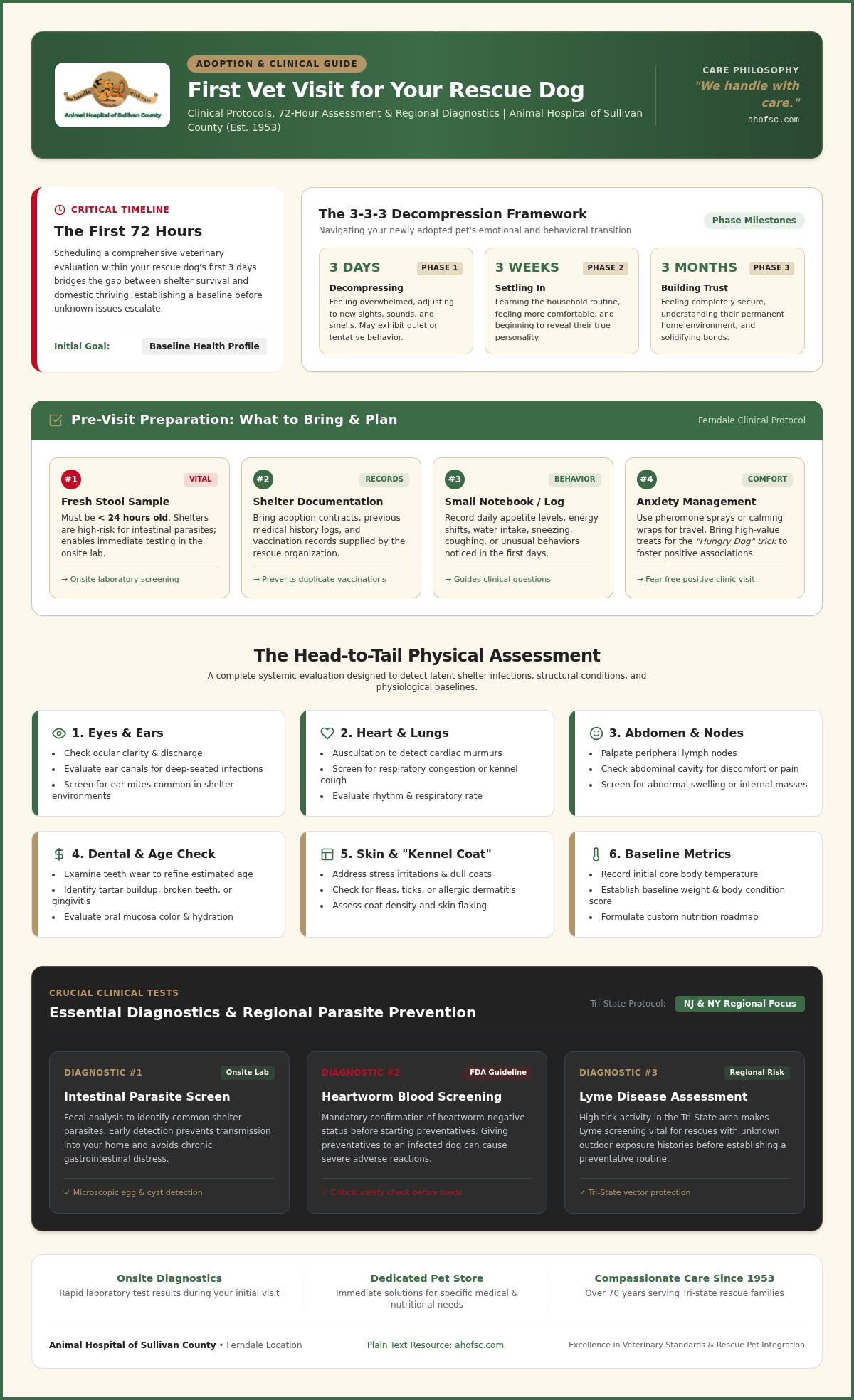
One of the most practical steps you can take is collecting a fresh stool sample, ideally less than 24 hours old. Shelter environments are unfortunately high-risk areas for intestinal parasites. Bringing a sample allows us to perform immediate diagnostics in our onsite laboratory, getting your pup on the right treatment path before they settle too deeply into your home. Additionally, keep a small notebook handy during those first few days. Note their appetite levels, any energy shifts, or specific behaviors that seem unusual. These small details are invaluable during our discussion of routine canine health and preventive care.
The Essential Paperwork Checklist
Having your documentation organized helps us build a complete medical picture. Please bring your shelter adoption contract and any previous medical history the rescue provided. This should include a list of current medications or supplements they are already taking. If you have specific questions about your dog’s breed traits or their estimated age, jot those down too! Our team loves helping you understand the unique heritage of your new companion. We want you to feel informed and empowered as a new pet parent.
Managing Pre-Visit Anxiety
Many rescue dogs have unknown histories that might make car rides or clinic visits frightening. To help them feel secure, consider using pheromone sprays or calming wraps during the drive to our Ferndale location. We also suggest the "Hungry Dog" trick. If it's medically safe, bring a bag of high-value treats to the appointment. Using treats creates a positive association with the clinic environment, turning a potentially scary event into a rewarding experience. This heart-first approach ensures your first vet visit for rescue dog NJ is a positive memory for everyone involved. We've used these gentle methods to care for our community's pets since 1953.
What to Expect During the Comprehensive Wellness Exam
When you walk through our doors for that first vet visit for rescue dog NJ, you aren't just bringing in a patient. You're bringing in a new family member. Our goal during this initial wellness exam is to create a complete picture of your dog's health while keeping them as comfortable as possible. This visit acts as a "welcome home" medical evaluation, bridging the gap between their time in the shelter and their new life with you. We take our time to ensure the experience is soothing and positive for your pup.
The Physical Assessment: Head to Tail
Our veterinarians perform a thorough physical assessment that covers every inch of your dog. We start by checking the eyes for clarity and the ears for any signs of deep-seated infections or mites, which are common in rescue environments. We also feel the lymph nodes and palpate the abdomen to ensure there are no unusual masses or areas of discomfort. Listening to the heart and lungs is vital; we look for murmurs or congestion that might indicate underlying issues that need a clear treatment plan.
During this exam, we also evaluate your dog's dental health and skin condition. Many rescues arrive with "kennel coat" or skin irritations from stress and proximity to other animals. We also discuss FDA guidelines on heartworm testing and prevention. It is dangerous to start a rescue dog on certain preventatives without first confirming they are heartworm-negative, as the medication can cause severe reactions if adult worms are present. This careful, step-by-step approach ensures your pet's safety from day one.
Establishing a Baseline for the Future
Recording a baseline weight and temperature is essential for a dog with an unknown medical history. These numbers give us a "normal" to refer back to if they ever feel under the weather in the future. This is part of the Animal Hospital of Sullivan County approach to lifelong care. We treat your pet like they are one of our own, focusing on longevity and happiness from the very first appointment.
We also provide nutritional counseling to help your pup reach their ideal weight. Whether they need to gain a few pounds after a stint in the shelter or require a specific diet for a sensitive stomach, we can help. To make managing your pet's health easier, we'll help you set up the PetDesk app. This tool allows you to access medical records and appointment reminders right from your phone. If you have questions about which food is best, feel free to ask our team about our onsite pet store products during your visit.
Essential Diagnostics and Parasite Prevention in the Tri-State
Living in the Northeast brings unique challenges for pet health, especially for dogs coming from a shelter environment. Ticks and mosquitoes don't respect state lines. For your first vet visit for rescue dog NJ, we focus heavily on regional threats like Lyme disease and heartworm. Since our area is classified as a high-risk corridor, these screenings are more than just routine; they are a vital safety net for your new companion. We follow CDC dog health and parasite prevention recommendations to ensure your pet is protected against local pathogens and zoonotic risks.
In-House Lab Testing for Fast Answers
We know that waiting for test results can be anxious for any pet parent. That's why we utilize our onsite laboratory to provide fast, accurate answers during your visit. Our team often uses the 4DX snap test to screen for heartworm and three common tick-borne illnesses, including Lyme and Ehrlichia. This is particularly important for senior rescues who may have had years of exposure without protection. We also perform centrifugal fecal testing to rule out "hidden" shelter diseases like Giardia or hookworms. These parasites are common in group housing and can easily spread to other pets or even family members if left untreated. This ensures your first vet visit for rescue dog NJ provides a complete shield against local health threats.
Regional Parasite Protection
One common myth is that parasites disappear when the temperature drops. In reality, ticks in the Tri-state area can remain active at temperatures as low as 35 degrees. This means your rescue dog needs year-round protection to stay safe. During your visit, we'll help you choose between oral and topical prevention options based on your dog's lifestyle and coat type. You can find these trusted products right here in our onsite pet store for your convenience. Given the high prevalence of ticks in the Catskills and Northern NJ, we also prioritize the Lyme vaccination for dogs frequenting wooded trails or local parks. Finally, we will verify your pet microchipping Sullivan County records. Ensuring the chip is scanned and registered to your current contact information is the best way to guarantee a happy reunion if your new friend ever wanders off. We are here to guide you through every step of this journey with expertise and kindness.
Addressing Rescue-Specific Behavioral and Health Needs
Adopting a rescue is a beautiful commitment that requires patience and a heart-first approach. During your first vet visit for rescue dog NJ, we don't just look at the physical body; we look at the whole animal. Many owners feel worried when their pup doesn't settle in immediately. We use the "3-3-3 rule" as a clinical framework: three days to decompress from shelter stress, three weeks to learn your household routine, and three months to finally feel fully settled. This timeline helps us distinguish between situational stress and chronic behavioral pathology like severe separation anxiety or noise phobias.
The Link Between Behavior and Health
Behavior is often a window into physical health. If your rescue dog shows signs of sudden reactivity or extreme fear, it might not be a "behavioral" problem at all. Undiagnosed pain from old injuries or unaddressed dental disease can make a dog feel defensive and vulnerable. In some cases, extreme anxiety is actually linked to medical conditions like hypothyroidism. We may recommend baseline diagnostics, such as thyroid testing, for dogs struggling to settle. Our goal is to ensure your first few weeks at home are as peaceful and supportive as possible for both you and your pet.
Fear-Free Handling at AHFSC
At Animal Hospital of Sullivan County, Dr. B and our team prioritize gentle handling techniques. We know that a clinic can be a scary place for a dog with a history of trauma or neglect. We often suggest "happy visits" where your pup comes in just for high-value treats and praise without any medical procedures. This builds a long-term relationship of trust. If you've opened your heart to an "older" rescue, we integrate senior pet care Sullivan County strategies to manage age-related discomfort or cognitive changes. We can also discuss whether pheromone diffusers or specific behavioral medications might help your dog feel safe during their transition.
Ready to start your rescue's journey on the right paw? Schedule your companion's initial wellness visit with our compassionate team today.
Building a Partnership with Animal Hospital of Sullivan County
Choosing a provider for your first vet visit for rescue dog NJ is about finding more than just medical skill. It is about finding a home for your pet's healthcare. At Animal Hospital of Sullivan County, we believe that the relationship between a family and their animal is a sacred bond. We treat every rescue dog that walks through our doors as a cherished member of our own community. Our goal is to alleviate the anxiety often associated with medical care by providing a welcoming environment for both you and your new companion.
A Legacy of Care in Ferndale
Our clinic has served the Ferndale and Tri-state area since 1953. This long-standing heritage matters because it represents decades of trust and commitment to local families. Led by Dr. Barbara Bodolosky (Dr. B), our team combines professional medical authority with genuine, neighborly empathy. We understand the unique journey of a rescue dog. We are dedicated to providing the steady, calming presence you need during those first few weeks of adoption. This "heart-first" approach ensures that your pet's emotional well-being is prioritized alongside their physical health.
Comprehensive Support Beyond the Exam
Our care doesn't end when you leave the exam room. We provide integrated support to help your new dog thrive in their new environment. For example, our onsite pharmacy and pet store make it easy to pick up pet store products like prescription diets or parasite preventatives immediately. This convenience ensures your pup gets exactly what they need for recovery or maintenance without an extra trip. We want to be your partner in every stage of your dog's life.
We also offer a full range of medical, surgical, and diagnostic care to address any health issues discovered during that first vet visit for rescue dog NJ. While we don't offer 24/7 emergency care, we provide emergency treatment during our regular business hours. Having a trusted partner nearby for urgent needs provides immense peace of mind as you navigate life with your new companion. We are personally invested in the lives of our clients and their pets.
Your rescue dog has found their "forever home" with you. Now, let us provide them with a "medical home" where they are treated with the dignity and affection they deserve. Schedule your rescue dog's first visit today and experience the compassionate care that has defined our practice for over 70 years.
Your Rescue’s Journey to Lifelong Health Starts Here
Welcoming a rescue dog into your home is a profound act of love. By following this checklist, you've taken the essential first step in ensuring their transition is as healthy as it is happy. Remember to gather all shelter records and bring a fresh stool sample to your appointment. These simple preparation steps allow us to use our in-house laboratory for rapid results, giving you clear answers about your new pet's health before you even leave the clinic.
Your first vet visit for rescue dog NJ is the beginning of a lifelong partnership rooted in trust and expert care. Whether we are screening for regional risks like Lyme disease or helping you navigate the emotional decompression phase, our team is here to support you. Animal Hospital of Sullivan County has served the Tri-State area since 1953 with Dr. B’s compassionate, heart-first medical approach. We treat every animal like a cherished family member because we believe the bond you share is truly sacred.
Schedule Your Rescue Dog’s First Compassionate Exam at AHFSC
You have already given them a beautiful new home. Now, let us help you give them the vibrant, healthy future they deserve!
Frequently Asked Questions
How soon after adopting a rescue dog should I go to the vet?
You should ideally schedule an appointment within 48 to 72 hours of bringing your new pet home. If that isn't possible, aim for a maximum window of 7 to 14 days. This early visit is critical for detecting incubation-stage shelter diseases like kennel cough or intestinal parasites. It also establishes a legal client-patient relationship. Getting an early start ensures your dog begins their new life with a clean bill of health and a dedicated care plan.
What vaccines does a rescue dog in NJ/NY absolutely need?
New Jersey law mandates that all dogs seven months of age or older must be vaccinated against rabies. Beyond this legal requirement, core vaccines like Distemper, Adenovirus-2, and Parvovirus are essential. Because of the high tick pressure in the Tri-State area, we also strongly recommend lifestyle vaccines for Lyme disease and Leptospirosis. These protect your pet during walks on local trails or visits to neighborhood parks where wildlife exposure is common.
How much does the first vet visit for a rescue dog typically cost?
The total for your first visit depends on the specific diagnostic tests and vaccinations your pet needs. A comprehensive initial visit typically includes a wellness exam, core vaccine updates, and a baseline blood panel. It also covers fecal screening and your first round of parasite preventatives. We focus on providing high-quality care that fits your family's needs while ensuring your rescue dog gets a compassionate and healthy start. We prioritize your pet's long-term quality of life.
Should I bring my rescue dog to the vet even if the shelter said they are healthy?
Yes, a private exam is vital even if the shelter provided a health certificate. Shelters often focus on herd health and basic stabilization rather than long-term wellness. Your first vet visit for rescue dog NJ allows our team to conduct a head-to-tail assessment tailored to your pet's individual history. We look for subtle signs of chronic conditions or nutritional needs that may have been overlooked in a high-volume rescue environment.
What if my rescue dog is aggressive or very fearful at the vet?
We understand that many rescue dogs arrive with unknown trauma or high anxiety. Our team uses gentle, Fear-Free handling techniques to minimize stress during the exam. We often suggest "happy visits" where your dog comes in just for treats and positive attention. If your pet is extremely fearful, we can discuss using pheromone sprays or specific calming medications. Our goal is to ensure every visit is a soothing experience for your new family member.
Can the vet tell me exactly how old my rescue dog is?
A veterinarian cannot determine an exact birth date, but we can provide a very close estimate. We look at dental wear, the presence of tartar, and the clarity of the lenses in their eyes to gauge their age. In younger dogs, the eruption of adult teeth provides a reliable timeline. For senior rescues, we look at joint mobility and coat changes. This estimate helps us customize their nutritional plan and preventive care as they grow older.
What happens if my rescue dog tests positive for heartworm?
If your dog tests positive, we will develop a clear and compassionate treatment plan. It is dangerous to start a rescue dog on certain preventatives without first confirming they are heartworm-negative, as the medication can cause severe reactions if adult worms are present. Treatment typically involves a series of injections and strict rest to safely clear the infection. We use our onsite diagnostics to monitor their progress and return them to a happy, active lifestyle.
Do I need to bring a stool sample to the first appointment?
Yes, please bring a fresh stool sample that is less than 24 hours old. Shelter environments are high-risk areas for intestinal parasites like Giardia or hookworms, which can sometimes be asymptomatic. Using our onsite laboratory, we can perform centrifugal flotation to get fast results. This allows us to start any necessary treatment immediately, protecting your household and ensuring your new companion feels their best as they settle into their forever home.


