
What if the small change you’ve noticed is your cat’s way of asking for help? Skipping a meal, hiding more than usual, or spending extra time in the litter box can be easy to explain away. Yet common cat illnesses symptoms often overlap, and cats may hide discomfort until something feels clearly different.
It’s natural to wonder what could be behind a change and whether it can wait. Appetite, thirst, urination, energy, and grooming habits offer useful clues, but they can’t confirm a diagnosis on their own. A veterinarian can assess the whole picture and help determine what care is appropriate.
This guide explains how to recognize common symptom patterns without trying to diagnose your cat at home, which changes call for prompt veterinary attention, and what details to share during an appointment. We’ll cover concerns ranging from digestive and respiratory signs to urinary changes and chronic conditions. Animal Hospital of Sullivan County provides medical care and onsite diagnostics to support your cat’s health.
Key Takeaways
- Learn how common cat illnesses symptoms may appear across respiratory, digestive, urinary, skin, dental, and age-related concerns.
- Use changes in your cat’s appetite, behavior, appearance, or bodily functions as observations to share, not proof of a specific illness.
- Track when symptoms began and how they change to give your veterinarian helpful context.
- Breathing difficulty, collapse, severe bleeding, seizures, or inability to urinate call for urgent veterinary attention.
- Learn how a veterinarian combines your observations, your cat’s history, an exam, and appropriate diagnostic tests to guide next steps.
Common Cat Illness Symptoms: What Changes Should Owners Notice?
Noticing a change in your cat is useful, even if you’re unsure what it means. A symptom is an observable change in appetite, behavior, appearance, or bodily function. On its own, it can’t identify a specific illness. Recognizing common cat illnesses symptoms means noticing what differs from your cat’s usual habits and sharing those observations with a veterinarian.
Pay attention to everyday patterns: how eagerly your cat eats, how often they use the litter box, how much energy they have, whether they groom normally, and how comfortably they breathe. Symptoms are most useful as patterns: their timing, frequency, and combination give a veterinarian context, but they don’t confirm a diagnosis.
For a general overview of conditions that can affect cats, browse this list of feline diseases. It’s a broad reference, not a way to determine what’s causing an individual cat’s symptoms.
For a closer look at illnesses that can affect cats as they age, watch this video:
Behavior and appetite changes that can signal illness
A cat who starts hiding, avoids interaction, seems restless, or vocalizes unusually may be experiencing discomfort or another change in well-being. Note what’s different, including whether it happens at a particular time or alongside another sign. Eating less, drinking more, or losing or gaining weight can have multiple causes, so don’t assume one symptom points to a particular condition.
Sudden changes deserve attention. Changes that persist or occur alongside other signs are worth discussing with a veterinarian. Your knowledge of your cat’s normal routine is valuable: even a subtle shift can help explain what has changed.
Physical signs to observe at home
Look for vomiting, diarrhea, coughing, sneezing, or discharge from the eyes or nose. Check for skin changes, such as irritation, and notice whether your cat is grooming less, grooming excessively, or leaving the coat looking unkempt. Observe breathing without trying to interpret its cause. Changes in litter-box habits are useful to record, too.
Keep a simple note of each sign. Include when it began, how often it occurs, and whether it’s becoming more or less noticeable. If it’s easy to do, a photo or short video can help you show what you observed. Don’t delay seeking care to collect more information if your cat seems seriously unwell.
These observations are part of caring for a cat throughout their life. A thoughtful approach to compassionate, lifelong pet care includes noticing changes and sharing them with your veterinary team. Clear details can help guide an appropriate assessment.
Common Cat Illnesses and the Symptoms They May Cause
Symptom lists can help you organize what you’re seeing, but they aren’t diagnostic checklists. A sneeze, appetite change, or litter-box shift may have several explanations, and different conditions can produce similar signs. The categories below are useful starting points for noticing patterns and describing them to a veterinarian, not for identifying an illness at home.
One sign can have several possible medical explanations, so the pattern can guide a veterinary assessment but cannot confirm the cause. Common cat illnesses symptoms may involve one body system or several at once. Consider how long a sign has been present, whether it’s changing, and what other differences you’ve observed.
Respiratory, digestive, and urinary concerns
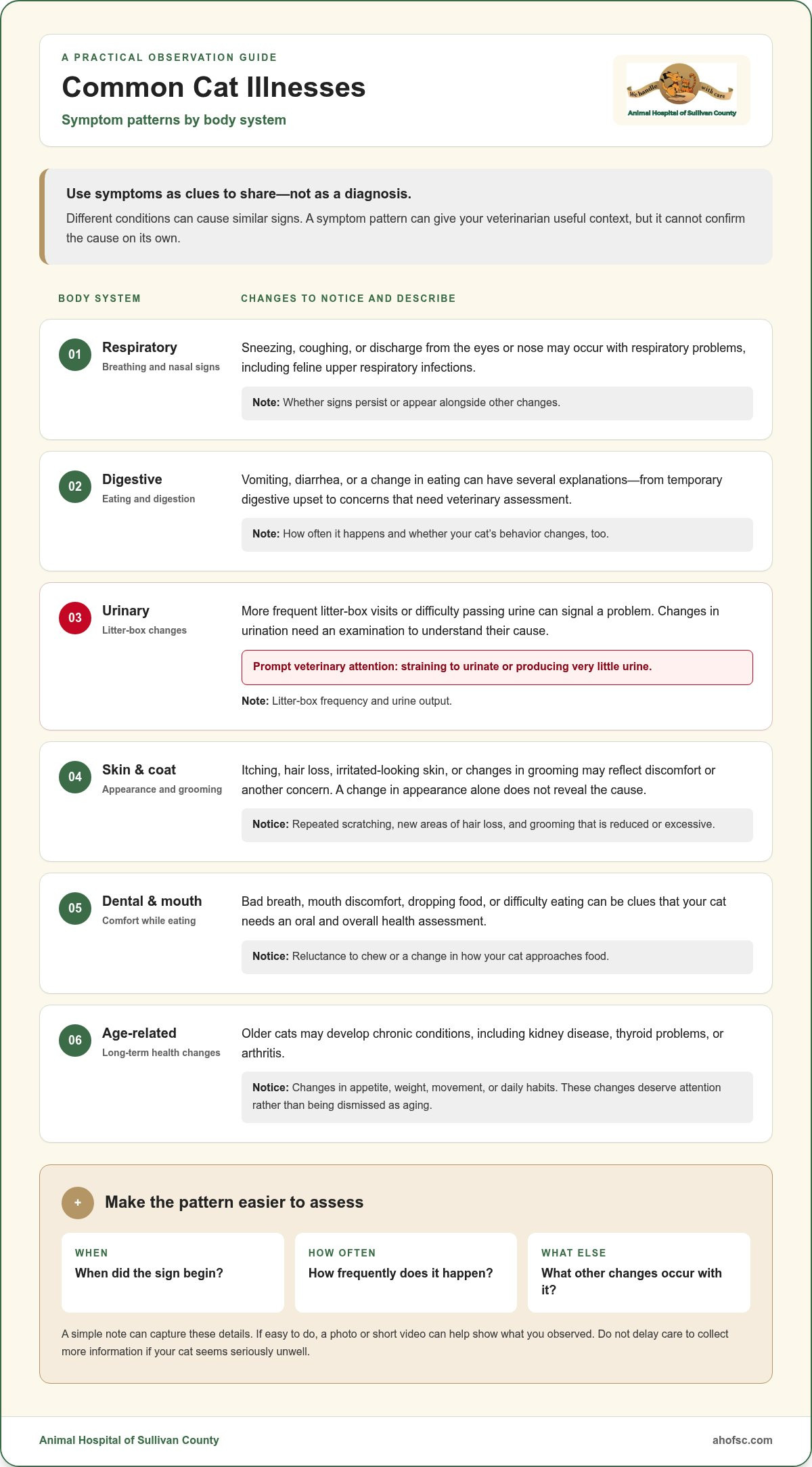
Sneezing, coughing, or discharge from the eyes or nose may occur with respiratory problems, including feline upper respiratory infections. Vomiting and diarrhea can have many causes, from temporary digestive upset to conditions that need veterinary assessment. Changes in urination, such as more frequent litter-box visits or difficulty passing urine, can also signal a problem.
Straining to urinate or producing little urine warrants prompt veterinary attention. These signs can occur with lower urinary tract problems, but an examination is needed to understand what’s happening.
- Respiratory: Sneezing, coughing, and eye or nasal discharge are observations to share, especially if they persist or appear with other changes.
- Digestive: Vomiting, diarrhea, or a change in eating can be important context. Note how often it happens and whether your cat’s behavior changes, too.
- Urinary: Record changes in litter-box frequency and urine output. Straining or passing very little urine needs prompt veterinary attention.
- Skin and coat: Itching, hair loss, irritated-looking skin, or changes in grooming may reflect discomfort or another concern. Appearance alone doesn’t reveal the cause.
- Dental and mouth: Bad breath, mouth discomfort, dropping food, or difficulty eating can be clues that your cat needs an oral and overall health assessment.
Skin, dental, and age-related conditions
Skin and dental changes can be easy to overlook if they develop gradually. Watch for repeated scratching, new areas of hair loss, reluctance to chew, or a change in how your cat approaches food. These signs can affect comfort and eating, but they don’t point to one condition on their own.
Older cats may develop chronic conditions, including kidney disease, thyroid problems, or arthritis. Changes in appetite, weight, movement, or daily habits deserve attention rather than being dismissed as aging. Cornell Feline Health Center’s guidance on cat behaviors signaling health problems explains why shifts in activity may matter. A veterinarian can assess these changes and determine whether diagnostics are appropriate. Animal Hospital of Sullivan County provides medical care and diagnostics to help assess your cat when you’re concerned about a new or persistent sign.
For more context on the changing needs of older companions, explore this guide to senior pet care.
Why Cat Illness Symptoms Can Overlap, and Why Guessing Can Mislead
Finding a symptom on an online list can feel like an answer, but a match isn’t a diagnosis. Vomiting, reduced appetite, or low energy can occur with different kinds of health concerns, and cats with the same condition may not show identical signs. Information about common cat diseases and symptoms can offer context, but it can’t identify the cause of your cat’s individual changes.
Infections, pain, stress, and chronic disease may all affect appetite, activity, or behavior. The common cat illnesses symptoms you notice are valuable clues, but understanding what they mean requires a broader assessment.
One symptom can have several possible explanations
Think of “my cat vomited” as an observation, not a medical conclusion. Appetite changes and lethargy are observations, too. They tell your veterinarian what you’ve seen, but they don’t explain why it’s happening. Avoid using a symptom match to rank possible causes or choose a home treatment. A veterinarian considers your cat’s overall condition and decides whether an examination or diagnostic testing is appropriate.
When the whole pattern matters more than one sign
A veterinarian interprets symptoms in context. Your cat’s age and medical history can shape which details matter, as can how long a sign has lasted, how often it occurs, and whether it’s mild, worsening, or paired with other changes. For example, reduced appetite alongside vomiting gives a different overall picture than a single episode with no other noticeable change. Neither pattern confirms a diagnosis on its own.
Recurring or worsening signs deserve attention, even if your cat still seems comfortable. Cats can appear composed while something is changing, so don’t rely only on whether they seem distressed. Keep a clear record of timing, frequency, and accompanying signs, and share it with your veterinary team. If the cause isn’t clear from the history and examination, appropriate diagnostics may help guide the assessment. Looking at the full pattern supports better decisions than trying to make one symptom fit an online condition list.
What to Do When Your Cat Shows Signs of Illness
Seeing your cat act differently can feel worrying. A calm, practical response helps you share useful details with a veterinarian and judge how quickly to seek care. Observe what has changed, record it, assess whether the signs are urgent, and contact a veterinarian if you’re concerned. You don’t need to figure out the cause yourself.
How to record symptoms for a veterinary visit
Brief notes can make it easier to explain what you’ve noticed, especially if a sign comes and goes. Include when it began, how often it happens, and whether it’s changing. Note appetite and drinking, litter-box visits and output, energy, and unusual behavior. Also write down current medications and recent changes to food or surroundings.
If an intermittent sign is safe to capture, a photo or short video may help your veterinary team understand what you observed. Don’t put off seeking care to record it, and avoid handling your cat in a way that causes stress or discomfort.
Which warning signs need prompt veterinary attention?
Some signs call for immediate veterinary contact. These include difficulty breathing, collapse, severe bleeding, seizures, or inability to urinate. Treat severe, sudden, or rapidly worsening symptoms as urgent rather than waiting to see if they pass. Don’t give human medication or try home remedies in place of professional guidance. A medication that’s safe for people may be dangerous for cats.
Other changes, such as a new cough, vomiting, diarrhea, reduced appetite, or a noticeable shift in energy, may still merit a timely veterinary conversation, particularly if they persist, recur, worsen, or appear alongside other signs. There isn’t one waiting period that fits every cat or symptom. If you’re unsure about urgency, call a veterinary team and describe what you’re seeing.
- Observe: Notice what’s different from your cat’s usual routine.
- Record: Write down timing, frequency, related changes, medications, and recent changes at home.
- Assess urgency: Seek immediate veterinary attention for severe warning signs.
- Reach out: Share your observations with a veterinarian when symptoms concern you, persist, or worsen.
Searching for common cat illnesses symptoms can provide general context, but it can’t show what’s causing your cat’s individual signs. Veterinary assessment is the safer next step when symptoms are urgent or concerning. Animal Hospital of Sullivan County provides emergency treatment during business hours, along with medical care and diagnostics to help assess your cat.
If you have concerns during business hours, contact Animal Hospital of Sullivan County about your cat’s symptoms.
How a Veterinarian Evaluates Common Cat Illness Symptoms
A symptom is a starting point for an assessment, not an answer by itself. Your veterinarian considers what you’ve observed, your cat’s health history, and findings from a physical examination. Together, these details help the veterinarian consider which explanations fit and what next steps may be useful for your cat.
A veterinary diagnosis combines your cat’s history, examination findings, and relevant testing when needed. Not every cat with symptoms needs the same tests. The decision depends on the signs, how they have changed, and what the veterinarian learns during the visit.
From symptom history to physical examination
Your observations help tell the story of what’s happening at home. The veterinarian may ask when the changes began, whether they’re progressing or recurring, and how your cat’s appetite, behavior, and daily routines have shifted. Mention relevant medical history and any medications, too. Small details can help put a symptom in context.
During the physical examination, the veterinarian assesses your cat’s overall condition and investigates the concerns you’ve described. They may focus on particular areas based on the history while considering your cat as a whole. You don’t need perfect notes or medical terms. Your familiarity with your cat’s usual habits helps the care team understand them as an individual.
When diagnostic testing can add useful information
If the history and examination leave questions to explore, diagnostic testing may provide additional information. The veterinarian decides whether testing is appropriate and which approach may help investigate the possibilities raised by the assessment. A test isn’t automatically needed for every symptom, and the same sign in two cats may call for different next steps.
At Animal Hospital of Sullivan County, onsite diagnostic capabilities support the evaluation of a cat’s symptoms. The veterinarian can explain what a recommended test is intended to clarify and how its results may inform next steps in care. Testing contributes information, but it’s considered alongside the examination and history rather than in isolation.
Before the visit, bring your notes and be ready to describe what feels unusual, even if the change seems small. Ask questions if you’d like clarification about the assessment or suggested diagnostics. Understanding why a step is being considered can make the process feel more manageable for both you and your cat.
If your cat’s symptoms are concerning or you’d like a veterinary assessment, you can explore veterinary care at Animal Hospital of Sullivan County. A thoughtful evaluation helps turn your observations into informed guidance for your cat’s health.
Take the Next Step for Your Cat’s Well-Being
Your attention to the small details in your cat’s routine can make a meaningful difference. If something feels off, you don’t need to know what’s causing it before asking for help. Keep a simple record of what you’ve noticed, trust your concern, and let a veterinary professional help you decide what to do next.
Searching for common cat illnesses symptoms can offer general information, but your cat’s needs are personal. A conversation with a veterinarian can put your observations in context and help you move forward with greater confidence. If symptoms are severe or rapidly worsening, seek veterinary attention promptly.
Animal Hospital of Sullivan County supports cats and their owners with compassionate veterinary care, including preventive, medical, and surgical care and onsite diagnostics. If you’re in New York, Connecticut, New Jersey, or Pennsylvania and have concerns about your cat, contact Animal Hospital of Sullivan County to arrange a veterinary assessment.
Frequently Asked Questions
Can common cat illnesses cause similar symptoms?
Yes. Different health problems can affect the same behaviors or body functions, so a symptom match on an online list can’t establish what’s wrong. The phrase common cat illnesses symptoms describes clues to consider, not a diagnosis. A veterinarian weighs those clues alongside your cat’s age, medical background, examination findings, and how the signs developed. Use online information to prepare questions, not to decide on treatment.
What are the most common signs that a cat is sick?
Common warning signs include eating or drinking differently, less interest in play, unusual tiredness, changes in grooming, altered breathing, and shifts in litter-box habits. You might notice your cat leaving food behind, avoiding a favorite resting spot, or making more trips to the litter box. Compare these habits with your cat’s usual routine. A combination of changes, or one that persists, is worth discussing with a veterinarian.
When should I take my cat to the vet for vomiting or diarrhea?
A single episode in an otherwise comfortable cat is different from repeated or severe vomiting or diarrhea, but only a veterinarian can advise what’s appropriate for your cat. Contact a veterinary team if episodes recur, worsen, or occur with weakness, appetite changes, or other concerning signs. Seek prompt help if your cat seems seriously unwell. Note what happened and when, but don’t delay care to gather details if symptoms are severe.
Is difficulty urinating an emergency in cats?
Straining to urinate or producing only a small amount can require urgent veterinary attention. Don’t assume your cat is constipated or wait for the problem to resolve on its own. Contact a veterinarian promptly and describe what you’ve seen, including litter-box visits and urine output. If your cat can’t urinate, treat that as an emergency. These observations help the veterinary team understand the concern and guide the next step.
Can I give my cat human medicine for illness symptoms?
No, don’t give human medication unless a veterinarian specifically directs you to. Medicines that people commonly use can harm cats, and the right response depends on the individual animal and what’s causing the symptoms. Don’t use leftover prescriptions, alter a dose, or try a home remedy based on an online search. If your cat has already received a medication, contact a veterinarian and share the product name, amount, and timing.
How do veterinarians find out what is making a cat sick?
Veterinarians assess a cat by considering the owner’s account, the animal’s medical history, and findings from a physical examination. They may recommend diagnostics if more information is needed to investigate a concern. The choice depends on the individual cat and the questions raised during the assessment, so testing isn’t identical for every case. For cat owners in New York, Connecticut, New Jersey, and Pennsylvania, Animal Hospital of Sullivan County provides medical care and onsite diagnostics to help evaluate symptoms in context.
What should I track before calling a veterinarian about my cat?
Write down when each change began and how often it occurs. Include appetite, water intake, litter-box visits and output, and any differences in activity or behavior. List medications your cat takes, including supplements, and note recent changes to food or the home environment. If a sign comes and goes, a photo or short video may help describe it. Don’t delay calling if your cat appears severely unwell.


