
A pet’s routine checkup deserves a place on the calendar, even when they seem well. Most healthy adult dogs and cats should have a wellness exam once a year, while many senior pets benefit from checkups more than once a year. A peace of mind pet health check gives you time to discuss your pet’s health and ongoing care.
It’s natural to feel reassured when your companion is eating, playing, and acting as usual. A peace of mind pet health check also gives you a chance to discuss small changes or questions with a veterinary professional.
Learn what a peace of mind pet health check may include, which records and details to bring, and how your pet’s age and health can affect the timing of the next checkup. A little preparation can make the visit more useful and help you leave with a clearer picture of how to support your dog or cat’s well-being.
Key Takeaways
- Routine wellness visits help review your pet’s overall health, even when they seem well.
- Bring vaccine records, medication details, diet information, previous medical records, and any questions or symptoms you’ve noticed.
- Most healthy adult pets should have a wellness exam once a year; senior pets may benefit from more frequent checkups.
- Your pet’s age, lifestyle, and health needs help shape what the veterinary team focuses on during an exam.
- Learn what to consider when arranging a wellness visit and how veterinary care can support your pet’s ongoing health.
What happens during an exam
A peace of mind pet health check is best understood as a veterinary wellness exam, not a separate checklist with guaranteed tests. The veterinarian considers your dog or cat’s species, age, lifestyle, and health history when deciding what to assess. This tailors the visit to your individual pet rather than relying on a one-size-fits-all routine. The appointment also gives you time to discuss concerns you’ve noticed at home.
The appointment often begins with a conversation about your pet’s health and daily habits. Share changes in appetite, energy, mobility, or behavior. The veterinarian considers these details alongside the physical examination. For example, a change in how your dog moves can provide useful context during the assessment. Indoor cats also benefit from routine physical exams and preventive-care discussions.
A wellness visit may cover several areas, guided by your pet’s needs:
- Physical health: The veterinarian examines your pet and considers changes you’ve observed at home.
- Dental health: A dental check brings oral health into the preventive-care conversation.
- Vaccines: Recommendations account for species, age, lifestyle, exposure risk, and local requirements.
- Parasites: Discuss prevention in light of your pet’s routine and possible exposures.
- Nutrition: Raise diet questions or changes so they can be considered in context.
- Senior care: As pets age, screening and other topics may be tailored to their life stage.
How does a peace of mind pet health check compare with a regular veterinary wellness exam? The phrase doesn’t define a different medical procedure. A wellness exam can include a physical assessment and preventive discussions about dental health, vaccines, parasites, nutrition, and age-related needs.
A basic check has limits. An appointment assesses your pet at that time; it can’t answer every health question or replace further evaluation when a concern arises. If the examination or your observations point to a specific issue, the veterinarian may discuss diagnostics or follow-up care. The visit supports informed decisions, but doesn’t guarantee that every condition will be found.
Does pet insurance cover a peace of mind pet health check? Coverage for a routine wellness exam depends on the policy’s terms; the phrase alone doesn’t establish coverage. Review the policy sections on preventive or wellness care and distinguish them from benefits for illness or injury. This can help clarify how the appointment is classified.
What to bring to an appointment
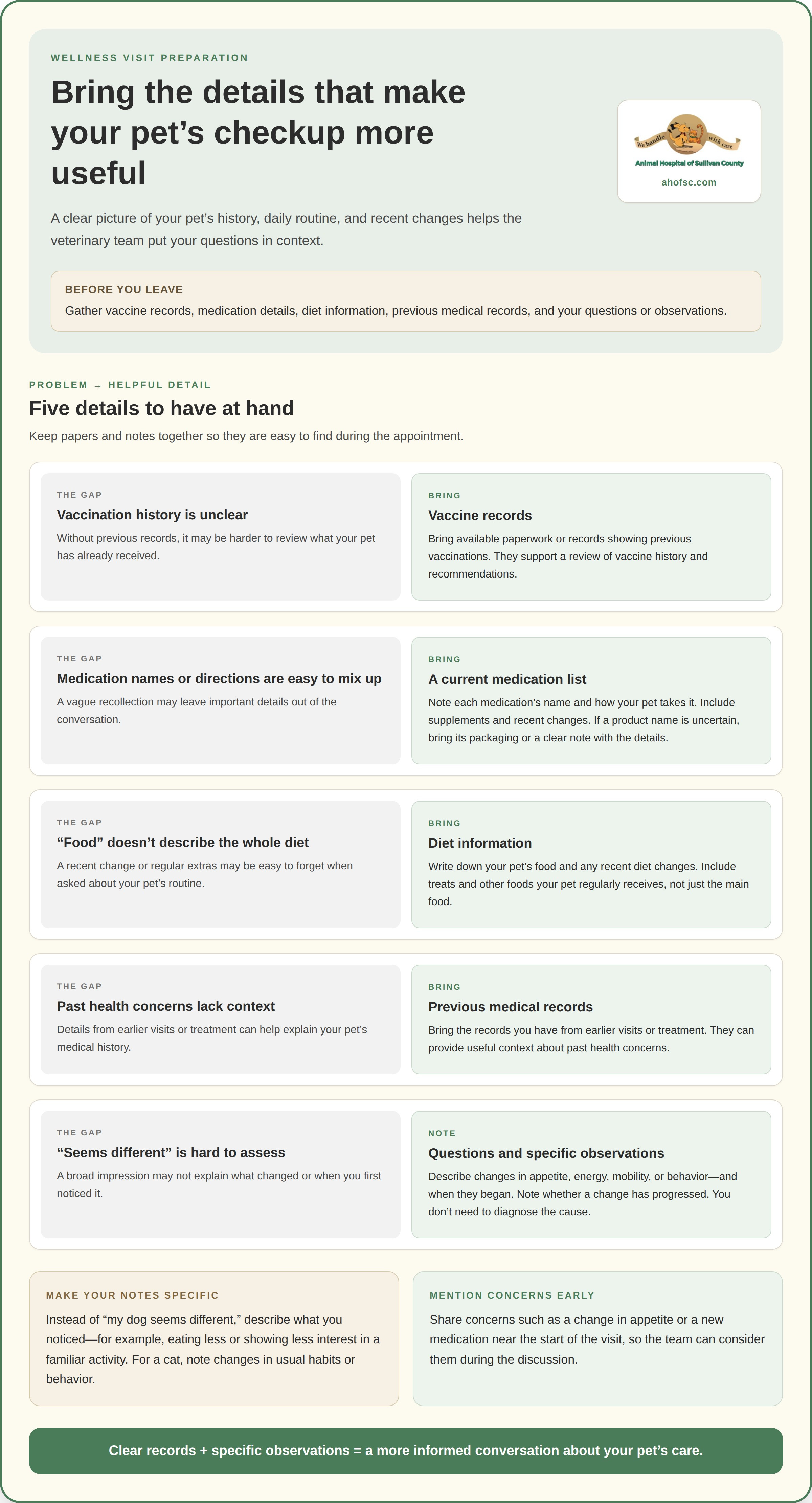
For a pet health check, bring vaccine records, medication details, diet information, available medical records, and questions or symptoms you’ve noticed. These details help the veterinary team understand your pet’s history and make the appointment more useful. A written list can help you remember what you want to discuss.
The appointment’s length depends on what needs attention. A routine review may focus on your pet’s history and examination, while questions about symptoms or further evaluation can shape the discussion. Mention concerns early, such as a change in appetite or a new medication, so the team can consider them during the visit.
Gather these items before leaving home:
- Vaccine records: Bring paperwork or records showing previous vaccinations, if available. These details support a review of your pet’s vaccine history and recommendations.
- Medication details: Note each medication’s name and how your pet takes it. Include supplements or recent changes, too.
- Diet information: Write down your pet’s food and any recent diet changes. For example, mention a new food introduced since the last appointment.
- Previous medical records: Bring records you have from earlier visits or treatment. They can provide useful context about past health concerns.
- Questions and symptoms: Describe what you’ve noticed and when it began. Examples include changes in energy, appetite, or behavior.
Specific observations are more helpful than broad impressions. Instead of saying your dog “seems different,” describe what you’ve noticed, such as eating less or showing less interest in a familiar activity. For a cat, note changes in usual habits or behavior. Mention when you first noticed the change and whether it has progressed. You don’t need to diagnose the cause; clear examples give the veterinary team a useful starting point.
A current written medication list can prevent confusion between similar names or changing instructions. If you’re unsure of a product’s name, bring its packaging or a clear note with the details. For diet discussions, include treats and other foods your pet regularly receives, not just the main food. These specifics help make the conversation relevant to your pet’s daily routine.
Keep the papers and notes together so vaccine records, medical history, and questions are easy to find during the appointment. If you’re organizing a visit, prepare your pet’s appointment information with these records and observations close at hand.
When to schedule wellness exams
For most healthy adult dogs and cats, schedule a wellness exam once a year. A peace of mind pet health check provides a regular opportunity to review your companion’s health and preventive care. After the visit, note the recommended timing for the next appointment so it stays part of your pet’s routine.
Senior pets often benefit from checkups more than once a year. As your pet ages, revisit topics such as mobility, nutrition, dental health, and age-related screening. If you notice a new concern between planned visits, record what changed and when. Those details can help guide the next conversation.
Is a peace of mind pet health check suitable for puppies, kittens, senior pets, or pets with symptoms? Wellness visits can support pets at different life stages, with age helping shape the exam. If your pet has symptoms, describe them when arranging the visit so the appointment can focus on the concern.
There isn’t one schedule that fits every animal. Vaccine recommendations depend on species, age, lifestyle, exposure risk, and local requirements. Changes to a pet’s routine can affect exposure considerations and which preventive-care topics are worth discussing. Sharing those changes helps the veterinary team consider your pet’s circumstances.
Use the last appointment as a practical starting point for planning the next one:
- Healthy adult: Keep the annual wellness exam on the calendar.
- Senior pet: Plan for checkups more than once a year, since older animals may benefit from more frequent visits.
- New symptom: Arrange a visit to discuss the change instead of waiting for the next routine date.
- Life-stage change: Mention a shift in your pet’s routine, since lifestyle can shape preventive-care discussions.
For puppies and kittens, a wellness visit offers time to discuss their current stage and preventive needs. Their schedule should reflect their age and circumstances rather than automatically following the adult annual interval. Mention changes you’ve noticed, such as shifts in appetite or activity, to make the discussion specific to your young pet.
At the end of a peace of mind pet health check, ask about the suggested timing for your pet’s next wellness exam and write it down. An adult dog with no new concerns and a senior cat needing closer attention may have different schedules. Recording the next appointment date connects today’s visit with your companion’s ongoing care.
An indoor lifestyle doesn’t make preventive care unnecessary. Indoor cats still need physical exams, dental checks, vaccine reviews, parasite discussions, nutrition guidance, and senior screening as they age. Their indoor status can inform the conversation, but it doesn’t replace reviewing these areas during wellness care.
When planning a visit, keep these topics in mind alongside any changes you’ve noticed. The appointment is an opportunity to ask about dental care, vaccines, parasites, nutrition, and screening as your cat gets older. Indoor living isn’t a reason to leave these health topics out of the discussion.
Which veterinary clinics offer Peace of Mind pet health checks near me?
Look for a veterinary clinic that provides routine wellness exams and preventive care for dogs and cats. “Peace of mind” describes a goal for the visit, but the phrase alone doesn’t explain what an exam includes. Focus on whether the clinic’s wellness visit addresses your pet’s health history, physical condition, and preventive-care needs.
In New York, Connecticut, New Jersey, and Pennsylvania, look for clinics that care for companion animals and offer wellness examinations. Then consider how the visit fits your pet. For example, a household with an indoor cat may want to discuss dental health, vaccines, parasites, nutrition, and age-related changes.
Use these practical points to understand what a clinic’s wellness exam covers:
- Exam content: Look for a veterinary wellness visit that includes a physical examination and time to discuss your pet’s health.
- Preventive topics: Ask how the visit addresses vaccines, parasite prevention, dental health, and nutrition.
- Age and lifestyle: Check whether the exam discussion can account for your pet’s age, daily routine, and exposure risks.
- Follow-up needs: Understand how the veterinary team discusses next steps if the exam raises a health concern.
A clinic’s approach matters more than a special-sounding label. Vaccine recommendations depend on the animal’s species, age, lifestyle, exposure risk, and local requirements. A dog that spends time outdoors may have different exposure considerations from an indoor cat. The veterinary team can use those details to shape a relevant discussion.
Before choosing a clinic’s wellness service, consider what you want from the appointment. An annual exam can support preventive care for a healthy adult dog. For a senior cat, ask how the visit can address age-related concerns and screening. If your pet has symptoms, describe them when arranging care so the clinic understands the reason for the visit.
It also helps to distinguish a routine wellness exam from a visit focused on a specific problem. A wellness appointment supports an overall health review; a concern such as a new change in appetite may call for a more focused assessment. The right appointment depends on the reason for the visit and the information you share about your pet.
Before settling on a clinic, match its wellness-exam approach to your dog’s or cat’s needs. A clear discussion of exam coverage, preventive topics, and follow-up helps you understand what the appointment is designed to do. That makes it easier to choose a visit centered on your companion’s health, rather than relying on the label alone.
Do I need an appointment for a Peace of Mind pet health check?
For a routine wellness exam, arrange an appointment rather than arriving without a plan. A scheduled visit gives you time to explain whether your dog needs a regular checkup or has a specific concern. Share your pet’s age, the reason for the visit, and any new symptoms when making the appointment. This helps set the visit’s focus.
“Peace of mind” describes what many people hope to feel after discussing their pet’s health. It doesn’t establish a separate appointment rule or a different kind of exam. A routine wellness visit can cover preventive care, while a new issue, such as reduced appetite or a change in activity, deserves clear attention when arranging the visit.
Use these steps to prepare for scheduling:
- State the purpose: Explain whether the visit is a routine wellness exam or concerns a change in your pet’s health.
- Describe the animal: Give the clinic your pet’s species and age, such as an adult dog or senior cat.
- Share the concern: Describe the symptom or behavior change and when you noticed it.
- Mention preventive topics: Note if you want to discuss vaccines, nutrition, dental health, or parasites.
- Have records ready: Keep vaccine and medical history details available for the appointment.
Clear scheduling details matter because dogs and cats have different health histories and needs. A senior cat’s routine exam may include discussion of age-related screening. A dog with a new behavior change may need an appointment centered on that observation. Sharing the reason up front helps distinguish a general wellness review from a visit focused on one concern.
If your pet has symptoms, don’t describe the visit only as a routine checkup. Tell the clinic what you’ve observed, such as a change in appetite, energy, or usual behavior. Include when it began and whether it has changed. These details help the team understand why you’re seeking care and how to approach the appointment.
For a healthy adult pet, plan the routine exam around the recommended annual wellness schedule. Senior pets may benefit from checkups more than once a year, so their next appointment may need a different interval. After each visit, note the recommended timing and arrange the next checkup accordingly. Keeping the date with your pet’s records makes preventive care easier to follow.
Ready to plan a wellness visit? Schedule a veterinary wellness exam and share your pet’s age, visit purpose, and any concerns.
If your pet will travel internationally, mention that when arranging the health check. Pets traveling internationally may need shots or tests well in advance of entering their destination country.
International travel may require specific permits and health certificates for your pet. Raise your travel plans when making the appointment so the visit can include discussion of these needs. Keep the destination country in mind, as preparations may need to be completed before entry.
Animal Hospital of Sullivan County
Animal Hospital of Sullivan County provides veterinary care for dogs and cats, from routine wellness visits to follow-up for health concerns. Preventive Care supports regular health reviews, while Medical Care and Diagnostics can address needs identified during an evaluation. Surgical Care is available when a pet’s treatment plan calls for it.
Bring your pet’s health history, medication details, and observations to the appointment. These details help the veterinary team understand your companion’s needs and discuss appropriate next steps. Whether you’re planning a routine checkup or responding to a change in your pet’s health, professional guidance can help you make informed care decisions.
To discuss a wellness visit, contact Animal Hospital of Sullivan County.
Make your pet’s next step a thoughtful one
A peace of mind pet health check can be more than a date on the calendar. Use the visit to build a shared picture of your companion’s needs and make care decisions with that context in mind. Your observations matter, too. A small change in routine or behavior can give the veterinary team a useful starting point for discussion.
After the appointment, keep care recommendations with your pet’s records. This creates a helpful reference for future discussions and makes changes easier to notice over time. Your dog or cat’s needs may shift, and ongoing conversations can help you respond with care and confidence.
If you’re ready to discuss your pet’s care, Contact Animal Hospital of Sullivan County. A thoughtful next step can help you feel more prepared to support the companion you love.
Frequently Asked Questions
What is included in a Peace of Mind pet health check?
A veterinary health check can include a nose-to-tail physical examination, with attention to your pet’s eyes, ears, nose, mouth, skin, abdomen, joints, heart, lungs, and gait. The veterinarian can also discuss your companion’s health concerns and preventive care. Mention a change in how your dog walks or your cat’s skin condition so the conversation can address what you’ve observed.
Does a Peace of Mind pet health check include vaccinations, bloodwork, or parasite testing?
Vaccinations and diagnostic tests aren’t automatically part of every wellness exam. The veterinarian considers your pet’s health and preventive-care needs when discussing vaccine recommendations or whether diagnostics are appropriate. Available diagnostic testing includes blood, urine, and fecal tests; parasite prevention can also be discussed. If you’re concerned about possible parasite exposure, mention it during the visit so the veterinary team can guide next steps.


