
Imagine it is a Tuesday afternoon in Ferndale and your senior dog suddenly collapses after a short walk. That immediate tightening in your chest is something every devoted pet parent understands. When your furry family member is hurting, the uncertainty of not knowing when to seek emergency vet care Sullivan County can feel overwhelming! You shouldn't have to guess whether a symptom is a minor issue or a life-threatening crisis.
We agree that your pet’s health represents a sacred bond that deserves both technical excellence and neighborly empathy. This guide will help you identify the "Red Alert" symptoms that require immediate medical intervention and explain how local options can provide the rapid care your pet needs. You'll learn how to navigate the difference between daytime urgent care and regional 24/7 hospitals. By the end, you'll have a clear plan to ensure your cherished companion stays safe while avoiding unnecessary long drives. We want you to feel confident and calm during those moments when every second counts.
Key Takeaways
- Identify the "Big Six" life-threatening red flags, including breathing distress and pale gums, so you can act the moment your pet needs you most.
- Navigate local Sullivan County hazards with confidence, from wildlife encounters like porcupine quills to seasonal risks like blue-green algae in our lakes.
- Learn exactly when to seek emergency vet care Sullivan County by understanding the difference between daytime urgent care and 24/7 regional facilities.
- Master safe transport techniques and the "Stay Calm" protocol to keep your cherished companion stable and comfortable during a medical crisis.
- Discover how AAHA-accredited standards and onsite diagnostics provide rapid, compassionate intervention for your family member during business hours.
Recognizing Immediate Life-Threatening Pet Emergencies
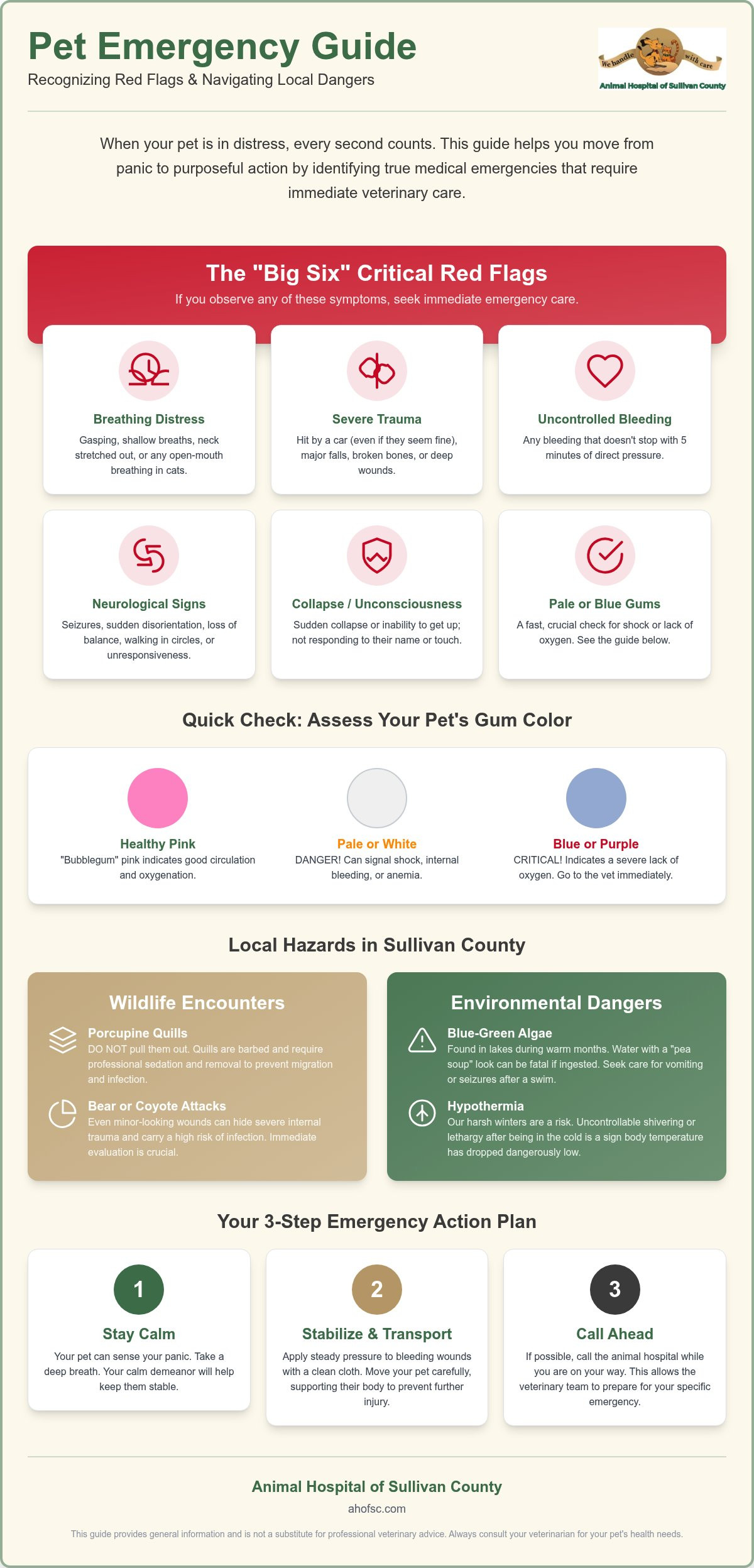
When your pet is in distress, your instincts as a protector kick in immediately. Knowing the "Big Six" red flags helps you move from panic to purposeful action. These critical markers include breathing difficulties, uncontrolled bleeding, loss of consciousness, abnormal gum color, severe trauma, and neurological changes. If you observe any of these, it is a clear sign for when to seek emergency vet care Sullivan County. Acting quickly during these moments is the most profound way you can honor the bond you share with your animal companion.
One of the fastest ways to assess your pet’s internal state is by checking their gums. Healthy gums should be a bright "bubblegum" pink. If you lift your dog’s lip and see pale, white, or blue-tinged tissue, it indicates a lack of oxygen or dangerous shock. Similarly, while a minor limp might wait for a scheduled visit, a traumatic fracture is unmistakable. Look for an inability to bear any weight, a limb held at an unnatural angle, or visible bone. Neurological signs like sudden seizures, walking in circles, or a "drunk" gait also demand an immediate trip to the clinic. Your pet relies on you to be their voice when they are hurting.
Respiratory and Cardiovascular Red Alerts
Respiratory distress is a life-threatening emergency where your pet cannot get enough oxygen to support their vital organs. In dogs, this often looks like excessive gasping or a neck stretched out to catch a breath. Cats are even more subtle; any instance of open-mouth breathing in a cat is a critical "Red Alert" that requires instant intervention. You can check your pet’s cardiovascular health by feeling for a pulse on the inside of the thigh, where the leg meets the body. A racing, thready, or extremely slow pulse during a crisis tells us that your pet’s heart is struggling to keep up.
Trauma and Severe Physical Injury
Accidents happen in the blink of an eye. If your pet is hit by a car, they must be evaluated even if they seem fine or aren't bleeding. Internal injuries, such as a ruptured spleen or lung bruising, often don't show symptoms until it is too late. For deep lacerations or active arterial bleeding, apply steady pressure with a clean cloth while you head to the hospital. Our team is equipped with onsite diagnostics to assess internal damage quickly. If your pet requires specialized repair for complex fractures or internal trauma, a veterinary surgeon Sullivan County can provide the advanced care needed to restore their quality of life. Knowing when to seek emergency vet care Sullivan County ensures that your pet receives the rapid, expert attention they deserve during their most vulnerable moments.
Local Hazards: Sullivan County Specific Pet Emergencies
Living in the beautiful Catskills brings us closer to nature, but it also introduces specific environmental risks that suburban pet owners might never face. Our rural landscape is home to wildlife and seasonal hazards that can turn a peaceful afternoon into a crisis. Understanding these local threats is essential for determining when to seek emergency vet care Sullivan County. Whether it is a curious encounter in the woods or a swim in a local lake, being prepared can save your pet's life. We want you to feel equipped to handle the unique challenges of our mountainous home.
Catskills Wildlife and Environmental Dangers
Porcupine encounters are a frequent reality in Ferndale and surrounding areas. If your dog returns with a face full of quills, remember the "never pull" rule. Quills are barbed and can break off under the skin or migrate deeper into vital organs if handled incorrectly. Professional sedation and removal at an animal hospital Sullivan County is mandatory to ensure every fragment is cleared safely. Similarly, bear swipes and coyote attacks require immediate medical attention to prevent infection and assess for internal trauma. While you are on the way to the clinic, you can refer to these tips for basic first aid for pets to help stabilize your companion during transport.
During the warmer months, keep a close eye on our local lakes. Blue-green algae, also known as cyanobacteria, can produce toxins that are fatal if ingested even in small amounts. If your pet swims in water with a "pea soup" appearance or floating scum, rinse them immediately and watch for vomiting or seizures. In contrast, our harsh New York winters bring the risk of hypothermia. Smaller pets or those with thin coats can lose body heat rapidly. If they are shivering uncontrollably or seem lethargic after being outside, they need a warm environment and a professional checkup right away.
Tick Paralysis and Rapid Onset Illness
Sullivan County is a known hotspot for ticks, but many owners are surprised by the reality of tick paralysis. This condition occurs when a specific toxin in a tick's saliva causes sudden hind-limb weakness that can progress to full paralysis. It is a frightening sight, but it is often reversible once the tick is identified and removed by a professional. We also see acute cases of anaphylactic shock from insect stings or snake bites. Our region is home to Copperheads and Timber Rattlesnakes; a bite usually causes rapid, painful swelling. If you notice a sudden "golf ball" sized lump on your pet's face or limb, this is a clear sign for when to seek emergency vet care Sullivan County. Rural households should also be wary of antifreeze and rodenticides stored in sheds, as these are highly toxic and require instant treatment. If you ever feel uncertain about a local hazard, reaching out to our compassionate team can provide the peace of mind you need.
Emergency vs. Urgent Care: How to Triage Your Pet
Deciding where to take your pet during a medical crisis is one of the most stressful choices a pet parent can face. In our rural community, the distinction between "urgent care" and a "true emergency" often determines your next steps. Urgent care involves conditions that are uncomfortable or painful but not immediately life-threatening. A true emergency, however, requires instant medical intervention to prevent a tragic outcome. Knowing when to seek emergency vet care Sullivan County allows you to act with the steady, calm presence your pet needs during their time of vulnerability.
Choosing a local provider for urgent needs often helps keep your pet’s stress levels manageable. A long, high-speed drive to a distant regional center can escalate an animal's anxiety, which may complicate their clinical symptoms. Because we have been AAHA-accredited since 1983, our team follows elite medical standards that ensure your pet receives hospital-level care right here in Ferndale. This "heart-first" approach balances professional medical authority with the neighborly empathy you expect from a long-standing community partner. To be the best caregiver for your pet, you must also look after your own health; you can learn more about Urgent Care Medical Consultations and Procedures to find immediate care for your own acute conditions.
Many common pet ailments fall under the category of urgent care. These are issues that should be seen the same day but do not necessarily require a 24/7 trauma center. Examples include mild vomiting, persistent ear infections, or minor skin irritations that cause significant discomfort. If your pet is limping or showing signs of persistent pain, they deserve rapid relief. To make this process easier, many Sullivan County owners use the PetDesk app to request appointments and track their pet’s health history. While you prepare for your visit, reviewing basic first aid for pets can provide helpful guidance on keeping your companion comfortable during the short trip to our clinic.
True Emergency Symptoms (Go to the Nearest ER)
Some situations are non-negotiable crises that demand the nearest available emergency resources. Gastric Dilatation-Volvulus, commonly known as bloat, is a primary example. If you notice your dog has a hard, swollen abdomen and is attempting to retch without producing anything, every minute is critical. Neurological events are also major red flags. Seizures that last more than three minutes or occur in rapid clusters can cause permanent brain damage. Another life-threatening situation is an inability to urinate, which is particularly common in male cats. A urinary blockage can lead to kidney failure or a ruptured bladder within hours. Recognizing these specific "Red Alerts" is the most important part of knowing when to seek emergency vet care Sullivan County. We believe that being an informed advocate is the greatest gift you can give your pet, ensuring they receive the rapid intervention required to return to their happy, healthy selves.
Steps to Take During a Pet Emergency in Ferndale
The moment you realize your pet is in crisis, your world feels like it is spinning. We understand that fear. The most important thing you can do right now is follow the "Stay Calm" protocol. Animals are incredibly intuitive; they pick up on your heart rate and anxiety levels. If you are frantic, their blood pressure and stress levels will rise, which can complicate their medical state. Take a deep breath and remember that you are their steady anchor in this storm. Once you have assessed when to seek emergency vet care Sullivan County, your next move should be a quick phone call to your veterinary team.
Calling ahead is a vital step that allows the hospital to prepare for your arrival. It gives the medical team time to clear a surgical suite or gather necessary life-saving equipment before you even pull into the parking lot. While you are on the phone, try to have specific details ready. We will need to know the exact symptoms, how long they have been occurring, and if there is any chance your pet ingested a specific toxin or medication. This information helps us triage your pet the moment they come through our doors.
At-Home First Aid and Stabilization
Your safety is just as important as your pet's. Even the gentlest dog or cat may bite when they are in extreme pain. If your pet isn't vomiting, you can safely use a muzzle or a soft wrap to prevent accidental injuries during handling. For larger dogs that cannot walk, you can create a makeshift stretcher using a heavy blanket. Simply slide the blanket under them and have two people lift the corners to keep their spine and limbs stable. While these steps are helpful, remember that home first aid is only meant to stabilize your pet for transport, not to replace professional medical intervention.
Navigating Local Care Options
If your emergency occurs during our business hours, you can find the Animal Hospital of Sullivan County conveniently located on Henger Street in Ferndale. As you prepare for the drive, keep the car cool and ensure your pet is secure so they don't slide around during turns. For those caring for older companions, specialized senior pet care Sullivan County can provide specific guidance for age-related emergencies or end-of-life transitions. Our veteran-owned practice has been a pillar of this community since 1953, and we are here to support you with both clinical expertise and a gentle touch. If you are facing a crisis right now, contact us immediately so we can guide you through these critical first steps.
Daytime Urgent Care at Animal Hospital of Sullivan County
Since 1953, our hospital has been a dedicated partner in the journey of care for Ferndale families. We understand that your relationship with your pet is a sacred bond, and we treat every patient with the same tenderness we would show our own. Being AAHA-accredited since 1983 means we meet the highest standards of veterinary excellence in the United States, a distinction held by fewer than 15% of clinics. This accreditation isn't just a badge; it is our promise that your pet will receive elite clinical care during their most vulnerable moments. Knowing when to seek emergency vet care Sullivan County becomes much less daunting when you have a compassionate expert right in your neighborhood.
Our veteran-owned and family-operated practice prioritizes a "heart-first" approach. We aim to alleviate the anxiety that naturally follows a medical crisis. Instead of a long, stressful drive to a distant regional center, our daytime urgent care provides rapid intervention right here in the Catskills. This proximity saves precious time and keeps your pet’s stress levels low. We are personally invested in the lives of our clients, helping you decide when to seek emergency vet care Sullivan County without feeling like just another number in a crowded waiting room.
Advanced Diagnostics in Ferndale
When minutes count, having answers matters most. Our onsite diagnostics suite includes an in-house laboratory and advanced imaging technology. This allows us to get results quickly, rather than waiting days for outside lab reports. If your pet has a deep laceration or has swallowed a dangerous object, our surgical suite is ready for immediate intervention. Dr. Barbara Bodolosky brings over 30 years of expertise in emergency stabilization to every case. Her steady, experienced hands provide the high-quality care required to manage acute trauma and stabilize pets for recovery. We focus on rapid, accurate diagnostics so we can start the right treatment plan immediately.
A Partner in Your Pet’s Lifelong Health
A Partner in Your Pet’s Lifelong Health
Our commitment to your companion doesn't end once the crisis passes. We believe in a holistic view of health that transitions smoothly from emergency stabilization to long-term wellness. After an urgent visit, we work closely with you to manage your pet’s recovery and prevent future issues. This dedication to longevity and happiness is why generations of Sullivan County families have trusted us with their cherished household members. Much like the comprehensive care provided by West Gippsland Vet Care, we believe that proactive wellness is the best way to ensure your pet's long-term health. We are more than just a medical facility; we are a steady guide in your pet's life. If you are worried about your pet's health right now, Contact us for urgent care needs during business hours at our Ferndale clinic.
Your pet's safety is a priority that requires both a watchful eye and a prepared heart. By recognizing the "Big Six" red flags and understanding our unique Catskills hazards, you have taken the first step toward being a heroic advocate for your animal companion. Whether it's a sudden wildlife encounter or a concerning change in behavior, you now have the tools to stay calm and act decisively. Being prepared is the best way to honor the deep bond you share with your furry family member.
Knowing exactly when to seek emergency vet care Sullivan County ensures that your cherished companion receives the right level of medical attention without unnecessary delay. Our veteran-owned practice has served this community since 1953, providing a steady and compassionate presence during life's most stressful moments. With our AAHA-accredited elite clinical standards and onsite advanced diagnostics, we are ready to provide the rapid intervention your pet deserves during business hours. We treat every patient with the neighborly empathy and technical skill they need to thrive.
Don't let uncertainty stand in the way of your pet's well-being. Contact Animal Hospital of Sullivan County for Urgent Daytime Care to experience the peace of mind that comes from our "heart-first" approach to medicine. We are here to support you and your pet every step of the way!
Frequently Asked Questions
How do I know if my dog is in enough pain to be an emergency?
Severe pain that causes your dog to cry out, pant excessively, or act aggressively is a clear signal for when to seek emergency vet care Sullivan County. You might notice them guarding a specific body part or showing an inability to lie down comfortably. If your pet is trembling, refusing to move, or hiding in unusual places, they are likely experiencing a crisis that requires immediate professional assessment to find the source of their distress.
My pet ate something toxic; should I induce vomiting at home?
You should never induce vomiting at home without first consulting a veterinarian or a poison control hotline. Certain substances, like caustic chemicals or sharp objects, can cause even more damage to the esophagus if they are brought back up. Instead, try to identify exactly what was eaten and how much. Our team can use specific, safe medications to manage toxin ingestion and protect your pet’s internal organs from further harm during our regular business hours.
What is the nearest 24/7 emergency vet to Sullivan County after hours?
Since we provide emergency treatment only during regular business hours, you will need to travel to a regional 24/7 facility in neighboring Orange County for after-hours care. Centers in Middletown are often the closest options for Sullivan County residents during the night or on weekends. It is always a good idea to keep the phone number and address of these regional hospitals saved in your phone so you aren't searching for them during a crisis.
Is a bloated stomach always a veterinary emergency?
Yes, a suddenly bloated or hard stomach is always a life-threatening emergency. This condition, often called GDV or "bloat," can cause the stomach to twist and cut off blood flow to vital organs. If you notice your dog retching without producing anything or acting extremely restless, every minute counts. This is a critical time for when to seek emergency vet care Sullivan County to prevent a tragic outcome for your cherished family member.
Can I bring my pet to Animal Hospital of Sullivan County for an emergency at night?
We do not offer 24/7 emergency care at our Ferndale location. Our team provides dedicated emergency treatment and surgical intervention exclusively during our regular business hours. For any medical crisis that occurs late at night or over the weekend, you should contact the nearest 24/7 emergency center. We are here to support your pet’s recovery and long-term wellness once our clinic reopens for the day; just give us a call then.
What should I do if my pet is hit by a car but seems fine?
Even if your pet appears normal after being hit by a car, you must have them examined by a veterinarian immediately. Internal bleeding, lung bruising, and shock often don't show visible symptoms right away. Our onsite diagnostics allow us to look beneath the surface for hidden injuries that could become fatal if left untreated. Prompt medical evaluation is the only way to ensure your pet is truly safe after a traumatic accident.
How much does an emergency vet visit usually cost in New York?
The cost for an emergency visit in New York depends on the specific diagnostics and treatments your pet needs to remain stable. Typically, you will pay a specialized exam fee followed by costs for bloodwork, X-rays, or life-saving surgery if required. While emergency care is a significant financial commitment, our focus is always on providing the most efficient and compassionate path to recovery for your cherished family member; we prioritize their quality of life.
Does Animal Hospital of Sullivan County offer emergency surgery?
Yes, we provide emergency surgical care for our patients during our normal business hours. Our facility is equipped with a modern surgical suite and onsite diagnostics to handle urgent procedures like foreign body removals or deep laceration repairs. Dr. Barbara Bodolosky uses her decades of experience to stabilize pets and perform life-saving operations. We are committed to providing the technical skill and emotional sensitivity your pet needs during a surgical crisis; we treat them like family.


