
What if your rescue cat’s missing medical history isn’t a reason to feel unprepared, but a starting point for the right questions? This first vet visit for rescue cat checklist can help turn unknowns into useful details your veterinarian can build on. A new home is a big adjustment, and travel or handling may feel unsettling for a cat who hasn’t yet learned to trust you.
You may not have complete adoption records, and it’s natural to wonder which concerns need attention first. With a little preparation, you can bring the documents and observations you do have, support your cat during transport, and make the appointment more productive. This guide covers what to bring, what to note about eating, litter-box habits, behavior, or symptoms, and how to prepare a secure carrier. It also explains what a nose-to-tail exam may include and which questions to raise about vaccines, parasite prevention, testing, and everyday care. Whether you’re preparing for a first visit in New York, Connecticut, New Jersey, or Pennsylvania, the goal is the same: leave with clear next steps tailored to your cat’s age, health, and lifestyle. Even when the past is uncertain, this visit can be a gentle beginning to a thoughtful care plan.
Key Takeaways
- Use the first vet visit for rescue cat checklist to gather adoption records, medication details, and helpful observations, even if the medical history is incomplete.
- Prepare the carrier and trip with gentle, practical steps that can help your cat feel more secure without expecting all fear to disappear.
- Think of the exam as a chance to discuss your cat’s health, lifestyle, and care needs, not as a sign that something is wrong.
- Bring questions about preventive care and testing so the veterinarian can shape recommendations around your cat.
- Keep the visit summary and next steps handy, and note any changes or questions to share during follow-up.
Why a Rescue Cat’s First Vet Visit Matters
An incomplete medical file is common for a newly adopted cat. You don’t need to fill in the gaps yourself. What you’ve noticed at home, along with information from the shelter, rescue, or previous caregiver, can help the veterinarian decide what to discuss next. The first exam isn’t an assumption that your cat is sick. It’s a chance to assess their current health and establish a starting point for future care.
A rescue cat’s first veterinary visit is an individualized baseline assessment that brings together known history, current observations, and health needs to guide a care plan. Age, available medical background, lifestyle, and current concerns all shape the conversation. For general context on topics that may come up, explore this overview of general cat health information.
A short video can also help you picture what to prepare for before the appointment:
When to arrange the first appointment
Plan a wellness visit after adoption, giving your cat a little time to settle into the home if they’re otherwise doing well. The appointment helps establish a health baseline and gives you a place to ask about preventive care, nutrition, behavior, and gaps in the cat’s history. You don’t need every record in hand before arranging a visit.
Pay attention to changes in appetite, litter-box habits, energy, or comfort. Share what you’ve observed and when it began rather than trying to diagnose the cause at home. If a change seems urgent, seek veterinary guidance promptly during regular office hours rather than waiting for a routine wellness conversation.
What uncertain medical history means
Missing dates or documents are useful information too. Tell the veterinarian what you know, what a shelter or previous caregiver reported, and what remains uncertain. Keep confirmed facts separate from estimates. For example, you might know that a vaccine was given but not have its date, or have an estimated age rather than a birth date. Label estimates clearly instead of guessing.
Bring observations from your cat’s first days at home, including changes in eating, drinking, grooming, movement, or behavior. These details can guide the discussion, especially when there’s little medical history to review. The veterinarian can assess your cat, explain which preventive care or diagnostic steps may be appropriate, and help prioritize questions based on age and current needs. This is the heart of the first vet visit for rescue cat checklist: prepare what you can, be honest about what you don’t know, and leave with next steps shaped for your cat.
Rescue Cat First Vet Visit Checklist: Records, Medicines, and Questions
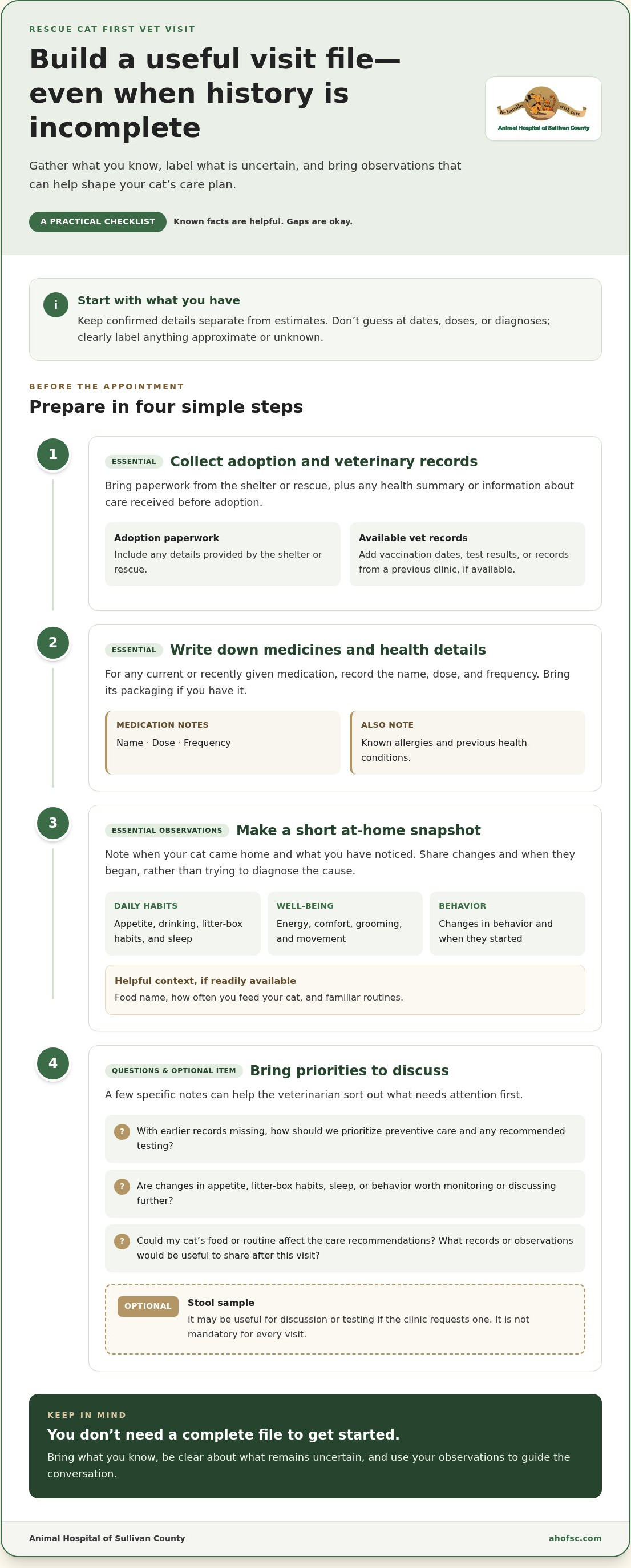
A little preparation can make the appointment more useful, even if your cat’s history has gaps. Use this first vet visit for rescue cat checklist to collect what you know, mark what you don’t, and bring observations that help the veterinary team understand your cat’s day-to-day life. You don’t need a complete file to get started.
Gather the records and details you already have
Keep known facts separate from estimates. A shelter’s approximate age or a previous caregiver’s recollection can still be helpful when clearly labeled. Don’t guess at dates, doses, or diagnoses. The ASPCA general cat care guidelines offer additional context on everyday care, while your veterinarian can tailor recommendations to your cat.
- Essential: Adoption paperwork. Bring documents from the shelter or rescue, including any health summary or information about care received before adoption.
- Essential: Available veterinary records. Include vaccination dates, test results, or records from a previous clinic if they were provided.
- Essential: Medication details. Write down the name, dose, and frequency for any current or recently given medication. Bring the packaging if you have it, and note known allergies or previous health conditions.
- Essential: Your observations. Note when your cat came home and any changes you’ve noticed in appetite, drinking, litter-box habits, sleep, energy, or behavior.
- Helpful if readily available: Food and routine. Record the food’s name, how often you feed your cat, and any familiar routines. These details can help frame questions about adjustment and daily care.
- Optional: Stool sample. A sample may be useful for discussion or testing if the clinic requests one. It isn’t a mandatory item for every visit.
Prepare a short list of questions
It’s easy to forget questions in the appointment room. Jot them down beforehand, especially if you’re unsure which concerns matter most. Prioritize what you’ve observed and ask the veterinarian to help sort out what needs attention first.
- With earlier records missing, how should we prioritize preventive care and any recommended testing?
- Are changes in appetite, litter-box habits, sleep, or behavior worth monitoring or discussing further?
- Could my cat’s food or routine affect the care recommendations?
- What records or observations would be useful to bring or share after this visit?
Keep the list simple. A few specific notes, such as when a behavior started or how often it happens, are more useful than trying to interpret the cause yourself. For local veterinary care in Sullivan County, Animal Hospital of Sullivan County’s veterinary care can support your cat’s ongoing health planning.
How to Get Your Rescue Cat Ready for the Carrier and Trip
A secure carrier helps protect your cat during travel and keeps them safely contained at the clinic. Preparation can make the process more manageable, though it can’t guarantee your cat won’t feel nervous. Move patiently and use a simple sequence that gives your new companion room to adjust.
Make the carrier familiar before appointment day
If you have time before the appointment, leave the carrier open in a familiar area at home. Let your cat approach it voluntarily. A familiar blanket or bedding may make the space feel less unfamiliar, provided it fits safely. Some cats may prefer a familiar scent on a small cloth. Don’t force your cat to stay inside or treat time near the carrier as a test they must pass.
Keep the journey and arrival manageable
On appointment day, focus on safe containment rather than trying to make the trip perfect. A calm, steady routine can help you avoid rushed handling. Work through these steps:
- Set up the carrier ahead of time. Check that it’s clean, in good condition, and closes securely. Add a familiar bedding item if your cat accepts it, making sure it doesn’t block ventilation or interfere with the door.
- Keep the route simple. Gather your belongings before bringing your cat to the carrier. This reduces the time you need to manage an open door or move around while your cat is waiting.
- Guide your cat gently. Give them time to approach if possible. If they’re wary, avoid chasing them around the home, which can add to the stress of leaving.
- Secure the carrier for travel. Keep it stable in the vehicle so it won’t shift. Avoid opening it during the trip, even if your cat meows. A frightened cat can slip away quickly.
- Keep your cat inside on arrival. Carry the closed carrier into the clinic and wait for the veterinary team to direct you before opening it. Don’t take your cat out in the waiting area.
- Share concerns with the team. Tell staff if your cat is fearful, resists handling, or has had a difficult travel experience. That context helps them guide the visit with your cat’s comfort and safety in mind.
Some cats settle near the carrier after having time to investigate it; others may remain cautious. Both responses are understandable, especially during a new transition. The goal isn’t to eliminate fear, but to make each step predictable and keep your cat securely contained.
If getting your cat into the carrier feels difficult, don’t force a prolonged struggle. Pause if it’s safe to do so and share the challenge with the veterinary team when you arrive. For future visits, you can discuss an individualized approach with them. A gentle, secure routine is a useful part of the first vet visit for rescue cat checklist, even when your cat still feels unsure.
What to Expect During a Rescue Cat’s First Veterinary Exam
Your cat’s first exam is both a health assessment and a conversation. The veterinarian will consider the information you’ve gathered, listen to your observations, and tailor recommendations to your cat’s age, known history, lifestyle, and current needs. It’s okay if some details are unknown. Sharing what you do know helps guide the discussion without assuming your cat is ill or that every possible test is needed.
At Animal Hospital of Sullivan County, a nose-to-tail wellness exam and conversation can help turn an uncertain background into an individualized care plan. The practice has a feline-friendly environment and uses low-stress handling, though every cat responds differently to a new place and new people.
The nose-to-tail examination
The veterinarian assesses your cat’s overall condition, while your observations add context about life at home. A nose-to-tail exam may include checking the eyes, ears, nose, mouth, skin, abdomen, and joints, as well as listening to the heart and lungs and observing how your cat stands and walks. The team may adapt handling to your cat’s comfort and response.
If your cat is tense or resists a particular part of the exam, tell the team what you’ve noticed. You can also mention changes in appetite, movement, grooming, or behavior. These details help the veterinarian interpret the assessment and decide what deserves more attention.
Preventive care and testing conversations
Based on the exam and available history, the veterinarian may discuss feline vaccinations, including PUREVAX, and parasite prevention. Recommendations depend on factors such as your cat’s age, lifestyle, prior care, and health assessment. If records are incomplete, ask how the team will account for what’s known and what remains uncertain.
Diagnostic testing may also be discussed when it’s clinically appropriate. Depending on the concern, options can include blood, urine, or fecal testing. A recommendation for a test isn’t a conclusion by itself. Ask what question it could help answer and how the result might inform the care plan.
Before leaving, make sure you understand which steps are recommended now, which can be considered later, and what signs or changes to monitor at home. The first vet visit for rescue cat checklist supports a useful conversation; it isn’t a fixed set of vaccines or tests for every cat. Your questions and the veterinarian’s assessment work together to shape the next steps.
Information about wellness exams and preventive care at Animal Hospital of Sullivan County can help you plan for your rescue cat’s visit.
After the Appointment: Rescue Cat Follow-Up and Local Care
The first visit is a starting point, not a one-time handoff. A simple record of what the veterinarian discussed can help you keep recommendations clear as your cat settles into home life. Save the visit summary somewhere easy to find, such as with adoption papers or in a secure digital folder, and note any agreed next steps in your own words.
Keep the care plan and records organized
Write down recommendations, questions you still have, and details the veterinary team asks you to observe. For example, note a change in appetite or a medication instruction so you can refer to it accurately later. PetDesk is a free scheduling and health-record tool that can help keep care information accessible. For broader context on preventive visits, explore the pet wellness exam guide.
At home, keep an informal log of changes you notice, such as shifts in eating, litter-box habits, energy, or comfort. Add questions as they come up rather than relying on memory. Share those observations with the veterinary team at a follow-up or sooner if a concern arises. Your veterinarian can advise on next steps based on your cat’s individual needs rather than a one-size-fits-all schedule.
If you don’t know whether your cat has a microchip, make a note to discuss identification. The Sullivan County microchipping guide explains why a microchip can be a useful part of a pet’s safety plan.
Continue care with a local veterinary team
Ongoing care gives you a place to revisit questions as your cat’s history becomes clearer. Animal Hospital of Sullivan County is located at 667 Harris Rd, Ferndale, NY 12734. It is the only AAHA-accredited animal hospital in Sullivan County, accredited since 1983, and adheres to over 900 rigorous standards.
Keep the first vet visit for rescue cat checklist and your appointment notes together so you can build on what you’ve learned. Each new observation or record can add helpful context to your cat’s care. A consistent veterinary relationship can support preventive care and help guide decisions as your cat’s needs change.
Details about on-site veterinary care in Ferndale are available from Animal Hospital of Sullivan County.
Build a Confident Start to Your Cat’s Care
Your rescue cat’s first appointment can be the beginning of a lasting partnership in their care. As you learn their preferences, routines, and little quirks, you’ll have new details to share that can guide future conversations. Keep asking questions as they come up, and remember that you don’t need to know everything about your cat’s past to take a thoughtful next step.
Use the first vet visit for rescue cat checklist as a starting point, then let your cat’s needs shape what comes next. Each visit can add to your understanding and help you make informed choices with your veterinary team.
Animal Hospital of Sullivan County’s caring veterinary team provides a welcoming place to begin your cat’s care in Ferndale.
Frequently Asked Questions
What should I bring to my rescue cat’s first vet visit?
Bring adoption or shelter paperwork, any medical or vaccination records you received, and details of current or recently used medication. A note about your cat’s food, appetite, behavior, and litter-box habits can fill in useful context. On your first vet visit for rescue cat checklist, mark missing information as unknown rather than estimating. Bring a stool sample only if the clinic requested one, and follow its instructions for collecting and transporting it.
What if I do not know my rescue cat’s vaccination history?
Tell the veterinarian that the history is unknown, and share any paperwork you do have. Don’t assume a vaccine was given or try to reconstruct dates from memory. If a document says a vaccine was administered but has no date, point that out. The veterinarian can consider your cat’s circumstances and discuss next steps. Keep written recommendations or new records with the adoption paperwork so they’re easy to find later.
Should I bring my rescue cat in a carrier?
Yes. A secure carrier helps keep your cat contained during the trip and at the clinic. If you can prepare ahead, leave the carrier accessible at home so your cat can investigate it at their own pace. Keep your cat inside until clinic staff say it’s safe to open the door. If your cat has a history of hiding, struggling, or becoming distressed during handling, let the team know when you arrive.
What happens during a rescue cat’s first vet exam?
The veterinarian reviews the history you can provide and examines your cat based on their individual needs. At Animal Hospital of Sullivan County, a nose-to-tail exam can include the eyes, ears, nose, mouth, skin, abdomen, joints, heart, lungs, and gait. Share anything you’ve noticed that may not be obvious during the appointment, such as occasional coughing or a change in grooming. Preventive care or testing may also be discussed.
Will my rescue cat need blood or other tests at the first visit?
Not every cat needs the same tests. Depending on your cat’s history, exam, and current concerns, the veterinarian may discuss blood, urine, or fecal testing. For example, mention if you’ve noticed a change in drinking or litter-box habits, since those observations may inform the conversation. Ask what a recommended test is intended to assess and how the result could guide care. A test isn’t automatically required just because it’s a first visit.
Can I schedule my cat’s first visit with the Animal Hospital of Sullivan County?
Yes. Animal Hospital of Sullivan County provides on-site veterinary care at 667 Harris Rd, Ferndale, NY 12734. You can schedule using PetDesk, a free scheduling and health-record tool, or call (845) 292-6711. When arranging the appointment, mention that your cat is newly adopted and share any concerns you’ve observed. This helps the team understand what you’d like to discuss during the visit.
How can I make my rescue cat less nervous about the first vet visit?
Give your cat time to explore an open carrier at home if the appointment is planned ahead, and add familiar bedding if it fits safely without blocking ventilation. Keep the carrier secure during travel, and don’t expect preparation to remove all fear. Cats respond differently. Tell the veterinary team what your cat finds difficult, such as being lifted or touched near the face. Animal Hospital of Sullivan County has a feline-friendly environment and uses low-stress handling.
To plan your rescue cat’s first visit, schedule with Animal Hospital of Sullivan County or call (845) 292-6711.


