
Is your pet’s sudden limp, vomiting, or minor wound a reason to seek care now, or can it wait? When you’re looking for urgent pet care Sullivan County NY, that uncertainty can feel stressful. Animal Hospital of Sullivan County in Ferndale provides urgent and emergency treatment for small animals during business hours, with diagnostic support to help assess your pet’s needs.
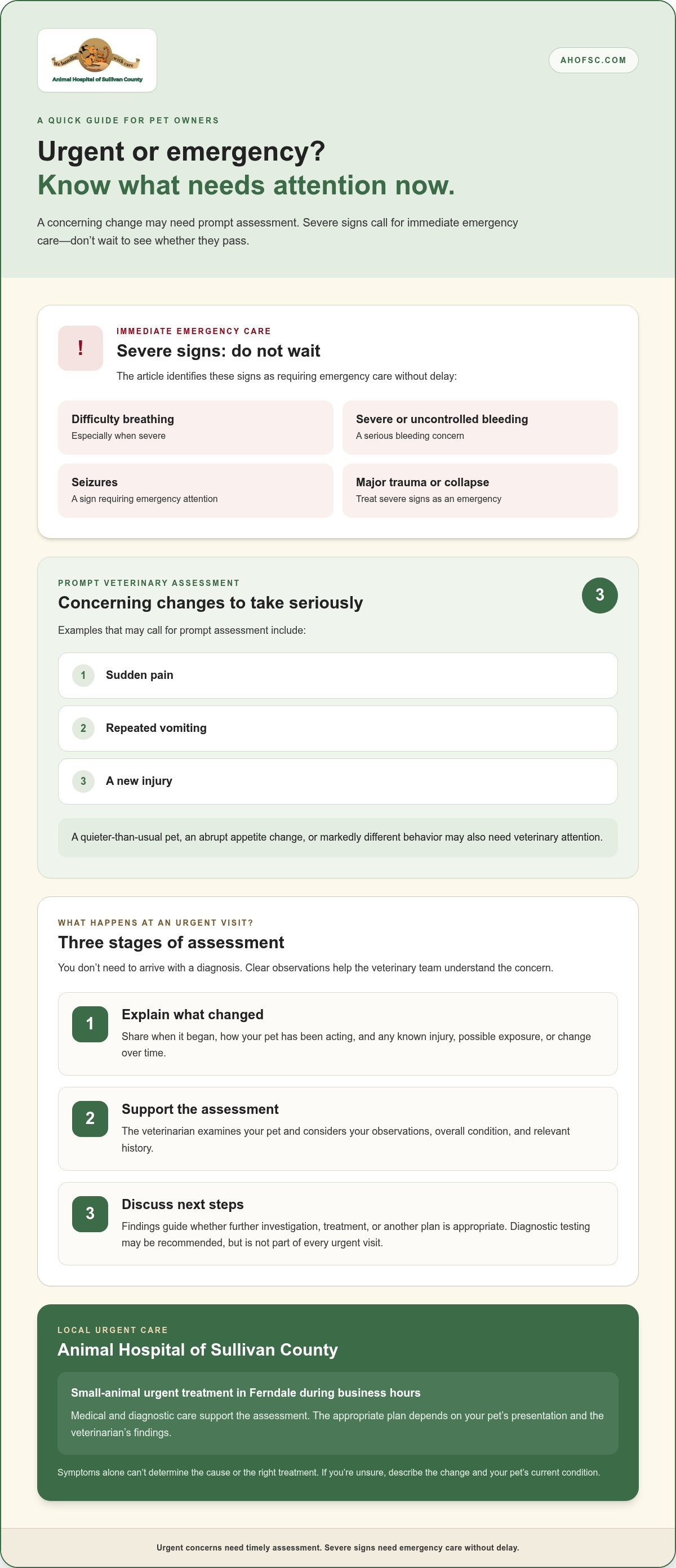
It’s natural to worry when a beloved companion isn’t acting like themselves. Some concerns need prompt veterinary attention but aren’t immediately life-threatening. Others, such as difficulty breathing, severe bleeding, seizures, or major trauma, require emergency care without delay. Knowing the difference can help you choose a next step.
This guide explains signs that call for urgent assessment, what to do while arranging care, and what details to share or bring to a daytime visit. It’s written for pet owners in Sullivan County and across New York, Connecticut, New Jersey, and Pennsylvania who are considering care in the area.
Key Takeaways
- Learn how to distinguish a concern that needs prompt veterinary assessment from signs that may indicate a life-threatening emergency.
- Understand how an urgent visit can unfold, from describing symptoms to discussing examination, diagnostics, and next steps.
- For urgent pet care Sullivan County NY, Animal Hospital of Sullivan County provides small-animal urgent treatment in Ferndale during business hours.
- Prepare useful details for the veterinary team, including when symptoms began and any possible exposure or injury.
- Medical, surgical, and diagnostic care can support assessment of your pet’s needs.
Urgent Pet Care in Sullivan County, NY: What Counts as Urgent?
A sudden change in your pet can be unsettling. You know their usual habits best, so noticing a change early is useful. Rather than trying to diagnose the cause at home, consider how quickly the change appeared, whether it’s getting worse, and how your pet is acting overall. If you’re unsure, veterinary guidance can help you decide what to do next.
Urgent veterinary care: A prompt assessment for a concerning health problem that may need timely attention. Symptoms alone can’t determine the cause or the right treatment. A veterinarian must assess your pet.
Urgent care sits between a routine wellness visit and an immediate emergency. Wellness visits are planned preventive care for a pet that is generally well. An urgent concern is new or troubling enough that waiting for a routine appointment may not be appropriate, even if your pet seems stable. Animal Hospital of Sullivan County provides urgent treatment during business hours in Ferndale, supported by medical and diagnostic care.
How is urgent pet care different from an emergency?
There isn’t one symptom that determines urgency for every pet. The concern’s severity, how quickly it’s progressing, and your pet’s overall condition all matter. Urgent care means timely veterinary assessment; it doesn’t guarantee a particular treatment or outcome. Severe difficulty breathing, collapse, or uncontrolled bleeding warrants immediate emergency care. Don’t wait to see whether these signs pass.
When should a Sullivan County pet owner act promptly?
Consider prompt assessment if your pet develops sudden pain, repeated vomiting, or a new injury. A pet that is quieter than usual, has an abrupt change in appetite, or behaves markedly differently may also need veterinary attention. These examples aren’t a complete checklist, and the same symptom can mean different things in different animals.
Look at the whole picture: what changed, when it began, and whether your pet seems to be getting worse. If a concern persists or intensifies, don’t rely on an online list to decide it’s harmless. You can also review Pet first aid for general information about care before professional assessment. First aid doesn’t replace a veterinary examination.
For urgent pet care Sullivan County NY, the practical distinction is whether your pet needs prompt assessment or immediate emergency attention. Treat severe signs as an emergency. For a concerning but stable change during business hours, contact the local hospital for urgent veterinary care and describe what you’ve observed. If you’re unsure how urgent the situation is, explain the change and your pet’s current condition rather than trying to label it yourself.
What Happens During an Urgent Veterinary Visit in Sullivan County?
A visit for a sudden health concern can feel unfamiliar, especially when you’re worried about your pet. The assessment starts with what you’ve noticed and continues with what the veterinarian finds during the examination. You don’t need to arrive with a diagnosis. Clear observations, honest answers, and your questions help the team understand the concern and discuss an appropriate next step.
An urgent visit generally follows this sequence:
- Explain what’s changed. Describe the concern, when it began, and how your pet has been acting. Mention any known injury, possible exposure, or change over time.
- Support the assessment. The veterinarian examines your pet and considers your observations alongside their overall condition and relevant history.
- Discuss next steps. The findings help guide whether further investigation, treatment, or another plan is appropriate. Ask questions as the options are explained.
How does the veterinary team assess a sudden health concern?
Your description gives the veterinary team useful context: what your pet was doing before the change, what you observed, and whether the problem has improved or worsened. Details about previous health concerns or medications can also help inform the conversation. The veterinarian’s examination adds another perspective. Together, this information supports a discussion of next steps without assuming a diagnosis before your pet has been assessed.
The clinical exam helps guide the next diagnostic or treatment step. An urgent visit doesn’t automatically lead to a particular test or procedure. The plan depends on your pet’s presentation and the veterinarian’s findings. If something is unclear, ask the team to explain what they’re considering and why so you can understand the care being discussed.
When might diagnostic testing help?
Sometimes an examination provides enough information to discuss an initial plan. In other cases, the veterinarian may recommend diagnostic testing to investigate the concern further. Testing is a tool, not a guaranteed part of every urgent visit. Animal Hospital of Sullivan County provides diagnostic testing alongside veterinary medical care, allowing findings to inform the assessment and discussion of appropriate next steps.
For urgent pet care Sullivan County NY, Animal Hospital of Sullivan County provides urgent treatment during business hours at its Ferndale practice. For a daytime visit, share a clear timeline and specific observations. You can find more information about the hospital’s urgent veterinary care during business hours as you plan your next step.
Urgent vs Emergency Care: Sullivan County Pet Guide
It can be hard to judge how serious a sudden change is, especially when your pet can’t tell you what hurts. The comparison below offers general guidance, not a way to diagnose or reliably grade symptoms at home. Severity, how quickly signs change, and your pet’s overall condition all matter. If something worsens or continues to concern you, seek veterinary guidance rather than relying on an online checklist.
| Concern type | General urgency | Safest next step |
|---|---|---|
| New but apparently stable concern, such as sudden discomfort | Prompt assessment may be needed | Describe the change and timeline to a veterinary team. |
| Worsening or persistent symptoms, such as repeated vomiting | Needs timely professional guidance | Share what has changed and seek veterinary assessment. |
| Collapse, major breathing difficulty, or uncontrolled bleeding | Potentially life-threatening | Seek immediate emergency veterinary attention. |
Which signs call for immediate emergency attention?
Some signs should be treated as emergencies, not monitored at home. Collapse, major difficulty breathing, and uncontrolled bleeding can signal a life-threatening problem that needs immediate veterinary attention. The table is only a guide; it can’t account for your pet’s full condition or determine the cause. If you see a severe sign, act promptly rather than waiting for an online checklist to confirm your concern.
Animal Hospital of Sullivan County provides urgent and emergency treatment during business hours in Ferndale. The hospital does not provide around-the-clock emergency care, so daytime availability should not be mistaken for 24/7 coverage. If your pet has a potentially life-threatening symptom, seek immediate emergency veterinary attention.
What if the problem is concerning but not clearly life-threatening?
A sudden or worsening change still deserves attention, even if it doesn’t look like an obvious emergency. When seeking professional guidance, describe your pet’s current condition, when the symptoms began, and how they’ve changed. Clear details help the veterinary team understand what’s happening and discuss an appropriate next step. Don’t wait for a symptom to match a list if your pet’s condition is deteriorating.
The hospital provides urgent and emergency treatment during business hours. For more local context, read this daytime emergency vet guide for Sullivan County. The phrase urgent pet care Sullivan County NY can lead to many kinds of information, but no general guide replaces a veterinarian’s assessment of your pet.
How to Prepare for Urgent Pet Care in Ferndale
A little preparation can make it easier to explain what’s happening while keeping your attention on your pet. You don’t need a perfect timeline or a folder of records before reaching out. Share what you know, and prioritize getting help if your pet’s condition is severe or worsening.
Use this practical checklist:
- Contact the clinic. During business hours, describe your pet’s concern and discuss the next step for urgent care. If the signs seem life-threatening, seek immediate emergency veterinary attention rather than delaying to gather information.
- Note the timeline. Record when the problem began, what you first noticed, and whether it has changed. Include any possible injury or exposure, such as access to a substance or an object your pet may have swallowed.
- Gather key health details. Have your pet’s species and age in mind, along with current symptoms, known conditions, and medications. Bring relevant veterinary records or medication information if they’re easy to locate.
- Prepare for safe travel. Use a secure carrier for a cat and safe restraint for a dog. Keep the journey as calm as possible, and avoid handling an injured or distressed pet more than necessary.
What information should you have ready?
Focus on what’s normal for your pet and what’s different now. Has appetite, energy, or behavior changed? Did the concern appear suddenly or build over time? Mention medications, existing health conditions, and any possible contact with a toxin or foreign object. A simple note on your phone can help you remember details during a stressful moment.
The most useful details are when signs began, what you observed, how they changed, and any known exposure or injury. You don’t need to interpret those signs or decide what they mean. Share your observations in plain language and let the veterinary team guide the assessment. If a serious symptom is present, don’t delay urgent action while searching for old records or writing a complete account.
How can you make travel and arrival calmer?
Keep your pet secure during the trip. A carrier can help contain a cat, while a dog should be safely restrained in a way that suits the situation. Bring medication details and existing veterinary records only if they’re readily available; collecting them shouldn’t hold up care. For a broader perspective on ongoing, compassionate care, explore this guide to compassionate lifelong pet care.
For urgent pet care Sullivan County NY, clear information helps the veterinary team understand your concern and discuss an appropriate next step. Animal Hospital of Sullivan County provides urgent treatment during business hours in Ferndale. Contact the hospital about urgent pet care and share what you’ve observed.
Getting Urgent Pet Care at Animal Hospital of Sullivan County
A sudden health concern can leave you unsure where to turn. Animal Hospital of Sullivan County is a small-animal veterinary practice in Ferndale serving Sullivan County and the surrounding Catskills area. The hospital provides urgent and emergency treatment during regular business hours, with medical care and diagnostic testing to support assessment of your pet. Surgical care is also part of the hospital’s broader veterinary services when clinically appropriate.
What local pet owners should know about daytime urgent care
Urgent treatment is available during regular business hours. The hospital is not a 24/7 emergency facility, so distinguish its daytime role from immediate emergency needs at other times. The practice has served the region since 1953. That local history is context, not a substitute for an individual examination or current veterinary guidance.
For a daytime concern, use the hospital’s current contact and visit information. Share what has changed and when you first noticed it. The team can use those details to guide a conversation about your pet’s needs. An examination may help determine whether medical treatment, diagnostic testing, or another next step is appropriate. The plan depends on your pet’s individual assessment.
What is the next step when your pet needs help?
Visit the hospital website for current contact details and information to help plan a daytime visit. If your pet’s condition appears severe or life-threatening, seek immediate emergency veterinary attention rather than waiting for regular business hours. For a concerning but stable problem during the day, timely contact can help you understand how to proceed and what information to share.
Looking for urgent pet care Sullivan County NY means finding a local option while understanding when immediate emergency attention is needed. Animal Hospital of Sullivan County provides daytime urgent treatment in Ferndale for small animals, with medical, surgical, and diagnostic care as part of its broader support for pet health. For more about the practice and its approach to ongoing care, read the Sullivan County animal hospital care guide.
If your pet needs daytime assessment, contact Animal Hospital of Sullivan County for urgent care. Explain the concern and your pet’s current condition. You don’t need to have all the answers before asking for help. Clear observations are a helpful place to begin, and the veterinary team can guide the next steps for your companion.
Make a Confident Next Move for Your Pet
When your pet’s health changes, you don’t have to know the cause before seeking guidance. Your observations are a useful starting point, and taking a concern seriously is a caring choice. If the situation feels unclear, focus on what you can do next rather than trying to assess everything alone.
It can help to save the hospital’s contact information and know where to find current visit details before you need them. That small step may make it easier to act calmly if a new concern arises. If signs appear life-threatening, seek immediate emergency veterinary attention.
For a daytime concern in Sullivan County, contact Animal Hospital of Sullivan County. The team’s veterinary medical, surgical, and diagnostic care supports individualized assessment. If you’re looking for urgent pet care Sullivan County NY, get in touch and explain what you’ve noticed. You know your companion well, and asking for help is a thoughtful way to care for them.
Frequently Asked Questions
Is urgent pet care available in Sullivan County, NY?
Yes. Animal Hospital of Sullivan County in Ferndale provides urgent and emergency treatment for small animals during business hours. The practice does not provide 24/7 emergency care. For urgent pet care Sullivan County NY, use the hospital’s contact information to discuss a daytime concern and plan your next step. If your pet has severe, life-threatening signs, seek immediate emergency veterinary attention.
Can I bring my pet in without knowing what is wrong?
Yes. You don’t need to identify the cause before seeking veterinary assessment. Tell the team what you observed, even if the details seem small or uncertain, such as a new reluctance to jump or an unusual reaction to being touched. If you have a short video of an intermittent behavior, it may help show what you’ve seen. The veterinarian can assess your pet and discuss what to do next.
How do I know if my pet’s condition can wait until the next business day?
You can’t reliably decide from an online checklist alone. Consider whether your pet’s condition is changing, worsening, or affecting normal movement, eating, or responsiveness, and seek veterinary guidance if you’re concerned. Collapse, major breathing difficulty, or uncontrolled bleeding calls for immediate emergency attention. If signs are mild but persist or develop further, don’t assume waiting is safe; explain the changes and timeline to a veterinary professional.
What should I do if my pet may have eaten something harmful?
Contact a veterinarian promptly and share what your pet may have eaten, approximately when, and how much, if you know. Keep the packaging, label, or a clear photo available to help identify the substance. Don’t try to make your pet vomit or give a home remedy unless a veterinary professional specifically advises you to. If severe signs develop, seek immediate emergency veterinary attention.
Can I give my pet human pain medicine before an urgent visit?
Don’t give human pain medicine unless a veterinarian has specifically instructed you to do so for this pet and situation. A medicine intended for people may be unsafe for an animal, and the right response depends on the pet and the circumstances. If your pet is in pain, tell the veterinary team what you’ve noticed and mention any medication already given, including its name and amount.
What should I bring to an urgent veterinary visit?
Bring your pet securely restrained, such as in a carrier for a cat or on a leash for a dog. If readily available, bring relevant veterinary records and a list or packaging for current medications. For a possible ingestion, bring the product label or a photo. You can also save a short video of an occasional symptom. Don’t delay urgent care to gather paperwork that’s difficult to find.


