

If your cat seems groggy after surgery, then suddenly wants to leap onto the sofa, it’s natural to wonder whether each change is normal. The cat neuter recovery timeline is best viewed as a series of checkpoints, not a rigid day-by-day schedule, because every cat and procedure is different.
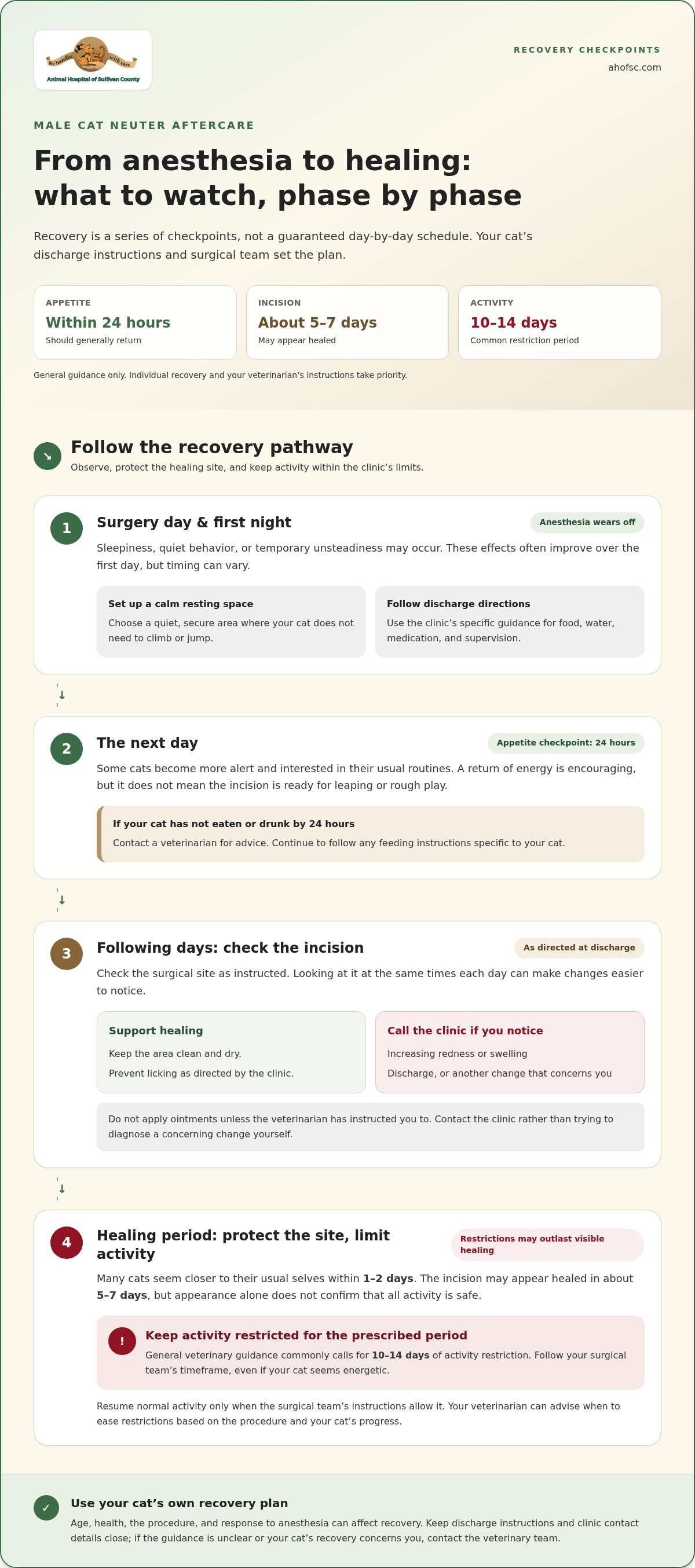
Some sleepiness may follow anesthesia on the first day, and appetite should generally return within 24 hours. Your cat may seem brighter soon after, but that doesn’t mean healing is complete: activity is commonly restricted for 10 to 14 days. This guide walks you through the usual milestones, from the first evening at home to the days when the incision is still healing. You’ll learn how to prepare a calm resting space, prevent licking, and check the surgical site without adding stress. We’ll also cover changes that call for prompt veterinary advice, so you can care for your cat while following your veterinarian’s specific instructions.
Key Takeaways
- The cat neuter recovery timeline is a series of checkpoints, not a guaranteed day-by-day schedule; your cat’s procedure and discharge instructions guide what to expect.
- Neutering removes a male cat’s testicles, while spaying is a different procedure performed on female cats.
- Set up a quiet recovery space and protect the incision while your cat heals.
- Know which changes may be part of recovery and which should prompt veterinary advice.
- Keep discharge instructions and clinic contact details close, and follow the surgical team’s guidance on follow-up and returning to normal activity.
Cat Neuter Recovery Timeline: What Happens After Surgery?
Most male cats recover from neutering without difficulty, but recovery doesn’t look exactly the same for every cat. Age, health, the procedure, and response to anesthesia can all affect what you see. A day-by-day timeline is a helpful guide, not a promise that every milestone will happen on schedule.
Recovery means the surgical site is healing and your cat can safely return to normal activity, not simply that he seems to feel better. A cat may appear lively before the healing period is complete. Follow the surgical team’s directions rather than using energy alone to decide when activity can resume.
What does a routine male cat neuter involve?
Neutering is surgery to remove a male cat’s testicles. It’s different from spaying, which refers to surgery on a female cat’s reproductive organs. Because the procedure is performed with anesthesia, a cat may be sleepy, unsteady, or quieter than usual as the effects wear off. The exact experience varies with the individual cat and the care provided by the surgical team.
A spay involves abdominal surgery, so its recovery needs and instructions can differ from those for a male neuter. Don’t use a female cat’s recovery experience as a direct comparison for your male cat.
How long does cat neuter recovery usually take?
As general guidance, some sleepiness or unsteadiness may continue for the rest of surgery day, and many cats seem more like themselves over the next day or two. These are broad expectations, not a deadline. If your cat’s behavior concerns you or doesn’t match the discharge guidance, contact the veterinary team for advice.
The cat neuter recovery timeline also includes healing after the immediate effects of anesthesia have passed. The incision may look healed within about 5 to 7 days, but appearance alone doesn’t confirm that all activity is safe. General veterinary guidance commonly calls for restricting activity for 10 to 14 days, though the surgical team should set the appropriate timeframe for your cat.
Your cat may want to jump or play before it’s safe to do so. Keep the clinic’s instructions close and follow them even if your cat seems fully energetic. The veterinarian can advise when to ease restrictions based on the procedure and your cat’s progress.
- Surgery day: Allow time for anesthesia to wear off and follow the discharge directions closely.
- Following days: Observe your cat’s behavior and surgical site, and keep activity within the prescribed limits.
- Healing period: Resume normal activity only when the surgical team’s instructions allow it.
These milestones are general guidance, not a substitute for individualized care. Your cat’s discharge instructions take priority over any typical timeframe in this article. If the paperwork is unclear or your cat’s recovery differs from what the team described, call the clinic for guidance.
Cat Neuter Recovery Timeline by Phase: The First Day Through Healing
Follow the cat neuter recovery timeline by watching how your cat changes from one phase to the next, rather than expecting an exact daily milestone. Sleepiness after anesthesia, a gradual return to normal behavior, and incision healing can all vary. The ranges below are general guidance; your cat’s discharge instructions and surgical team take priority.
Surgery day and the first night
Once home, your cat may be sleepy, quieter than usual, or temporarily unsteady as the anesthesia wears off. These effects often improve over the first day, but timing can differ. Settle him in a quiet, secure space where he can rest without needing to climb or jump. Keep an eye on him as directed at discharge, especially while he’s still drowsy.
Follow the clinic’s individual directions for food, water, medication, and supervision. Don’t assume that a routine from a previous pet’s surgery applies to this cat. If you’re unsure how to follow an instruction or his response seems concerning, call the surgical team for guidance.
The next day
By the next day, some cats are more alert and interested in their usual routines. A gradual return of energy is encouraging, but it doesn’t mean the incision is ready for rough play or leaping onto furniture. Keep activity within the limits provided by the clinic, even if your cat seems eager to explore.
Appetite should generally return within 24 hours. If your cat hasn’t eaten or drunk by then, contact a veterinarian for advice. Continue following any feeding instructions you were given, as these may be specific to your cat and procedure.
The following days and healing period
During the days after surgery, check the incision as directed in the discharge instructions. Keep the area clean and dry, and don’t apply ointments unless the veterinarian has instructed you to. Looking at the site at the same times each day can make changes easier to notice. If it becomes increasingly red or swollen, develops discharge, or otherwise concerns you, contact the clinic rather than trying to diagnose the cause yourself.
As general guidance, many cats seem closer to their usual selves within 1 to 2 days, an incision may appear healed in 5 to 7 days, and activity restrictions may continue for 10 to 14 days, but individual recovery varies. These ranges don’t replace the schedule set by your cat’s surgical team. The American Veterinary Medical Association offers general information about spaying and neutering; your clinic’s directions are specific to your cat.
Animal Hospital of Sullivan County provides surgical and medical care for pets in the New York, Connecticut, New Jersey, and Pennsylvania region. Learn more about the hospital’s veterinary care.
Normal Healing or a Warning Sign? How to Read Your Cat's Recovery
It can be hard to tell whether a change is part of healing or a reason to call the clinic. Consider the whole picture: your cat’s energy, appetite, comfort, movement, and incision, and whether things are improving or getting worse. The cat neuter recovery timeline offers general context, but it can’t determine what’s happening with an individual cat.
The comparison below is a guide, not a diagnosis. An incision can’t be assessed reliably from a description or photograph alone, so contact your veterinary team if you’re uncertain. The operating veterinarian’s discharge instructions take priority over generalized online symptom lists.
Changes that may occur
- Sleepiness or quieter behavior: A cat may be drowsy or less active after anesthesia. Follow the clinic’s guidance and notice whether alertness gradually improves.
- Appetite returning: Appetite may take time to return after surgery. Contact a veterinarian if your cat hasn’t resumed eating or drinking within 24 hours.
- Careful movement: Your cat may move less while recovering. Keep activity within the limits set by the surgical team, even if he seems eager to play.
- A surgical site to monitor: Check the area as instructed and note any changes. Don’t assume redness, swelling, discharge, or apparent pain is normal.
Changes that merit veterinary advice
- Worsening condition: Contact a veterinarian promptly if your cat becomes increasingly weak, distressed, or less responsive rather than gradually improving.
- Incision changes: Ask for veterinary advice about increasing redness or swelling, discharge, or any other change that concerns you.
- Bleeding or breathing difficulty: Significant bleeding or trouble breathing needs prompt veterinary assessment.
- Eating, drinking, or urination concerns: Seek advice if your cat won’t eat or drink after 24 hours, or hasn’t urinated within 12 to 24 hours after surgery.
- Persistent licking: If your cat keeps reaching the incision or won’t leave it alone, contact the clinic for guidance on protecting the site.
Trust what you’re observing. If a symptom is severe, appears suddenly, or is getting worse, don’t wait for it to match a list exactly. Call your veterinary clinic for direction. Animal Hospital of Sullivan County provides emergency treatment during business hours. If urgent symptoms occur outside those hours, contact an emergency veterinary service that is open.
Before calling, if it’s safe to do so, note when the change began, whether it’s worsening, and any differences in eating, drinking, urination, or behavior. This information can help the veterinary team advise you on the next step. Don’t give human pain medicines or apply ointment unless your veterinarian has specifically instructed you to.
At-Home Cat Neuter Aftercare: Protect the Incision and Support Rest
A calm, simple setup can make recovery easier for your cat and the family caring for him. Use the discharge instructions as your main guide: activity limits, incision care, and medication directions should match the procedure and your cat’s needs. The cat neuter recovery timeline can help you understand the broad phases, but your surgical team’s instructions determine what to do at home.
Set up a calm recovery space and limit activity
Choose a quiet, secure indoor area where your cat can rest and where jumping, climbing, and vigorous play are easier to prevent. Keep food, water, and a litter box accessible if that fits the discharge directions. If other pets might chase, groom, or jostle him, follow the clinic’s advice about separating them during recovery.
Protect the incision and follow medication directions
Check the surgical site as often as the clinic recommends. Look without pressing, rubbing, or otherwise handling the area. Follow instructions on keeping it clean and dry; don’t bathe your cat, apply ointments, or try home remedies unless the veterinarian specifically directs you to. If you notice a concerning change, call the clinic for advice rather than treating it yourself.
Use an Elizabethan collar or another protective option only as directed by the veterinary team. If your cat can still reach the incision or seems very distressed by the device, contact the clinic for guidance on protecting the site. Give prescribed medication at the instructed dose and schedule. Never give human pain medicines or substitute another medication, as some medicines intended for people can be dangerous to cats.
Use this checklist to keep care consistent:
- Prepare a restful spot: Choose a secure area with comfortable bedding and limited opportunities to jump.
- Make essentials accessible: Set up food, water, and litter according to the discharge directions.
- Keep activity controlled: Follow the surgical team’s specific restrictions and their duration, even if your cat seems energetic.
- Observe without disturbing: Check your cat’s behavior and incision as instructed, and note changes to report.
- Stick to prescribed care: Follow medication, collar, and separation directions; call the clinic if an instruction is unclear.
Preparing the recovery space ahead of time can help you avoid making decisions in the moment, especially if a curious cat wants to explore before activity is allowed. The veterinary surgery care standards offer further context on thoughtful surgical care, while your cat’s discharge plan remains the guide for home recovery.
For help understanding aftercare directions or concerns about your cat’s incision, the veterinary team can provide guidance.
Your Cat's Recovery Plan: Follow-Up and Local Veterinary Support
Recovery is easier to manage when the instructions from surgery are close at hand. Keep the discharge paperwork and clinic contact details somewhere easy to find, such as on the refrigerator or saved in your phone. The cat neuter recovery timeline gives a general sense of what may happen, but your cat’s procedure and the surgical team’s plan determine the right follow-up and when activity can safely return to normal.
What to keep track of during recovery
A few brief notes each day can help you spot changes and explain them clearly if you call the clinic. You don’t need to monitor every moment. Record details that help show whether your cat is steadily improving or needs veterinary guidance.
- Appetite and drinking: Note whether your cat is eating and drinking, and when you last saw him do so.
- Energy and comfort: Write down changes in alertness, movement, or signs that he seems uncomfortable.
- Medication: Track each prescribed dose as you give it, following the label and discharge directions.
- Incision appearance: Record visible changes you notice during the checks recommended by the clinic. Don’t touch or treat the site unless instructed.
- Timing of concerns: Note when a change began and whether it’s improving, staying the same, or getting worse.
These notes are especially useful if a concern develops between routine check-ins. They can help the veterinary team understand what you’ve observed without relying on memory during a stressful moment.
When to get veterinary help in Sullivan County
Follow the clinic’s discharge plan for routine follow-up, activity restrictions, and when to return to normal play. Timing can depend on the individual procedure and your cat’s progress, so don’t use a general online timeline to decide that restrictions can end. If your cat’s recovery differs from the instructions, contact the surgical team for specific advice.
For a severe or rapidly worsening change, seek immediate veterinary care. Animal Hospital of Sullivan County provides surgical and medical care for small animals, as well as emergency treatment during business hours. Pet owners in New York, Connecticut, New Jersey, and Pennsylvania can keep the clinic’s contact instructions accessible and act promptly if they’re worried. The Sullivan County animal hospital care guide shares more about the hospital’s approach to ongoing pet care.
You know your cat’s usual behavior best, and you don’t have to sort through a concerning change alone. For veterinary care or guidance about your cat’s recovery, contact Animal Hospital of Sullivan County.
Take the Next Step With Confidence
Your cat’s healing is personal, and a general cat neuter recovery timeline can’t replace guidance based on his procedure and progress. Keep the conversation open with your veterinary team if something changes or you’re unsure what to do next. Asking early can help you make a thoughtful plan instead of worrying alone.
Animal Hospital of Sullivan County has supported small animal care since 1953, with preventive, medical, and surgical care, diagnostics, and emergency treatment during business hours. If you need help with your cat’s recovery or future veterinary care in New York, Connecticut, New Jersey, or Pennsylvania, contact Animal Hospital of Sullivan County.
With clear guidance and your loving attention, you can help your cat take each step toward feeling at home again.
Frequently Asked Questions
How long does it take a male cat to recover from neutering?
The cat neuter recovery timeline has an early phase and a longer healing phase. Many cats are drowsy after anesthesia and improve over the next day, while incision healing and a safe return to activity take longer. The exact pace depends on your cat’s health and procedure. Follow the discharge plan, and contact the surgical team if recovery worsens or differs significantly from what they told you to expect.
Is it normal for my cat to be sleepy after neutering?
Some sleepiness or unsteadiness can happen after anesthesia, but your clinic’s guidance is the best reference for what to expect from your cat. Give him a safe place to rest and observe his alertness, breathing, and comfort without repeatedly disturbing him. If he seems unusually difficult to rouse, has trouble breathing, or becomes more unwell, contact a veterinarian promptly. Don’t change food or medication unless the discharge instructions say to.
Can my cat jump or play after being neutered?
Don’t encourage jumping or vigorous play until the surgical team says those activities are safe. For example, temporarily block access to a favorite high perch if your cat tends to leap onto it. The appropriate restriction and its duration depend on the procedure and your cat, so use the clinic’s directions rather than a universal schedule. If activity is hard to manage or you notice a change at the incision, call for advice.
What should a neuter incision look like as it heals?
There isn’t one appearance that fits every neuter incision, because technique and individual healing can differ. Use the operating veterinarian’s instructions to know what to look for, and observe without squeezing, cleaning, or applying products unless directed. Increasing swelling, discharge, bleeding, or an incision that appears open warrants veterinary advice. A photo or online description can’t confirm whether healing is normal, so ask the clinic to assess concerns.
Does a male cat need to wear a cone after neutering?
Whether your cat needs a cone or another protective option depends on the surgical team’s plan and his tendency to lick or chew the site. If one is prescribed, use it as directed and watch whether he can rest and reach food, water, and litter. If he can still reach the incision or is struggling with the device, contact the clinic. Don’t remove or replace it without veterinary guidance.
When should I call the vet after my cat's neuter?
Call the surgical team if your cat’s recovery doesn’t match the discharge instructions or a new concern develops. Severe or rapidly worsening signs, significant bleeding, or difficulty breathing call for immediate veterinary care. Animal Hospital of Sullivan County provides emergency treatment during business hours, not 24/7 emergency care. Pet families in New York, Connecticut, New Jersey, and Pennsylvania should keep their clinic’s contact directions handy for timely advice.
Is recovery different after a cat spay and a cat neuter?
Yes. Neutering a male cat and spaying a female cat are different operations, and a spay typically involves an abdominal incision. That can mean different aftercare and activity directions, but it doesn’t guarantee one cat will heal faster than another. Follow the instructions written for the individual patient. The veterinary surgery care guide offers additional context about surgical care.


