
What if the best way to make pet care more manageable isn’t to put off a vet visit, but to plan for it? When an unexpected health concern disrupts the household budget, it’s natural to wonder which costs you can prepare for and where cutting back could put your pet at risk. These cost-effective pet care tips focus on planning ahead while keeping your companion’s wellbeing first.
You don’t have to choose between caring for your pet and caring for your budget. A thoughtful plan can help you anticipate routine needs, prepare for surprises, and make informed choices without delaying care your pet may need.
In this article, you’ll learn how to organize predictable expenses, build a practical buffer for unexpected veterinary needs, and find safe ways to manage everyday pet-care spending. We’ll also explain why preventive care matters, when to seek veterinary guidance, and where it’s important not to cut corners. At Animal Hospital of Sullivan County in Ferndale, preventive care and diagnostic testing support informed decisions about your pet’s health, while urgent care is available during regular office hours. For pet owners in New York, Connecticut, New Jersey, and Pennsylvania, a clear next step can make planning feel more manageable for you and your cherished companion.
Key Takeaways
- Use cost-effective pet care tips to organize routine needs and prepare for unexpected changes without making price the only factor in care decisions.
- Build a practical budget by listing your pet’s needs, reviewing health records, setting aside a reserve, and revisiting your plan.
- Compare preventive care, insurance review, planned purchasing, and delaying needed care with a focus on safety and veterinary guidance.
- Follow a monthly and seasonal checklist to track health changes, check records, plan supplies, and review your spending.
- Learn how Animal Hospital of Sullivan County’s preventive, diagnostic, dental, and nutritional care can support informed planning. It is the only AAHA-accredited animal hospital in Sullivan County, accredited since 1983.
Budget Pet Care: Plan Ahead Instead of Skipping Care
A pet’s needs don’t always arrive on a convenient payday. Your household budget may already be stretched, while a beloved companion still needs food, a checkup, or attention for a new health concern. That pressure is real. But cost-effective care isn’t simply choosing the cheapest option or postponing anything that feels difficult to afford. It means identifying essential needs, planning for them as clearly as you can, and making decisions with your pet’s health in view.
Routine veterinary care helps you understand your pet’s current health and discuss appropriate next steps. It can inform decisions, but it can’t prevent every illness or unexpected expense. The wider pet economy includes a range of household needs; the pet industry encompasses various expenditures, including healthcare and food. Separating those needs in your own plan can make budgeting feel less like guesswork.
Planned care: Recurring or anticipated needs you can review and prepare for, such as food, wellness exams, vaccinations, parasite prevention, and dental care.
Unexpected needs: New health concerns, changes to treatment, or other veterinary needs that arise outside your routine. A reserve can help you prepare, though it can’t predict every situation.
Which pet expenses are predictable?
Start by listing categories, rather than trying to guess every future bill. Routine exams, vaccinations, parasite prevention, food, and dental needs are useful places to begin. Some are recurring household essentials; others may be seasonal, recommended at particular visits, or dependent on your pet’s health. Your veterinarian can help you understand what applies to your companion and when.
Needs vary with age, health, lifestyle, and veterinary guidance. A young, active pet may have different care priorities than an older companion or one managing an ongoing condition. Review your pet’s records to spot repeat needs and upcoming recommendations. Then separate necessities from discretionary purchases. Food and prescribed care belong in a different planning category from a new toy or optional accessory. Pausing a nonessential purchase is a practical budget decision, not a measure of how much you love your pet.
Why delaying care can undermine a budget
A new limp, change in appetite, or shift in behavior can leave you unsure what to do, especially when money is tight. Writing down what changed and when it started can help you describe the concern clearly to a veterinary team. Early discussion supports timely, informed decisions. It doesn’t mean every change is serious or that every untreated concern will become more expensive. It does give you a chance to understand your options rather than making decisions based on worry alone.
Budgeting works best when essential care is planned before surprises arise. If the full plan feels out of reach, identify the next essential need and discuss priorities with your veterinarian. These cost-effective pet care tips are about making thoughtful choices, not expecting yourself to foresee every expense or skip care your pet may need.
Build a Pet Care Budget Around Routine Needs and Unexpected Changes
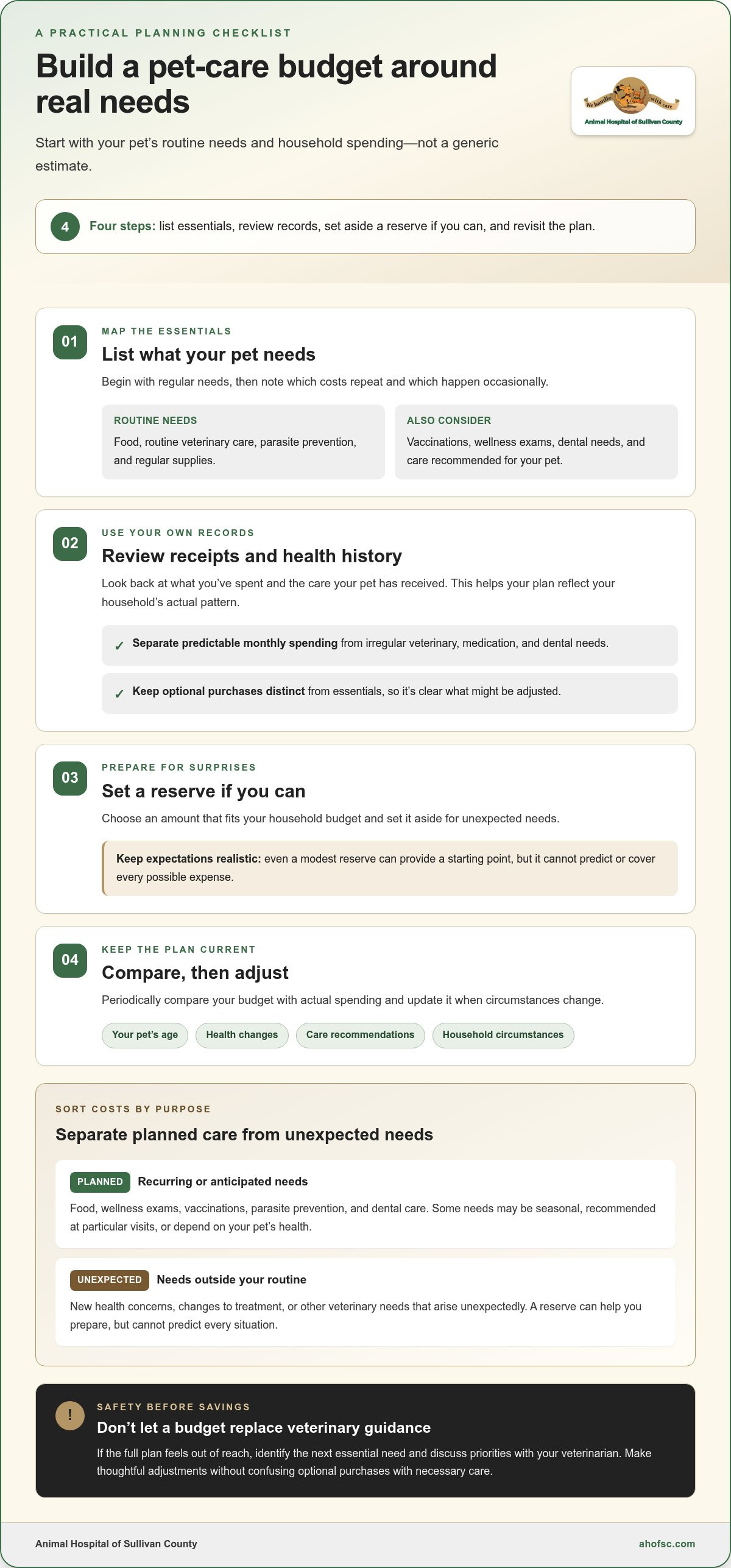
A useful budget should reflect what your pet actually needs and what your household actually spends. Rather than relying on a generic estimate, build a simple plan from your own records, then adjust it as circumstances change. This turns cost-effective pet care tips into a practical routine, not a one-time calculation.
- List the essentials. Start with food, routine veterinary care, parasite prevention, and regular supplies. Note which purchases recur and which are occasional.
- Review records and receipts. Look back at what you’ve spent and the care your pet has received. Record irregular veterinary, medication, and dental needs separately from predictable monthly spending.
- Set a reserve if you can. Choose an amount that fits your household budget and set it aside for unexpected needs. Even a modest reserve can give you a clearer starting point, but it can’t predict or cover every possible expense.
- Revisit the plan. Compare your budget with actual spending periodically. Update it when your pet’s age, health, care recommendations, or your household circumstances change.
Create a simple pet-care spending plan
Use categories that are easy to maintain. Food and regular supplies may be tracked monthly, while exams, dental care, medication, or other veterinary needs can be recorded when they occur. Keep optional purchases separate from essentials so you can see what might be adjusted without confusing it with necessary care. Reviewing receipts and health records helps the plan reflect your household’s real spending pattern instead of an unsupported average.
Plan for insurance and other unexpected needs
Pet insurance policies differ. Coverage, exclusions, waiting periods, and reimbursement terms vary, so read the policy documents and compare them with your financial priorities and your pet’s needs. A reserve fund is another planning option, but it isn’t a universal substitute for insurance. Some households may consider both; others may use a different approach. The goal is to understand the choices before an unexpected need adds pressure.
Use records to make spending decisions clearer
Keep vaccination, diagnostic, dental, and medication records together, either in an organized folder or another system you’ll remember to update. A clear history can help you review past care and discuss questions with your veterinary team. Animal Hospital of Sullivan County’s free PetDesk app provides appointment scheduling and access to health records. For a first visit, gather your pet’s records and a current medication list to help make the appointment more organized.
A plan works best when it stays flexible. A change in health may shift priorities; a change in household income may mean reviewing optional spending or adjusting how you build a reserve. For support with preventive care and your pet’s health records, explore Animal Hospital of Sullivan County’s veterinary care.
Compare Pet Care Savings Without Trading Away Safety
Some budget changes protect your pet’s wellbeing; others can leave important questions unanswered. Compare each idea by asking what it could help with, what it might miss, and whether veterinary guidance is needed. These cost-effective pet care tips focus on thoughtful trade-offs, not shortcuts that depend on guesswork.
| Choice | Possible benefit | Caution or veterinary input |
|---|---|---|
| Keep up with recommended preventive care | Supports ongoing health monitoring and informed care decisions. | Recommendations depend on the individual pet. Discuss which care is appropriate and when. |
| Review insurance policies | Helps you understand whether coverage fits your priorities and household plan. | Read the policy. Coverage, exclusions, waiting periods, deductibles, and reimbursement rules vary. |
| Plan purchases and check supplies | Can help avoid duplicate or unused items and keep regular needs visible. | Ask a veterinary professional for guidance on nutrition, parasite prevention, or products tied to health. |
| Skip or delay recommended care | May postpone an expense in the moment. | Leaves a health question unanswered. Discuss the recommendation and your concerns with your veterinary team. |
Cost savings should never depend on guessing about a pet’s medical needs.
Where owners can look for practical savings
Before buying supplies, check what you already have, note what’s running low, and compare that list with your pet’s regular needs. This can reduce duplicate purchases and help you avoid stocking items your companion doesn’t use. For occasional or short-term needs like travel crates, carriers, or training equipment, utilizing rental marketplaces like Life4Rent can help keep upfront costs manageable. For food, supplements, or preventive products, discuss suitable options with a veterinary professional rather than switching based on price alone. A veterinary-clinic pet store buying guide can also help you think through product choices and questions to raise.
Changing foods abruptly can disrupt a pet’s routine and isn’t a safe shortcut to savings. If you’re considering a diet change, ask for guidance on whether it suits your pet and how to make the transition. Home care can be useful for appropriate everyday needs, but it shouldn’t replace an assessment when a veterinary exam has been recommended. Online products also vary; don’t assume every item is unsafe, but make sure a health-related product is appropriate for your pet.
How to evaluate insurance choices
Compare policy documents rather than relying on a headline or general description. Look at covered conditions, exclusions, deductibles, reimbursement rules, and waiting periods. Pre-existing-condition rules differ, so review the actual policy wording and consider how it fits your pet’s history and your household priorities. No policy should be treated as a promise that a particular claim will be paid. Insurance may be one part of a plan, while a reserve fund is another option, not a universal replacement.
Use a Practical Routine to Keep Pet Care Costs Manageable
A small, repeatable check-in can help you spot upcoming needs before they get lost in a busy month. It also makes your budget more useful: you’re tracking your own pet’s care, not relying on online averages that may not match your household. These cost-effective pet care tips work best as a planning habit, not a reason to postpone care when your pet’s health changes.
A monthly check-in for pet owners
Choose a regular time to review what’s coming up and note what you’ve observed. Keep the process simple:
- Check appointment dates and health records for upcoming care or follow-up.
- Look over food, medication, parasite-prevention products, and other regular supplies. Note what needs replacing so you can plan purchases and avoid duplicates.
- Write down changes in appetite, activity, behavior, or comfort, including when you first noticed them.
- Update your spending notes with actual household expenses and separate routine purchases from irregular needs.
Animal Hospital of Sullivan County’s free PetDesk app provides appointment scheduling and access to health records, which can help keep those details in reach. If you notice a concerning change, don’t wait for the next budget review to decide what to do. Contact your veterinary team for guidance rather than delaying care to save money.
A seasonal review of changing needs
As your pet ages, their health, routine, and surroundings may change. Revisit preventive-care plans with your veterinary professional, including whether recommendations should be adjusted. Outdoor activity and seasonal conditions can also affect parasite-prevention needs. For pets spending time outdoors in Sullivan County, include a conversation about tick prevention in your seasonal planning and follow veterinary guidance for your companion.
Use the change of season as a prompt to check records, note new habits or symptoms, and review supplies that may be running low. A seasonal review isn’t a diagnosis; it’s a practical way to notice when your pet’s needs or your plan may warrant a conversation.
Know the local route for veterinary support
Keep your veterinary team’s contact details and office hours somewhere easy to find. Animal Hospital of Sullivan County provides urgent care and rapid-response emergency surgery during regular office hours only. Its hours are Mon-Thu 7:30 AM to 6:00 PM, Fri 8:00 AM to 1:00 PM, Sat by appointment, Sun closed. Knowing this schedule helps you plan routine appointments, but it shouldn’t lead you to wait when your pet’s health changes. Seek veterinary guidance promptly instead of treating delayed care as a budgeting strategy.
Make your next check-in easier by scheduling veterinary care with Animal Hospital of Sullivan County and keeping your pet’s records current.
Make a Cost-Conscious Care Plan With Animal Hospital of Sullivan County
A thoughtful pet-care budget is most useful when it helps you make informed choices for the animal in front of you. At Animal Hospital of Sullivan County (AHOFSC), preventative wellness exams, diagnostic testing, dental care, and nutritional counseling help the veterinary team assess an individual pet and discuss appropriate next steps. These services support care decisions, but no exam or test can promise to prevent every illness or future expense.
How ongoing veterinary care supports informed decisions
Bring your questions, health records, and notes about changes you’ve noticed to a wellness visit. Together, you and the veterinary team can review your pet’s health and discuss which care may be appropriate. Diagnostic testing can add information when a concern needs further assessment, while dental care and nutritional guidance address other aspects of your companion’s wellbeing.
A wellness exam is a chance to talk through priorities, not a guarantee that every concern will be found or avoided. For a closer look at what to expect, use the Sullivan County pet wellness exam guide as you prepare your questions and records.
Local care grounded in experience and compassion
AHOFSC is the only AAHA-accredited animal hospital in Sullivan County and has been accredited since 1983. The hospital adheres to over 900 rigorous standards. This accreditation is one part of the practice’s commitment to a structured standard of care, alongside the personal attention that matters when discussing your pet’s health and your household’s priorities.
Veteran-owned and woman-owned, AHOFSC has served the community since 1953. The practice is led by Dr. Barbara Bodolosky, a U.S. Army veteran with over 30 years of veterinary experience. Its Ferndale location serves pet families in Sullivan County, including Monticello and Liberty, as well as the Catskills, Hudson Valley, and New York City.
Choose a helpful next step
To put your plan into action, gather your pet’s available records and make a note of questions about preventive care, dental health, nutrition, or a change you’ve observed. A wellness visit gives you an opportunity to discuss your companion’s needs with the veterinary team and consider a practical next step. You don’t need to have every future expense mapped out before starting the conversation.
These cost-effective pet care tips are meant to help you plan with care, not promise a particular financial or health outcome. When you’re ready, call Animal Hospital of Sullivan County at (845) 292-6711 to plan a wellness visit for your pet.
Take One Confident Step Toward Your Pet’s Care
A care plan doesn’t need to be perfect to be useful. Choose one next step that feels manageable, such as organizing your pet’s records, noting a question about a recent change, or setting a reminder to review upcoming care. Small, steady actions can make it easier to stay prepared while keeping your companion’s individual needs at the center.
The most helpful cost-effective pet care tips are the ones you can put into practice with confidence. If you’re unsure which need to prioritize, a conversation with a veterinary team can help you understand your options and decide what makes sense for your pet. You don’t have to figure it all out alone.
Start planning your pet’s care with Animal Hospital of Sullivan County. One thoughtful next step can help you feel more prepared for the road ahead, and your cherished companion deserves care shaped around them.
Frequently Asked Questions
Can preventive pet care help me manage veterinary expenses?
Yes, preventive care can help you plan for recommended services and make informed decisions about your pet’s needs. At a wellness visit, ask which vaccinations or parasite-prevention steps are appropriate and when to revisit them. Keep a note of recommendations and follow-up dates so you can plan ahead. Routine care supports informed choices, but it can’t guarantee your pet will avoid illness or unexpected veterinary needs.
Is pet insurance worth considering for my dog or cat?
It may be worth considering if you want help managing eligible unexpected costs, but whether it fits depends on your household and the policy. Before enrolling, consider how you’d handle an unexpected bill without coverage, then compare that with the policy’s terms and premiums. Review exclusions, deductibles, reimbursement rules, and waiting periods. Don’t rely on a brief summary alone; the policy document explains what may and may not be covered.
What should I include in a monthly pet care budget?
Include recurring essentials such as food, parasite prevention, and regular supplies, along with a monthly amount for planned veterinary needs. Track irregular items separately, such as medication refills, dental care, or diagnostic testing, so they don’t disappear from your overall picture. These cost-effective pet care tips work best when based on your own receipts and records. Adjust categories as your pet’s needs or household budget changes.
Can I give my pet human medicine to avoid a veterinary visit?
No, don’t give human medicine unless a veterinarian specifically advises you to do so. A drug that’s familiar to people may be unsafe for a pet, and the appropriate response depends on the animal and the situation. If your pet has already swallowed medication, note the product, strength, and possible amount, then seek veterinary guidance promptly. Don’t try to manage a health concern by guessing at a dose.
Does pet insurance cover pre-existing conditions?
Coverage for pre-existing conditions depends on the insurer’s policy terms, so don’t assume a condition will be covered or excluded in the same way by every plan. Read the policy definition and rules, including how it treats symptoms or diagnoses documented before coverage begins. If your pet has a health history, keep relevant records handy as you compare plans. The written policy, not a general description, determines its terms.
What should I do if my pet needs urgent care outside AHOFSC’s office hours?
AHOFSC’s urgent care and rapid-response emergency surgery are available during regular office hours only. Outside those hours, seek emergency veterinary care promptly and follow the veterinary team’s instructions. Pet owners in New York, Connecticut, New Jersey, or Pennsylvania should identify an appropriate emergency option in advance. If your pet’s condition seems urgent, don’t delay seeking help to wait for regular office hours.
How can I keep track of my pet’s health records and appointments?
Keep a current record of appointments, vaccinations, test results, and medications together, either digitally or in a folder you can bring to visits. Add dates and note questions as they come up, such as when a new symptom began or a medication changed. The free PetDesk app provides appointment scheduling and access to health records. Keeping a separate backup of key information can also be helpful if you can’t access your phone.


