
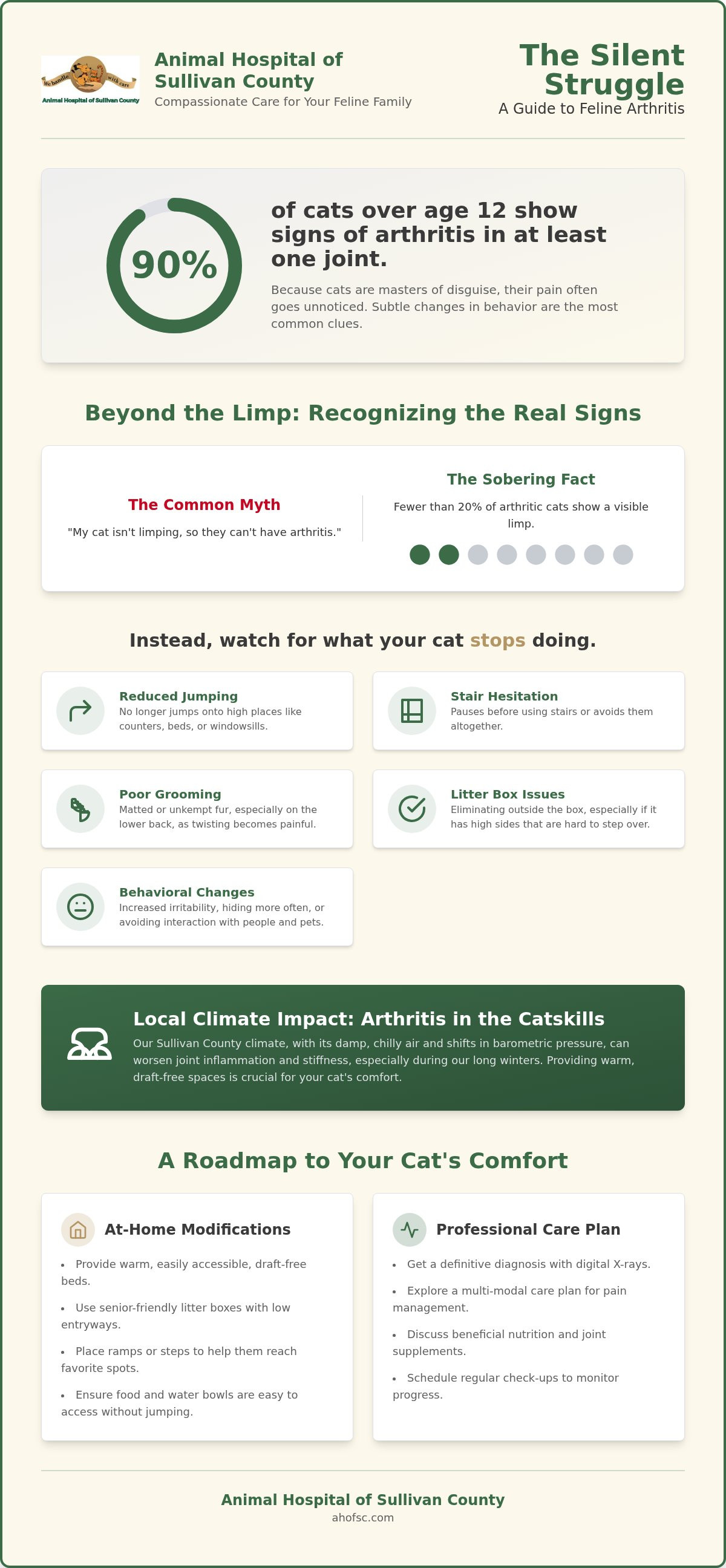
Did you know that 90% of cats over the age of 12 show evidence of arthritis in at least one joint? It's a staggering number that often surprises even the most devoted pet parents. Because cats are natural survivors, they've become experts at masking physical discomfort, making it difficult to spot the signs of arthritis in cats Sullivan County families should be looking for. You might notice your friend jumping less or sleeping more and assume it's just a normal part of aging, but these subtle shifts often signal a need for medical support.
We understand the anxiety that comes with seeing your cherished companion slow down. It's perfectly natural to feel a bit of guilt or confusion when their behavior changes, but you don't have to navigate this journey alone. We promise to help you replace that worry with confidence by teaching you how to identify hidden pain and exploring the compassionate care options available right here in Ferndale to improve your cat's quality of life.
This guide provides a clear checklist of behavioral symptoms to watch for and explains how modern diagnostics can provide the quick answers you need. We will also share practical ways to make your home more comfortable, ensuring your feline friend remains a happy, mobile member of your family for years to come.
Key Takeaways
- Learn how to spot the silent signs of arthritis in cats Sullivan County owners often mistake for normal aging.
- Discover how our local Catskill climate impacts joint health and what you can do to keep your senior cat cozy during damp winters.
- Understand the role of professional diagnostics, including digital X-rays, in creating a compassionate roadmap for your pet's comfort.
- Find out which simple home modifications, like senior-friendly litter boxes, can immediately improve your cat’s daily quality of life.
- Explore the benefits of multi-modal care, including nutrition and supplements, to help your feline friend move with ease again!
Understanding Feline Arthritis: Why Cats Hide the Pain
Cats are remarkable creatures. Their evolutionary history as both hunters and hunted has gifted them with a powerful survival instinct: the ability to mask physical vulnerability. In the wild, a cat that shows pain is a target. This instinct remains deeply rooted in our domestic companions today. Because they don't cry out or complain, identifying the signs of arthritis in cats Sullivan County families love requires a keen, watchful eye.
Many owners assume their cat is simply slowing down due to age. However, there is a distinct difference between natural aging and degenerative joint disease. While age is a factor, arthritis is a chronic inflammatory condition that primarily affects the hips, knees, and spine. It's a progressive disease that changes the way your cat experiences their world. Recognizing that this is a medical condition rather than just a birthday milestone is the first step in helping them feel like themselves again.
To better understand this concept, watch this helpful video:
Limping vs. Behavior: The Great Feline Misconception
One of the biggest myths in pet care is that an arthritic cat will limp. In reality, fewer than 20% of cats with arthritis actually show a visible limp. Instead of a change in gait, look for changes in grooming. If your cat has matted fur on their back or hindquarters, it's often because it hurts too much to twist and reach those spots. Much like humans who find relief from chronic joint and back pain through specialists like Premium Sports & Orthopedic Center, cats require a proactive approach to manage their discomfort. You might also notice they've become more irritable or withdraw from social interactions they once enjoyed. These emotional shifts are often a quiet plea for help.
What Your Cat Stops Doing
The most telling signs of arthritis in cats Sullivan County residents should watch for are "omissions." Pay attention to what your cat stops doing. Are they no longer jumping onto the kitchen counter or their favorite sunny windowsill? Do they hesitate at the bottom of the stairs, looking up before deciding to climb? Even litter box habits can change. If the walls of the box are high, a cat with joint pain may begin having accidents nearby simply because stepping over the edge has become too painful. Recognizing these lifestyle shifts is the first step toward restoring their comfort and happiness.
Local Factors: Arthritis in Sullivan County and the Catskills
Living in the Catskills offers beautiful scenery, but our unique climate plays a significant role in the physical comfort of our pets. In Sullivan County, we see a high prevalence of arthritis in our local senior pet population. The damp, chilly air that rolls through our valleys can be particularly hard on aging joints. Owners often report a "seasonal shift" in their cats' mobility as soon as the autumn leaves begin to fall and the first frost hits. This isn't just a coincidence; the environment is a major factor in how your cat feels every day.
The Impact of New York Winters on Joint Health
Freezing temperatures and shifts in barometric pressure are more than just weather patterns; they're physical triggers for inflammation. When a storm approaches Ferndale, the drop in air pressure can cause sensitive joint tissues to expand, leading to increased discomfort. This is why morning stiffness is often much more pronounced during our long, freezing winter months. It's vital to provide warm, draft-free resting spots, especially in older Catskill homes that might have chilly floors or drafty windows. Identifying the subtle signs of osteoarthritis during these cold snaps is key to ensuring your cat isn't suffering in silence while curled up by the radiator. Maintaining a consistent indoor temperature helps keep those joints from seizing up when the thermometer outside drops.
Sullivan County Lifestyle and Outdoor Access
Our rural landscape adds another layer of complexity to feline health. Many local cats enjoy exploring the outdoors or even spending time in barns and outbuildings. However, the uneven terrain of rural New York yards, filled with rocks, slopes, and fields, puts significant stress on a senior cat's frame. If your feline friend has spent years patrolling the neighborhood, their joints may show wear and tear earlier than an indoor-only cat. We often recommend transitioning these outdoor-loving seniors to a safer, more controlled indoor environment as they age. This protects them from the elements and prevents them from overexerting themselves on difficult terrain.
Watching for the signs of arthritis in cats Sullivan County families might otherwise overlook is a beautiful way to show your pet you care. If you've noticed your cat hesitating before heading outside or spending more time near the woodstove, it might be time for a senior wellness consultation to discuss their comfort. Our team is here to help you navigate these seasonal changes and keep your companion purring through the coldest New York nights.
Professional Diagnostics at Our Ferndale Animal Hospital
When you bring your feline friend to see us, we don't just see a patient; we see a cherished family member. Since 1953, our team has focused on providing compassionate, lifelong care for the small animals of our community. Diagnosing the signs of arthritis in cats Sullivan County owners report requires a blend of advanced technology and a gentle "bedside manner." We believe that getting quick, accurate answers is the kindest way to start the journey toward healing and comfort.
The Diagnostic Process for Feline Joint Pain
Our process begins with you. Your observations at home are our most valuable tool. We'll discuss any changes in your cat’s routine, from their sleeping patterns to their social interactions. Following this, we perform a thorough physical exam. We gently palpate the joints to check for range of motion and crepitus, which is a subtle "crunchy" sensation that indicates cartilage wear. Because we understand that vet visits can be stressful, we prioritize a calm, quiet environment for every senior pet.
To confirm what we find during the exam, we utilize our in-house diagnostic laboratory. We often recommend digital X-rays to visualize bone changes and inflammation clearly. In some cases, we may use pet ultrasound Sullivan County services to look at soft tissue structures and surrounding areas. Before starting any long-term medication, we perform bloodwork to ensure your cat’s kidneys and liver are healthy enough to process treatments safely. For more on how we support our older patients, explore our guide to senior pet care Sullivan County.
Why Early Detection Matters for Longevity
Early intervention is vital for preventing "wind-up" pain. This occurs when the nervous system becomes over-sensitized to chronic discomfort, making the pain much harder to manage later on. By catching arthritis early, we can protect your cat from secondary behavioral issues like anxiety or sudden irritability. Chronic pain is exhausting. It changes a cat's personality and their willingness to engage with the family they love.
As a dedicated animal hospital Sullivan County families have trusted for decades, we create personalized care plans that evolve with your cat’s needs. These plans don't just focus on medicine; they focus on the whole cat. Our goal is to ensure their golden years are spent in comfort, not in hiding. We're here to be your partner in this journey, ensuring your pet enjoys the highest quality of life possible.
Practical Home Modifications for Your Aging Cat
Once we identify the signs of arthritis in cats Sullivan County residents often feel a mix of relief and concern. Relief because there's finally an explanation for those subtle behavior changes, and concern about what steps to take next. The good news is that small, thoughtful adjustments to your home can make a world of difference. Your home should be a sanctuary where your senior companion feels safe and supported in every room. By making their environment more accessible, you're directly improving their daily quality of life.
Start with their most basic needs. High-walled litter boxes are a common obstacle for arthritic cats who struggle to lift their hind legs. Swapping these for low-entry "senior-friendly" models ensures they can step in and out without discomfort. Similarly, think about where they rest. Orthopedic bedding provides much-needed support for aching joints, but placement is just as vital. Position these beds in warm areas away from the drafts we discussed earlier. If your cat has a favorite elevated spot, like a windowsill or your bed, consider installing pet ramps or small carpeted stairs. These tools allow them to maintain their favorite routines without the jarring impact of jumping.
Creating a "Low-Impact" Home Environment
A senior-friendly home is all about stability and accessibility. If you have hardwood or tile floors, your cat might struggle with "slipping," which can cause painful muscle strains and anxiety. Placing non-slip rugs or runners in high-traffic paths provides the traction they need to walk confidently. We also recommend raising food and water bowls just a few inches off the ground. This simple change reduces the need for them to crouch, which eases tension in the neck and shoulders. For cats with declining vision, adding a few nightlights near their litter box and food area helps them navigate safely after the sun goes down.
Weight Management as a Pain Relief Tool
One of the most effective ways to manage joint pain is through weight control. Every extra pound puts direct mechanical stress on already inflamed joints; it's a heavy burden for a small frame to carry. By keeping your cat at a healthy weight, you're essentially providing them with daily pain relief. We can help you find the right balance through specialized pet store products veterinary clinic recommendations, including weight-control diets that don't sacrifice nutrition. Gentle exercise, like short play sessions with soft toys, keeps their muscles strong enough to support their joints without causing overexertion.
Creating a comfortable home is a beautiful act of love for your aging friend. If you're unsure which changes would benefit your cat the most, we invite you to contact us for a senior wellness check with our compassionate team. Together, we can ensure your home remains a place of joy and ease for your feline family member.
Compassionate Medical Management and Long-Term Care
Managing arthritis is a journey of love and long-term commitment! Once we have identified the signs of arthritis in cats Sullivan County families bring to us, we move toward a multi-modal therapy plan. This approach doesn't rely on just one solution; instead, it combines specialized nutrition, high-quality supplements, and modern medical care. We believe in treating the whole cat, ensuring they don't just live longer, but live better every single day.
Supplements like Glucosamine, Chondroitin, and Omega-3 fatty acids serve as the building blocks for joint support. These nutrients help maintain cartilage health and naturally reduce the inflammation that causes daily discomfort. Dr. B’s philosophy is always rooted in balancing medical necessity with a cat's overall happiness. We want your cherished companion to feel like themselves again, whether that means regaining their playful spirit or simply resting comfortably without a wince.
Safe Medication and Supplementation
Safety is our highest priority when it comes to the pets we serve. You must NEVER give human pain relievers to cats; medications like acetaminophen or ibuprofen are highly toxic to felines and can be life-threatening! Instead, we utilize modern, feline-specific pain medications designed with their unique metabolism in mind. Prescription feline NSAIDs have a strong safety profile when monitored correctly through our in-house laboratory. We also offer advanced injectable therapies, including long-acting joint lubricants and monoclonal antibody treatments, which can provide significant relief with a simple visit to our clinic. These modern options often have fewer side effects, making them a wonderful choice for senior cats with sensitive systems.
Partnering with Animal Hospital of Sullivan County
Long-term care is about more than just prescriptions; it's about a dedicated partnership. Regular "quality of life" checkups at our Ferndale hospital allow us to monitor your cat’s progress and adjust their care plan as their needs evolve. We prioritize compassionate communication, ensuring you feel supported and informed every step of the way. We understand that the relationship between you and your pet is a sacred bond. It is a relationship that deserves both technical excellence and a neighborly, gentle touch!
Since 1953, we've stood by the families of the Catskills through every stage of their pets' lives. Helping your senior cat navigate their golden years with ease is our true privilege. Together, we can ensure your home remains filled with the quiet purrs and gentle affection that make your family complete.
Help Your Feline Friend Move with Ease Again
Understanding that your cat may be masking discomfort is the first step toward restoring their daily happiness. By watching for the subtle signs of arthritis in cats Sullivan County families can identify pain before it deeply impacts their pet's personality. Whether it's adjusting their home environment to be more accessible or managing the effects of our chilly Catskill winters, your proactive care makes a world of difference. It's about ensuring their golden years are filled with comfort rather than quiet struggle.
At the Animal Hospital of Sullivan County, we've been a partner in pet wellness since 1953. Dr. Barbara Bodolosky and our dedicated team utilize our full-service diagnostic lab in Ferndale, NY, to provide the clear answers you need. We combine medical authority with neighborly empathy to support the sacred bond you share with your animal.
Your cat doesn't have to navigate aging alone. Schedule a compassionate wellness exam for your senior cat today. We're ready to help your friend enjoy many more happy, mobile years by your side!
Frequently Asked Questions
Is it normal for my senior cat to sleep all day, or is it arthritis pain?
It is not necessarily normal for a cat to sleep all day just because they are older. While seniors do rest more, excessive lethargy is often one of the signs of arthritis in cats Sullivan County owners should investigate. If your cat is avoiding movement or seems "lazy," they might actually be avoiding the pain of getting up. A thorough physical exam can help distinguish between a peaceful nap and a painful retreat.
Can feline arthritis be cured, or just managed?
Feline arthritis cannot be cured, but it can be very effectively managed to ensure a high quality of life. Since it is a progressive degenerative disease, our goal at Animal Hospital of Sullivan County is to slow the progression and minimize discomfort. Through a combination of medical care, environmental changes, and specialized nutrition, we can help your cat remain mobile and happy throughout their senior years in the Catskills.
Are there natural supplements that actually work for cat joint pain?
Yes, several natural supplements are scientifically proven to support joint health in cats. Glucosamine and chondroitin help maintain cartilage, while Omega-3 fatty acids from high-quality fish oils act as natural anti-inflammatories. We carry a selection of these pet store products at our Ferndale clinic. These supplements work best when started early, providing a foundation of support that complements other medical treatments and diagnostic plans recommended by Dr. B.
What happens if I leave my cat’s arthritis untreated?
Leaving arthritis untreated leads to a cycle of chronic pain and declining mobility. Without intervention, the joint inflammation worsens, potentially causing "wind-up" pain where the nervous system becomes over-sensitized. This often results in secondary issues like muscle wasting, obesity from lack of movement, and behavioral changes such as aggression or hiding. Treating the signs of arthritis in cats Sullivan County residents observe early is vital for preventing this downward spiral.
How do I know if my cat is in too much pain to have a good quality of life?
Assessing quality of life involves looking at your cat's ability to perform "activities of daily living." We often use a scale to evaluate their appetite, hygiene, and social engagement. If your cat no longer enjoys their favorite treats, stops grooming, or withdraws from the family, their pain may be poorly controlled. We offer compassionate consultations to help you navigate these difficult observations and adjust their care plan for maximum comfort and peace of mind.
Can I give my cat baby aspirin for their joint stiffness?
No, you should never give your cat baby aspirin or any human pain medication. Cats have a unique metabolism that makes common over-the-counter drugs like aspirin, ibuprofen, and acetaminophen highly toxic and potentially fatal. Even a small dose can cause severe kidney damage or stomach ulcers. Always consult with our medical team for feline-safe prescriptions that are specifically formulated to manage joint stiffness without the life-threatening risks of human medications.
How often should an arthritic cat see the vet in Sullivan County?
We typically recommend that cats with managed arthritis visit our Ferndale hospital every six months. These biannual wellness exams allow us to monitor the progression of the disease and perform necessary bloodwork to ensure their medications are working safely. Because our Catskill weather can fluctuate so much, these regular check-ins help us adjust their treatment plan to keep them comfortable through every seasonal shift and barometric pressure change.
Is feline arthritis more common in specific breeds in our area?
While any cat can develop arthritis, certain breeds like Maine Coons, Persians, and Scottish Folds are genetically predisposed to joint issues. Maine Coons, which are quite popular in our rural New York region, are particularly prone to hip dysplasia. However, the majority of cases we see are related to age and previous injuries. Regardless of breed, we focus on providing personalized diagnostics to ensure every local cat receives the specific support they need.


