
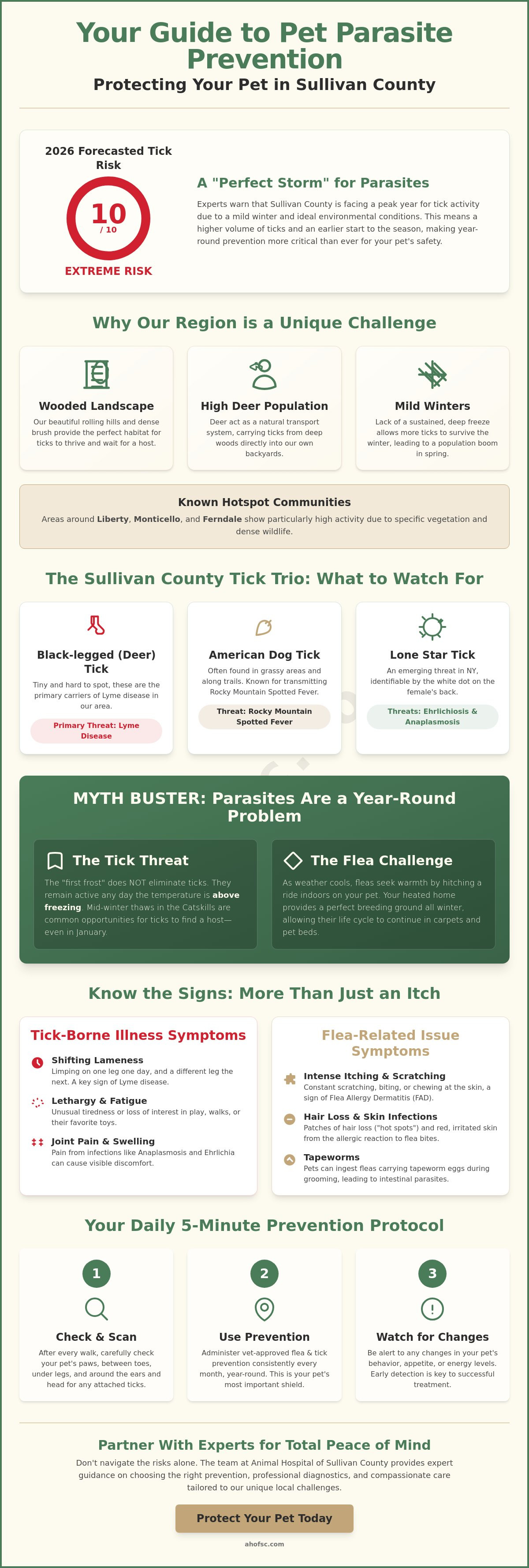
Experts are warning that 2026 is shaping up to be a "10 out of 10" risk year for ticks across New York. Our beautiful Sullivan County is right in the heart of this activity. We understand that heart-sinking feeling of finding a tick on your dog after a simple afternoon walk. It's incredibly stressful to worry about Lyme disease or the rare Powassan virus when you're just trying to enjoy the sunshine with your best friend. You want your home to be a sanctuary; you don't want to be constantly checking paws and fur for tiny intruders.
We agree that your pet's safety is a sacred bond that deserves the best protection possible. You shouldn't have to feel confused by endless product labels or anxious about every blade of grass. Our goal is to provide a compassionate, expert-led protocol for flea tick prevention Sullivan County families can trust for total peace of mind. In this guide, we'll explain the unique local risks your pets face and how to choose the right preventive care to keep your cherished companions healthy and happy all year long.
Key Takeaways
- Identify the specific local hotspots and environmental factors that make our region a "perfect storm" for parasites.
- Learn to recognize the subtle symptoms of tick-borne illnesses like Lyme disease before they become serious medical concerns.
- Master a simple five-minute daily routine that transforms medical safety into a comforting bonding experience for you and your pet.
- Get expert guidance on choosing the right flea tick prevention Sullivan County products, from oral medications to specialized topicals.
- Discover how professional diagnostics and a dedicated local history of care can protect your cherished companion’s long-term well-being.
Why Sullivan County is a Unique Challenge for Pet Owners
Living in the Catskills means sharing our lives with the beauty of the great outdoors. Our sprawling wooded lots and rolling hills are a paradise for us and our animals, but they also create a "perfect storm" for parasites. The high deer population acts as a natural transport system, carrying ticks right into our backyards and onto our porches. It's a unique local challenge that requires a steady, watchful eye to keep our cherished companions safe from harm.
Some neighborhoods in our region see more activity than others. Areas around Liberty, Monticello, and Ferndale are known hotspots because of their specific vegetation and dense brush. In these communities, flea tick prevention Sullivan County is more than just a seasonal task; it's a vital part of keeping your household healthy. We see the anxiety this causes for many families, and we're here to help you navigate these risks with confidence and care.
The outlook for 2026 is particularly concerning for our community. State experts have labeled this year a "10 out of 10" for tick risk because our recent winter was unusually mild. Without a deep, sustained freeze to thin out the population, we're expecting an early start to the season and a much higher volume of pests. This means the time to start your protection protocol is now, before the spring activity reaches its peak.
The Sullivan County Tick Trio: What to Watch For
- Black-legged (Deer) Ticks: These are the primary carriers of Lyme disease in the Hudson Valley. They're tiny and often hard to spot, which makes daily checks essential for your pet's safety.
- American Dog Ticks: Often found in grassy clearings and along hiking trails, these ticks are known for transmitting Rocky Mountain Spotted Fever.
- Lone Star Ticks: This is an emerging threat in New York. You can identify them by the distinct white dot on the female's back.
Understanding the different Tick-borne diseases is the first step in protecting your pet's quality of life. Beyond Lyme, we're seeing a rising trend in anaplasmosis and babesiosis in local diagnostic tests. It's a lot to manage, but being informed helps you act quickly if you ever notice your pet acting out of character.
Year-Round Risks in the Catskills
There's a common belief that the "first frost" ends the threat for the year. Unfortunately, this is a myth that can leave your pet vulnerable. Ticks are incredibly hardy and remain active whenever the temperature rises above freezing. In Sullivan County, we often have mid-winter thaws that bring these pests back out in search of a host. We've found ticks on pets even in January after a particularly sunny afternoon.
Fleas present their own winter challenge for local homes. As the weather cools, these pests look for warmth and often hitch a ride inside on your pet's fur. Once they've entered your home, our long heating seasons create a perfect breeding ground. Fleas can complete their entire life cycle in your carpets or your pet's favorite bed while the snow falls outside. Protecting your family's bond means staying vigilant through every season of the year.
Understanding the Risks: More Than Just an Itch
Protecting your pet's health is about more than just avoiding a nuisance. It's about preserving the joyful moments you share every day. While a flea or tick might seem like a small problem, the diseases they carry can have a profound impact on your pet's quality of life. In our local area, we see these health challenges frequently, making consistent flea tick prevention Sullivan County a cornerstone of compassionate care. We know how much you love your animals, and seeing them in distress is heartbreaking for any pet parent.
Lyme disease is the most frequent threat we encounter in Sullivan County dogs. It often presents in ways that can be confusing. You might notice "shifting lameness," where your dog limps on one leg one day and a different one the next. They may also seem unusually tired or lose interest in their favorite toys. These aren't just signs of getting older; they're often signals of an underlying infection. Our local diagnostic lab tests are also showing a rise in other bacterial infections like Anaplasmosis and Ehrlichia. These can be just as serious as Lyme, affecting blood cells and leading to joint pain or even more severe complications if they aren't caught early.
Fleas present their own set of serious risks. For some pets, they're a source of intense physical distress rather than just a simple itch. Flea Allergy Dermatitis (FAD) means even a single bite can trigger an extreme immune response. This leads to weeks of scratching, hair loss, and painful skin infections. Additionally, fleas are a common carrier for tapeworms. If your cat or dog accidentally ingests a flea while grooming, they can develop an internal parasite infection that requires medical attention.
The 24-Hour Rule for Tick Transmission
The grace period for disease transmission is the 24 to 48-hour window a tick must remain attached to a host before bacteria like Lyme can successfully enter the bloodstream. This biological delay is why checking your pet every single day is so effective. If you can find and remove a tick shortly after a walk, you significantly lower the chance of infection. Early detection really is your pet's best defense. You can find more expert advice from Cornell University on flea and tick prevention to help guide your choices for year-round safety.
Symptoms Your Pet Needs an Urgent Visit
If your pet starts "slowing down," has a fever, or stops eating, it's time for a professional evaluation. Don't wait for symptoms to worsen if you suspect a tick-borne illness. For those pets dealing with intense skin irritation, hot spots, or excessive scratching, our team can provide the medical care and diagnostics needed to get your companion back to their happy, comfortable self. We're here to support you and your pet through every step of their recovery.
Step-by-Step: Your Daily Sullivan County Prevention Protocol
Protecting your pet is a daily act of devotion. We believe medical safety shouldn't feel like a chore; instead, it's a beautiful moment of connection between you and your best friend. By turning your daily inspection into a "Compassionate Tick Check," you're not just looking for pests. You're offering your pet a soothing massage and reinforcing the sacred bond you share. For effective flea tick prevention Sullivan County pets rely on a consistent system that starts with this attentive, hands-on care at home.
While over-the-counter options are available at many local stores, they often fall short in high-density areas like the Catskills. Our local parasites are incredibly resilient. Choosing professional-grade Preventive Care products ensures your pet has the strongest possible shield. These medical-grade solutions are specifically designed to handle the heavy tick pressure we face in New York, providing a level of reliability that generic products simply can't match. This professional approach gives you the confidence to explore our beautiful trails without fear.
How to Perform a Proper Tick Check
Consistency is your greatest ally. After every outdoor excursion, take five minutes to run your hands over your pet's body. Start at the "hot zones" where ticks love to hide: between the toes, under the armpits, inside the ears, and around the base of the tail. Use your fingertips to feel beneath the fur for any small, hard bumps that don't belong there. Ticks can be as small as a poppy seed, so your sense of touch is often more reliable than your eyes.
If you discover a tick, stay calm. Your pet will pick up on your energy, so keep the environment peaceful. Use a pair of fine-tipped tweezers to grasp the tick as close to the skin's surface as possible. Pull upward with steady, even pressure. Don't twist or jerk the tick, as this can cause the mouthparts to break off and remain in the skin. Once removed, clean the bite area and your hands thoroughly with rubbing alcohol or soap and water.
Yard Safety in the Hudson Valley
Your backyard should be a safe haven for your family. You can make your property much less inviting to parasites by keeping your grass mowed short and promptly removing leaf litter. Ticks thrive in moist, shaded environments, so clearing out brush and tall weeds helps eliminate their favorite hiding spots. These simple steps significantly reduce the number of "hitchhikers" waiting to jump on your dog or cat.
Creating a physical barrier is another expert strategy. Consider installing a three-foot-wide border of woodchips or gravel between your lawn and any wooded areas. This "tick-safe zone" restricts tick migration into your recreational space. For more detailed environmental tips, the New York State tick-borne disease guide offers wonderful resources on managing your local landscape. Combining these outdoor habits with reliable medical protection ensures your pet stays safe, happy, and healthy through every season.
Choosing the Right Protection: Medical vs. Natural
Every pet parent wants to make the safest choice for their furry family members. We often hear from neighbors who hope to use essential oils or cedar sprays to avoid traditional medications. While we deeply respect the desire for a natural lifestyle, the reality of flea tick prevention Sullivan County requires a shield that can stand up to extreme pressure. Our local parasites are incredibly hardy. They've adapted to our environment, often rendering "natural" repellents ineffective against the heavy tick populations found in our wooded trails and tall grasses.
Selecting between oral and topical medications is a personal decision that depends on your pet's unique routine. Oral chewables are a wonderful, mess-free option for dogs who enjoy swimming in our local lakes or those who have young children at home who love to cuddle. Topical treatments remain a reliable choice for cats or pets who are picky about taking pills. We're here to guide you through these choices with the same care we'd give our own animals, ensuring the format fits your lifestyle perfectly.
Safety is often the biggest concern for the families we serve. It's completely normal to feel a bit of anxiety about "chemicals." Please know that the professional products we provide have undergone extensive safety testing. These medications are designed to target the nervous systems of parasites without harming your cherished companion. In contrast, many over-the-counter or counterfeit products found online lack these safety guarantees and can even be dangerous. Purchasing your Pet Store Products directly from a trusted medical source is the only way to ensure you're getting a genuine, effective, and safe formula.
The Efficacy Gap: Why Sullivan County Needs Professional Grade
Local ticks have developed significant resistance to many of the older ingredients found in grocery store collars and sprays. Professional-grade medications offer a much faster "kill speed." This is vital because, as we discussed earlier, the window to prevent disease transmission is very narrow. A product that takes two days to work simply isn't fast enough to protect your pet from the high-risk environment of the Hudson Valley.
Personalizing Your Pet’s Plan
We don't believe in a one-size-fits-all approach to medicine. When we sit down together, we'll consider your pet's age, weight, and breed. We also want to know how often they're hiking the Catskills or exploring the brush. For many of our Sullivan County neighbors, the best strategy is a comprehensive protocol. This often involves combining your flea and tick protection with your monthly heartworm medication. This "all-in-one" approach provides a total circle of care that keeps your best friend safe from every angle.
Partnering with Animal Hospital of Sullivan County
Our hospital has been a steady, calming presence in the lives of local families for over 70 years. Since 1953, we've had the distinct privilege of serving the cherished pets of Ferndale, Liberty, and Monticello. We don't just see patients; we see neighbors and friends. This long history in the Catskills allows us to understand the specific environmental shifts in our corner of New York. We've watched the tick populations change over the decades, and we've evolved our medical protocols to meet those challenges with both technical skill and deep empathy.
One of the greatest comforts we offer our clients is our onsite diagnostics. If you find a tick or notice your pet acting lethargic, you don't have to wait days for a distant lab to send back results. Our facility allows for rapid testing for Lyme disease and other tick-borne infections right here. This speed is vital for starting treatment early and protecting your pet's long-term quality of life. We combine this medical expertise with Dr. B’s "Heart-First" approach, ensuring every medical decision is made with your pet's emotional well-being at the center of the plan.
Choosing the right flea tick prevention Sullivan County families can rely on is much easier when you have a dedicated partner. Our onsite pet store products aren't just picked at random from a generic catalog. We hand-select every medication and repellent based on the specific parasite threats we see in our local woods and fields. We know which ingredients are still effective against our local pests and which ones have lost their strength. This curated approach takes the confusion out of the process and gives you total confidence in your choice.
Comprehensive Wellness Exams
We believe that prevention is a year-round conversation that requires a personal touch. That's why we include thorough parasite screenings as a standard part of every annual wellness visit. We don't just prescribe a product; we partner with you to ensure you feel comfortable with the protocol. We take the time to educate every owner on local risks, helping you keep your entire family safe from the diseases these pests carry.
Easy Access to Prevention
Our onsite pharmacy and store ensure you can leave with the right protection the very same day as your visit. You won't have to worry about the shipping delays or the safety risks associated with counterfeit products from unverified online retailers. We're here to make the process as smooth and supportive as possible. Schedule your pet’s wellness exam and parasite screening today to ensure your best friend stays healthy, happy, and protected through every season.
Embrace Worry-Free Adventures with Your Best Friend
You now have the knowledge to navigate the unique environmental challenges of the Catskills with confidence. Protecting your pet from parasites is an ongoing journey of love; it requires both a dedicated daily routine and the right medical support. By prioritizing flea tick prevention Sullivan County families can enjoy the beauty of our region without the constant shadow of anxiety. Your pet's well-being is our highest priority, and we're committed to helping you maintain their quality of life.
Our team has been a trusted part of this community since 1953. We provide the peace of mind that comes from onsite diagnostics and the compassionate, expert-led care of Dr. Barbara Bodolosky. We treat every animal as a cherished family member because we know just how sacred that bond is to you. Let's work together to keep your home a safe haven for your best friend. We're here to be your partner in care every step of the way.
Protect your pet today. Schedule a Wellness Exam at AH of Sullivan County
We're here to guide you toward a future filled with healthy, happy memories!
Frequently Asked Questions
Do I really need flea and tick prevention in the winter in Sullivan County?
Yes, you should maintain protection year-round because ticks remain active whenever temperatures rise above freezing. Our local winters often include thaws that bring these pests out of dormancy. Additionally, fleas thrive in the warmth of your heated home during the colder months. Consistent flea tick prevention Sullivan County pets receive ensures they're never left vulnerable to these resilient parasites. Staying vigilant through every season is the best way to protect your family bond.
What is the best way to remove a tick from my dog or cat?
Use fine-tipped tweezers to grasp the tick as close to your pet's skin as possible. Pull upward with steady, even pressure without twisting or jerking, which can break off the mouthparts. After removal, clean the bite site and your hands thoroughly with rubbing alcohol or soap and water. If you feel anxious about the process, our team is always here to help guide you through it with patience and care.
Can my indoor cat get fleas or ticks in New York?
Indoor cats are still at risk because pests can easily hitch a ride into your home on your clothing, shoes, or other family pets. Fleas are especially notorious for finding their way through small gaps in window screens or doors. Since cats are meticulous groomers, they may ingest fleas before you even notice an infestation. We recommend a gentle, professional preventive protocol for every feline member of your household to ensure total peace of mind.
How long does it take for a tick to transmit Lyme disease?
It typically takes between 24 and 48 hours of attachment for the bacteria that causes Lyme disease to move from the tick into your pet's bloodstream. This delay is why daily "compassionate tick checks" are such a powerful tool for your pet's safety. If you can remove the tick shortly after it attaches, you significantly lower the risk of infection. Early detection paired with reliable medical protection is your pet's best defense.
Are flea and tick preventatives safe for my children to be around?
Modern veterinary preventatives are designed with family safety in mind. If you use a topical product, simply keep children from touching the application site until it's completely dry. Oral medications eliminate this concern entirely since the active ingredients remain inside your pet. We're happy to discuss which format best fits your family's lifestyle and provides you with the most comfort. Your pet's health and your family's safety are our top priorities.
What should I do if I find a tick on my pet but I can’t get the head out?
Don't panic or struggle to dig the mouthparts out, as this can cause further skin irritation or infection. If the head remains, clean the area with an antiseptic and allow the skin to heal naturally. Your pet's body will often push the remaining piece out on its own, much like a small splinter. If you notice significant swelling, redness, or if the site looks angry, please contact us for a professional medical evaluation.
Why am I still seeing ticks on my dog even though they are on a preventative?
Most professional products work by killing the tick after it makes contact with your pet's skin or begins to feed. Seeing a tick doesn't necessarily mean the product is failing; it often means the parasite hasn't been exposed to the medication long enough to die yet. Using a high-quality flea tick prevention Sullivan County protocol ensures that even if a tick hitches a ride, it won't survive long enough to transmit dangerous diseases to your companion.
Which tick-borne diseases are most common in the Sullivan County area?
Lyme disease remains the most frequent threat to our local pets, but we're seeing an increase in anaplasmosis and ehrlichiosis in our diagnostic tests. These infections can cause joint pain, fever, and lethargy in your cherished companions. Experts also warn of babesiosis and the rare Powassan virus in our region. Staying informed about these local risks helps you stay proactive. Our team is here to provide the steady, expert guidance you need to navigate these challenges.


