
Imagine you're enjoying a crisp morning walk through the Sullivan County woods when your loyal companion suddenly stops, lifting a paw with a look of quiet confusion. It's a moment that tugs at any pet owner's heart, leaving you to wonder if this is a minor strain or a true emergency. When your dog is hurting, getting a clear answer is the first step toward healing. Modern diagnostics for limping dog patients allow us to look beneath the surface, moving past the guesswork to find exactly what's causing that discomfort.
We understand how stressful it is to see your best friend struggle, especially when you're worried about the complexity of medical tests. You want your happy, active dog back; we're here to help you achieve that goal. This guide explains how advanced tools like digital radiography and in-house lab work uncover issues ranging from local Lyme disease to joint injuries. You'll discover how a precise diagnosis leads to effective pain management and a clear roadmap back to those long walks and afternoon playtime sessions you both love.
Key Takeaways
- Learn how to distinguish between a sudden injury and a gradual limp to determine if your pet needs immediate medical attention.
- Understand the step-by-step process of diagnostics for limping dog patients, ranging from the initial gait analysis to advanced digital imaging.
- Discover why Sullivan County’s local environment makes tick-borne diseases like Lyme a frequent cause of shifting lameness in our area.
- Explore how in-house tools like digital X-rays and laboratory testing provide the fast, accurate answers needed to start your dog's recovery journey.
- See how a precise diagnosis leads to a personalized care plan for your cherished family member, whether through compassionate medical management or specialized surgical care.
Understanding Your Dog’s Limp: Acute vs. Chronic Lameness
A limp is more than just a change in how your pet walks; it's a physical expression of discomfort or a structural abnormality. In the veterinary world, we refer to this as lameness. It's your dog's way of communicating that a bone, joint, or soft tissue isn't functioning as it should. Because our loyal companions can't tell us where it hurts, we have to pay close attention to the stories their bodies tell. Even a "minor" limp that seems to come and go can be the first sign of a condition that requires professional attention. Ignoring these early signals can lead to long-term mobility issues that are much harder to manage later in life.
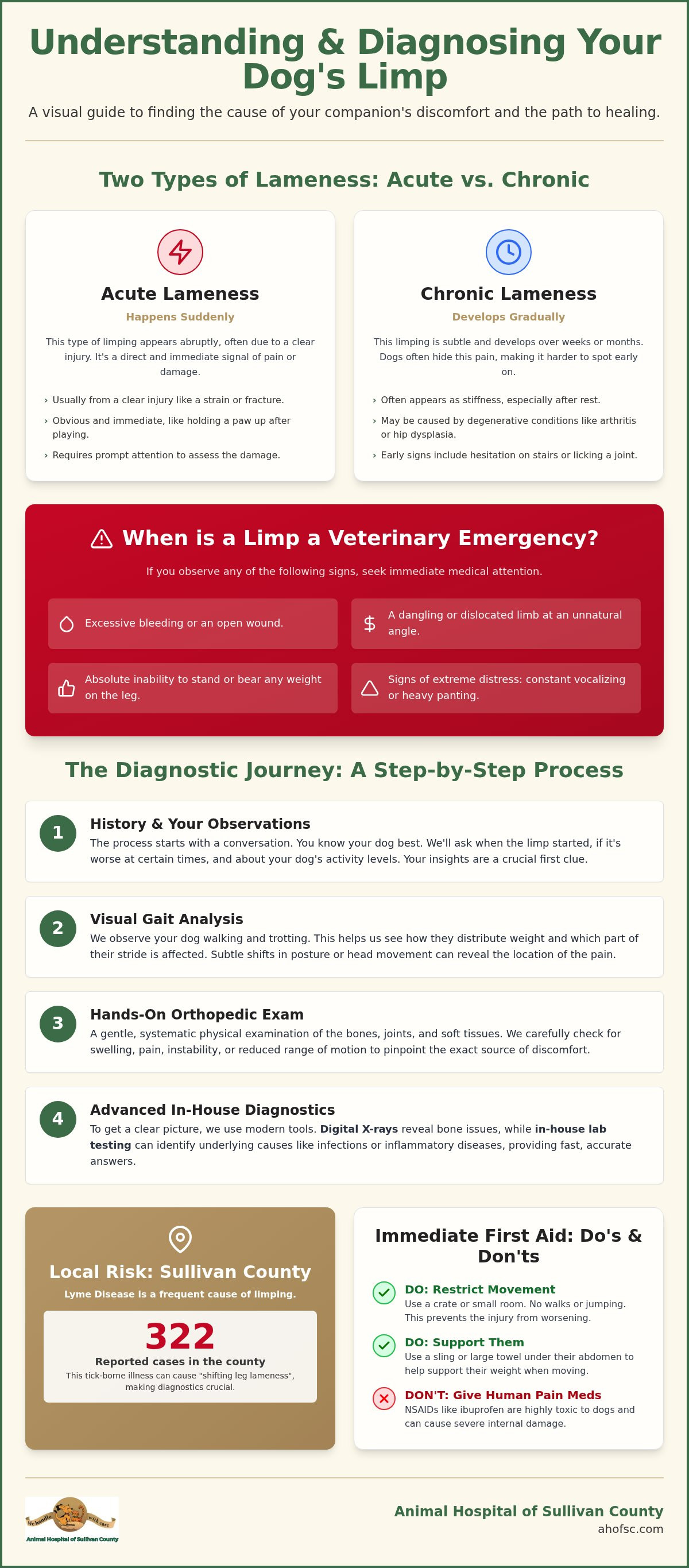
We generally categorize lameness into two groups: acute and chronic. Acute lameness happens suddenly. One moment your dog is chasing a ball, and the next, they're holding a paw up in the air. These are often related to clear injuries like strains or fractures. Chronic lameness is more deceptive. It develops slowly over months, often appearing as stiffness that gets better once the dog "warms up." This is frequently seen with degenerative conditions like Canine hip dysplasia, which is common in larger breeds. Because dogs are naturally stoic, they often mask their pain to keep up with the family. You might not hear them whimper, but you'll see subtle signs like licking a specific joint, panting without exertion, or a new hesitation when climbing stairs. Utilizing modern diagnostics for limping dog patients is the only way to look past these survival instincts and find the true source of the trouble.
When is a Limp a Veterinary Emergency?
While some limps can wait for a scheduled appointment, others demand immediate action. If you notice any of the following, please contact us right away:
- Excessive bleeding or an obvious open wound.
- A limb that appears dangling, dislocated, or set at an unnatural angle.
- An absolute inability to stand or bear weight on the leg.
- Signs of extreme distress, such as constant vocalizing, heavy panting, or a total refusal to eat.
We provide dedicated emergency treatment during our regular business hours. Having a trusted team nearby in Sullivan County means you don't have to face these scary moments alone; we're here to provide a calming presence and expert care when your pet needs it most.
Immediate First Aid for the Limping Dog
Before you arrive at our Ferndale animal hospital, your goal is to prevent the injury from getting worse. The most important step is strict movement restriction. This means no walks, no jumping on furniture, and no "testing" the leg to see if it's better. Use a crate or a very small, carpeted room to keep them quiet. It's also vital that you never give your dog human pain medications. Common over-the-counter NSAIDs like ibuprofen or naproxen are highly toxic to dogs and can cause severe kidney damage or stomach ulcers. When transporting your pet, use a sturdy sling or a large towel under their abdomen to help support their weight as they move to the car.
The Diagnostic Journey: What to Expect During the Orthopedic Exam
The journey toward healing starts the moment you walk through our doors. We believe in a "Heart-First" approach, where your pet's emotional comfort is just as important as their physical health. A veterinary orthopedic exam is more than a list of tests; it's a careful investigation led by compassion. Before we begin any technical diagnostics for limping dog patients, we take the time to let your pet settle in. We offer gentle words and a calming touch to ease their anxiety, ensuring they feel like a cherished family member rather than just a patient.
Our investigation begins with a visual gait analysis. We'll watch your dog walk or trot in a safe, controlled environment. This allows us to see how they distribute their weight and which part of their stride is affected. Sometimes, the way a dog holds their head or shifts their hips tells a story that isn't visible when they're standing still. This observation, combined with your unique insights as a pet parent, helps us narrow down the search for the root cause of their pain. It's a collaborative process that respects the bond you share with your dog.
The History: Questions We Will Ask You
We'll start with a conversation because you know your dog better than anyone. We'll ask when the limping began and if it seems to shift between different legs. Does the stiffness seem worse during those chilly Sullivan County mornings or after a long afternoon of outdoor adventures? Because Lyme disease is endemic here, with 322 reported cases in the county during just the first half of 2021, we'll also ask about recent exposure to wooded trails. These details are vital pieces of the puzzle that guide our next steps in the diagnostic process.
The Physical and Orthopedic Evaluation
Once your dog is comfortable, we move to a hands-on evaluation. We gently palpate the limbs, feeling for heat, swelling, or tension in the muscles and joints. We check the range of motion in each joint with precise, gentle movements to identify exactly where the discomfort is located. This careful process helps us test for specific issues, such as a CCL tear or joint instability, while minimizing any further stress for your pet. By pinpointing the exact location of the pain, we can ensure that any further diagnostics for limping dog care are targeted and necessary. If you've noticed your pet slowing down or favoring a leg, we're here to help. You can schedule a wellness or sickness exam to get the answers your best friend deserves.
Advanced Imaging and In-House Lab Testing
When the physical exam points to a specific area of concern, we use technology to see what the naked eye cannot. These advanced diagnostics for limping dog patients are essential for moving from a suspected issue to a confirmed diagnosis. We know that waiting for answers is the hardest part for any pet parent. That's why we've invested in onsite equipment that allows us to share findings with you during your visit. It's about providing peace of mind as quickly as possible. By having these tools under one roof, we can move directly from the exam room to the imaging suite without delay.
Sometimes, getting the perfect image requires your pet to be very still. If your dog is in significant pain or is particularly anxious, we may recommend light sedation. This isn't just about getting a clear picture; it's about ensuring your pet doesn't feel any additional stress or discomfort during the process. It's a gentle way to get the most accurate information while keeping your best friend's well-being at the forefront. We treat every pet with the same patience and caution we'd want for our own family members.
Digital X-Rays: Seeing Beneath the Surface
Digital radiography is the cornerstone of modern veterinary care. Unlike traditional film, digital X-rays appear on our screens in seconds. This speed means less time on the table for your dog and faster answers for you. We use these high-resolution images to identify everything from hairline fractures and dislocations to the subtle changes of osteoarthritis. If we suspect more complex causes of lameness, we can also utilize ultrasound. This tool is incredibly helpful for evaluating soft tissues, such as tendons and ligaments, that traditional X-rays might miss.
Bloodwork and Laboratory Diagnostics
While imaging looks at the structure, bloodwork looks at the system. Our onsite laboratory allows us to screen for inflammatory markers and systemic illnesses that might be contributing to your dog's mobility issues. For example, a dog might limp because of a joint injury, or they might be feeling lethargic and stiff due to an underlying infection. Running these tests in-house means we don't have to wait days for a courier to return with results. We also prioritize comprehensive pet bloodwork in Sullivan County before any surgical intervention. This ensures your pet is healthy enough for anesthesia and helps us tailor a pain management plan that's safe for their specific internal health. We're committed to being your partner in this journey, providing the technical expertise and emotional support you need to make the best decisions for your dog.
Why Dogs Limp in Sullivan County: Local Risks and Common Causes
Living in Sullivan County means our dogs enjoy a beautiful, active lifestyle, but the local landscape presents specific challenges. Whether your pet is hiking the Catskills or playing in a grassy backyard, they're exposed to elements that can lead to sudden lameness. During our diagnostics for limping dog evaluations, we often find that the cause ranges from a simple foreign object like a thorn or piece of glass to a more complex soft tissue injury. Sprains, strains, and the dreaded CCL rupture are common hurdles for our active local companions. We take the time to investigate every possibility, ensuring we treat the whole pet and not just the symptom. Sometimes, the solution is as straightforward as removing a painful burr from between the toes or treating a torn nail, but our thorough approach ensures nothing is missed.
The Threat of Lyme and Anaplasmosis in NY
Sullivan County is a high-risk area for tick-borne lameness. In the first half of 2021 alone, there were 322 reported cases of Lyme disease in our county. This statistic is a sobering reminder of why we prioritize tick screening during our exams. Lyme often presents as a "shifting" limp, where your dog might favor one leg on Monday and a different one by Thursday. It's a confusing experience for families, but it's a classic sign of the systemic inflammation caused by these parasites. We use a rapid "4Dx" snap test in our onsite lab to get answers about Lyme, Anaplasmosis, and other tick diseases in just minutes. You can learn more about protecting your pet by reading our guide on ticks on dogs in Sullivan County.
Aging and Senior Pet Mobility
It's a common misconception that "slowing down" is just a natural, unavoidable part of getting old. In reality, many senior pets are suffering from treatable Degenerative Joint Disease or osteoarthritis. If your older friend is hesitant to jump into the car or takes longer to stand up after a nap, they're likely expressing a need for help. Our diagnostics for limping dog seniors help us identify exactly where the inflammation is located so we can create a personalized comfort plan. We want to help your companion enjoy their golden years with as much mobility and joy as possible. For more advice on supporting your aging friend, visit our resource on senior pet care in Sullivan County.
If your dog's gait has changed or they seem less enthusiastic about their daily walks, please reach out to us. You can request an appointment online to start their journey back to comfort today.
From Diagnosis to Healing: Compassionate Treatment at AHOSC
Healing is rarely a straight line. It requires patience, adjustment, and a dedicated team by your side. As your dog begins to feel better, we'll help you navigate the transition back to their favorite activities. We provide ongoing support to monitor how they're handling increased exercise and adjust their care plan as they age. This long-term commitment is what sets our family-oriented practice apart. We aren't just looking for a quick fix; we're looking for a lifetime of mobility and happiness for your best friend. Every dog is unique, and their roadmap to recovery should be too.
When Surgery is the Solution
In cases where structural damage is too severe for medicine alone, such as a complete ligament tear or advanced joint disease, surgical intervention may be the kindest path forward. Our team approaches every procedure with a focus on safety and precision. We understand that the thought of your pet in the operating room can be overwhelming. That's why we prioritize clear communication and compassionate care throughout the entire process. You can learn more about our standards by reading our guide to veterinary surgery in Sullivan County. Recovery doesn't end when the surgery is over. We provide detailed home-care instructions and support to manage your expectations for your pet's mobility as they heal. We're with you from the first incision to the final follow-up exam.
A Lifetime of Comfort and Care
Our commitment to your pet's well-being doesn't stop once the limp is gone. We want to be your partner in preventing future injuries. Maintaining a healthy weight is one of the most impactful things you can do for your dog's joint longevity. Even a few extra pounds can put significant stress on aging or injured limbs. We'll work with you to find the right balance of nutrition and low-impact exercise to keep them fit and flexible. At the Animal Hospital of Sullivan County, we've been part of this community since 1953. We treat every patient like a member of our own family because we know how much they mean to you. Whether it's a routine check-up or a complex diagnostic journey, we're here to guide you every step of the way with a heart-first approach. For more advice on supporting your aging friend, visit our guide on senior pet care in Sullivan County.
Restoring Your Dog’s Joy and Mobility
Seeing your loyal companion struggle with a limp is difficult, but you don't have to face the uncertainty alone. From distinguishing between sudden injuries and chronic stiffness to identifying local risks like Lyme disease, the path to recovery always begins with a clear answer. By choosing modern diagnostics for limping dog patients, you're taking the most important step toward ending their discomfort and returning to the active life you both enjoy. Our team is dedicated to providing that clarity with the warmth and empathy your cherished family member deserves.
At the Animal Hospital of Sullivan County, we've been a trusted partner for local pet parents since 1953. Our onsite diagnostic laboratory ensures we get rapid results, allowing us to start a tailored healing plan without unnecessary delays. We treat every pet with a heart-first approach, combining professional expertise with the kindness of a good neighbor. Your dog’s comfort and quality of life are our greatest passions!
Ready to find the root cause of your pet's lameness? Schedule a Compassionate Diagnostic Exam for Your Dog today. We look forward to helping your best friend get back to those long, happy walks through our beautiful county.
Frequently Asked Questions
Is a dog limping but not crying an emergency?
A dog that is limping without vocalizing still needs prompt veterinary attention, though it isn't always a life-threatening emergency. Our loyal companions are naturally stoic and often hide their pain as a survival instinct. If your dog is completely unable to bear weight, has an obvious deformity, or seems lethargic, you should seek care during our business hours immediately. Even a quiet limp indicates that something isn't right with their mobility.
How much does a dog X-ray cost in Sullivan County?
The cost for imaging typically depends on the number of views required to see the joint clearly and whether your pet needs light sedation to remain still. Every situation is unique, so we start with a physical exam to determine which specific diagnostics for limping dog patients are necessary. This targeted approach ensures we get the most accurate information while being mindful of your family's resources and your pet's comfort.
Can Lyme disease cause my dog to limp on different legs?
Yes, this phenomenon is known as "shifting leg lameness" and is a classic sign of tick-borne illness. Because the infection causes systemic inflammation, the discomfort can move from one joint to another over the course of a few days. If you notice your pet favoring the front left leg on Monday and the back right leg by Thursday, it's a strong indicator that we should run a rapid blood test for Lyme disease.
What happens if I leave my dog’s limp untreated?
Leaving a limp untreated can lead to permanent joint damage or compensatory injuries as your dog overuses their healthy legs. What starts as a minor strain can quickly progress into chronic osteoarthritis or a more severe ligament tear. Early intervention helps us manage pain effectively and prevents a simple issue from turning into a long-term mobility struggle that requires more invasive care.
Will my dog need to be sedated for diagnostic tests?
Sedation isn't always necessary, but we often recommend it to ensure we get the highest quality images without causing your pet stress. It allows your dog to relax completely, which is vital when we need to position a painful limb for digital X-rays. We always use the gentlest approach possible, prioritizing your pet's emotional well-being and safety throughout the entire process.
How long does it take to get diagnostic results at your animal hospital?
You'll usually have answers before you leave your appointment. Because we utilize an onsite laboratory and digital radiography, our team can process tests and review images in real time. Providing fast results is a key part of our diagnostics for limping dog services, as it allows us to discuss a treatment plan with you immediately and get your best friend started on the road to recovery.
What is the most common cause of sudden limping in dogs?
Soft tissue injuries, such as muscle strains or ligament sprains, are the most frequent causes of sudden lameness. These often occur during high-energy play or while your dog is exploring the woods and uneven trails around Sullivan County. While many of these injuries heal with rest and medication, a sudden limp can also indicate a more serious condition like a CCL rupture or a bone fracture.
Can I give my dog aspirin for a limp before seeing a vet?
No, you should never give your pet aspirin or any other human pain medications like ibuprofen or Tylenol. These over-the-counter drugs are often toxic to dogs and can cause life-threatening issues, including stomach ulcers and kidney failure. The safest way to help your dog is to restrict their movement to a small area and wait for a professional evaluation and a pet-safe prescription from our team.


