
Catching kidney disease isn't about finding a sick cat; it's about noticing the subtle shift in a healthy one. You might notice your friend is spending a little more time at the water bowl or seems a bit less interested in their favorite kibble. It's easy to dismiss these changes as part of the normal aging process, especially when your cat still seems happy and affectionate. We understand the deep anxiety that comes with wondering if these small changes are actually early signs of kidney disease in cats. You want to protect that sacred bond you share, and the fear of a "silent killer" can feel overwhelming.
The good news is that you don't have to face this uncertainty alone. We've created this guide to help you distinguish between senior milestones and medical red flags. You'll learn exactly which symptoms to watch for and how our compassionate team in Ferndale uses advanced diagnostics to catch issues before they become emergencies. We'll walk you through the diagnostic process and show you how a proactive care plan can offer you true peace of mind. By working together, we can ensure your best friend enjoys a high quality of life for as long as possible!
Key Takeaways
- Chronic kidney disease is a slow, progressive condition, but understanding its "silent" nature is the first step toward protecting your cat's health.
- Learn how to identify the early signs of kidney disease in cats, such as increased thirst and subtle changes in litter box habits, before they become obvious.
- Discover why proactive screening is more effective than the "wait and see" approach for slowing disease progression and preserving your friend's quality of life.
- Get a clear look at our gentle diagnostic process in Ferndale, from physical exams to urinalysis, designed to keep your pet comfortable and stress-free.
- Explore how simple adjustments in nutrition and hydration can significantly boost your cherished companion's daily happiness and long-term well-being.
Understanding Feline Kidney Disease: The "Silent" Condition
Your cat's kidneys are quiet, tireless workers. They spend every minute filtering waste from the blood and balancing the body's hydration. When these organs function well, your cat feels vibrant and healthy. Chronic Kidney Disease (CKD) occurs when there is a slow, progressive decline in this vital work. Unlike an acute kidney injury, which happens suddenly due to toxins or infections, CKD is a long-term journey. It's often called a "silent" condition because the body compensates for the damage for a very long time.
To better understand this concept, watch this helpful video:
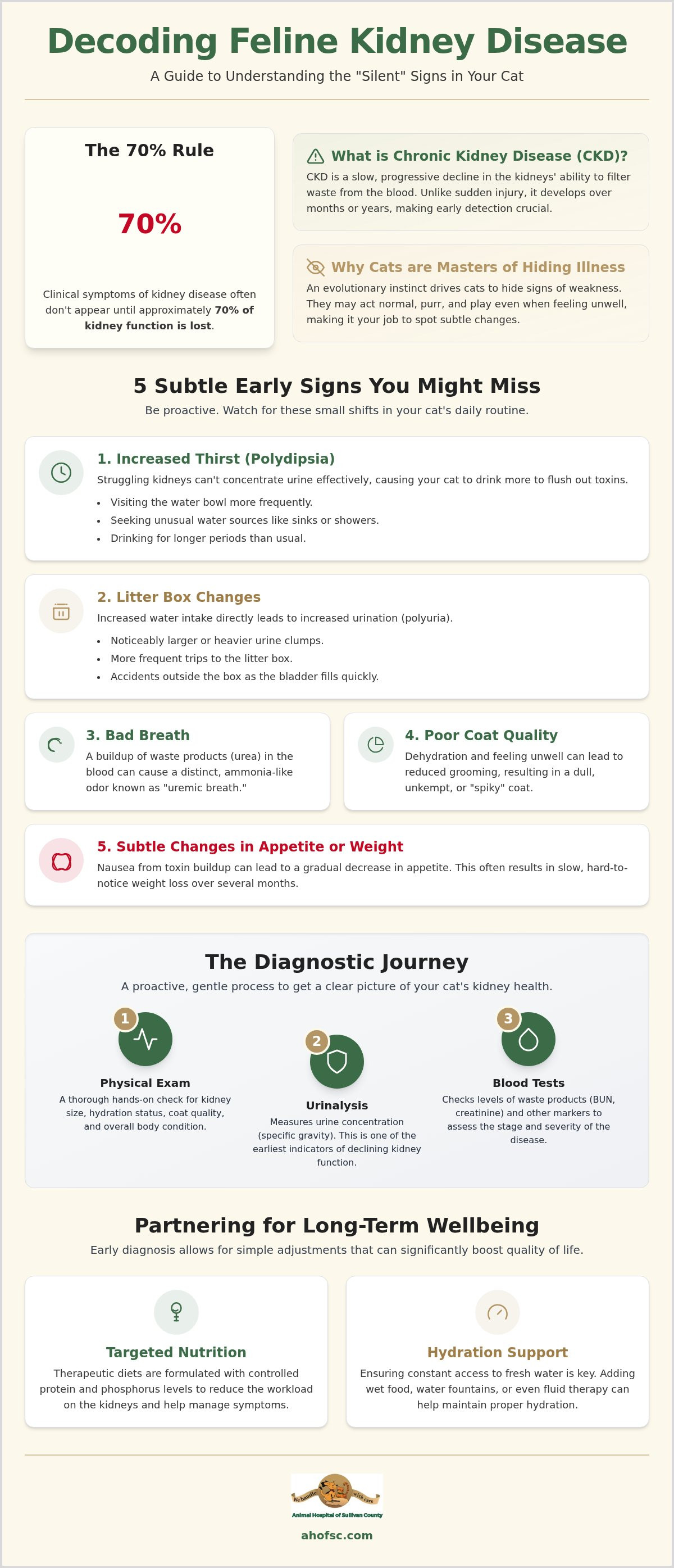
The most challenging part of this disease is what veterinarians call the "70% Rule." Clinical symptoms often don't appear until approximately 70 percent of kidney function is already lost. This is why Chronic kidney disease in cats can feel like it appears out of nowhere. By the time you notice your friend is acting differently, their kidneys have been working overtime to hide the problem for months. Catching the early signs of kidney disease in cats requires a watchful eye and a proactive approach to wellness.
Why Cats are Masters of Hiding Illness
In the wild, showing any sign of weakness or pain makes an animal a target. This evolutionary instinct is still present in our domestic companions. Your cat might still jump on the counter or purr in your lap even if they feel unwell. Acting normal isn't always the same as being healthy. It's their way of staying safe. Nephrons are the microscopic functional units of the kidney that filter blood, and because they don't regenerate once lost, we must protect the ones that remain.
The Sacred Bond: Why We Monitor Closely
At the Animal Hospital of Sullivan County, we believe the relationship you share with your pet is a sacred bond. Since we opened our doors in 1953, our mission has been to provide neighborly empathy alongside professional medical authority. We don't just see patients; we see cherished family members. Our Ferndale team is dedicated to keeping your friend comfortable and happy. Because we've been part of the Sullivan County community for decades, we understand the unique needs of local pets. We're here to guide you through every stage of your cat's life with a heart-first approach to care. Monitoring for the early signs of kidney disease in cats is just one way we protect the companions who bring so much joy to our lives!
5 Subtle Early Signs of Kidney Disease You Might Miss
Because cats are so skilled at hiding discomfort, the first changes are often behavioral rather than physical. You might notice your friend hanging out by the water bowl more than usual. This increased thirst, or polydipsia, happens because the kidneys are struggling to concentrate urine. They need more water to flush out waste. It's a subtle shift that's easy to miss if you aren't looking for it. Since our founding in 1953, we've seen how these small details can make a world of difference in a pet's long-term health.
Monitoring the Water Bowl and Litter Box
Tracking habits in a multi-cat Sullivan County home can be tricky. One helpful tip is to mark the water level on your bowls with a small piece of tape each morning. If you see the level dropping faster, it's a sign to pay closer attention. In the litter box, look for clumps that are noticeably larger or heavier than usual. Sometimes, a cat might even have accidents outside the box because their bladder fills up so quickly they can't make it to the tray in time. Trust your gut feeling! If something feels "off" about their routine, it's always worth investigating.
Breath and Coat Quality Changes
Your cat's physical appearance can tell a story about their internal health. When kidneys aren't filtering properly, toxins like urea build up in the bloodstream. This can cause "uremic breath," which has a distinct, ammonia-like smell. You might also notice their coat looks dull or "spiky" because they are dehydrated or simply too tired to groom. According to the Cornell Feline Health Center, these changes often happen gradually over several months.
- Increased Thirst: Your cat visits the water bowl more often or seeks out unusual water sources like dripping faucets.
- Litter Box Changes: You notice larger urine clumps or more frequent trips to the box than in previous years.
- Unexplained Weight Loss: You might feel their spine or ribs more easily, even if they still have a good appetite.
- The "Unkempt" Look: A lack of grooming leads to mats, dandruff, or a greasy appearance in their fur.
- Subtle Lethargy: They may stop jumping on high perches or spend more time sleeping in new, hidden spots.
The kidneys also play a vital role in blood health; they produce a hormone called erythropoietin that tells the bone marrow to make red blood cells. When function drops, anemia can set in, making your cat feel even more tired. Recognizing these early signs of kidney disease in cats allows us to start supportive care much sooner. If you've noticed any of these shifts, our Ferndale team is here to help with a preventive care checkup to keep your cherished companion feeling their best.
Why "Wait and See" is Risky for Sullivan County Cats
It is a common sight in our Ferndale clinic: a devoted owner mentions their cat is "just slowing down" or drinking a bit more because of old age. While we all want to believe our feline friends are simply maturing, these shifts are often the first whispers of a manageable medical condition. Waiting until your cat looks visibly ill before seeking help is a risky strategy. By the time symptoms like frequent vomiting or severe weight loss appear, the kidneys have already lost a massive amount of their filtering power. Early intervention is the most effective tool we have to slow the progression of this disease and keep your companion comfortable.
Proactive care allows us to create a roadmap for your cat's health. When we identify the early signs of kidney disease in cats through routine screenings, we can implement lifestyle changes that significantly extend their quality of life. This isn't about bracing for the worst. It's about taking small, compassionate steps today to ensure your cat remains a vibrant part of your family for years to come!
Aging vs. Illness: Knowing the Difference
It's important to understand that while kidney issues are more common as pets age, they are not a "normal" part of growing old. Research and clinical data from the Cornell University College of Veterinary Medicine highlight that chronic kidney disease is a distinct illness that requires specific medical support. Our approach to senior care focuses on maintaining that sacred bond you share with your pet. If you want to learn more about supporting your friend during their later years, our Senior Pet Care Guide offers deeper insights into the specialized needs of Sullivan County's aging cats.
Local Environmental Hazards in the Catskills
Living in the beautiful Catskills brings unique environmental risks that can impact kidney health. During our cold New York winters, antifreeze (ethylene glycol) is a major threat. It has a sweet taste that cats find appealing, but even a tiny amount can lead to sudden, acute kidney failure. As spring arrives, garden favorites like lilies pose another danger. Every part of a lily is highly toxic to a cat's kidneys. If you suspect your cat has ingested a toxin, please contact us for Emergency Treatment during our regular business hours. Catching these "silent" shifts through annual checkups is the best way to protect your best friend from both chronic decline and unexpected local hazards.
The Diagnostic Journey: What to Expect at Our Ferndale Clinic
Starting a diagnostic journey for your cherished companion can feel overwhelming, but we view it as a supportive partnership. Our team in Ferndale focuses on a gentle, methodical approach to lower both your anxiety and your cat's stress. We don't just run tests; we look for the story your cat's body is telling us. Every step is designed to give us the clearest possible picture of their internal health.
The first step is always a comprehensive physical exam. We carefully palpate the abdomen to check the size and shape of the kidneys. Kidneys that feel unusually small, large, or irregular can be one of the physical early signs of kidney disease in cats. Next, we perform a urinalysis. This test is vital because it reveals how well the kidneys are concentrating urine. If the urine is too dilute, it is often a sign that the kidneys are struggling to filter waste effectively, even if the cat still seems vibrant.
The Power of In-House Laboratory Testing
We know that waiting for news about a family member is the hardest part of any vet visit. That's why our onsite diagnostic laboratory is such a critical part of our care. Having these tools right here in Sullivan County means we get results quickly, often while you are still in the building! For healthy adult cats, we always recommend "baseline" bloodwork. This gives us a clear record of what "normal" looks like for your specific pet. You can learn more about our full range of testing in our Pet Diagnostics Pillar.
Blood chemistry allows us to measure markers like Blood Urea Nitrogen (BUN) and Creatinine. If these levels are elevated, it suggests waste products are building up in the bloodstream. In some cases, we might also suggest advanced imaging. X-rays or ultrasounds help us see if there are kidney stones, cysts, or other structural changes that bloodwork alone might miss.
Understanding SDMA: The Modern Early Warning System
One of the most important tools we use today is the SDMA test. In the past, veterinarians had to wait for creatinine levels to rise, which typically doesn't happen until 70 percent of kidney function is already lost. SDMA is a much more sensitive biomarker. It can flag a decline when as little as 25 to 40 percent of function is gone! We prioritize these tests in our Pet Wellness Exams because they give us a massive head start in protecting your friend.
These results help us create a personalized roadmap for your cat's long-term happiness. We use the data to decide when to adjust nutrition or start supportive therapies. If you have noticed any changes in your cat's behavior, don't wait for them to act sick. Schedule a diagnostic checkup with our compassionate experts today to ensure your best friend stays by your side for years to come!
Partnering for Your Cat’s Long-Term Happiness
Receiving a diagnosis can feel like a heavy burden, but it's actually the first step toward a brighter, more stable future for your pet. Once we identify the early signs of kidney disease in cats, our focus shifts from worry to proactive action. We take a "heart-first" approach to management. This means we prioritize your cat's daily comfort and your emotional peace of mind equally. Managing a chronic condition is a journey we take together as partners in care, ensuring your friend feels loved and supported every step of the way.
Prescription Diets and Sullivan County Resources
Nutrition is often the most powerful tool in our management toolkit. Specialized kidney diets are formulated with precisely controlled levels of protein and phosphorus. High phosphorus levels can be very hard on struggling kidneys; reducing them helps slow the progression of the disease and keeps your cat feeling vibrant. We carry these specialized options in our Prescription Pet Store to make life easier for our Sullivan County neighbors. Transitioning your cat to a new food should always be done slowly. We usually recommend mixing the new diet with their current favorite over a period of 7 to 10 days. This ensures they accept the change without any added stress.
Beyond food, we may discuss medications to manage blood pressure or supplements to bind excess phosphorus. Every cat is an individual. We tailor these choices to fit your friend's specific health profile and your daily routine. Hydration is also vital! You can encourage more drinking by adding water to wet food or using pet fountains. Many cats prefer moving water, and these small changes can make a big difference in their hydration levels and overall energy.
Creating a Comfort-First Home Environment
Making your home a sanctuary for a senior cat doesn't have to be a complicated process. Adding extra water stations throughout the house ensures they never have to travel far for a refreshing drink. If your cat has mobility issues, a low-entry litter box can prevent discomfort during their daily routine. We also schedule regular monitoring visits to check blood levels and adjust the care plan as needed. These checkups are not just about medical data; they're a time for us to support you and celebrate your pet's milestones. We want to ensure the bond you share remains strong and joyful.
Many cats live long, happy lives with well-managed kidney disease. By catching the early signs of kidney disease in cats and acting quickly, you're giving your best friend the gift of time. We're honored to be your partner in this journey. Our Ferndale team is always here to provide the guidance and neighborly empathy you deserve. Your cat is a cherished member of the family, and their happiness is our greatest reward!
Protecting Your Cat’s Vibrant Future
Watching your feline friend grow older is a privilege. While the early signs of kidney disease in cats can be subtle, your intuition as a dedicated owner is their best defense. By staying alert to small changes in their drinking habits or energy levels, you can catch this "silent" condition before it impacts their daily happiness. We've seen how early intervention, combined with personalized nutrition and hydration, allows cats to thrive for years after a diagnosis. It's about preserving that sacred bond you share with your cherished companion.
Since 1953, our team has served Sullivan County families with deep compassion and medical expertise. We offer fast, onsite diagnostic testing to provide you with immediate peace of mind and clear answers. Our comprehensive senior pet care plans are tailored specifically to your best friend's unique needs. Don't wait for symptoms to become obvious before taking action. Please Schedule a Wellness Exam for Your Cat at Our Ferndale Clinic today. We're here to be your partner in care, ensuring your cat enjoys a long, comfortable, and joyful life by your side!
Frequently Asked Questions
What is the life expectancy of a cat with early-stage kidney disease?
Cats diagnosed with early-stage chronic kidney disease often live for several years with proactive management. While every situation is unique, many feline friends enjoy a high quality of life for three years or more when we catch the issue early. Our goal in Ferndale is to use early intervention to stretch these golden years as long as possible. We focus on stabilizing kidney function through nutrition and hydration to keep your cherished family member happy.
Is kidney disease in cats painful?
Feline kidney disease isn't typically painful in the way a broken bone is, but it does cause significant discomfort. As toxins build up in the bloodstream, cats often feel nauseated, lethargic, and generally unwell. This is why noticing the early signs of kidney disease in cats is so important. By managing these uremic toxins, we can help your pet feel vibrant again. We prioritize their comfort to ensure they stay the affectionate companion you love!
Can a cat recover from kidney disease or is it permanent?
Chronic kidney disease is a permanent, progressive condition because lost nephrons do not regenerate. However, this doesn't mean your cat cannot have a wonderful life! While we can't cure the disease, we can certainly slow its progression. This is different from acute kidney injury, which can sometimes be reversed if treated immediately after toxin exposure. Our Sullivan County team focuses on long-term management strategies that protect the remaining healthy kidney tissue and maintain your pet's well-being.
How much water should a cat drink in a day?
A healthy cat typically needs about four ounces of water per five pounds of body weight each day. For a ten-pound cat, that is roughly one cup of water. If you notice your cat is suddenly clearing out the water bowl more frequently, it could be one of the early signs of kidney disease in cats. We recommend using pet fountains or adding water to canned food to help them meet these hydration goals comfortably and safely.
What is the most common cause of kidney failure in cats?
The most common cause of chronic kidney failure is simply the gradual wear and tear of aging. Over time, the functional units of the kidney, called nephrons, begin to decline. Other factors like genetics, high blood pressure, or past infections can also play a role. In our Catskills community, we also see acute cases caused by environmental toxins like antifreeze or lilies. Regular checkups allow us to monitor these shifts before they impact your cat's health.
Are certain cat breeds more prone to kidney disease?
Yes, certain breeds do have a higher genetic predisposition to kidney issues. Persians, Abyssinians, Siamese, and Ragdolls are among the breeds we monitor more closely at our Ferndale clinic. If you share your home with one of these beautiful breeds, starting baseline bloodwork as early as age seven is a smart move. This proactive approach helps us catch subtle changes in kidney function long before your pet starts to show any outward signs of illness.
What happens if my cat stops eating their kidney-friendly food?
It's very common for cats to become picky when they feel nauseated from kidney issues. If your friend stops eating their prescription food, don't panic! We can help you with appetite stimulants or transition tips to make the food more appealing. Sometimes, warming the food or adding a small amount of water can help. It's vital that they keep eating to maintain their strength, so we'll work closely with you to find a solution that fits.
How often should a cat with kidney disease see the vet?
We generally recommend that cats with kidney disease visit us every three to six months. These regular monitoring visits allow us to check blood pressure and kidney values to ensure the current care plan is still working. Since this condition is progressive, we need to make small adjustments to nutrition or medication as things change. These visits provide peace of mind and ensure your best friend is always receiving the most effective, compassionate care available.


