
Imagine you just filled your dog's bowl with their favorite meal, only to find it back on the carpet minutes later, looking exactly like it did in the bag. It's a heart-wrenching sight that leaves any pet parent feeling anxious and confused. Since nearly 80% of pet owners consider their animals to be true members of the family, seeing your dog throwing up undigested food can feel like a personal crisis. You're likely wondering if they're in pain, if they just ate too fast, or if this is a sign of a life-threatening emergency.
We understand that uncertainty is often the hardest part of being a pet guardian. We want to help you find peace of mind by explaining the critical difference between active vomiting and passive regurgitation. This guide will walk you through the common reasons why food comes back up and provide a clear checklist of red-flag symptoms. You'll learn exactly when your pet's digestive upset requires a visit to our Sullivan County clinic for professional care. Our mission is to ensure you feel confident and supported as you care for your cherished companion.
Key Takeaways
- Learn how to tell if your dog is actively vomiting or passively regurgitating, which is the first step in understanding their digestive health.
- Identify why a dog throwing up undigested food might simply be eating too fast or exploring local Sullivan County wildlife.
- Recognize critical emergency symptoms, such as non-productive retching, that signal a need for immediate medical care during business hours.
- Discover simple home monitoring steps and the "NPO" rule to help soothe your pet's stomach safely.
- Understand how our onsite laboratory provides the fast diagnostic answers you need to restore your peace of mind.
Vomiting vs. Regurgitation: Understanding the Difference
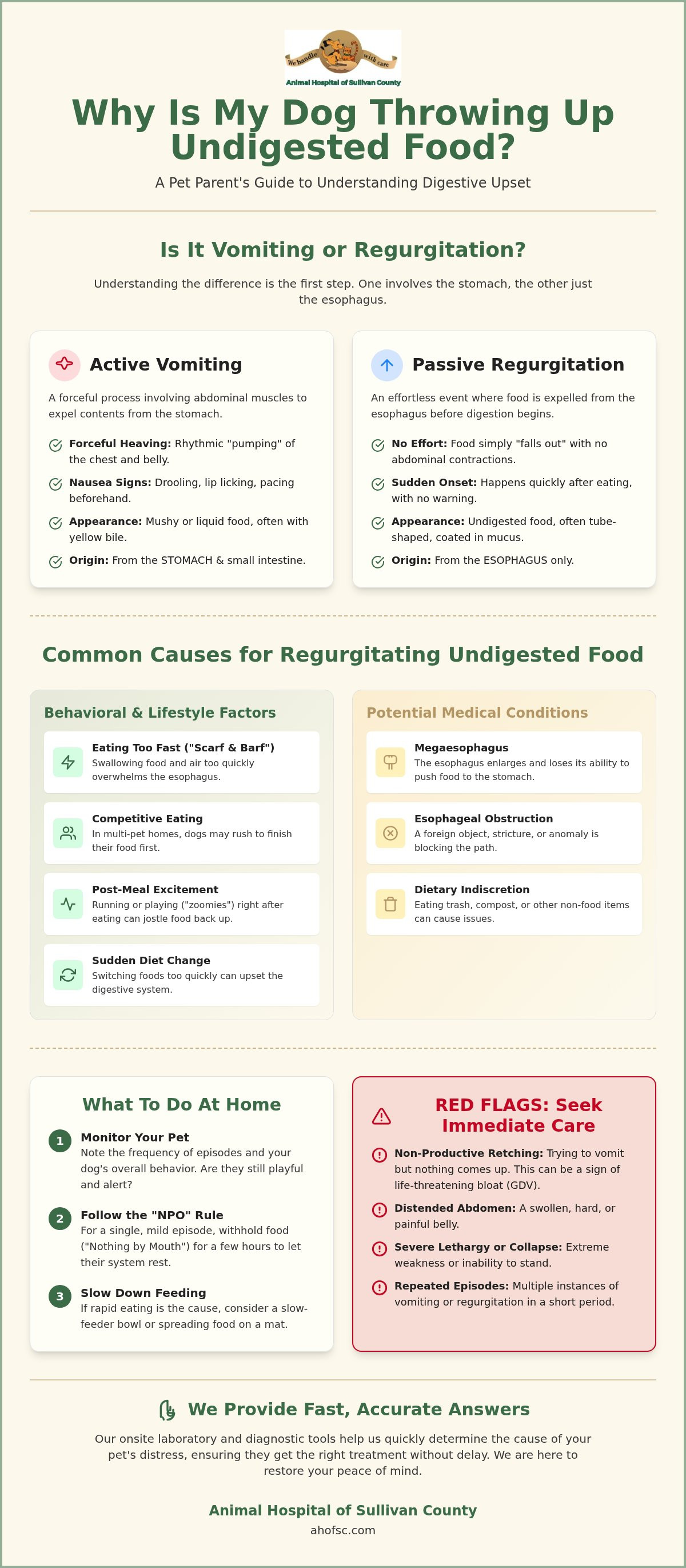
When your beloved companion brings their dinner back up, your first instinct is likely one of worry. It's helpful to understand that what looks like vomiting might actually be a different biological process entirely. For most pet parents, seeing a dog throwing up undigested food is the most common reason for concern. However, if the food looks exactly as it did in the bowl, you're likely witnessing regurgitation rather than true vomiting.
Regurgitation is a passive event where food is expelled from the esophagus before digestion begins. Unlike vomiting, which involves the stomach and small intestine, Regurgitation (digestion) is a more immediate rejection of what was just swallowed. Understanding this distinction is vital. It helps our team at the Animal Hospital of Sullivan County determine whether the issue lies in the throat or the stomach.
To better understand this concept, watch this helpful video:
Signs of Active Vomiting
True vomiting is an active and often exhausting process for your pet. It involves forceful contractions of the abdominal muscles. You'll see this as rhythmic heaving or "pumping" of the chest and belly. Before this happens, your dog will usually show signs of nausea. They might pace restlessly, drool excessively, or lick their lips repeatedly. Because the food has reached the stomach, the expelled contents are often mushy or partially liquid. You might also notice yellow bile or a sour smell. These are clear indicators that digestive acids have already started their work.
Signs of Passive Regurgitation
In contrast, regurgitation happens with surprising speed and almost no warning. There is no heaving or abdominal effort involved. The food simply "falls out" of the mouth. This is a key detail when you notice your dog throwing up undigested food shortly after a meal. Because the food never made it past the esophagus, it often retains a distinct tube-like shape. You'll notice the kibble looks whole and dry, perhaps coated in a layer of clear, slimy mucus. Recognizing these passive signs helps us narrow down potential causes like esophageal issues or simply eating too quickly.
Common Reasons Why Dogs Throw Up Undigested Food
Seeing your dog throwing up undigested food can be deeply unsettling for any pet parent. While it often happens because of a simple habit, there are times when it signals a medical need. Understanding the "why" behind these episodes helps us take the best possible care of our four-legged family members. We want to ensure your pet feels comfortable and that you have the information needed to support their health.
Behavioral and Lifestyle Factors
The most frequent cause of this issue is the "scarf and barf" phenomenon. This occurs when a dog eats too fast, swallowing large amounts of air and unchewed kibble. The sudden pressure in the esophagus triggers a reflex that sends the food back up almost immediately. In homes with multiple pets, this "competitive eating" is a common instinct. Dogs feel they must finish their portion quickly before a sibling can reach the bowl. This rush often leads to the meal reappearing on the floor just minutes later.
Post-meal excitement is another significant factor. If your dog gets a case of the "zoomies" or jumps around right after eating, the mechanical movement can cause passive regurgitation. We also see issues when a pet's diet is transitioned too quickly. A sudden change in food brands can overwhelm the upper digestive system, leading to a quick rejection of the new meal. It's always best to move slowly when introducing new flavors or formulas to their routine.
Medical Conditions Affecting the Esophagus
Sometimes the issue is physical and requires more than just a slower feeding bowl. Megaesophagus is a condition where the esophagus becomes enlarged and loses its muscular ability to push food into the stomach. Instead of traveling down, the food simply sits in the throat until it's eventually expelled. In younger pups, we might look for vascular ring anomalies. These are congenital issues where blood vessels wrap around the esophagus and physically constrict it, making it difficult for solid food to pass.
Living in beautiful Sullivan County means our dogs often have access to "wildlife snacks," compost, or trash during their outdoor adventures. These scavenged items can cause significant irritation or even minor obstructions in the upper digestive tract. The experts at Cornell University on Vomiting emphasize that while one-off events might be minor, chronic issues always need professional attention. If you're worried about your pet's digestion, our team can offer the medical care and diagnostic answers you need to feel confident in their health.
When Undigested Food Becomes a Medical Emergency
While we've discussed how a single instance of a dog throwing up undigested food might be minor, certain patterns signal a deeper crisis. It's heart-wrenching to see our pets in distress. We want you to know when a "wait and see" approach is no longer safe. If your dog is bringing up food at every single meal, it's a sign that something is blocking the path or the digestive system is failing to function properly. Chronic issues like this need professional medical care to prevent dehydration and malnutrition.
The most terrifying symptom we see is non-productive retching. This looks like your dog is trying desperately to vomit, but nothing comes out. This "dry heaving" is a classic sign of Gastric Dilatation-Volvulus (GDV), commonly known as bloat. This is a life-threatening emergency where the stomach twists on itself. It requires immediate intervention to save your pet's life. If you notice a distended, painful abdomen alongside this retching, every minute counts. Please don't hesitate to call us if you see these signs.
The "Red Flag" Checklist for Sullivan County Owners
Monitoring your pet's behavior is just as important as looking at what they expelled. We've spent over 70 years caring for the pets of this community, and we've learned that pet parents often have a "gut feeling" when something is wrong. Please reach out to us if you notice any of the following red flags:
- Non-productive retching: As mentioned, trying to vomit with no result is a top-tier emergency.
- Blood in the material: Look for bright red streaks or dark, grainy spots that look like coffee grounds.
- Significant behavioral shifts: Is your pet acting "off", perhaps hiding, shivering, or refusing to move? These are signs of intense pain.
- Fever or extreme lethargy: A dog that is too weak to lift its head or play as usual needs a diagnostic check immediately.
Toxins and Obstructions in the Tri-State Area
Our beautiful Catskill landscape offers plenty of room for adventure, but it also holds hidden dangers. Dogs are naturally curious. They may ingest poisonous mushrooms found in the damp woods or encounter dead wildlife that carries harmful bacteria. In the garage, common items like antifreeze or pesticides are highly toxic if even a small amount is licked. These toxins can cause sudden, violent digestive upset that requires fast action.
Foreign body obstructions are another frequent culprit. Swallowed sticks, stones, or pieces of a favorite toy can lodge in the esophagus or stomach. This prevents food from passing, leading to repeated episodes of a dog throwing up undigested food. Our emergency vet services in Sullivan County are available during our regular business hours to provide fast, life-saving care. We treat every patient with the same dedication we would give our own pets, ensuring they are safe and comfortable.
Immediate Steps to Take at Home and What to Monitor
If your dog throwing up undigested food has left you feeling helpless, there are gentle steps you can take right now to help them recover. Our goal is to provide comfort while we determine if a medical intervention is necessary. Most minor stomach upsets can be managed with a period of digestive rest, but careful observation is the key to keeping your pet safe. We want to help you navigate this stressful time with a clear, steady plan.
The first step is often the "NPO" rule, which stands for "Nothing Per Os" or nothing by mouth. This involves withholding all food for 12 to 24 hours. This gives the stomach and esophagus a chance to settle without being forced to process a meal. During this time, you must monitor your pet's hydration carefully. Instead of letting them gulp down a full bowl of water, which can trigger another episode of regurgitation, offer small ice cubes or single sips of water every hour. This slow approach keeps them hydrated without overwhelming their sensitive system.
How to Safely Fast Your Dog
Fasting is generally a safe and effective way to reset the digestive tract for healthy adult dogs. However, our youngest family members require a different approach. Small puppies, especially toy breeds, are at a higher risk for low blood sugar if they skip meals for too long. If you're caring for a puppy, never fast them for more than a few hours without speaking to a veterinarian first. If the vomiting continues even when their stomach is empty, it's time to stop the home care and call for professional help. Creating a calm, quiet space away from the "hustle and bustle" of the house can also help lower their stress and promote healing.
Introducing a Bland Diet
Once the fasting period is over and the vomiting has stopped for several hours, you can slowly introduce a bland diet. We recommend a 2:1 ratio of cooked white rice to a lean protein like boiled chicken breast or extra-lean ground beef. It's vital to avoid any oils, butter, salt, or seasonings; these additions can further irritate a sensitive stomach. Start with small, frequent portions about the size of a tablespoon. If they tolerate these well, you can gradually increase the amount over the next two days. Eventually, you will transition them back to their regular meal or a specialized prescription pet food if their condition requires long-term support. If you're unsure about the best path forward, our team is always here to provide compassionate guidance for your pet's recovery.
How Animal Hospital of Sullivan County Diagnoses Digestive Issues
When home care and monitoring don't resolve the issue, we're here to provide the steady, professional guidance you need to get your pet back on their feet. We know how frightening it is to see your dog throwing up undigested food repeatedly. At the Animal Hospital of Sullivan County, we don't just see patients; we see cherished family members. Our "heart-first" approach means we combine advanced medical technology with the gentle bedside manner your pet deserves during a stressful visit.
Our goal is to find the root cause of the problem as quickly as possible. Because we have an onsite diagnostic laboratory, we can perform comprehensive blood panels and get results while you wait. This speed is vital for ruling out infections, organ dysfunction, or metabolic issues that might be causing digestive distress. We believe that fast answers lead to faster relief for both you and your companion.
Our Diagnostic Toolbox in Ferndale
To get a complete picture of your pet's health, we utilize a variety of advanced imaging tools. Digital radiography allows us to take high-resolution X-rays of the esophagus and stomach to check for foreign objects or structural abnormalities. If we suspect a blockage or a more complex soft-tissue issue, we may use pet ultrasound to gain a detailed view of the internal organs. For pets struggling with motility issues in the throat, contrast studies like barium swallows help us watch how food moves through the system in real-time. This thoroughness ensures we create an accurate and effective treatment plan from the very start.
A Partner in Your Pet’s Lifelong Health
Since 1953, our clinic has served as a trusted community advocate for animal welfare in the Tri-State area. We're committed to helping you manage both acute crises and chronic conditions like Inflammatory Bowel Disease (IBD) or Megaesophagus. While we provide emergency treatment during business hours, we believe that regular pet wellness exams in Sullivan County are the single best way to catch digestive issues before they become emergencies. These routine check-ups allow us to monitor your pet's baseline health and catch subtle changes early. If you are worried about your dog’s digestion, please contact the Animal Hospital of Sullivan County today. We're here to be your dedicated partner in your pet's journey toward a long, happy, and healthy life.
Protecting Your Pet’s Digestive Health and Happiness
Managing the worry of a dog throwing up undigested food becomes much easier once you understand the difference between active vomiting and passive regurgitation. Whether your companion simply ate too fast or is dealing with a more complex esophageal issue, your careful observation is the first step toward their recovery. Always keep a close eye on red flags like non-productive retching or persistent distress, as these require immediate professional attention to ensure your pet's safety.
Since 1953, the Animal Hospital of Sullivan County has been a steady, calming presence for families throughout our community. We provide heart-first care that treats your animal as a cherished household member rather than just a patient. Our onsite laboratory ensures that we can provide rapid diagnostic results, giving you the fast answers and peace of mind you deserve during stressful times.
We're here to support you and your "fur family" every step of the way. Schedule a Compassionate Wellness Exam for Your Pet today to ensure their digestive system remains healthy and strong! Your pet's well-being is our greatest priority, and we look forward to being your dedicated partner in their lifelong journey of care.
Frequently Asked Questions
Is it normal for a dog to throw up undigested food once in a while?
An occasional episode isn't always a cause for alarm. Many dogs experience a "scarf and barf" moment if they eat too quickly or ingest something unusual while exploring their Sullivan County backyard. If your pet is acting like their normal, happy self and the issue doesn't repeat, you can usually monitor them at home. However, if it happens more than once a week, it's time for a professional checkup.
How can I tell if my dog is regurgitating or vomiting?
The main difference lies in the effort your pet exerts. Vomiting is an active process where you'll see rhythmic abdominal heaving and signs of nausea like drooling. Regurgitation is passive and happens suddenly without any warning or stomach contractions. If you see your dog throwing up undigested food that is still in a tube shape, they are likely regurgitating, which often points to an issue in the esophagus rather than the stomach.
Can I give my dog Pepto-Bismol for throwing up undigested food?
We don't recommend giving your pet Pepto-Bismol without a direct veterinary consultation. This human medication can be harmful if your dog accidentally breathes it into their lungs. It can also show up on X-rays, which makes it harder for our team to get a clear diagnostic view of your pet's digestive tract. It's always safer to stick to the "NPO" fasting rule and call our Ferndale clinic for professional medical guidance.
What should I do if my dog throws up undigested food right after eating?
If your dog brings their meal back up immediately, the first step is to pick up the food bowl and start a short fast. Withholding food for 12 to 24 hours allows their digestive system to rest and settle. You can offer small ice cubes to keep them hydrated without triggering another episode. If they continue to struggle after the fast, please reach out to us during our regular business hours for an exam.
When is vomiting undigested food a sign of a blockage?
A blockage is a serious concern if your pet cannot keep down any food or water at all. You might notice a dog throwing up undigested food repeatedly along with a painful, bloated abdomen or a total loss of appetite. If your pet is also struggling to have a bowel movement or seems extremely weak, these are red flags. We use digital radiography at our clinic to quickly identify if a swallowed object is causing an obstruction.
Could my dog have Megaesophagus if they keep throwing up whole food?
It's a possibility that we should explore if the episodes are frequent. Megaesophagus occurs when the tube leading to the stomach loses its ability to move food downward. This results in the passive rejection of whole, unchewed kibble shortly after a meal. Our compassionate team can perform a contrast study or X-ray to see how food is moving. We'll then help you create a personalized management plan to keep your pet comfortable.
How long should I wait before calling the vet if my dog throws up?
You can often wait and monitor for 24 hours if your dog had a single episode but is still energetic and alert. However, you should call us immediately if you see blood, if they are retching without producing anything, or if they seem "off" and lethargic. Since we've served Tri-State families since 1953, we know that your intuition as a pet parent is valuable. If your gut tells you something is wrong, don't hesitate to call.
Does eating grass cause dogs to throw up undigested food?
Eating grass typically triggers active vomiting rather than passive regurgitation. Many dogs instinctively eat grass to settle an upset stomach, which results in them bringing up bile, mucus, and whatever they recently ate. While eating a little grass isn't usually dangerous, it can sometimes indicate an underlying digestive irritation. If your pet is obsessively eating grass and then vomiting, a wellness exam can help us ensure their stomach lining is healthy and protected.


