

Imagine sitting in your living room in Ferndale or Liberty, watching your usually vibrant pup tucked away in a corner, trembling and unable to lift their head. It's a heart-wrenching sight that leaves any pet parent feeling helpless and anxious. When you notice your dog shaking and lethargic, your mind immediately races through every possibility from a simple chill to something much more serious. You aren't alone in that worry! We understand that your pet is a cherished member of your family, and seeing them in distress is incredibly painful.
In this guide, you'll learn why the combination of shaking and lethargy is a critical warning sign that requires a heart-first response. We'll help you decode what these symptoms might mean for your pet's health and provide a clear triage checklist to help you decide on immediate care. From understanding potential causes like toxins or pain to finding reassurance from our dedicated team here in Sullivan County, we're here to guide you through this stressful moment with the expertise and kindness your furry family member deserves.
Key Takeaways
- Recognize why the "red flag" duo of trembling and low energy is a clinical priority for your pet's safety.
- Identify common hidden causes of weakness, ranging from internal pain and physical trauma to metabolic issues like hypoglycemia.
- Master a simple triage framework to decide if your pet needs immediate medical care or careful monitoring at home.
- Learn the safest ways to comfort and transport a dog shaking and lethargic to prevent further distress or injury.
- Gain peace of mind by knowing how professional onsite diagnostics can quickly pinpoint the root cause of your dog’s symptoms.
Understanding the 'Red Flag' Duo: Why Shaking and Lethargy Together Matter
When you notice your dog shaking and lethargic, it feels like a heavy weight has settled in your chest. You're used to a wagging tail and a happy greeting, so seeing your best friend trembling and unwilling to move is deeply upsetting. While many online resources discuss these symptoms individually, the real concern lies in their combination. This "red flag" duo acts as a clinical siren. It tells us that your dog's body is fighting a battle on two fronts at once.
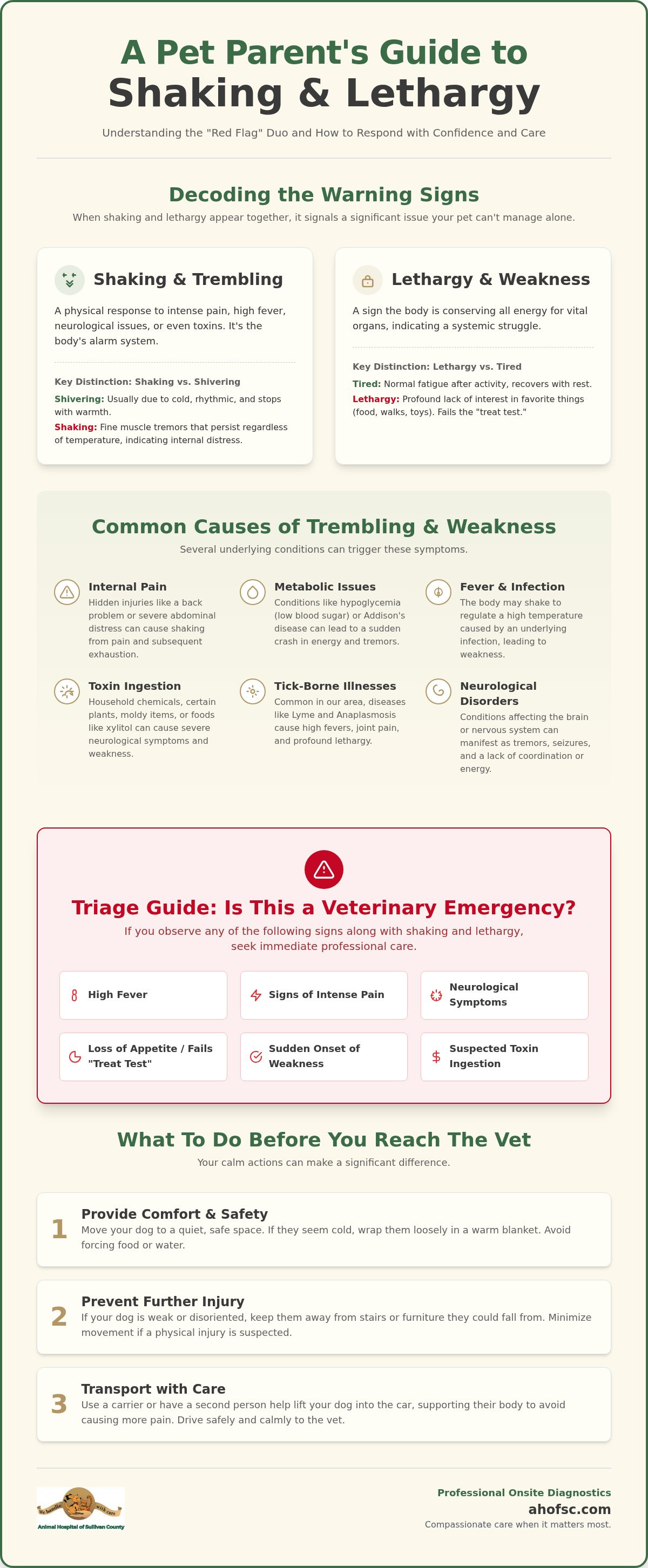
Biologically, shaking is often a physical response to intense pain, a high fever, or a neurological disruption. Lethargy, on the other hand, indicates a systemic struggle where the body is husbanding its remaining energy to protect vital organs. When these two occur together, it usually means the underlying issue is no longer something the body can manage on its own. At the Animal Hospital of Sullivan County, we take a heart-first approach to these scary moments. We know you aren't just looking for a diagnosis; you're looking for a way to help a cherished family member feel safe again.
Shaking vs. Shivering: Identifying the Difference
It is important to distinguish between a dog that is simply cold and one experiencing true tremors. Shivering from the cold is usually rhythmic and stops once the dog is wrapped in a warm blanket. In contrast, physiological shaking often looks like fine muscle tremors that persist regardless of the room temperature. If the shaking is behavioral, such as from a thunderstorm, it usually stops once the trigger is gone. However, if your pet is shaking while resting or hiding, it's likely a sign of physical distress or a condition like Addison's disease (hypoadrenocorticism).
Lethargy: More Than Just a Long Nap
Clinical lethargy is different from a dog being tired after a long walk at Walnut Mountain Park. A lethargic dog shows a profound lack of interest in things that usually bring them joy. You can try the "treat test" at home: offer their absolute favorite snack. If they won't even lift their head for a piece of chicken or a special biscuit, their energy levels are dangerously low. Sudden weakness is always more urgent than a gradual slowing down over several weeks. To get to the bottom of this quickly, we utilize advanced Pet Diagnostics in Sullivan County to identify the root cause and start a healing plan immediately.
Common Causes of Trembling and Weakness in Dogs
Seeing your pet lose their spark is frightening. There are several Common Causes of Shaking in Dogs that we investigate when a family brings their pet to us. Often, shaking is a loud signal for internal pain, such as a back injury or abdominal distress. When that pain is severe, the body becomes exhausted, leading to a dog shaking and lethargic. Metabolic issues like hypoglycemia (dangerously low blood sugar) or Addison's disease can also cause a sudden crash in energy and physical tremors. If your dog has a high fever from an infection, their body may shake to try and regulate temperature, much like we do when we have the flu.
Tick-Borne Illnesses in Sullivan County
Living in the Catskills means we share our beautiful backyard with ticks. Lyme disease and Anaplasmosis are incredibly common in the Tri-State area. These illnesses often present as a sudden onset of "joint-sore" lethargy and shivering. Your dog might seem stiff, reluctant to move, and visibly trembling from a high fever. It's a heavy burden on their system; however, early detection through our Lyme Disease Prevention for Dogs resources can make a world of difference for their long-term health.
Ingestion of Toxins: A Sullivan County Reality
Our curious companions often find things they shouldn't. In Sullivan County, hazards can range from wild mushrooms in the woods to "tremorgenic mycotoxins" found in moldy compost piles. Household chemicals or even sugar-free gum containing xylitol can lead to neurological tremors and profound weakness. Because many toxins act quickly, time is of the essence. If you suspect your dog ate something unusual, don't wait for the symptoms to worsen. We treat every patient like they're our own family, and our team is a steady, calming presence ready to help you find answers.
Triage Guide: Is This a Veterinary Emergency?
When your pet is suffering, the most common question we hear is, "Should I wait until morning, or do we need to come in now?" It is a difficult decision fueled by both love and anxiety. If you are seeing your dog shaking and lethargic, the safest answer is almost always to seek professional help. These symptoms combined suggest that your pet's internal coping mechanisms are overwhelmed. At the Animal Hospital of Sullivan County, we provide emergency treatment during our regular business hours in Ferndale. We are here to act as a steady, calming presence when you feel the most uncertain.
Checking Your Dog's Vital Signs at Home
You can perform a quick physical assessment to help determine the urgency of the situation. Start by gently lifting your dog's lip to check their gum color. Healthy gums should be a bubblegum pink. If they appear white, blue, or a deep, brick red, your dog is likely in a circulatory crisis. You can also test the "capillary refill time" by pressing your finger firmly against the gum and releasing it. The spot should turn from white back to pink in under two seconds. Finally, check for hydration by gently pinching the skin on the back of their neck. If the "skin tent" remains or slides back slowly, your pet is dangerously dehydrated and needs immediate medical care.
The 'Wait and See' Trap
It is tempting to hope that a nap or a quiet evening will solve the problem. However, many conditions that cause a dog to be shaking and lethargic can deteriorate with terrifying speed. Issues like gastric torsion (bloat) or the ingestion of a fast-acting toxin don't offer the luxury of time. Dogs are also masters at hiding their pain. By the time they are visibly trembling and refusing to move, their discomfort has often become unbearable. An exam is never a wasted trip. Even if the cause turns out to be minor, the peace of mind that comes from a professional diagnostic exam is invaluable. We treat every patient like a member of our own family, and we would much rather tell you your pet is going to be okay than have you wait until a treatable issue becomes a tragedy. If you're worried, trust your instincts and give us a call.
Immediate Steps to Take Before You Reach the Vet
When you notice your dog shaking and lethargic, your own stress levels naturally spike. It's a scary situation, but your pet is incredibly sensitive to your emotions. The most important thing you can do right now is take a deep breath. Staying calm helps keep their heart rate down and prevents them from panicking further. If you're heading to see us during business hours, you can use the PetDesk app to give our team a quick heads-up. This allows us to prepare for your arrival so we can provide a steady, calming presence the moment you walk through the door.
Creating a Safe, Calm Environment
Many conditions that cause shaking are made worse by bright lights or loud noises. Dim the lights and turn off the television or radio to create a soothing atmosphere. If your dog is shivering but doesn't have a fever, wrap them gently in a warm, familiar blanket to offer comfort. However, if you suspect a fever or heatstroke, avoid the blanket. One critical rule: never give your pet human medications like Tylenol or ibuprofen. These are highly toxic to dogs and can cause severe complications that make it harder for us to help them. Focus on keeping them still and quiet while you prepare for transport.
Moving a dog that is weak or trembling requires a gentle touch. For smaller pups, use a carrier or a laundry basket lined with towels to keep them stable. For larger dogs, you might need a "sling" made from a large towel placed under their belly to help them walk to the car. If they cannot stand at all, a flat board or a heavy blanket used as a stretcher can safely get them into your vehicle without causing further pain.
Information Your Vet Will Need
In the middle of a crisis, it's hard to remember every detail. Try to jot down a quick timeline of events. When did the shaking start? Was it a sudden collapse or a gradual slowing down? Think about any recent changes in their routine. Did they go for a hike in a tick-heavy area or get into the trash? If they've ingested something suspicious, like a wild mushroom or a household cleaner, bring the packaging or a photo with you. If your pet is already a patient at our Sullivan County Animal Hospital, we'll have their records on hand. Even so, mentioning any new medications or recent health changes is always helpful for a fast diagnosis.
If you are seeing these signs right now, please contact us immediately so we can provide the compassionate care your family deserves during this difficult time.
Compassionate Medical Care at Animal Hospital of Sullivan County
At the Animal Hospital of Sullivan County, we believe that medical excellence and emotional support go hand in hand. Since 1953, our clinic has been a steady pillar of the Ferndale community under the dedicated leadership of Dr. Barbara Bodolosky. We treat every animal as a cherished member of your family because we know how sacred that bond truly is. When you arrive with a dog shaking and lethargic, we don't just see a clinical case; we see a family member in need of protection. Our "Heart-First" approach ensures that we prioritize your pet's comfort and your peace of mind from the very first second.
Fast In-House Laboratory and X-Ray Results
In a crisis, time is your pet's most valuable asset. Waiting days for outside lab results simply isn't an option when your pet's health is on the line! That's why we've invested in advanced Pet Diagnostics in Sullivan County right here in our facility. Our in-house laboratory and digital X-ray equipment allow us to get critical answers in minutes rather than days. We use these tools to look beneath the surface and identify the hidden causes of shaking, whether it's an electrolyte imbalance, an infection, or an internal injury. We take the time to demystify the diagnostic process for you, explaining the results in plain language so you feel informed and empowered.
A Partner in Your Pet's Lifelong Journey
Our dedication doesn't end once your pet is stabilized. We aim to be a dedicated partner in your pet's lifelong journey toward health. Whether we are transitioning from emergency treatment to routine wellness or providing specialized Senior Pet Care, our focus remains on longevity and happiness. We build trust through transparent communication and a gentle bedside manner that reflects our neighborly empathy. If your pet has recently been shaking and lethargic, we'll work with you to create a personalized recovery plan. Our team in Ferndale, NY, is always here to listen and guide you through every stage of your companion's golden years!
Acting with Compassion for Your Furry Family Member
Watching your companion suffer is one of the hardest parts of being a pet parent. We've explored why the combination of a dog shaking and lethargic is such a critical warning sign, signaling everything from hidden pain to regional risks like tick-borne illnesses. Your instincts are powerful! While checking vital signs at home is a helpful starting point, nothing replaces the accuracy and relief of professional medical care.
Since 1953, the Animal Hospital of Sullivan County has stood as a steady, calming presence for families in Ferndale and the surrounding Catskills. We provide the onsite diagnostics needed for immediate answers; this ensures you don't have to spend days in a state of painful uncertainty. Our team treats every pet like a cherished member of our own household. If your dog is shaking and lethargic, don't wait. Contact Animal Hospital of Sullivan County for Compassionate Urgent Care. We are here to help your best friend get back to their happy, vibrant self!
Frequently Asked Questions
Can a dog shake and be lethargic from just being cold?
Shivering can happen if a dog is cold, but lethargy usually points to a deeper medical struggle. While a cold pup might huddle for warmth, they should still be responsive to their favorite treats or toys. If you notice your dog shaking and lethargic, it suggests their body is unable to regulate itself properly. This combination is often a sign of pain, fever, or metabolic distress rather than just a chilly draft.
What toxins commonly cause shaking and weakness in dogs?
Several common household and outdoor items can cause neurological tremors and weakness. In our local Sullivan County environment, hazards include moldy compost piles, certain wild mushrooms, and sugar-free gum containing xylitol. Household cleaners or even human medications like ibuprofen are also dangerous. Because these toxins can affect the nervous system quickly, it is vital to contact your veterinarian the moment you suspect your pet has ingested something harmful.
Is shaking a sign of pain in dogs even if they aren't crying out?
Shaking is a very common sign of pain in dogs, even if they never whimper or cry out. Our canine companions are naturally stoic and often hide their discomfort to avoid showing vulnerability. Fine muscle tremors, especially when combined with a reluctance to move, are clear indicators that something is wrong internally. We always recommend a professional exam to identify the source of the pain before it becomes unbearable for your pet.
How can I tell if my dog has a fever at home?
You can check for a fever by feeling your dog's ears and paws, which should not feel excessively hot to the touch. Their gums may also appear red and feel dry or tacky if a fever is present. The only certain way to know is by using a rectal thermometer; a normal temperature for a dog is between 101 and 102.5 degrees Fahrenheit. If their temperature exceeds 103 degrees, please call us for guidance.
When should I seek emergency care for a shaking dog in Sullivan County?
You should seek immediate care if the shaking is accompanied by blue or white gums, seizures, or an inability to stand. If your pet seems disoriented or has labored breathing, these are signs of a critical emergency. We provide urgent treatment during our regular business hours in Ferndale, NY. Trusting your "gut feeling" is often the best way to ensure your cherished family member gets the help they need before a situation worsens.
Could my dog's shaking and lethargy be related to a tick bite?
A tick bite is a very likely culprit for these symptoms in the Tri-State area. Diseases like Lyme or Anaplasmosis often cause a sudden onset of high fever, which leads to a dog shaking and lethargic. You might also notice your pet walking stiffly or acting like their joints are sore. Because ticks are so prevalent in Sullivan County, we frequently use onsite diagnostics to test for these illnesses and start treatment right away.
What should I do if my dog starts shaking after eating something outside?
If your dog eats something outside and begins to tremble, try to identify exactly what they consumed. Take a clear photo of the plant, mushroom, or substance, or bring a sample with you to the clinic if it is safe to do so. Do not attempt to induce vomiting at home unless specifically instructed by a veterinary professional. Quick action and accurate information are the keys to a successful recovery when toxicity is a concern.
Does Animal Hospital of Sullivan County see emergencies after hours?
Animal Hospital of Sullivan County provides emergency treatment exclusively during our regular business hours. We are a family-oriented practice focused on providing a steady, calming presence during the day. If your pet experiences a crisis after we have closed for the evening, you should contact the nearest 24/7 emergency veterinary center. We are always happy to coordinate follow-up care and long-term wellness once our office reopens in Ferndale.


