
When you’re researching common dog surgery costs NY, it’s natural to want a clear number and to wonder what could change after your dog is examined or has diagnostic tests. The estimate is more useful when it explains the care behind the price: what’s planned, what each service is for, and what may depend on new findings. Your dog’s comfort and safety matter, and so does understanding what you’re agreeing to.
Surgery estimates can vary with the procedure, your dog’s age, size, and health, as well as the tests, anesthesia, monitoring, medications, and follow-up care involved. An initial estimate may need to be updated if an examination or diagnostic results point to a different approach. Asking how each part of the plan supports your pet can make the conversation more manageable.
This article explains the main factors that shape surgery estimates in New York, what services may be included, and which questions can help you plan for follow-up care. At Animal Hospital of Sullivan County, surgical care is supported by onsite diagnostics. An individualized discussion can help you understand your dog’s treatment plan, whether you’re coming from Sullivan County or a nearby community in New York, Connecticut, New Jersey, or Pennsylvania.
Key Takeaways
- Common dog surgery costs NY depend on your dog’s individual needs, so a procedure name alone won’t tell the whole story.
- Review a written estimate item by item to understand what’s included and what may need clarification.
- Compare treatment plans by the care they describe, not just by the total at the bottom.
- Bring your dog’s medication details, relevant records, and questions to the appointment to help guide the conversation.
- An individualized discussion with your veterinary team can help you understand your dog’s surgical plan and prepare for next steps.
Why Common Dog Surgery Costs in New York Can Differ
It can feel unsettling when your dog may need surgery and the estimate isn’t one fixed figure. You want to understand the care your companion needs, what the estimate covers, and why it might change as more is learned. An estimate is based on a proposed plan for one dog, not a universal price attached to a procedure name.
Common dog surgery costs NY vary because dogs have different diagnoses, health histories, and treatment needs. The condition’s severity and the scope of care matter, as do examination and diagnostic findings. A general overview of veterinary surgery can introduce the range of considerations involved, but an estimate for your dog needs to be based on that individual patient.
What does a dog surgery estimate represent?
An estimate is a projection of expected charges for the care outlined at that point in time. It isn’t the final invoice, but that doesn’t mean the amount is arbitrary. The initial figure reflects the information available, including the reason for surgery and the services the team expects to provide.
An examination may clarify the recommended treatment and what preparation or follow-up your dog may need. A useful estimate identifies planned services and explains contingencies that could affect the total. If new findings change the plan, the veterinary team can explain what changed and why, helping you make an informed decision about your dog’s care.
Why the same surgery name may not mean the same plan
A procedure label can describe a broad type of treatment, not every detail of the work involved. Two dogs with a similar diagnosis may differ in the condition’s severity, the area affected, or the extent of treatment needed. One dog’s plan may be relatively straightforward; another may require additional steps based on examination or diagnostic findings.
Your dog’s age, overall health, medical history, and pre-existing conditions can also affect planning. These details may influence which diagnostics are appropriate, how the team prepares for anesthesia, and what monitoring or recovery support is recommended. They don’t automatically determine a particular outcome or cost. They help the team consider a suitable plan for that dog.
This guide avoids unsupported price ranges because a personalized estimate requires clinical context, including your dog’s diagnosis and recommended care. At Animal Hospital of Sullivan County, surgical care is supported by onsite diagnostics, which can help inform a discussion about your dog’s needs. Understanding how the estimate connects to the plan is a practical first step toward preparing for surgery.
What Goes Into Common Dog Surgery Costs?
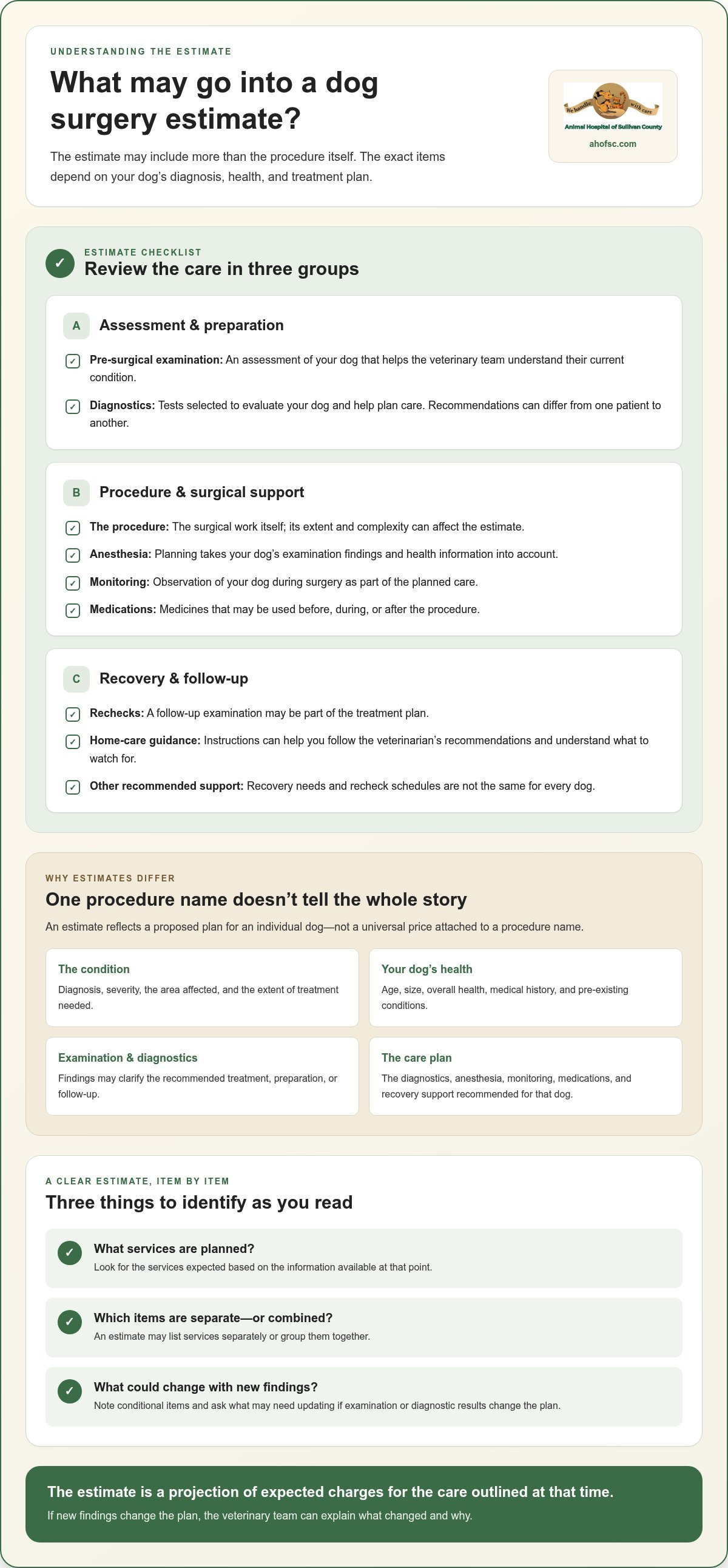
A surgery estimate is easier to understand when you can see how the parts of your dog’s care fit together. Common dog surgery costs NY may include more than the procedure itself. The exact items depend on the diagnosis, your dog’s health, and the treatment plan. Some services may be recommended, while others may not be needed for your pet.
Depending on the plan, an estimate may separate or combine items such as:
- Pre-surgical examination and diagnostics: An assessment and tests selected to evaluate your dog and plan care.
- The procedure: The surgical work itself, shaped by the extent and complexity of treatment.
- Anesthesia and monitoring: Care related to keeping your dog comfortable and observing them during surgery.
- Medications: Medicines that may be used before, during, or after the procedure.
- Recovery and follow-up: Rechecks, home-care guidance, or other recommended support after surgery.
A clear surgery estimate connects the planned procedure with the diagnostics, anesthesia, monitoring, medications, and follow-up care recommended for that dog. Read it by identifying the planned services first, then noting which items are conditional or may change if new information affects the plan.
Diagnostics, anesthesia, and monitoring
An examination helps the veterinary team understand your dog’s current condition and decide whether additional diagnostics are appropriate. The findings can guide preparation and clarify what care is suitable. Tests recommended for one dog may differ from those recommended for another, so a standard checklist won’t necessarily fit every patient.
Anesthesia planning also takes the individual dog into account. The team considers relevant examination findings and health information when preparing for anesthesia, then monitors the patient during surgery. These steps are part of the planned care, not a reason to assume something is wrong. Your veterinarian determines which assessments and monitoring are appropriate for your dog.
Procedure, medication, and recovery care
The procedure’s extent and complexity can affect the estimate. A treatment plan may also account for medication, a follow-up examination, or instructions for caring for your dog at home. Recovery guidance helps you understand what to watch for and how to follow the veterinarian’s recommendations after your pet returns home. Not every dog needs the same medication or recheck schedule.
As you review the estimate, note what is included, what is listed separately, and whether any item depends on findings during care. The team at Animal Hospital of Sullivan County can discuss how diagnostics and surgical care relate to your dog’s individual plan. For more context on the hospital’s approach, explore its compassionate surgical care.
How to Compare Dog Surgery Estimates Without Comparing Price Alone
Two estimates can use the same procedure name yet describe different care. To compare them fairly, review the written plan line by line: which services are included, which are separate, and what could change if your dog’s needs become clearer. A lower total isn’t automatically better, and a higher estimate doesn’t guarantee a better outcome. The goal is to understand the recommended care and how it fits your dog.
This matters for common dog surgery costs NY because estimates reflect both the clinical plan and the items each document spells out. Use a simple comparison table to organize the details. Mark “not clear” rather than assuming a service is included or excluded.
| Care item | Included status | Clarification needed |
|---|---|---|
| Diagnostics and pre-surgical assessment | Included / separate / not clear | Which tests are planned, and are they included? |
| Anesthesia and monitoring | Included / separate / not clear | What anesthesia-related care and monitoring are part of the plan? |
| Surgical procedure | Included / separate / not clear | What treatment does the estimate describe? |
| Medication and recovery guidance | Included / separate / not clear | Which medications and home-care instructions are anticipated? |
| Follow-up care | Included / separate / not clear | Are rechecks planned, and how are they handled? |
Questions that make estimates easier to understand
Bring the written estimate to your appointment or discussion, and ask the treating veterinarian to explain the recommendations. Useful questions include: Which diagnostics, anesthesia services, and monitoring are included? What medications or follow-up care are anticipated? If examination findings change the plan, how will the team explain the change and discuss next steps? Clear answers help you understand what each estimate covers without having to interpret unfamiliar terms on your own.
How to discuss affordability while protecting your dog’s care
If cost is a concern, say so early. Your veterinary team can explain which parts of the plan are medically important and whether appropriate alternatives or staged care are options for your dog. Ask about the benefits, limitations, and timing of any option so you can weigh it in light of your dog’s needs.
Some owners also explore pet insurance, payment plans, or third-party financing resources. Terms and eligibility vary. An open conversation about affordability helps the veterinarian explain the clinical recommendations and discuss a practical path for your companion.
Planning for Dog Surgery in Sullivan County and Nearby New York Communities
Preparing for a surgery conversation can make the next steps feel more manageable, especially if you’re traveling from elsewhere in Sullivan County or a nearby community in New York, Connecticut, New Jersey, or Pennsylvania. A little organization helps the veterinary team understand your dog’s needs and helps you leave the discussion with a clearer picture of the plan. These steps can also help you make sense of common dog surgery costs NY without trying to estimate your pet’s care from general figures.
Prepare for a clear estimate conversation
Before discussing surgery, gather details that can help the veterinarian understand your dog’s situation. Bring medication information and relevant records, and write down your questions so you don’t have to remember everything in the moment.
- Note the diagnosis and symptoms. Record what you’ve observed, when it began, and any changes in your dog’s comfort, appetite, or activity. Share relevant medical history and a current list of medications, including supplements if your dog takes them.
- Bring useful records. If your dog has had previous examinations, diagnostic tests, or treatment, bring the available records or information about them. This context can help the care team consider the full picture.
- Ask for the plan in plain language. Invite the veterinarian to explain the recommended treatment and the services involved. Ask which parts are planned, what is conditional, and whether examination or diagnostic findings could change the approach.
- Write down the answers. Note instructions, follow-up expectations, and anything you need to arrange at home. A written list makes it easier to revisit details after the appointment.
Plan for appointment logistics and recovery
Travel and home preparation are part of caring for your dog, too. Think ahead about transportation to and from the hospital, especially if your pet may be sleepy or need help moving after care. Set up a calm, comfortable recovery space at home, then adapt it to the veterinary team’s specific recommendations. Older dogs may have particular comfort or mobility needs, so discussing their overall health can be helpful. The hospital’s guide to senior pet care in Sullivan County offers related context for supporting an aging companion.
Before the procedure, follow the care team’s instructions for arrival, fasting, and medications. Don’t rely on general advice for these details, since instructions can depend on your dog’s individual plan. If something is unclear, contact the veterinary team for guidance before making changes to food or medication.
If your dog develops an urgent concern during business hours, seek prompt veterinary guidance. Animal Hospital of Sullivan County provides emergency treatment during business hours, alongside surgical and diagnostic care. For an individualized discussion of your dog’s needs and estimate, discuss your dog’s surgical care with the hospital team.
Discuss Your Dog’s Surgical Care With Animal Hospital of Sullivan County
Considering surgery for a cherished dog can bring many questions, including what the recommended care involves and how to understand the estimate. Animal Hospital of Sullivan County provides surgical care supported by onsite diagnostics, giving the veterinary team information to consider as they discuss your dog’s needs. An individualized conversation can connect the clinical recommendations with the items in a plan-based estimate, helping you understand what is proposed for your companion.
Every dog’s situation is different. The discussion starts with your pet’s condition, health history, and the findings that help guide care. You don’t need to arrive with every answer. Sharing what you’ve noticed and the concerns on your mind gives the team a useful starting point.
What to expect from a compassionate surgery discussion
The veterinary team can talk through your dog’s condition, the recommended care, and the estimate components in clear language. If a term or line item isn’t familiar, pause and ask what it means. You can also share concerns about your dog’s comfort, recovery, or your ability to manage the proposed plan. These are important parts of the conversation.
As you consider common dog surgery costs NY, remember that a general article can explain how estimates are shaped, but it can’t determine the care or estimate for an individual pet. That requires clinical context. Ask the veterinarian to explain the reasoning behind recommendations and any alternatives that may be appropriate for your dog. Take notes, bring a trusted family member into the discussion if helpful, and move through the information at a pace that lets you feel informed.
Take the next step for your dog
Animal Hospital of Sullivan County has served the community since 1953 and is led by Dr. Barbara Bodolosky. The hospital provides care for local pets and the families who love them. Your dog’s care plan is shaped by their own needs and veterinary assessment.
If surgery is being considered, a conversation with the care team can help you understand what comes next, what diagnostics may inform the plan, and how the estimate relates to your dog’s care. Share your questions and concerns openly so the team can discuss the recommendations and help you consider your next step.
Talk with our caring veterinary team about your dog’s surgical care and the next step for your companion.
Take the Next Step With Confidence
It’s natural to want certainty before making a decision for your dog. Information about common dog surgery costs NY can help you prepare, but the next step is a conversation centered on your pet: what the veterinary team recommends, what questions remain, and what choices feel manageable for your family.
You don’t need to have everything figured out before reaching out. Bring your concerns, share what you’ve noticed, and ask for explanations in clear language. A thoughtful discussion can help you move forward one decision at a time, with your dog’s wellbeing at the heart of the plan.
Talk with our caring veterinary team about your dog’s surgical care and the next step.
Frequently Asked Questions
How much does common dog surgery cost in New York?
There isn’t one reliable price that applies to every dog and procedure. Common dog surgery costs NY depend on the diagnosis, recommended treatment, your dog’s health, and the care planned around surgery. General price ranges may not match your pet’s needs, so request an individualized written estimate. Ask which assumptions it’s based on and whether it reflects the latest examination and diagnostic information.
What affects the cost of dog surgery the most?
The procedure’s complexity, your dog’s health, and the care needed before, during, and after surgery are key factors. Diagnostics, anesthesia assessment, monitoring, medication, and follow-up may also contribute. Ask the veterinary team to explain what each item is for and which recommendations are part of your dog’s plan. You can then discuss questions or concerns about individual items with the veterinarian.
Does a dog surgery estimate include anesthesia and monitoring?
It may, but the estimate’s format and included services can vary. Anesthesia-related care or monitoring might appear as separate line items or be grouped with other planned services. Ask the veterinary team to explain what each entry covers and whether related care is listed elsewhere. If a term is unfamiliar, request a plain-language explanation so you can understand the plan without guessing from the label.
Can a dog surgery estimate change after an examination?
Yes, an estimate may need revision if an examination or diagnostic results reveal information that affects the recommended plan. Ask what findings could lead to a change and how the team will explain updated recommendations. You can also ask how you’ll be informed if the plan differs from the original estimate. Knowing the communication process ahead of time can help you respond thoughtfully if new information comes to light.
How can I compare dog surgery estimates fairly?
Compare the details of the proposed care, not just the procedure name or total. Check whether each estimate addresses the same diagnostics, anesthesia, monitoring, medications, and follow-up. Mark unclear items and ask the veterinary team what they mean for your dog. A lower total may reflect a different set of services, so comparing equivalent plan details gives you a more useful basis for discussion.
Should I delay my dog’s surgery if I am worried about cost?
Don’t delay recommended care without first discussing the concern with your veterinarian. Ask how the condition affects timing, which parts of the plan are medically important, and whether appropriate alternatives exist for your dog. If symptoms suddenly worsen or new urgent signs appear, seek veterinary guidance promptly rather than relying on an online article. Your veterinarian can help you understand the medical considerations and discuss a practical next step.
What should I bring when discussing surgery for my dog?
Bring a current medication list, relevant medical records, and notes about your dog’s symptoms. Include when changes began and what you’ve observed, such as shifts in appetite, comfort, or activity. Write down your top questions so you can focus the conversation, especially if you’re traveling to an appointment from New York, Connecticut, New Jersey, or Pennsylvania. These details help the veterinary team understand your concerns and discuss the plan with you.


