
What if your dog’s "slowing down" or your cat’s extra naps aren't just signs of old age, but a quiet whisper for help? It is deeply painful to watch a cherished family member lose their spark, and it’s only natural to worry about hidden illnesses you might be missing when considering senior pet bloodwork Sullivan County. We believe your pet's golden years should be defined by comfort and joy rather than uncertainty!
You want the absolute best for your companion, and we agree that every extra day of tail wags or purrs is a sacred gift. This article will show you how routine senior bloodwork acts as a vital early warning system, helping your aging pet live a longer, more comfortable life right here in our community. We will explore how our onsite laboratory in Ferndale detects manageable conditions early, such as the rising tick-borne risks unique to our area. You will gain the peace of mind that comes from knowing you aren't missing a thing, ensuring your best friend stays happy and healthy for years to come.
Key Takeaways
- Learn why senior pets instinctively hide their discomfort and how a blood panel serves as a proactive health map to catch issues before they become serious.
- Discover what lab results like the CBC and Chemistry Profile actually mean for your pet's organ function and immune system health.
- Understand the unique local risks in the Catskills and why senior pet bloodwork Sullivan County is essential for screening against rising tick-borne illnesses like Lyme and Anaplasmosis.
- Find out how to prepare for your diagnostic visit in Ferndale, including fasting tips and our gentle, low-stress handling techniques designed for aging companions.
- See how partnering with an AAHA-accredited hospital with over 70 years of community history ensures your pet receives the highest standard of compassionate senior care.
Why Senior Pet Bloodwork is the Most Compassionate Choice for Aging Best Friends
Our pets are masters at hiding their physical discomfort. This instinct comes from their wild ancestors, where showing weakness could be dangerous. For our senior companions, this means they often suffer in silence while we simply see them "getting a bit older." Choosing senior pet bloodwork Sullivan County is one of the most compassionate gifts you can give your aging friend. It transforms our approach from reacting to a crisis into following a proactive health map. This map allows us to honor the sacred bond you share by protecting their quality of life before they even show a single symptom.
To better understand how these lab results help us care for your pet, watch this helpful video:
Baseline testing is vital even if your pet seems perfectly healthy. By establishing what is "normal" for your companion today, we can spot tiny variations in the future that might signal a problem. It’s about staying one step ahead of the aging process to keep those tails wagging for as long as possible.
The 'Silent' Aging Process in Dogs and Cats
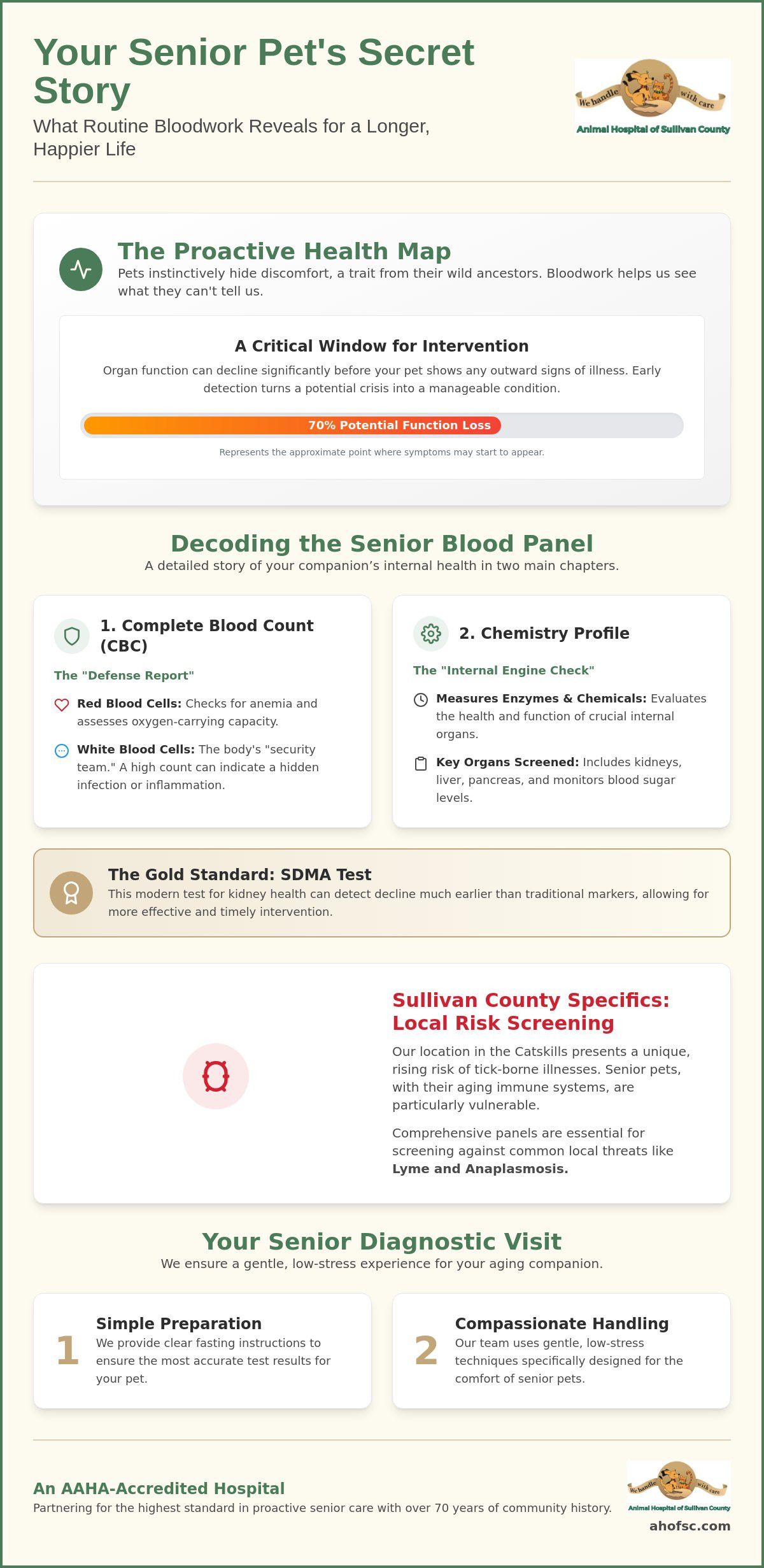
It is a startling fact in veterinary medicine that organ function, particularly in the kidneys and liver, can drop by as much as 70% before a pet shows external signs of illness. By the time a cat stops eating or a dog begins drinking excessive water, a condition may already be quite advanced. Many owners assume a pet is just "slowing down" because of their years. In reality, these changes are often manageable medical shifts that we can identify through routine diagnostic tests. Knowing what is happening inside their bodies provides an incredible emotional benefit. It replaces worry with a clear, supportive plan of action.
Senior Care as Preventive Medicine
Early detection is the key to turning what could be an expensive emergency into a successful plan for chronic condition management. When we catch a trend in blood sugar or kidney enzymes early, we have more tools to help your pet feel their best. This philosophy is at the heart of the senior pet care Sullivan County families have trusted for decades. Because pets age so much faster than we do, Dr. B recommends twice-yearly screenings for any companion over the age of seven. These regular check-ins ensure that your friend's golden years are truly golden, filled with the comfort and dignity they deserve.
Decoding the Senior Blood Panel: What Your Pet’s Lab Results Actually Mean
When you receive a lab report, the rows of numbers and abbreviations can feel overwhelming. We want you to feel empowered, not confused. Think of senior pet bloodwork Sullivan County as a detailed story of your companion’s internal health. This story is divided into two main chapters: the CBC and the Chemistry Profile.
The Complete Blood Count (CBC) is your pet's "defense report." It examines red blood cells, which carry life-giving oxygen, and white blood cells, which act as the body's security team against infection and inflammation. If the white cell count is high, your pet's body might be quietly fighting a battle we can't see from the outside. The Chemistry Profile serves as an "engine check." It measures chemicals and enzymes in the blood to see how well the internal systems are humming along.
We also place a high priority on the SDMA test. This is the modern gold standard for kidney health because it can detect decline much earlier than traditional tests. Because our local environment has unique challenges, our comprehensive panels often include Screening Seniors for Lyme and Tick-Borne Illness to protect their aging immune systems. If you have questions about these specific markers, we invite you to reach out to our compassionate team for a detailed explanation.
Monitoring the 'Engine' Organs: Liver and Kidneys
The kidneys and liver are the workhorses of your pet's body. On a lab report, we pay close attention to BUN (Blood Urea Nitrogen) and Creatinine. When these levels are elevated, it suggests the kidneys are struggling to filter waste from the bloodstream. Similarly, liver enzyme trends help Dr. B determine if we need to adjust medications or transition your pet to a supportive senior diet. When these "engine" organs are healthy, your pet will naturally have more energy for those afternoon walks in the yard.
Thyroid and Metabolic Screening
The thyroid gland acts as the body's thermostat, regulating metabolism and energy. In senior cats, hyperthyroidism is a "silent thief" that can cause weight loss despite a ravenous appetite. Conversely, older dogs often suffer from hypothyroidism. This condition leads to weight gain and a noticeable lack of interest in play. These metabolic shifts happen slowly, making them hard to spot at home. Simple adjustments based on these bloodwork results can often restore a pet's youthful spark, giving them a second wind in their golden years.
Sullivan County Specifics: Screening Seniors for Lyme and Tick-Borne Illness
Living in our beautiful Catskills region brings us closer to nature, but it also places our aging companions at the center of a tick-heavy environment. In the first half of 2021 alone, Sullivan County reported 322 cases of Lyme disease. Anaplasmosis is also surging; those cases in early 2021 already matched the total for the entire year of 2019! For an older pet, these aren't just statistics. They are serious threats to their comfort. This is why senior pet bloodwork Sullivan County protocols must include specific screenings for tick-borne pathogens.
One of the most heart-breaking aspects of these illnesses in seniors is how they mimic other conditions. You might notice your dog is stiff or reluctant to jump and assume it's just arthritis. While joint pain is a hallmark of "old age," it’s also a primary symptom of Lyme and Ehrlichia. Identifying the true cause through bloodwork allows us to treat the infection rather than just masking the pain. It is about giving your best friend the right kind of relief!
The Tri-State Area's Tick Burden
Pet parents in our community must remain vigilant throughout the year. Ticks don't simply disappear when the leaves fall! For a senior animal, a hidden infection can be devastating. Lyme disease can lead to Lyme nephritis, a severe form of kidney inflammation that can cause sudden organ failure. Because an older pet's organs are already working harder, they have less "reserve" to fight off these aggressive invaders. Regular screening creates a vital safety net, catching these "silent" infections before they can cause permanent damage to your friend's heart or kidneys.
Senior Immunity and Chronic Inflammation
As pets age, their immune systems naturally become less robust. A chronic tick-borne infection acts like a constant drain on their limited energy reserves. This leaves them feeling tired, lethargic, and generally "unwell" without a clear reason. Even if you are diligent about using parasite prevention, no product is 100% effective. Annual or bi-annual screening is the only way to be sure a tick hasn't slipped through the defenses.
We use the "4DX" snap test during senior wellness visits to get immediate answers. This test checks for heartworm and the three most common tick-borne illnesses in our area. Dr. B leverages these specific Sullivan County health trends to tailor each senior's diagnostic plan to the exact environmental threats they face. By staying proactive, we ensure your companion spends their golden years enjoying the outdoors rather than struggling with its hidden dangers!
What to Expect During Your Senior Diagnostic Visit in Ferndale
We understand that bringing your aging friend to the vet can sometimes feel like a source of worry. Our goal at the Animal Hospital of Sullivan County is to make this process as smooth and gentle as possible! When you schedule senior pet bloodwork Sullivan County, we start with clear, neighborly communication. We often recommend fasting your pet for about 12 hours before the appointment. This ensures that the levels of fats and sugars in the blood are "baseline" and accurate. However, every pet is a unique individual. Please always check with our office first, especially if your companion is on specific medications or manages a condition like diabetes.
Our facility is designed to be a place of comfort. We believe that a high-quality medical visit starts with a heart-first approach. This means prioritizing your pet's emotional well-being just as much as their physical health. You are a vital part of this process, and we welcome your questions at every step.
A Stress-Free Experience for Your Aging Companion
We take our "Canine and Feline Friendly" certification seriously. For older pets, the clinical environment can be intimidating. We use calming pheromones and quiet, dedicated spaces to significantly reduce "vet anxiety." If your dog or cat struggles with arthritis or mobility issues, we don't expect them to perform uncomfortable movements. Our team uses specialized low-stress handling techniques to perform blood draws in positions that are most natural for them. We treat your pet like a cherished member of our own family. It is about safety, respect, and a soft touch during every interaction.
The Power of Onsite Lab Results
One of the biggest advantages of our animal hospital Sullivan County is our fully equipped onsite laboratory. You don't have to wait days for a phone call while a sample travels to a distant facility. We often have results ready during your appointment! This speed is critical for seniors because it allows us to adjust diets or start life-changing medications immediately. You can also use the PetDesk app to keep this digital health history at your fingertips. It makes tracking your pet's long-term health trends simple and organized.
Once the results are ready, you won't just receive a list of medical jargon. You will sit down with Dr. B for a collaborative review. She takes the time to explain what every number means for your pet's daily comfort and joy. We discuss the "next steps" as partners, ensuring you feel confident in the care plan. If you are ready to gain peace of mind regarding your companion's health, request a senior wellness appointment with our team.
Partnering with Animal Hospital of Sullivan County for Proactive Senior Care
Choosing a partner for your companion's golden years is a decision rooted in trust. Since 1953, our hospital has been a steady, supportive presence for families throughout our region. We take immense pride in our 70-year history of helping local pets thrive well into their teens. Whether you are coming from Liberty or Monticello, our Ferndale location is a convenient hub for the high-quality senior pet bloodwork Sullivan County residents rely on to keep their best friends healthy. We don't just see patients; we welcome cherished family members into a legacy of care that spans generations.
Our commitment to excellence is reflected in our AAHA accreditation, a distinction we have maintained since 1983. This puts us in the top 15% of veterinary practices in the United States! This high standard is especially important when your pet requires complex veterinary surgery or advanced diagnostics. It means every procedure and lab test is performed with the utmost precision and safety. Dr. B’s "heart-first" philosophy ensures that your pet receives the same level of dedication and medical authority she would provide for her own animals.
A Legacy of Compassionate Expert Care
As the only AAHA-accredited hospital in the county, we offer a unique blend of technical skill and neighborly empathy. Dr. B is a US Army veteran with over 30 years of experience. She brings a sense of disciplined care and deep sincerity to every exam. We understand that the golden years can feel uncertain at times. Our team is here to be a calming, reliable guide through the aging process. We focus on maximizing your pet's quality of life so you can focus on making more memories together in our beautiful community.
Taking the Next Step for Your Senior Pet
Scheduling your companion’s senior wellness and bloodwork consultation is a simple but profound act of love. Proactive care is the greatest gift you can provide for an aging friend. It offers them a voice when they cannot speak for themselves. We invite you to join our family of Sullivan County pet lovers who prioritize longevity and happiness. Let’s work together to ensure your pet’s golden years are filled with comfort, dignity, and the best possible health. Your journey of care continues here with a team that truly cares!
Honoring Your Best Friend's Golden Years
Your pet’s golden years should be a time of comfort, dignity, and deep connection. By choosing senior pet bloodwork Sullivan County, you are giving your companion a voice and ensuring that "slowing down" isn't actually a hidden medical issue. We have seen how early detection of organ changes or local tick-borne illnesses can lead to manageable solutions rather than stressful emergencies. It is about protecting the sacred bond you share with your best friend.
Since 1953, our hospital has been dedicated to the health of our local Catskills pets. Our status as an AAHA-accredited facility since 1983 ensures that your family member receives the highest standard of medical care. With our onsite laboratory, we provide the rapid results you need to make informed decisions for your pet's long-term happiness. We believe every extra day of purrs and tail wags is worth the proactive effort!
We are here to walk this journey with you as your trusted community partners in care. Schedule your senior pet's compassionate bloodwork at Animal Hospital of Sullivan County today! We look forward to seeing you and your cherished companion in Ferndale soon.
Frequently Asked Questions
At what age should my pet start getting senior bloodwork?
Most pets are considered seniors when they reach the age of seven. However, large breed dogs often age more rapidly and may benefit from senior screenings as early as five or six. We recommend starting baseline testing during their mature adult years. This gives us a healthy record to compare against as they grow older, making it much easier to spot subtle changes in their internal health.
Is senior pet bloodwork expensive in Sullivan County?
We focus on providing high-quality, accessible care that fits the needs of our local neighbors. While we don't list specific fees here, senior pet bloodwork Sullivan County is a valuable investment that often saves money in the long run. By detecting manageable conditions early, we can frequently avoid the high costs associated with emergency treatments or advanced disease management. We are always happy to provide a clear estimate during your visit.
Does my pet need to fast before their blood draw?
Most pets should fast for about 12 hours before their diagnostic appointment to ensure the most accurate lab results. This usually means picking up their food bowl after dinner the night before a morning visit. You should never withhold water, as hydration is very important for a successful draw. Some pets with specific conditions like diabetes may have different requirements, so please call our Ferndale office to confirm the best plan.
How often does Dr. B recommend bloodwork for older dogs and cats?
Dr. B typically recommends comprehensive bloodwork twice a year for our senior companions. Because pets age much faster than humans, their internal health can shift significantly in just six months. These bi-annual checks allow us to monitor trends in organ function and adjust medications or diets promptly. It is the most effective way to maintain a steady, high quality of life for your best friend as they navigate their golden years.
What if the bloodwork results show a problem?
If a lab result comes back with an abnormality, please try not to panic. Many age-related conditions are highly manageable when we catch them early through routine screening. We will sit down with you to discuss the findings in plain, everyday language and create a tailored care plan together. Whether it involves a simple diet change or a new supportive medication, we are here to guide you through every step of the process.
Can bloodwork detect cancer in senior pets?
Bloodwork is a powerful diagnostic tool that can reveal "red flags" or secondary changes often associated with certain types of cancer. For instance, it might show unexplained anemia or unusual shifts in white blood cell counts. While blood tests are often the first step in a diagnostic journey, they are usually paired with other tools like X-rays for a definitive diagnosis. It serves as a vital early warning system for many internal health shifts.
Is the blood draw painful for an older pet with thin skin or arthritis?
We use extremely gentle, low-stress handling techniques to ensure your pet stays comfortable and calm. Our team is very experienced in working with seniors who may have thin skin or sensitive, arthritic joints. We use the smallest needles possible and often perform the draw in a position that is most natural for your pet. Most companions barely notice the quick poke and are quite happy to receive a treat and a pat afterward!
How long does it take to get the results back from your Ferndale lab?
One of the greatest benefits of our facility is our onsite laboratory, which often provides answers in just a few minutes. For many routine senior panels, we can discuss the results with you before you even leave your appointment. This immediate feedback allows us to start any necessary treatments or dietary changes right away! For more specialized testing that requires an outside lab, we typically receive those results within a few business days.


