Imagine waking up to see your faithful companion, the one who has been your shadow for over a decade, struggling to stand for their morning walk. You find yourself wondering if it's just a "bad day" or if their light is truly starting to dim. It's a heavy, heartbreaking place to be! We understand that the bond you share with your pet is a sacred one, and the fear of missing signs of hidden pain is something no pet parent should carry alone. To find the clarity you need, a professional pet quality of life assessment Sullivan County families trust can help you ensure your cherished family member maintains their dignity and comfort until the very end.
We're here to help you move from a place of uncertainty to a place of confidence. We believe that every family deserves a clear, objective way to measure their companion's happiness. This guide provides a professional framework for assessing senior pet health, including the HHHHHMM scale and practical tools for tracking daily well-being. We'll walk through how to distinguish between temporary setbacks and permanent decline so you can find peace of mind. You don't have to walk this difficult path without a steady, compassionate neighbor to guide your way.
Key Takeaways
- Learn how to look past the emotions of a slow decline to objectively evaluate your pet's physical and emotional well-being.
- Use the HHHMMMM scale as a professional framework to measure critical factors like comfort, hygiene, and daily happiness.
- Understand how a pet quality of life assessment Sullivan County families rely on can help distinguish between treatable medical issues and permanent age-related changes.
- Discover practical ways to track your pet's journey, including the "Five Favorite Things" test and "Good Day/Bad Day" visualization tools.
- Gain peace of mind by learning how onsite diagnostics can rule out hidden pain before you make any final decisions.
Understanding Pet Quality of Life: Why a Professional Assessment Matters
Quality of life is more than just a clinical score; it is the delicate balance of physical comfort, social engagement, and emotional joy. For our furry family members, a good life means more than just being free of pain. It means being able to wag a tail at the sound of your voice or purr during a quiet evening on the couch. Because pets can't tell us how they feel with words, we must learn to read their subtle cues. A professional pet quality of life assessment Sullivan County neighbors trust helps bridge that communication gap.
It is perfectly natural for pet parents to struggle with objectivity during a slow decline. When you live with a senior dog or cat every day, you might not notice the gradual loss of muscle or the slow retreat from social play. A veterinarian serves as a compassionate, neutral advocate for your animal's well-being. By focusing on comfort as the primary metric rather than just a number of years lived, we can make decisions rooted in love and mercy. This process often includes understanding animal euthanasia as a potential path to prevent suffering when medical options are exhausted.
To better understand this concept, watch this helpful video:
The Emotional Weight of the 'Final Gift'
Many families in our community feel an immense caregiver burden as their pets age. You are likely providing around-the-clock care, and the emotional toll is significant! We want you to know that your bond is recognized and respected here. Seeking professional guidance isn't about giving up; it's about honoring that bond by ensuring your pet doesn't suffer in silence. This support can help lift the heavy weight of guilt that often accompanies end-of-life choices. You are making a decision out of profound love, and having a local expert by your side makes a world of difference.
Medical Baseline vs. Current Reality
To understand where your pet is today, we look back at their history. This is why keeping up with regular wellness exams is so vital! These visits establish a "normal" baseline for your pet's health. While chronic conditions like arthritis or kidney disease can often be managed with advanced diagnostics and medicine, there comes a point where the decline becomes terminal. We help you identify that shift, ensuring that "old age" is never treated as an excuse for untreated discomfort. Our goal is to ensure that your pet's final chapter is written with dignity and peace.
The HHHMMMM Scale: A Framework for Evaluating Comfort in 2026
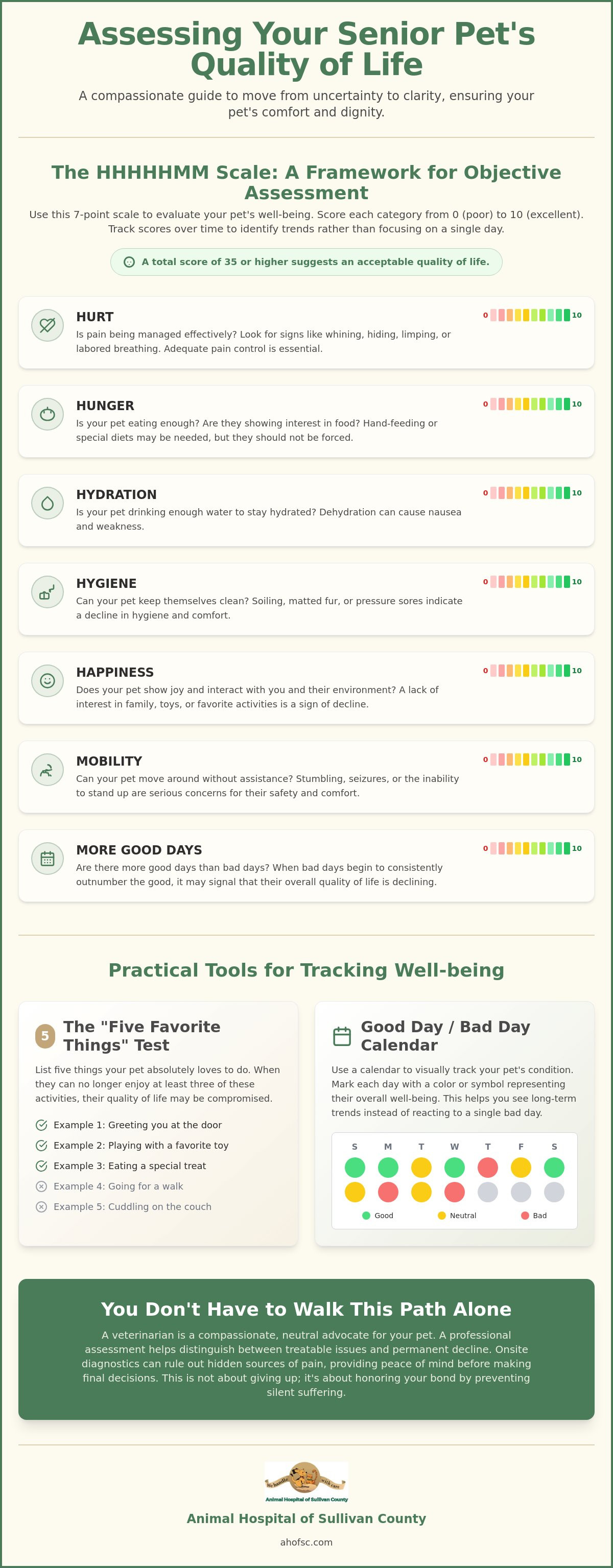
When you're facing tough choices, you need more than just a gut feeling to guide your heart. The HHHMMMM scale is a gold-standard framework that helps pet parents look at their companion's life through a clearer, more objective lens. It moves us away from the "bad day" panic and toward a steady understanding of their overall comfort. This scale is something we often discuss during a pet quality of life assessment Sullivan County families request at our Ferndale clinic. It provides a structured way to evaluate seven key pillars of well-being: Hurt, Hunger, Hydration, Hygiene, Happiness, Mobility, and More Good Days.
Each of these categories is typically scored from zero to ten. A total score of 35 or higher generally suggests that your pet's quality of life is still acceptable, while lower scores indicate it might be time to discuss palliative care or peaceful transitions. These numbers are most useful when you track them over several weeks to see if the trend is moving toward a permanent decline. If you're feeling overwhelmed by the scoring process, please reach out to our compassionate team for a neighborly consultation to help you interpret the results.
Evaluating Physical Needs: Hurt, Hunger, and Hydration
Physical comfort is the foundation of a good life, but pets are masters at hiding their pain. You have to look for subtle signs like heavy panting, restlessness at night, or a sudden preference for hiding in dark corners. If your pet is struggling with hunger, ask yourself if nutritional support is still effective or if they've lost all interest in their favorite treats. Hydration is equally critical; chronic dehydration can lead to confusion and a sharp decline in cognitive function. The AVMA on euthanasia emphasizes that relieving persistent, unmanageable pain is one of the most humane gifts we can offer our animals. When medical care can no longer bridge the gap between pain and comfort, we help you understand the next steps with dignity.
Evaluating Emotional Needs: Happiness and Mobility
Emotional well-being is just as vital as physical health for a senior pet. We encourage families to look for the "spark" in their pet's eyes and their desire to interact with the household. Does your dog still get excited about a trip to a local Sullivan County park, or do they simply watch from their bed? Mobility is another major factor in happiness. If a pet can no longer stand to eliminate or move toward their water bowl, their dignity and independence are compromised. To help visualize this, many families find it useful to track these specific behaviors:
- Wagging their tail or purring when you enter the room
- Moving comfortably to their favorite sunspot
- Maintaining basic hygiene and grooming habits
- Having more "good days" than "bad days" each week
Recognizing Subtle Signs: Medical vs. Behavioral Changes
It's easy to assume that a senior pet is just "slowing down" because of their age. Many behavioral shifts are actually cries for help that our advanced diagnostics can help identify. When a previously social dog begins to hide under the bed, or a gentle cat suddenly hisses when touched, they aren't just being grumpy. They are likely experiencing localized pain or systemic discomfort. By performing a thorough pet quality of life assessment Sullivan County families can determine if these changes are treatable or if they signal a deeper decline.
Cognitive Dysfunction Syndrome, or pet dementia, is another significant factor to consider. You might notice your dog getting stuck in corners or your cat staring blankly at walls. These aren't just quirks of old age; they represent a fundamental shift in their emotional well-being. Distinguishing between a temporary "slump" caused by a minor infection and a permanent loss of function is vital. We want to ensure your pet still feels like themselves, even as their body ages. A professional perspective helps you see the difference between a bad week and a permanent change in their reality.
Personality Shifts in Senior Pets
Discomfort often presents as irritability. If your pet has become snappy or withdrawn, it's likely a response to chronic pain. You might also see changes in sleeping patterns, such as pacing or vocalizing at 2:00 AM. This night-time anxiety is a common symptom of both pain and cognitive decline. We recommend documenting these episodes in a simple journal. Note the time, the behavior, and what seemed to trigger it. This information is incredibly helpful for our team during your next visit. It helps us build a complete picture of your pet's daily life at home.
Physical Indicators You Might Miss
Some signs of decline are more visual than behavioral. You may notice muscle wasting along the spine or weight loss even if your pet is eating normally. For senior cats, a matted or greasy coat often means they can no longer reach certain spots due to arthritis. Subtle changes in breathing rate or effort can be the first sign of underlying heart or lung distress. These indicators are easy to miss if you aren't looking for them, but they are crucial for a complete pet quality of life assessment Sullivan County families rely on. Identifying these early allows us to adjust their care plan for maximum comfort.
To help you stay objective, we often suggest the "Favorite Things" list. Write down five activities that define your pet's personality. This might include:
- Greeting you at the door with a wagging tail
- Chasing a laser pointer or a favorite squeaky toy
- Enjoying a specific evening treat or mealtime
- Seeking out affection or "snuggle time" on the couch
- Sunbathing in a specific spot in your home
Practical Tools for Sullivan County Families: Tracking the 'Good Days'
Deciding when to say goodbye is often the hardest choice a family will ever make. To help you navigate this emotional terrain, we recommend using a structured approach at home. Tracking your pet's decline isn't about morbidly counting down days. It's about being a diligent witness to their life! When you use practical tools, you can step back from the immediate heartache and see the bigger picture. A formal pet quality of life assessment Sullivan County families perform in their own living rooms provides the data needed to make an informed, loving choice.
We suggest a four-step process to help your family find clarity:
- Step 1: Start a visual calendar to track trends.
- Step 2: Review the "Five Favorite Things" list as a family.
- Step 3: Schedule a senior pet care consultation to discuss medical options.
- Step 4: Gather the whole family for a "360-degree" check-in to share observations from different times of the day.
The Calendar Method: Visualizing the Trend
Consistency is your best friend when emotions are running high. We recommend keeping a physical calendar in a central spot, like the kitchen. Each evening, mark the day with a simple "smiley face" if it was a good day or a "sad face" if your pet struggled. This helps you identify the "tipping point" where the bad days begin to outnumber the good. It removes the emotional bias that often happens during a "good hour" in an otherwise painful week. Seeing the trend on paper makes it much easier to accept the reality of a permanent decline.
Consulting Your Sullivan County Veterinarian
When you come in for a consultation, bring your calendar and any videos you've taken of your pet's mobility. These recordings are vital! Pets often experience a "white coat effect" at the clinic, where adrenaline helps them mask pain or move better than they do at home. Dr. B can review these logs to provide a more accurate pet quality of life assessment Sullivan County families can trust. This meeting is a safe space to ask questions about palliative care and pain management.
Remember, an assessment doesn't always mean you are reaching "the end." Sometimes, it reveals that a simple change in medication or a new diagnostic test can provide several more months of comfort. We are here to be your partner in this journey, ensuring your pet's golden years are as bright as possible. If you're ready to discuss these findings with a professional, please schedule an appointment with our team today.
Compassionate End-of-Life Support at Animal Hospital of Sullivan County
When the time comes to transition from active medical treatment to comfort-focused care, you deserve a team that treats your pet like their own. Since 1953, our hospital has served as a steady, calming presence for families in their most difficult moments. We prioritize a peaceful, non-clinical environment at our Ferndale facility to ensure that your final moments together are filled with love rather than stress. A professional pet quality of life assessment Sullivan County families receive here is always handled with a "heart-first" approach, balancing medical expertise with deep neighborly empathy.
One of the most vital benefits of choosing a full-service hospital for this journey is our access to immediate answers. Unlike national hospice-only services, we utilize our onsite diagnostics to ensure that your pet isn't suffering from a treatable condition. We believe it is essential to rule out manageable illnesses before making a final decision. This provides you with the absolute peace of mind that you are doing the most compassionate thing for your cherished family member. Our goal is to support your bond through every stage of life, including the very last one.
Palliative and Hospice Care Options
If your pet's assessment shows that they still have joy to experience but require extra help, we offer comprehensive palliative care. This focus on pain management allows you to extend the quality time you have left with your best friend. We provide the medical tools and guidance needed to keep your companion comfortable in the familiar surroundings of your own home. We also support you through the "waiting" period, offering a listening ear and professional advice whenever you feel uncertain about your pet's daily comfort levels.
A Continuous Circle of Care in Ferndale
We understand how much it means to know your pet never leaves our trusted hands. Our onsite crematorium provides a level of dignity and continuity that is unique in our community. From the moment you walk through our doors for a pet quality of life assessment Sullivan County families trust, to the final aftercare, your pet remains with the people who have cared for them. We also offer various memorialization options through our pet store products to help you honor their legacy. You don't have to navigate this journey alone. Contact us today for a compassionate quality of life consultation.
Honoring Your Pet's Journey with Peace and Dignity
You've learned that measuring your companion's happiness doesn't have to be a guessing game. By using objective tools like the HHHMMMM scale and focusing on your pet's favorite daily rituals, you can find the clarity you need to move forward. It's also vital to remember that professional medical diagnostics often reveal treatable paths to comfort that you might not have expected. A professional pet quality of life assessment Sullivan County families trust ensures that every decision is backed by both medical expertise and deep compassion.
Since 1953, we've stood beside our neighbors through every stage of pet ownership. Our Ferndale facility provides expert palliative care to manage chronic pain and a unique onsite crematorium to ensure your pet never leaves our gentle, trusted hands. We are here to help you navigate this sacred time with the dignity and peace of mind your faithful friend deserves. Schedule a Compassionate Quality of Life Consultation with Dr. B to get the support your family needs today. You don't have to carry this heavy weight alone; we're ready to walk this path with you.
Frequently Asked Questions
What is the most accurate pet quality of life scale to use at home?
The HHHMMMM scale, developed by Dr. Alice Villalobos, is widely considered the gold standard for home assessments. It helps you score seven key areas of your pet's life, including happiness and mobility, on a scale from zero to ten. This provides a clear, visual way to see if your companion's good days still outnumber the bad.
How do I know if my aging dog is in pain if they aren't whimpering?
Dogs often hide chronic pain through subtle behaviors rather than vocalizing or whimpering. You should look for increased panting when it isn't hot, a reluctance to climb stairs, or restlessness during the night. Some dogs may also become more withdrawn or lose interest in social interactions they used to love!
Can a quality of life assessment lead to new treatment instead of euthanasia?
Absolutely, an assessment can often uncover treatable issues that significantly improve your pet's comfort. By using onsite diagnostics, we can rule out simple infections or adjust pain medications to give your pet more quality time. A pet quality of life assessment Sullivan County families schedule with us is designed to explore every option for comfort first.
What should I expect during a quality of life consultation in Sullivan County?
You can expect a gentle, thorough conversation about your pet's daily routine and any changes you've noticed at home. Dr. B will perform a physical exam and may suggest blood work or imaging to get a full picture of your pet's internal health. We'll work through a professional framework together to help you reach a confident decision.
Is it 'too soon' to consider end-of-life care if my pet still eats?
Eating is only one part of the picture and isn't the sole indicator of a good life. If your pet is eating but can no longer stand, is in constant pain, or has lost their social "spark," their quality of life may still be poor. We look at the whole animal to ensure they are living with dignity and peace.
How does the onsite crematorium at Animal Hospital of Sullivan County work?
Our onsite crematorium ensures that your cherished companion never leaves our trusted care. This provides a higher level of dignity because your pet is handled exclusively by the team you already know. We offer both private and communal options to fit the specific needs and wishes of your family.
What are the signs that a senior cat's quality of life is declining?
Senior cats often show decline by hiding more frequently or stopping their usual grooming habits. You might notice they no longer jump onto their favorite windowsill or that they've started having accidents outside the litter box. These subtle shifts often indicate underlying pain or cognitive changes that need professional attention.
Can Dr. B help me decide when it is the 'right time'?
Dr. B serves as a compassionate advocate for your pet to help you navigate the "right time" with confidence. During a pet quality of life assessment Sullivan County residents rely on, she balances medical facts with your family's unique situation. This guidance helps remove the burden of guilt and ensures your pet's comfort remains the top priority.


