
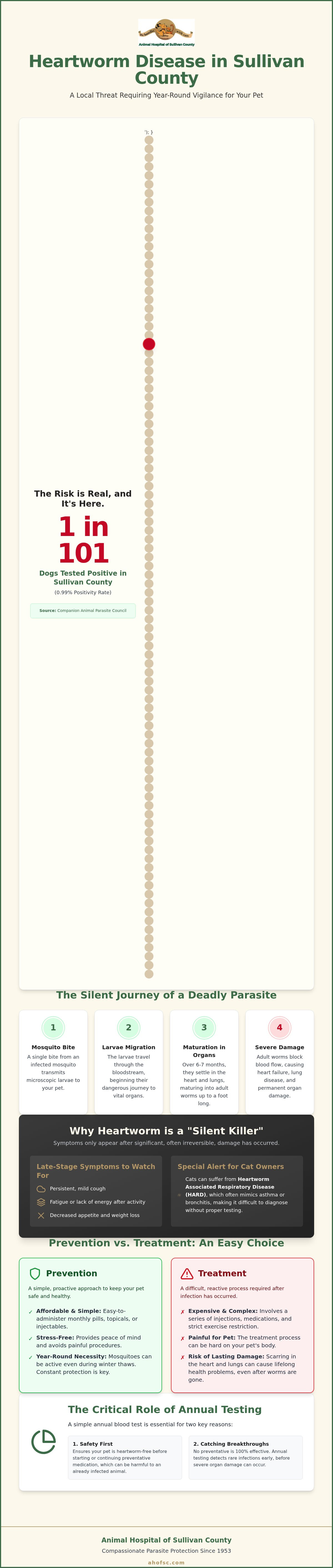
Did you know that 1 in 101 dogs in Sullivan County, New York, tested positive for heartworm disease this year? While a 0.99% positivity rate might sound small, for the families of those pets, it's a heartbreaking reality that was entirely preventable. It's natural to feel anxious about a "silent" threat that shows no early symptoms. When it comes to heartworm prevention Sullivan County pet owners often feel confused by the wide variety of pills, topicals, and injectables available today. You want to protect your cherished pet without the fear of high treatment costs or the pain associated with advanced disease. We understand that your relationship with your animal is a sacred bond that requires both technical skill and emotional sensitivity.
We're here to help you safeguard your pet with local insights and compassionate care strategies! This article will explain the specific risk factors in our community and help you choose a simple, manageable prevention schedule that fits your lifestyle. You'll gain a clear understanding of how to keep your pet safe and the peace of mind that comes from being in capable, caring hands. Let's work together to ensure your pet enjoys a long, healthy life by your side.
Key Takeaways
- Discover why the local landscape makes heartworm prevention Sullivan County a year-round necessity for every cherished family pet.
- Learn how heartworms damage vital organs and why understanding the parasite's lifecycle is the first step in protecting your pet.
- Explore the variety of preventive options available at our onsite pet store to find a simple, stress-free schedule for your family.
- Understand the critical safety reasons for annual blood testing, which ensures your pet is healthy enough to receive their medication.
- Benefit from decades of local expertise with a compassionate team that has treated Sullivan County pets like family since 1953.
Understanding the Heartworm Risk in Sullivan County
Heartworm disease is a serious and potentially fatal condition that affects our beloved pets right here in New York. It is caused by Dirofilaria immitis, the parasitic roundworm known as heartworm, which lives in the heart, lungs, and blood vessels of infected animals. These worms are transmitted through the bite of a single infected mosquito. Since mosquitoes thrive wherever there is standing water or tall grass, our pets are constantly at risk during the warmer months. Even a short walk through a wooded area can expose your furry friend to a life-threatening infection.
To help you understand why staying ahead of this parasite is so vital for your pet's long-term health, watch this helpful video from a veterinary expert:
The Sullivan County Environment and Mosquitoes
Our beautiful landscape in Sullivan County is part of the problem. Wooded areas and the lush environment around towns like Ferndale create perfect breeding grounds for mosquitoes. Many pet parents believe that "heartworm season" only happens in the heat of summer, but this is a dangerous gamble. With our changing Catskills climate, a few warm days in mid-winter can bring mosquitoes out of dormancy. According to data from the Companion Animal Parasite Council, 1 in 101 dogs in Sullivan County, New York, tested positive for heartworm in 2026. This proves that heartworm prevention Sullivan County is a year-round necessity. Mosquitoes don't respect front doors; even strictly indoor pets can be bitten by a mosquito that sneaks inside your home.
Why Heartworm is a "Silent Killer"
One of the most frightening aspects of this disease is that it's nearly invisible in the beginning. Adult worms can grow up to a foot long, but your pet won't show symptoms like coughing or fatigue until significant damage has already occurred. By the time a pet owner notices something is wrong, the heart and lungs may already be struggling. The emotional toll of a late-stage diagnosis is heavy for any family. We see the anxiety it causes, and that's why we emphasize proactive care. Choosing a reliable heartworm prevention Sullivan County strategy gives you the peace of mind that your pet is safe from this hidden threat. It's much easier to prevent the problem than to witness the pain of a long, difficult treatment process.
How Heartworm Disease Affects Your Pet’s Health
Heartworm disease isn't just a diagnosis; it's a physical transformation that happens inside your pet over several months. When an infected mosquito bites your animal, it leaves behind microscopic larvae. These larvae travel through the bloodstream, eventually settling in the heart and pulmonary arteries. Over six to seven months, they mature into adult worms that can reach a foot in length. While dogs are the natural host, cats are also vulnerable. In cats, the disease often manifests as Heartworm Associated Respiratory Disease (HARD), which can be even trickier to detect because it mimics asthma or bronchitis.
Early detection is difficult because pets are experts at hiding discomfort. You might notice a persistent, mild cough or a sudden lack of energy after a simple walk. Some pets experience weight loss or a decreased appetite as the infection progresses. Because these signs are so subtle, prioritizing heartworm prevention Sullivan County is the only way to ensure your pet doesn't suffer in silence. By the time symptoms become obvious, the internal damage is often already extensive.
The Biological Impact on the Heart and Lungs
Adult heartworms cause massive inflammation in the delicate tissues of the lungs and heart. They physically block blood flow, forcing the heart to work much harder to pump blood through the body. This constant strain leads to heart failure and severe lung disease. According to FDA facts about heartworm disease, even after the worms are successfully removed, the scarring left behind can cause lifelong health issues. Using rapid diagnostics during a wellness exam is critical because catching these silent invaders early is the only way to prevent permanent organ damage.
Prevention vs. Treatment: A Comparison of Care
Choosing a path for your pet often comes down to a choice between a simple routine and a medical crisis. Prevention is a gentle, monthly habit. It's an act of love that takes seconds to administer. In contrast, treatment is a grueling, multi-month process involving a series of injections that can be quite painful for the animal. During treatment, your pet must be kept under strict exercise restriction, often confined to a crate for weeks to prevent dying worms from causing a fatal blockage in the lungs. Investing in consistent heartworm prevention Sullivan County families can trust is the most compassionate and cost-effective choice for your family. We believe every pet deserves a life free from this struggle, which is why we include heartworm education in every preventive care visit.
Choosing the Right Heartworm Prevention for Your Lifestyle
Every pet is a unique member of the family with their own habits and preferences. Because of this, heartworm prevention Sullivan County isn't a one-size-fits-all medical requirement. We stock a variety of options in our onsite pet store products to ensure you find a method that fits your daily routine. Whether your dog loves a tasty treat or your cat prefers a gentle topical application, we're here to guide you toward the most effective choice. Selecting the right product is a collaborative process between you and our compassionate team.
Monthly Oral and Topical Preventives
Many families choose the convenience of flavored chewables. These treats make medicine time something your pet actually looks forward to! For others, topical solutions are the better path. These liquids are applied directly to the skin and often provide multi-parasite coverage, protecting against fleas and ticks alongside heartworms. It's vital to stay consistent with these doses. Life gets busy, but missing even one month can leave your pet vulnerable. We often suggest using tools like the PetDesk app to set friendly reminders. These digital nudges help ensure your cherished companion never misses a day of protection. According to FDA facts about heartworm disease, maintaining a strict schedule is the most effective way to stop larvae from maturing into adult worms.
Long-Acting Injectable Options
If you have a hectic schedule, you might prefer a "set it and forget it" approach. We offer long-acting injectable preventives that provide continuous protection for several months at a time. These professional veterinary injections are a fantastic choice for busy Sullivan County families who worry about forgetting a monthly pill. With an injectable, there are no "gaps" in protection caused by a spat-out tablet or a late dose. This method offers incredible peace of mind! You can simply enjoy your time together, knowing the medicine is already doing its job. When we discuss heartworm prevention Sullivan County options with you, we'll consider several factors:
- Your Pet’s Temperament: Does your pet take pills easily or do they require a topical or injectable?
- Lifestyle Risks: Does your pet spend a lot of time in the woods or near local water sources?
- Ease of Use: Which method will you be most consistent with over the long term?
- Comprehensive Coverage: Would you like to combine heartworm prevention with flea and tick protection in a single product?
Our team at Animal Hospital of Sullivan County takes the time to listen to your concerns. We'll help you select a product based on your pet’s age, weight, and specific needs. By finding a manageable schedule, you create a comprehensive shield for your animal. We treat every patient like they're our own, ensuring they get the exact care they need to thrive.
The Essential Role of Annual Heartworm Testing
Annual testing is the cornerstone of a safe and effective heartworm prevention Sullivan County plan. You might wonder why a blood test is necessary if your pet is already on a monthly preventive. The truth is that even the most dedicated pet parents can occasionally miss a dose or have a pet spit out a tablet when no one is looking. A small gap in protection is all a single mosquito needs to transmit the disease. Testing every 12 months ensures that your pet is heartworm-free before you continue their medication. This is a vital safety step. Administering a preventive to a pet that is already heartworm-positive can be dangerous; it may cause a sudden, severe reaction as the microscopic larvae die off.
At Animal Hospital of Sullivan County, we treat your pets like members of our own family. We include heartworm testing as a standard part of every annual wellness exam. It is the best way to catch the "silent killer" before it has a chance to cause lasting damage. If you haven't scheduled your pet's yearly checkup yet, now is the perfect time to prioritize their Diagnostics and long-term health. Choosing the right heartworm prevention Sullivan County families trust begins with a clear bill of health.
The Testing Process at AHSC
The testing process is quick and stress-free for both you and your pet. During your visit, our technician will perform a simple blood draw that takes only a few minutes. We don't just look for heartworms; we use this opportunity to screen for other common local threats like Lyme disease, Anaplasmosis, and Ehrlichia. These tick-borne illnesses are prevalent in our wooded areas, so this comprehensive check provides a full picture of your pet's wellness. We provide fast in-house laboratory results to reduce owner waiting time. You'll often have your answers before you even leave the exam room!
What Happens if a Test is Positive?
If your pet's test comes back positive, please know that you aren't alone. We approach these conversations with the same neighborly empathy and compassion that has defined our practice in Ferndale since 1953. Our first step is to stay calm and provide a clear, supportive path forward. We'll use our onsite Diagnostics to stage the disease, which might include X-rays or additional bloodwork to see how the heart and lungs are coping. From there, we'll build a tailored treatment plan designed to keep your pet comfortable and safe. We'll be your dedicated partner throughout the entire recovery journey, providing the technical expertise and emotional support your family needs. To ensure your pet stays protected and healthy, schedule an appointment for a wellness exam and heartworm test today.
Compassionate Parasite Protection at Animal Hospital of Sullivan County
Animal Hospital of Sullivan County has been a steady, comforting presence in Ferndale since 1953. Our legacy is built on a foundation of neighborly empathy and medical excellence. We believe the bond you share with your pet is sacred; it requires both technical skill and emotional sensitivity. This is why we treat every animal that walks through our doors with the same love and attention we give our own pets. Our comprehensive wellness plans are designed to make heartworm prevention Sullivan County a seamless part of your pet's life, ensuring they stay healthy and happy for years to come.
We invite you to join our veterinary family! Our approach combines decades of local expertise with a sincere dedication to your pet's quality of life. We understand that medical visits can be stressful for both the animal and the owner. Because of this, we focus on creating a calming environment where you feel heard and your pet feels safe. We're not just your veterinarians; we're your partners in a lifelong journey of care.
Meeting Dr. B and the AHSC Team
Dr. Barbara Bodolosky, known affectionately as Dr. B, leads our team with a "heart-first" philosophy. We pride ourselves on a gentle bedside manner that aims to alleviate the anxiety often associated with medical care. Our team stays current on the latest American Heartworm Society guidelines to provide you with the most accurate and effective advice for our region. While we focus heavily on Preventive Care, having a skilled veterinary surgeon onsite means we're prepared for more complex medical or surgical care needs. This breadth of experience ensures your cherished pet is in capable hands, no matter their stage of life.
Scheduling Your Preventive Care Visit
Taking the first step toward lifelong protection is easy and convenient. Our onsite pet store is fully stocked with all your prescription needs, allowing you to pick up your pet’s heartworm prevention Sullivan County medication right after your appointment. We want to make managing your pet's health as simple as possible. For more information on how we support your animal's journey, read our Pet Wellness Exams in Sullivan County: A Family Guide.
Your pet's heart is in your hands, but you don't have to protect it alone. We're here to be your dedicated partner, offering the guidance and compassion your family deserves. Let’s work together to keep the silent threat of heartworm away from your home. Schedule your visit today and experience the peace of mind that comes from being part of the AHSC family.
Give Your Pet a Lifetime of Healthy Heartbeats
Protecting your cherished pet from the silent threat of heartworm disease is one of the most significant acts of love you can provide. We've explored how the local environment creates unique risks, but with consistent care, your furry family member can remain safe. By prioritizing heartworm prevention Sullivan County families can avoid the physical and emotional toll of a late-stage diagnosis. It's a simple commitment that yields a lifetime of happiness and shared memories.
Since 1953, our team has been dedicated to providing compassionate care led by the gentle guidance of Dr. B. With our onsite diagnostics for rapid results and a convenient onsite pet store for all your prescription needs, we make safeguarding your pet's heart simple. We treat every animal like our own! Take the first step toward peace of mind and long-term health today. Schedule your pet’s heartworm test and wellness exam today at Animal Hospital of Sullivan County and let us be your partner in this journey of care. We look forward to seeing you and your pet soon!
Frequently Asked Questions
Is heartworm prevention really necessary in the winter in Sullivan County?
Yes, year-round protection is essential because mosquito activity can persist during unseasonably warm winter days in the Catskills. While we think of winter as a dormant period, even a single day above 50 degrees can bring mosquitoes out of hiding. Protecting your pet every month ensures there are no gaps in their safety. This consistent approach is the most reliable way to handle heartworm prevention Sullivan County pets need to stay healthy regardless of the weather.
Can my indoor cat get heartworms?
Yes, indoor cats are at risk because mosquitoes often find their way inside through open doors or small tears in window screens. Cats are not the natural host for heartworms, which actually makes the disease more difficult to diagnose and treat in felines. Even a single worm can cause significant respiratory issues for a cat. Providing a monthly preventive for your indoor companion is a compassionate way to ensure their bond with your family remains protected.
How much does heartworm treatment cost compared to prevention?
Prevention is far more cost-effective and physically easier on your pet than the intensive process of treating an active infection. While a monthly preventive is a small, manageable expense, the medical care required for treatment involves multiple office visits, specialized injections, and several months of strict exercise restriction. Choosing a proactive schedule not only saves your family from high medical costs but also protects your cherished pet from the pain and discomfort of advanced disease.
What are the first signs of heartworm in dogs?
A persistent, mild cough is typically the earliest clinical sign of heartworm infection in dogs. You might also notice that your pet tires more easily after exercise or seems unusually lethargic during their favorite activities. As the disease progresses, some animals may experience a decreased appetite or weight loss. Because these symptoms often don't appear until adult worms have reached the heart and lungs, regular testing is the only way to catch an infection early.
Is the heartworm test painful for my pet?
No, the heartworm test is a simple and quick blood draw that feels like a tiny pinch to your pet. Most animals handle the procedure very well during their annual wellness exam. Our team uses a gentle bedside manner to keep your pet calm and comfortable throughout the process. Since we use onsite diagnostics, we can often provide you with results before you leave the office, giving you immediate peace of mind about your animal's health.
Can I buy heartworm prevention without a vet prescription?
No, heartworm preventives are prescription medications that require authorization from a licensed veterinarian. This regulation exists to ensure your pet is healthy enough to start the medication safely. Administering prevention to a pet that already has heartworms can lead to serious medical complications. By visiting us for a checkup, you ensure your pet receives the correct dosage and type of medication for their specific health needs and lifestyle in Sullivan County.
What happens if I miss a month of my dog’s heartworm pill?
You should contact us immediately if you realize a dose has been missed. A single missed month can leave a window of opportunity for mosquitoes to transmit the disease to your pet. Depending on how much time has passed, we may recommend an early heartworm test to ensure your pet hasn't been infected. Maintaining a steady schedule for heartworm prevention Sullivan County pets rely on is the best way to keep your cherished companion safe.
How often should my pet be tested for heartworms?
Your pet should be tested for heartworms every 12 months as part of their annual wellness exam. This is the standard recommendation even for pets that are on year-round prevention. Annual testing acts as a safety net to ensure the medication is working effectively and that no doses were missed or spit out. Regular screening allows us to provide the most thorough care and catch any potential issues before they become life-threatening emergencies for your family.


