
What if the most vital part of your cat’s big day isn't the procedure itself, but the quiet, loving preparation you provide in the hours leading up to it? We understand that while a neuter is a common step for a healthy life, it never feels "routine" when it's your own companion on the table. It's natural to feel a flutter of worry about anesthesia safety or confusion over exactly when to pull the food bowl away. Because you want the best for your pet, preparing cat for neuter surgery Sullivan County should be a clear and supportive experience that puts your mind at ease.
At the Animal Hospital of Sullivan County, we've been caring for local families since 1953, and we treat every patient with the same heart-first compassion we’d give our own pets. We promise to guide you through every step so you feel confident and ready for your visit to Dr. B and our team in Ferndale. This article provides a straightforward 24-hour checklist to follow before you arrive. We'll also explain our professional safety protocols and share tips for creating a calm, cozy recovery environment at home once your cat is safely back in your arms.
Key Takeaways
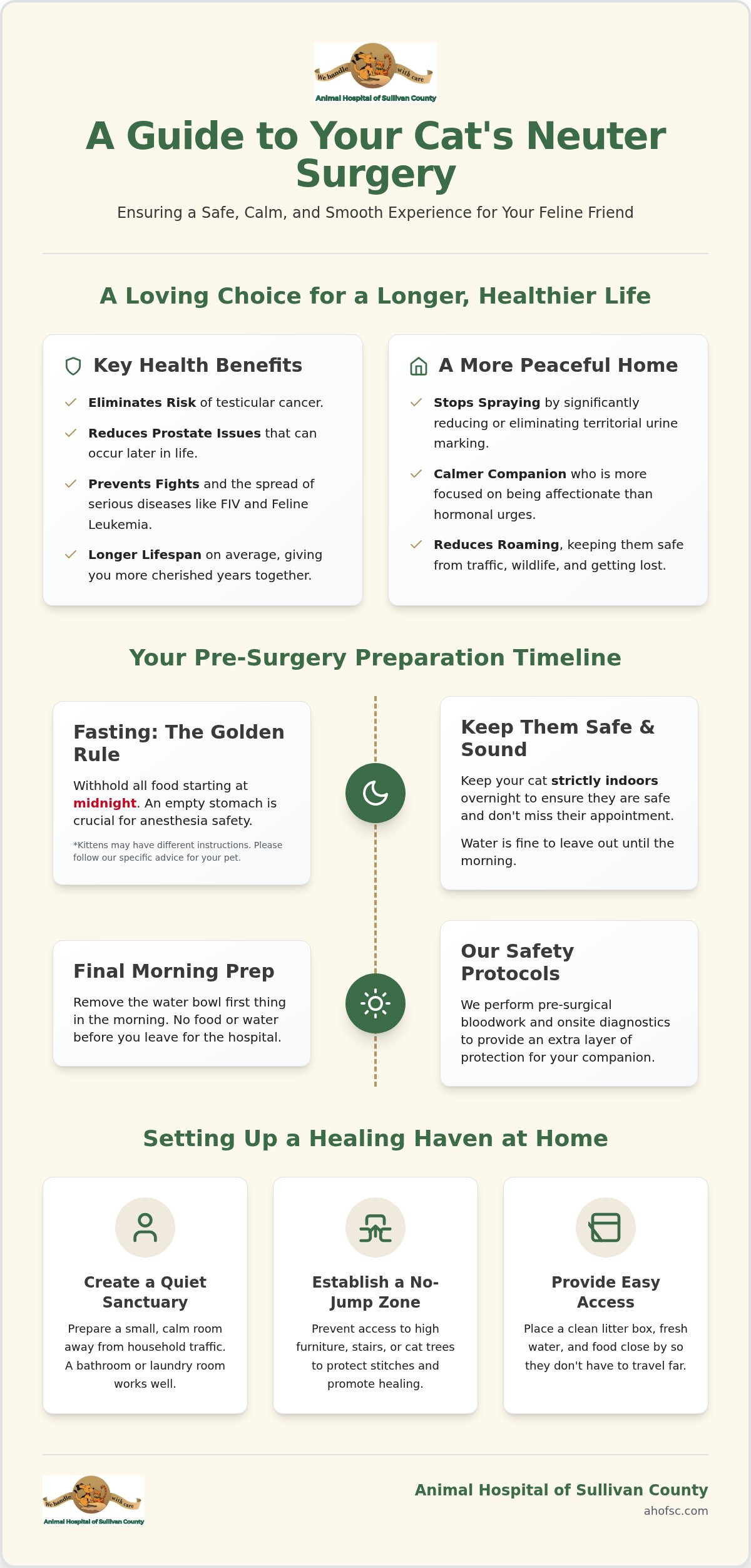
- Understand why neutering is a compassionate choice for your cat's long-term health, including how it reduces the risk of certain cancers.
- Learn the essential fasting rules for the night before to ensure your pet stays safe and comfortable during their procedure.
- Discover how our onsite diagnostics and pre-surgical bloodwork at our Ferndale hospital provide an extra layer of protection for your cherished companion.
- Get a step-by-step guide to preparing cat for neuter surgery Sullivan County, including what to expect during our streamlined morning check-in process.
- Find out how to set up a soothing recovery sanctuary at home that prevents jumping and promotes fast, stress-free healing.
Understanding Cat Neutering: Why It’s the Best Choice for Your Feline Friend
Deciding to neuter your cat is a profound act of love and responsibility. It's a routine surgical procedure where a veterinarian removes the testes of a male cat. While the thought of surgery might cause a bit of worry, it's one of the most common and safest ways to ensure your companion lives a long, vibrant life. At the Animal Hospital of Sullivan County, we treat every feline friend like a member of our own family. When you're preparing cat for neuter surgery Sullivan County clinics like ours in Ferndale provide a supportive environment where your pet's comfort is our top priority. Gaining a clear Understanding Cat Neutering helps you feel confident in this choice for your pet's future.
The Long-Term Health Benefits
Choosing to neuter your cat offers significant medical advantages that extend far beyond population control. This procedure completely eliminates the risk of testicular cancer and greatly reduces the chance of prostate issues later in life. We've served local families since 1953, and we've seen how preventive care truly changes lives. Neutered cats are much less likely to engage in territorial fights. This is vital because fighting is the primary way that serious diseases like feline leukemia and FIV spread among local cats. By removing the urge to battle, you're protecting them from these life-threatening infections. On average, neutered cats enjoy a longer, healthier lifespan, giving you more years of purrs and head-bumps.
Behavioral Harmony at Home
Life at home becomes much more peaceful once your cat is neutered. One of the most frustrating behaviors for owners is "marking" or spraying urine to claim territory. Neutering significantly reduces or eliminates this instinct, keeping your home clean and smelling fresh. You'll also notice your friend becomes much calmer and more affectionate. Instead of being driven by hormones, they can focus on being a loving companion. In our beautiful Sullivan County woods, the urge to roam can be dangerous. Neutered cats lose the desperate drive to find a mate, which means they're less likely to try to escape outside. This keeps them safe from local wildlife, traffic, and the risk of getting lost in the forest.
Some owners believe that if their cat stays strictly indoors, they don't need to be neutered. This is a common myth that can lead to health problems later. Even indoor cats can experience the stress of hormonal urges, leading to persistent howling or attempts to bolt out the door. More importantly, the health benefits like cancer prevention apply to every cat, regardless of whether they ever step foot outside. Your cat deserves the protection that neutering provides. We're here to guide you through every step of preparing cat for neuter surgery Sullivan County so you can have total peace of mind.
Pre-Surgical Instructions: The Night Before Your Cat's Procedure
The evening before surgery is a time for quiet connection and careful planning. While your cat won't know things are different, your preparation ensures their absolute safety. It's the most critical part of preparing cat for neuter surgery Sullivan County families can do at home. By following these simple steps, you minimize surgical risks and set the stage for a smooth morning at our Ferndale hospital. We want this experience to be as peaceful for you as it is for your cherished companion.
Fasting Guidelines for Feline Patients
The term "NPO" stands for nil per os, which means "nothing by mouth." We ask that you withhold all food starting at midnight the night before the procedure. This is vital because anesthesia can cause nausea; an empty stomach prevents your cat from accidentally inhaling food particles. While adult cats usually need a full 10 to 12 hour fast, kittens may have different requirements to keep their blood sugar stable. Always check the specific instructions provided by Dr. B for your pet's age. Water is generally fine to leave out until the very morning of the surgery. If your cat happens to sneak a snack from a roommate's bowl, please don't worry, but do tell us immediately. We may need to adjust the surgical schedule to keep them safe. This careful attention ensures they receive the full health benefits of spaying and neutering without unnecessary risk.
Preparing the Carrier and Environment
Ensure your cat stays strictly indoors the night before. Cats are experts at sensing change and might decide to wander into the Sullivan County woods if they feel a trip is coming. Keep them close and comfortable where you can monitor them. A clean carrier with familiar bedding, perhaps a t-shirt that smells like you, provides a profound sense of security. You might also consider using a calming pheromone spray on the bedding 15 minutes before you leave. If you have any lingering concerns about your pet's specific needs before the big day, our compassionate team at the Animal Hospital of Sullivan County is always ready to offer guidance.
End the night with a gentle, calming routine. Soft play and extra chin scratches help lower stress levels for both of you. A calm cat is much easier to settle in the morning, making the start of their surgical journey as peaceful as possible. By creating a soothing environment now, you are helping your friend prepare for a fast and healthy recovery.
Surgery Morning: Check-in & Safety in Ferndale
The morning of the appointment is when the careful steps you've taken at home meet our professional medical standards. As you drive into Ferndale, you might feel a bit of nervous energy, which is completely normal for a devoted pet parent. When you walk through our doors at the Animal Hospital of Sullivan County, our goal is to replace that anxiety with a sense of security. We believe that preparing cat for neuter surgery Sullivan County residents can rely on means providing a seamless, compassionate hand-off that prioritizes your pet's emotional state as much as their physical safety.
Pre-Anesthetic Bloodwork: A Vital Safety Net
Even if your cat seems vibrant and healthy, their internal health is what truly matters during surgery. We perform pre-surgical bloodwork to evaluate liver and kidney function. These organs are responsible for processing and clearing anesthesia from the body. Our onsite diagnostics allow us to review these vital results immediately, ensuring there are no hidden conditions that could complicate the procedure. This diagnostic step provides a crucial safety net. It gives Dr. B the information needed to tailor the anesthetic protocol specifically to your cat's unique needs, offering you true peace of mind while they are in our care.
Once the check-in is complete, Dr. B or one of our experienced technicians will perform a brief physical exam. We listen to the heart and lungs and check your cat's temperature. This final check ensures that your friend is in peak condition before moving into the surgical suite. We've been serving local families since 1953, and this methodical approach is part of our long-standing commitment to excellence.
What to Bring to the Clinic
- Vaccination Records: If you are a new client, please bring any previous medical history or proof of rabies and distemper vaccinations.
- Current Medications: If your cat is on any daily supplements or prescriptions, let us know the exact dosage and the last time they were administered.
- Reliable Contact Information: We will need a phone number where you can be reached at all times during the day for updates.
When it's time for the drop-off, try to keep your departure brief and upbeat. Cats are incredibly intuitive; they often mirror the emotions of their owners. By staying calm and using a soothing voice, you help your pet feel that they are in a safe, friendly place. We'll take it from there, providing the gentle bedside manner and expert care your cherished companion deserves.
What Happens During Surgery? Our Standards for Feline Surgical Care
Once your cat is settled in our surgical suite, we begin the process with the highest level of technical skill and emotional sensitivity. Our Ferndale team understands that preparing cat for neuter surgery Sullivan County involves more than just the night before; it's about the trust you place in us during the procedure itself. We maintain a strictly sterile environment, using advanced medical equipment that mirrors the standards found in human hospitals. Dr. B and our dedicated surgical staff work with a focused, gentle touch to ensure the procedure is swift and successful. We treat each patient as a cherished family member, ensuring they feel secure throughout their time with us.
The expertise of our team is backed by a legacy of care in Sullivan County that dates back to 1953. We've refined our protocols over decades to prioritize safety and comfort above all else. When your cat is in our surgical suite, they are surrounded by professionals who truly care about their well-being. This commitment to quality is why so many local families trust us with their pets' most important medical milestones.
Monitoring and Anesthesia Safety
We use modern anesthesia protocols tailored specifically for cats, which are significantly safer than traditional methods. Throughout the surgery, we continuously track your pet's heart rate, oxygen saturation, and respiration using precise electronic monitors. A dedicated veterinary technician stands by your cat's side, never taking their eyes off the vitals. We believe in providing human-grade care for your feline family member. This constant vigilance allows us to make immediate, real-time adjustments. This level of attention ensures your pet remains stable and safe from the moment they drift off until they wake up.
Pain Management and Recovery
Our heart-first approach means we never wait for a pet to show signs of discomfort. We use a multi-modal pain management strategy, administering relief before the surgery begins and continuing it through the recovery period. This proactive care helps block pain signals and leads to a much faster healing process. As the procedure ends, your cat is moved to a warm, quiet recovery area. We keep them tucked in and comfortable, allowing them to wake up in a soothing atmosphere without loud noises or bright lights. Our team checks on them frequently to ensure they are alert and stable before we call you for pick-up. If you want to learn more about our surgical excellence, you can view our surgical care services online to see how we prioritize your pet's safety.
Preparing Your Home for a Smooth Post-Operative Recovery
The journey home is a significant milestone in your cat's surgical experience. While the procedure itself is over, your role as a caregiver is just entering its most vital phase. Successfully preparing cat for neuter surgery Sullivan County means having a quiet, safe harbor ready before you even leave for our Ferndale office. Your home should be a place where your friend can shake off the last effects of anesthesia in total peace. By creating a controlled environment, you're not just preventing accidents; you're providing the emotional security your pet needs to heal quickly.
Setting Up the 'Recovery Suite'
Choose a small, draft-free room like a bathroom or a laundry room to serve as a temporary "recovery suite" for the first 24 hours. This confined space prevents your cat from wandering or hiding in hard-to-reach places where you can't monitor them. Fill the area with soft, familiar bedding and ensure it's away from the hustle and bustle of children or other curious pets. When you first arrive home, offer a small "welcome home" meal, about half of their normal portion, and keep fresh water within easy reach. Male cats might feel a bit groggy or uncoordinated for a few hours, so a flat, level space is much safer than a room with stairs or high perches.
To protect the surgical site, you'll need to make a few temporary adjustments to their environment:
- Limit Vertical Movement: Remove access to high furniture, window sills, or cat trees to prevent jumping, which can strain the incision.
- Litter Box Care: Switch to a paper-based litter for the first few days. This prevents dust or clay granules from irritating the surgical site.
- Proximity: Keep the litter box very close to their bed so they don't have to travel far during their first night home.
- Gentle Interaction: Provide "low-impact" affection. Gentle chin scratches and quiet talking are much better than vigorous play right now.
Monitoring the Incision Site
A healthy healing incision should look clean, and the edges should stay closed. You might see a tiny bit of redness or very minor swelling in the first 24 hours, but this should quickly improve. The "Elizabethan collar," often called the cone, is a vital tool during this time. While your cat might not love wearing it, it's the only way to ensure they don't lick or chew at their sutures. Licking is the most common cause of post-op infections or incisions opening up, which would require a follow-up visit to our clinic.
We want you to feel supported throughout this entire process. If you notice any significant bleeding, foul-smelling discharge, or if your cat remains completely lethargic after the first 24 hours, please call our Ferndale office immediately. We've been caring for Sullivan County's pets since 1953, and we're always here to provide the guidance you need for a calm, successful recovery. Your observant eye is the final piece of the puzzle in ensuring your cherished companion returns to their happy, healthy self.
A Bright and Healthy Future for Your Feline Friend
Choosing to neuter your cat is a beautiful commitment to their long-term health and happiness. By following the fasting rules and setting up a cozy recovery suite at home, you've already taken the most important steps in preparing cat for neuter surgery Sullivan County families can provide. This routine procedure is a gateway to a calmer life and a deeper bond with your pet. Our team is here to ensure every moment of their stay is filled with warmth and professional care. We understand that your cat is a cherished member of the family, and we treat them with the same tenderness we’d give our own companions.
Since 1953, the Animal Hospital of Sullivan County has been a trusted partner for local pet owners. With Dr. B’s compassionate surgical expertise and our advanced onsite diagnostics, we prioritize your pet’s safety at every turn. We're proud to offer a "heart-first" approach that balances medical authority with neighborly empathy. Schedule your cat's compassionate neuter surgery at Animal Hospital of Sullivan County today. We look forward to helping your feline friend enjoy a long, vibrant life right by your side!
Frequently Asked Questions
At what age should I have my cat neutered in Sullivan County?
Most veterinarians recommend neutering cats at approximately four to six months of age. This timing helps prevent the onset of hormonal behaviors like spraying or roaming into the Sullivan County woods. However, kittens can often be safely neutered as soon as they weigh at least two pounds. When you are preparing cat for neuter surgery Sullivan County families can consult with Dr. B to determine the absolute best schedule for their specific pet’s development and health needs.
Is neuter surgery painful for my cat?
Your cat will not feel any pain during the procedure because they are under a safe, modern general anesthesia. We also prioritize a "heart-first" approach by administering proactive pain relief before the surgery even starts. This blocks pain signals before they begin. After the procedure, we provide additional medication to ensure they remain comfortable during their recovery in Ferndale. Most cats are back to their playful, purring selves within just a day or two.
How long does the actual neuter procedure take?
The surgical procedure itself is quite efficient and typically takes only 15 to 20 minutes to complete. However, the entire process includes pre-surgical exams, onsite diagnostics, and a steady waking-up period in our quiet recovery area. We usually ask that you drop your pet off in the morning and pick them up in the late afternoon. This allows our team to monitor them closely and ensure they are stable and alert before heading home.
Can my cat eat or drink anything on the morning of surgery?
No, your cat should not have any food after midnight on the night before their appointment. An empty stomach is critical for preventing nausea while under anesthesia. While food is strictly prohibited, you can generally leave their water bowl out until the morning of the surgery. If your cat accidentally sneaks a snack, please let us know immediately. We may need to adjust the timing to ensure their safety during the procedure.
What are the most common risks associated with cat neutering?
While neutering is one of the safest surgeries performed, common risks include minor swelling at the incision site or a mild reaction to anesthesia. Because we've served Sullivan County since 1953, we use advanced monitoring and pre-surgical bloodwork to minimize these possibilities. Our onsite diagnostics help us identify any underlying health issues before we begin. Most complications are easily avoided by following our post-operative instructions and preventing your cat from being too active too soon.
How long will it take for my cat to fully recover at home?
Most cats begin to feel like themselves again within 24 to 48 hours after returning home. However, the internal healing process takes a bit longer, usually about 10 to 14 days. During this window, it is vital to keep them in a quiet, confined space and prevent them from jumping on high furniture. By preparing cat for neuter surgery Sullivan County residents can ensure their home environment supports a fast and stress-free recovery for their cherished companion.
Will neutering my cat change his personality?
Neutering does not change your cat’s fundamental personality or intelligence. Instead, it reduces or eliminates behaviors driven by hormones, such as the urge to spray urine, roam far from home, or act aggressively toward other cats. You will likely find that your pet becomes even more affectionate and focused on their human family. They remain the same loving friend you know, just without the stress and frustration caused by the mating instinct.
What should I do if my cat licks his incision site?
If you notice your cat licking or chewing at their incision, you must use an Elizabethan collar, also known as a cone. Cats have bacteria in their mouths that can easily cause a surgical site infection or cause the incision to open. While your pet might seem unhappy with the collar at first, it is the only way to ensure they heal properly. If the site looks red or has discharge, call our office for a check-in.


