What if the "slowing down" you see in your senior cat isn't just a natural part of getting older, but a quiet whisper for help? For many families, it’s difficult to tell the difference between a cat who’s simply maturing and one showing the first cat kidney disease signs Sullivan County owners need to recognize. You might notice they're drinking a bit more water or sleeping longer in their favorite sunbeam. It's completely normal to feel a sense of anxiety or confusion about what these subtle changes actually mean for your pet's future.
We understand that the thought of a life-threatening diagnosis feels overwhelming. At the Animal Hospital of Sullivan County, we believe your cat is a cherished family member who deserves a heart-first approach to medical care. We're here to help you navigate these worries with clarity and neighborly empathy. In this guide, you'll learn how to identify the early warning signs of feline kidney disease and see how our Ferndale team uses advanced diagnostics to protect your pet's health. We will walk through the specific symptoms to watch for, when it's time to call the vet, and how we can partner together to ensure your companion feels supported and loved through every stage of their journey.
Key Takeaways
- Spot the "silent" shifts in your cat's behavior, such as subtle changes at the water bowl, that often signal the earliest stages of kidney issues.
- Identify the specific cat kidney disease signs Sullivan County owners should watch for to ensure your companion receives timely, life-saving care.
- Learn how our in-house laboratory in Ferndale provides fast and accurate answers, so you don't have to wait days to understand your pet's health.
- Discover practical, heart-first strategies to improve your cat's hydration and comfort at home through simple dietary and environmental adjustments.
- Understand how to assess your cat's daily quality of life to ensure they remain happy, comfortable, and cherished throughout their journey.
Recognizing the Early Whispers: Common Signs of Cat Kidney Disease
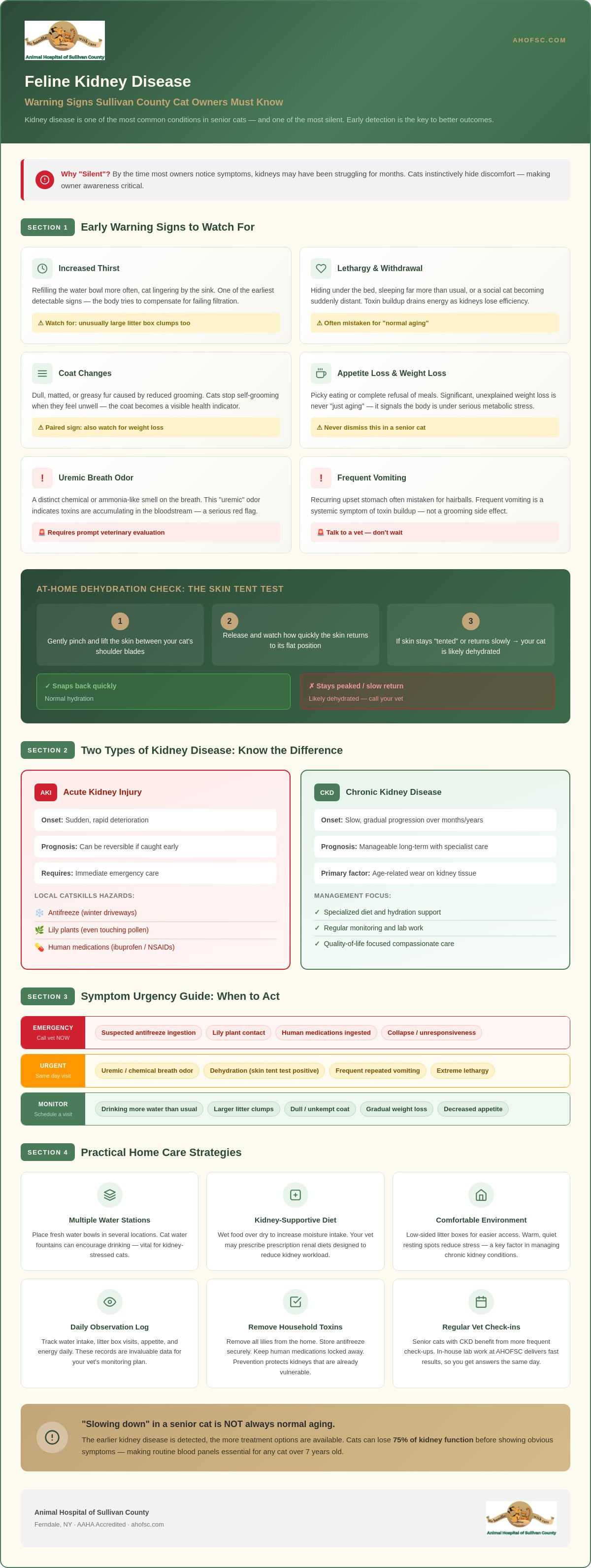
Feline kidney disease is often called a "silent" condition because cats are masters at hiding their discomfort. By the time many owners notice something is wrong, the kidneys have already been working overtime for a long while. Recognizing the cat kidney disease signs Sullivan County residents might see in their homes starts with paying close attention to the smallest changes in daily routine. It isn't just about a sudden illness; it's about hearing the quiet whispers of a body in need of support! Our team at the Animal Hospital of Sullivan County is dedicated to helping you spot these shifts before they become emergencies.
One of the most common early indicators is a subtle shift in how your cat interacts with their water bowl. You might find yourself refilling it more often or noticing your cat lingering by the sink. This increased thirst usually leads to a heavier litter box. If those clumps are larger than usual, it is a major red flag that the kidneys are struggling to concentrate urine. Understanding Chronic kidney disease in cats helps us realize that these behaviors are actually attempts by the body to stay balanced as its filtration system slows down.
To better understand this concept, watch this helpful video:
Have you noticed your cat’s fur looking a bit "unkept" lately? When kidney health declines, cats often lose interest in their usual grooming rituals. Their coat might appear dull, matted, or greasy. To learn how integrated medicine can support skin and coat health during chronic illness, you can discover 亞洲獸醫專科醫院. This change in appearance is often paired with a lack of energy, as the body redirects its resources to handle the buildup of toxins that the kidneys can no longer filter effectively. It's a visible sign that your companion isn't feeling their best.
Behavioral Changes You Shouldn’t Ignore
It is easy to mistake a cat’s withdrawal for a normal part of aging. However, if your social cat is suddenly hiding under the bed or seems unusually lethargic, it’s time to take note. Many owners also report "picky" eating habits or a decreased appetite. Unexpected weight loss is another critical sign. While it’s tempting to think they are just getting older and thinner, significant weight loss is never just "normal" for a senior pet!
Physical Red Flags in Senior Cats
As toxins build up in the bloodstream, you might notice a distinct, chemical-like odor on your cat’s breath. This "uremic" smell is a specific indicator of renal issues. You can also check for dehydration at home using the "skin tent" test; gently lift the skin between the shoulder blades and see if it snaps back quickly. If it stays peaked, your cat is likely dehydrated. Finally, keep track of occasional vomiting. While many dismiss this as simple hairballs, frequent upset stomachs are among the cat kidney disease signs Sullivan County families should discuss with a professional right away.
Understanding the Causes: From Sullivan County Risks to Senior Health
When we discuss the "why" behind kidney issues, it’s helpful to distinguish between a sudden crisis and a slow, age-related decline. Acute Kidney Injury (AKI) happens fast, often due to an infection or toxin. In contrast, Chronic Kidney Disease (CKD) is a gradual wear-and-tear process. Recognizing the cat kidney disease signs Sullivan County owners often see requires understanding that both paths lead to the same place: a cat who needs our help. While AKI can sometimes be reversed if caught early, CKD is about managing a long-term journey with love and specialized care.
Acute Hazards in the Catskills
Our beautiful local environment in Ferndale and the surrounding Catskills presents unique risks. During our cold New York winters, antifreeze is a major concern. Even a tiny amount licked off a driveway can cause immediate, devastating kidney failure. Inside the home, certain plants are equally dangerous. Lilies are incredibly toxic; even biting a leaf or brushing against the pollen can be fatal for a cat. We also see cases where curious cats ingest human medications like ibuprofen or other NSAIDs. These "acute" events are emergencies that require immediate action to save kidney function!
The Slow Progression of Chronic Disease
For most of our feline friends, kidney challenges are a marathon rather than a sprint. Age is the most significant factor here. Experts at the Cornell Feline Health Center indicate that kidney function naturally decreases as a cat matures. In fact, 80% of cats over the age of 15 will face some degree of kidney disease. Other factors that contribute to this slow decline include:
- High blood pressure, which puts constant stress on delicate kidney filters.
- Untreated dental disease, where bacteria from the mouth travel through the bloodstream to the kidneys.
- Genetic predispositions in certain breeds like Persians or Abyssinians.
- Previous bouts of feline lower urinary tract disease or infections.
Because these changes happen so slowly, they can be hard to spot. Proactive monitoring is the best gift you can give your companion. You can learn more about supporting your aging friend in our guide to senior pet care in Sullivan County. Staying ahead of these changes ensures your cat enjoys their golden years in comfort. If you have any concerns about your pet's recent behavior, our team at the Animal Hospital of Sullivan County is always here to listen and help.
Advanced Diagnostics in Ferndale: How We Uncover Silent Issues
When you bring your companion to our Ferndale clinic, the journey toward answers begins with a gentle, hands-on physical exam. Dr. B carefully feels the size and shape of the kidneys, as changes in their texture or volume can be one of the first physical cat kidney disease signs Sullivan County owners might not be able to detect at home. We treat every patient like a member of our own family. This means we don't just look at numbers on a page; we listen to your cat's heart and observe their comfort levels. Because we have an in-house laboratory, we can provide your family with fast results, often during the very same visit. This speed helps alleviate the anxiety that comes with waiting days for an outside lab to call back!
Our diagnostic panels look at several key indicators to form a complete picture of your cat's health. Blood urea nitrogen (BUN) and creatinine are traditional markers that show how well the kidneys are filtering waste from the bloodstream. However, we also rely on resources like the Cornell Feline Health Center to stay current on the latest testing protocols. Alongside bloodwork, we perform a urinalysis to check "specific gravity." This measurement tells us if the kidneys are still able to concentrate urine effectively. If the urine is too dilute, it's a clear signal that the kidneys are struggling to do their job, even if blood levels still look relatively normal.
Diagnostic Imaging for a Deeper Look
Sometimes, a blood test only tells part of the story. We may recommend an X-ray or a pet ultrasound in Sullivan County to get a closer look at the internal structure of the organs. Imaging allows us to see if there are kidney stones, cysts, or structural changes that bloodwork alone cannot reveal. It helps us differentiate between different disease stages and ensures we're treating the root cause of your cat's discomfort with precision and care.
The Power of Early Screening
We recommend starting regular screening for all cats once they reach age seven. Establishing baseline results while your cat is healthy is vital. It allows us to spot tiny trends and shifts in their internal health before any outward symptoms ever appear. SDMA is a biomarker that detects kidney loss up to 17 months earlier than traditional tests. Catching these changes early gives us the best chance to protect your cat's quality of life for years to come!
Managing Feline Kidney Health: Practical Steps for Sullivan County Families
Managing a chronic condition like kidney disease is a journey we take together. Our "heart-first" approach means we prioritize your cat’s comfort and your peace of mind above all else. It is not just about medical charts; it’s about maintaining the sacred bond you share with your companion. Once you have identified the cat kidney disease signs Sullivan County owners often notice, the next step is creating a supportive home environment. This involves simple, practical changes that can make a profound difference in how your cat feels every single day.
Hydration is the most critical element of renal support. Since the kidneys struggle to concentrate urine, your cat needs to take in more water to flush out metabolic waste. Many cats are naturally poor drinkers, so we have to get creative! Water fountains are excellent because many felines prefer the sound and taste of running water. Switching from dry kibble to wet food is another game changer for hydration. You can even try "flavoring" their water with a small splash of low-sodium tuna juice or clam juice to encourage them to visit the bowl more often.
Nutrition also plays a vital role in protecting what kidney function remains. High levels of phosphorus and certain types of protein can be difficult for struggling kidneys to process. By adjusting their diet, we can reduce the buildup of toxins in the bloodstream that cause nausea and lethargy. Creating a low-stress, quiet home environment helps even more. When a cat feels safe and relaxed, their body can focus its energy on healing and maintenance rather than staying on high alert.
The Role of Prescription Diets
Therapeutic foods are specifically formulated to reduce the workload on the kidneys while still providing essential nutrients. We know that cats can be notoriously picky, especially when they aren't feeling their best! We recommend a very slow transition, mixing a tiny amount of the new food into their current favorite over several weeks. You can explore our selection of pet store products at the clinic to find the specific textures and flavors that your cat finds most appealing.
Medical Support and Hydration
As kidney disease progresses, we often need to manage secondary issues like high blood pressure or anemia. Regular monitoring allows us to catch these shifts early and adjust medications as needed. In more advanced stages, we may introduce subcutaneous fluids. While the idea of giving fluids under the skin at home might feel intimidating at first, our team will walk you through it with patience and care. Most owners find it becomes a peaceful, life-sustaining part of their daily bonding routine. If you're concerned about your cat's health, schedule a consultation with the Animal Hospital of Sullivan County to discuss a personalized management plan.
Compassionate Support for Every Stage of Your Cat’s Journey
Caring for a cat with a chronic illness is one of the most profound expressions of love a pet parent can offer. It is a journey that requires patience, heart, and a dedicated team by your side. While recognizing the cat kidney disease signs Sullivan County families often face is the first step, our role is to walk with you through every mile that follows. We treat the relationship between you and your animal as a sacred bond. Our goal is to ensure that your cat’s golden years are filled with as much comfort and happiness as possible!
One of the hardest parts of managing kidney disease is the emotional weight of making health decisions. We often recommend the "Happy Days" vs. "Bad Days" assessment to help you maintain perspective. Simply keep a calendar on your fridge and mark each day based on your cat’s appetite, energy, and social interaction. When the bad days begin to outnumber the good, it helps provide a clear, visual guide for our conversations about their quality of life. This method replaces some of the anxiety of the unknown with a sense of gentle clarity.
Palliative care is about more than just medicine; it is about keeping your companion comfortable in their favorite spots at home. We focus on managing pain, nausea, and hydration to ensure their daily experience remains peaceful. If the time comes to say goodbye, we offer a gentle, family-oriented approach. You won't have to navigate that difficult moment alone. Because we have an onsite crematorium, your cherished friend stays in our compassionate care until the very end, providing the dignity and peace of mind your family deserves.
A Legacy of Care in Sullivan County
The Animal Hospital of Sullivan County has been a pillar of this community since 1953. These deep roots inform our "heart-first" approach to medicine today. We aren't just a clinic; we are your neighborly experts who have cared for generations of local pets. There is a special kind of comfort that comes from a long-term relationship with a doctor who knows your pet’s entire story. You can read more about our compassionate pet end-of-life care for grieving families to understand how we support you through every transition.
Your Next Steps
If you have noticed any changes in your cat’s behavior or thirst, please reach out to us. Scheduling a consultation at our Ferndale animal hospital is the best way to get the answers you need. When you prepare for your visit, try to jot down any observations about their eating habits or litter box use. This history is incredibly helpful for Dr. B and our team as we build a personalized care plan. Schedule a wellness exam today to protect your cat’s kidney health.
Partnering for Your Cat’s Longevity and Happiness
Your cat’s health is a journey that doesn't have to be walked alone. By learning to recognize the subtle cat kidney disease signs Sullivan County residents often encounter, you've already taken the most important step in protecting your companion’s future. Whether it's adjusting their favorite meals or using our advanced in-house laboratory for immediate answers, every small action contributes to a more comfortable life for your pet. Having fast results means you can spend less time worrying and more time enjoying the quiet moments with your cherished friend.
Our clinic has been a community pillar since 1953, and we treat the relationship you share with your pet as a sacred bond. Dr. B and our dedicated team offer neighborly empathy alongside medical expertise to ensure you feel supported at every turn. We provide the highly personalized care your cat deserves because we know they're a vital member of your family. If you've noticed any changes in your pet’s routine, let us be your partner in this journey of care.
Book a Compassionate Wellness Exam for Your Cat
We look forward to seeing you and your feline friend soon!
Frequently Asked Questions
Is kidney disease in cats a death sentence?
Kidney disease is absolutely not a death sentence for your beloved companion. While it is a chronic condition, many cats thrive for several years after diagnosis with the right supportive care and monitoring. Our goal is to focus on your cat's daily happiness and comfort. Early detection allows us to implement strategies that slow the progression, giving you more precious time together.
Can a cat recover from kidney failure?
Recovery depends on whether the issue is acute or chronic. Acute kidney injuries, often caused by toxins like lilies or antifreeze, can sometimes be reversed if treated immediately with emergency care. However, chronic kidney disease is a progressive condition where the damage is permanent. While we cannot cure chronic failure, we can manage the symptoms effectively to ensure your cat remains comfortable and happy.
How much does it cost to diagnose kidney disease in Sullivan County?
The cost of a diagnostic workup varies depending on the specific needs of your cat and the depth of testing required. A typical evaluation includes bloodwork, urinalysis, and sometimes imaging like an ultrasound. We believe in transparent communication and will always discuss the recommended steps and associated costs with you before proceeding. Our in-house lab helps keep the process efficient for your family.
Are cats in pain when they have kidney disease?
Cats with kidney disease usually experience a sense of malaise or nausea rather than sharp, localized pain. As toxins build up in the bloodstream, they may feel under the weather or lose their appetite. We prioritize palliative care to manage these symptoms and keep your pet feeling their best. Identifying the cat kidney disease signs Sullivan County owners often notice helps us intervene before discomfort becomes severe.
What is the life expectancy of a cat with chronic kidney disease?
Life expectancy varies greatly depending on how early the disease is detected and the stage of the condition. Some cats live for many years after a diagnosis in the early stages, while others in advanced stages may have a shorter timeline. By using advanced diagnostics and personalized treatment plans, we work hard to maximize both the length and the quality of your cat’s life.
What happens if my cat stops eating due to kidney issues?
If your cat stops eating, it is often a sign that toxins are building up or they are feeling nauseated. This is a serious situation that requires a call to the vet to adjust their management plan. We might suggest appetite stimulants, anti-nausea medications, or a different flavor of prescription food. Keeping your cat nourished is a top priority for maintaining their strength and overall spirit.
Can I prevent my cat from getting kidney disease?
You cannot always prevent the age-related changes that lead to chronic kidney disease, but you can reduce the risks. Keeping your home free of toxins like lilies and antifreeze is a vital first step. Additionally, maintaining excellent dental health and providing a high-quality diet can support overall organ function. Regular wellness exams are the best way to catch the cat kidney disease signs Sullivan County pets might show early on.
Is there a specific age when I should start testing my cat’s kidneys?
We recommend beginning regular kidney screening for all cats once they reach seven years of age. This allows us to establish a healthy baseline and monitor for tiny changes over time. Senior cats are more prone to renal issues, so annual bloodwork and urinalysis become essential tools for proactive care. Catching these silent issues early gives us the best opportunity to protect your pet's long-term health.


