You’ve spent twenty minutes coaxing your dog into the car with their favorite treats, only to have them freeze the moment you pull into the clinic parking lot. By the time you reach the waiting room, your heart is racing as fast as theirs; you find yourself apologizing to everyone in sight for the frantic pacing and whining. It is a deeply stressful experience that can leave you wondering if a thorough exam is even possible when your pet is this overwhelmed. We understand that your dog is a cherished member of your family, and seeing them in distress is truly heartbreaking.
You aren't alone in this struggle. In fact, 2026 research shows that reactivity and fear are the top concerns for dog owners today. We believe that a veterinary visit should be a partnership of care, not a physical or emotional battle. This guide provides gentle, expert-backed anxious dog at vet solutions to help Sullivan County pet parents transform those fearful moments into a calm, manageable experience. We will explore practical tools for the car ride, ways to navigate the waiting room with confidence, and how a compassionate veterinary team can respect your dog’s emotional needs while providing the high-quality medical care they deserve.
Key Takeaways
- Learn to recognize subtle signals like a tucked tail or heavy panting so you can support your dog before their anxiety escalates.
- Discover gentle anxious dog at vet solutions such as "Happy Visits" that help your pet associate the clinic with treats and affection rather than fear.
- Implement simple in-clinic strategies, like checking in from your car, to avoid the stress of a busy waiting room and keep your dog calm.
- Explore how supplements or pre-visit medications can take the edge off for highly stressed pets, allowing for a thorough and compassionate exam.
- Find peace of mind by partnering with a dedicated veterinary team that prioritizes your dog’s emotional well-being alongside their physical health.
Recognizing the Signs of Veterinary Anxiety in Dogs
It's heart-wrenching to see your beloved companion tremble at the mere sight of the clinic doors. Many pet parents feel a sense of guilt or embarrassment when their dog reacts poorly, but it's vital to understand that veterinary anxiety is a true physiological response. When your dog feels threatened, their brain triggers a "fight or flight" surge of adrenaline and cortisol. They aren't choosing to be "difficult"; they are simply trying to survive a situation they don't understand. Finding effective anxious dog at vet solutions starts with learning to "speak dog" and recognizing these distress signals as early as possible.
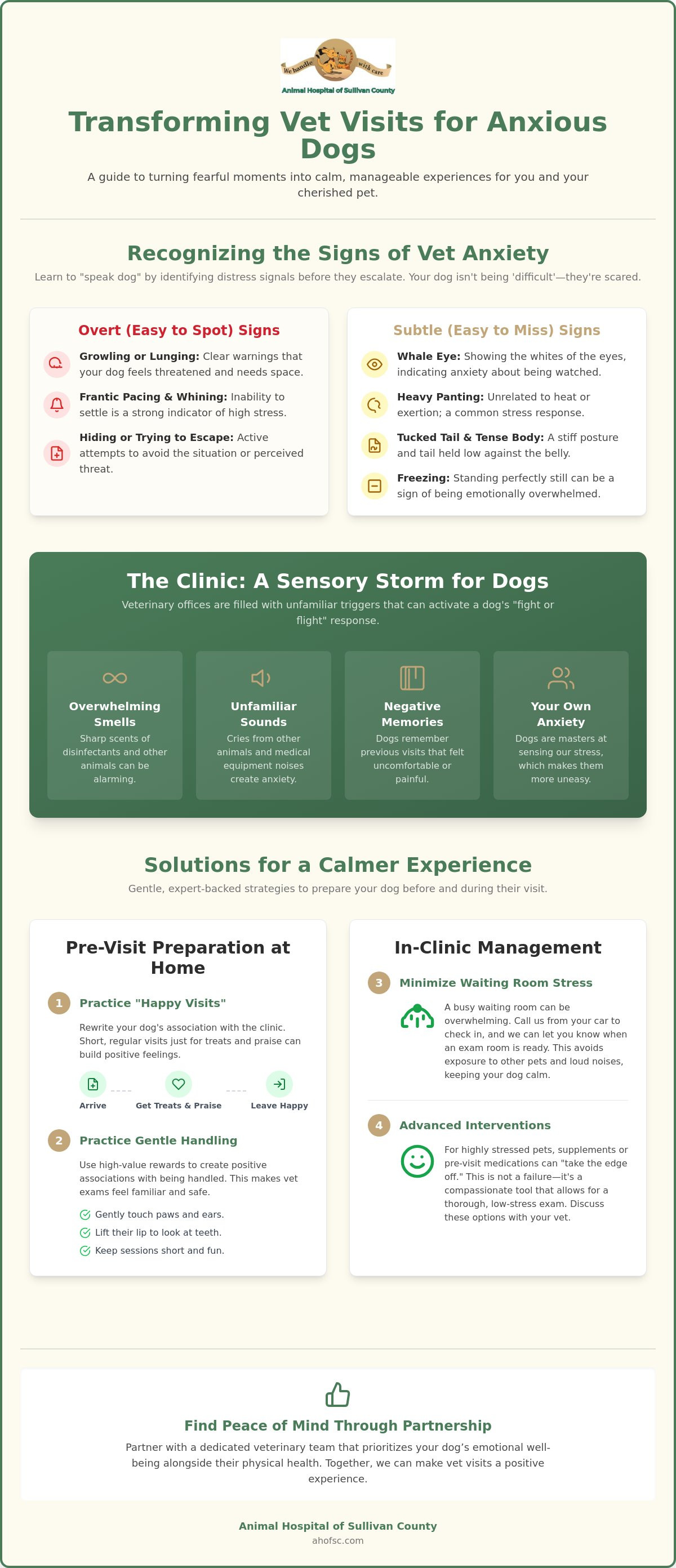
For some pets, the stress begins long before you arrive at our doors. You might notice your dog hiding under the bed the moment you grab your keys or the specific leash used for outings. This anticipatory anxiety builds up, making it harder for them to settle once the exam begins. While overt behaviors like growling or lunging are hard to miss, many dogs communicate their fear through quieter signals. You might notice heavy panting even when the room is cool, or a tail tucked tightly against the belly. Some dogs exhibit "displacement behaviors" during an exam. These are out-of-context actions, like a sudden urge to sniff the floor or scratch behind an ear. These are your dog’s ways of trying to self-soothe or distract themselves from the stress of the moment.
Subtle Body Language You Might Miss
Some stress markers are incredibly easy to overlook. "Whale eye" occurs when a dog turns their head slightly away but keeps their eyes fixed on the "threat," revealing the whites of their eyes. You might also notice your dog leaving damp, sweaty paw prints on the scale or shedding excessively on the exam table. Perhaps most deceptive is the "freeze" response. A dog who stands perfectly still isn't necessarily calm; they may be so overwhelmed that they have shut down emotionally. Recognizing these involuntary markers allows us to adjust our pace and approach to keep them feeling safe.
Why Veterinary Offices Trigger Fear
Veterinary offices are a sensory storm for canines. The sharp scent of disinfectants, the sound of other animals, and the feeling of slippery floors can all trigger a canine fear of loud noises or unfamiliar environments. Dogs have incredible "medical memories." They remember the exact moment a previous visit felt uncomfortable. Additionally, because our bond is so sacred, dogs often mirror our own emotions. If you are tense or worried about the appointment, your dog will likely pick up on that energy and feel even more uneasy. Understanding these triggers is the first step toward implementing lasting anxious dog at vet solutions that prioritize your pet's comfort and emotional well-being.
Pre-Visit Solutions: Preparing Your Dog at Home
The journey to a peaceful veterinary appointment begins long before you arrive at our clinic. For many Sullivan County pet parents, the drive itself can be a source of tension. Whether you are navigating the winding roads of the Catskills or a short trip through Ferndale, the car ride often sets the emotional tone for the visit. By implementing proactive anxious dog at vet solutions in the comfort of your own home, you can help your dog build the confidence they need to face the clinic with a wagging tail. Preparation is an act of love that transforms a scary "medical event" into a predictable routine. Beyond specific vet prep, general training and socialization tips from H&H Dog can help your pet feel more secure in any public setting.
The Power of "Happy Visits"
One of the most effective ways to lower your dog’s stress is to rewrite their associations with our office. We encourage you to bring your pet by for a "Happy Visit" when no medical care is needed. These brief stops involve walking into the lobby, receiving a high-value treat from our front desk team, and leaving immediately. Doing this regularly, perhaps once a week, helps your dog realize that our building isn't just a place for vaccines; it's a place where they are celebrated! Please feel free to reach out to us at ahofsc.com to find the best time for a quick, treat-filled stop.
In-Home Handling Training
You can make a significant difference by practicing "mock exams" at home during quiet bonding time. Use tiny, delicious rewards to encourage your dog to let you touch their paws, look inside their ears, or lift their lip to see their teeth. Desensitization is the gradual exposure to a trigger at a sub-threshold level. By making these movements part of a fun game, you ensure that when our team performs these same actions, they feel familiar rather than threatening. This preparation makes the experience much less stressful for dogs and their owners alike; to further support your pet's progress, you can visit I Wuff You Dog Training for professional behavior consulting.
Don't forget the sensory details that can soothe a nervous system. Applying a pheromone spray to a bandana or using a gentle, snug-fitting calming wrap about thirty minutes before you leave can provide a sense of security. If your dog suffers from motion sickness during Sullivan County travels, mention this to our team. Nausea often masquerades as anxiety, and addressing physical discomfort in the car is a vital part of a holistic approach. When your pet feels physically steady and emotionally prepared, the transition into the exam room becomes a much smaller hurdle to clear!
In-Clinic Strategies for a Calmer Exam Experience
Once you arrive at the clinic, the environment itself becomes the primary focus for your pet. The sights, sounds, and scents of a medical facility can be overwhelming, but we have developed several anxious dog at vet solutions to help your pet feel at ease. We believe that the clinic should be a place of healing and comfort, not a source of fear. By managing the experience from the moment you pull into our parking lot, we can keep your dog’s stress levels below their "threshold" and ensure a much more productive visit.
Waiting Room Management
For many dogs, the waiting room is the most challenging part of the entire appointment. It's a space filled with unfamiliar animals and high-energy interactions. To bypass this stress, we highly recommend our "parking lot check-in" protocol. Instead of coming inside immediately, stay in the comfort of your car and let us know you've arrived using the PetDesk app. We will text or call you the moment your exam room is ready. This allows your dog to transition directly from the safety of your vehicle to a private room. If you do need to enter the lobby, try using your body or a towel as a visual barrier. Keeping your dog focused on you rather than the other pets nearby can prevent their anxiety from escalating before the exam even begins.
The Exam Room Environment
Inside the exam room, we take every step to create a soothing atmosphere. We use non-slip mats on all surfaces because slippery floors and tables can make a dog feel incredibly vulnerable. We also provide towels infused with calming pheromones to wrap your pet in a "blanket of security." One of our favorite anxious dog at vet solutions is the "hungry dog" strategy. We suggest bringing your pet to their appointment slightly hungry. This makes high-value treats, like peanut butter or spray cheese, an irresistible distraction during vaccines or physical checks. Clinical insights into Anxiety in Dogs confirm that using food as a positive association can fundamentally change a pet's emotional response to a "scary" stimulus.
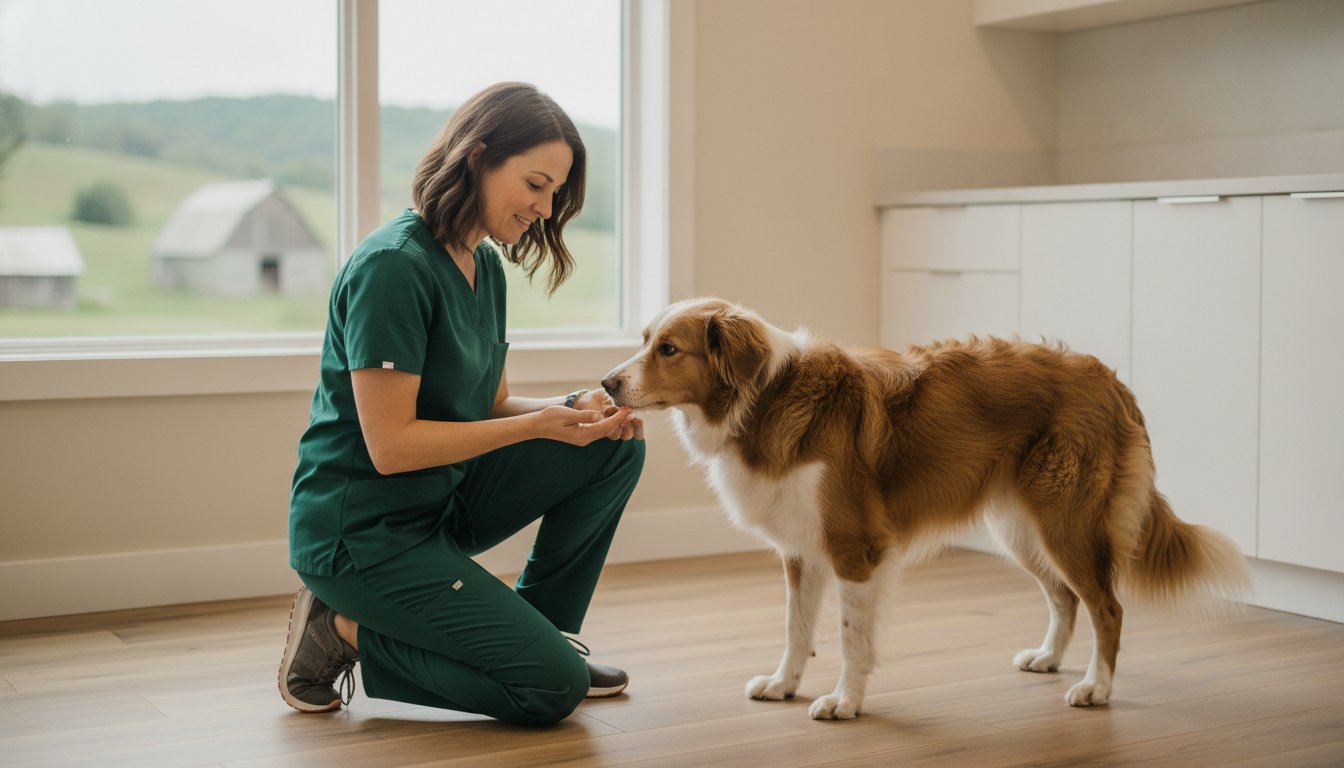
Our team, including Dr. B, practices a gentle "bedside manner" that prioritizes trust over speed. We don't believe in forcing a dog onto a high table if they are more comfortable on the floor. We will happily get down on the rug with them to perform our exam! This "meet them where they are" philosophy is at the heart of our compassionate care. By using "distraction therapy" and respecting your pet's body language, we can provide essential medical care while keeping their tail wagging. Your dog’s emotional well-being is just as important to us as their physical health!
Advanced Interventions: Supplements and Medications
Sometimes, despite our best efforts with training and environmental changes, a dog's fear remains too high to overcome. When a pet is in a state of true panic, they lose the ability to learn or process positive associations. In these situations, we look toward medical anxious dog at vet solutions to provide the emotional relief your pet deserves. It is important to remember that using supplements or medication is not a sign of failure. Instead, it is a compassionate way to lower your pet’s stress so they can feel safe enough to receive the care they need. We treat every animal as a cherished family member, and their comfort is our highest priority.
Natural Calming Aids vs. Prescriptions
For pets with mild anxiety, over-the-counter options can be a wonderful starting point. Pheromone diffusers, calming collars, and supplements containing L-theanine or CBD may help take the edge off a nervous dog. However, for dogs that experience significant distress, we may discuss "pre-visit pharmaceuticals" (PVPs). These are medications like Gabapentin or Trazodone that you administer at home before leaving for the clinic. We also stay at the forefront of veterinary medicine, such as utilizing Tessie (tasipimidine oral solution), which was approved by the FDA on May 6, 2026, to treat noise aversion and situational anxiety. Medication is a bridge to learning that helps your dog stay below their panic threshold, rather than a "knock-out" pill designed to cause heavy sedation.
Professional Behavioral Support
Chronic anxiety is more than just a temporary "bad mood"; it has a real impact on your dog’s long-term health. High levels of stress hormones can strain the immune system and complicate the management of other conditions. This is particularly vital for older dogs, as managing stress is a key component of senior pet care Sullivan County. By reducing anxiety now, you are investing in your pet's future happiness and longevity. We often recommend partnering with local Sullivan County trainers who specialize in positive reinforcement to help with desensitization between visits.
Our team is here to monitor your pet’s progress over time. We track how they respond to different protocols and adjust our care plan at every visit. This methodical, heart-first approach ensures that we are always moving toward a more peaceful experience for your dog. If you feel your pet struggles with veterinary visits, please schedule a consultation with our compassionate team to discuss a personalized plan. Together, we can find the right balance of support to keep your dog's tail wagging and their heart at ease.
The AHOSC Approach: Compassionate Care in Ferndale
At the Animal Hospital of Sullivan County, we understand that your dog is more than just a patient; they’re a cherished member of your family. For over 70 years, our clinic in Ferndale has served as a reliable anchor for local pet parents, treating every animal with the same sincerity we provide our own. This long-standing legacy allows us to offer unique anxious dog at vet solutions rooted in deep community roots and a genuine "heart-first" philosophy. We don't just treat symptoms; we care for the whole pet, prioritizing their emotional comfort as a sacred part of our medical mission. Our facility is designed to be a steady, calming presence where technical expertise meets neighborly empathy.
A Neighborhood Vet Who Listens
Dr. B and our dedicated staff believe that a successful visit starts with listening to both the pet and the owner. We know that a pet wellness exam Sullivan County can feel like a hurdle for a nervous dog, so we intentionally move at a pace that feels supportive and thorough. Our team uses a blend of patience and advanced technical skill to ensure every examination is as stress-free as possible. Even when the unexpected happens, our emergency vet Sullivan County NY services are delivered with a soothing bedside manner that aims to lower the tension of a high-stress situation. Because we have onsite diagnostics and a comprehensive pharmacy, we can often complete testing and provide medications in one visit, minimizing the number of trips for your sensitive pet.
Your Partner in Lifelong Pet Health
Our commitment to your pet’s health is a lifelong promise. We’re honored to walk beside you from those first playful puppy vaccines through the quiet, dignified moments of pet end of life care Sullivan County. Because we offer full-service support, including an onsite crematorium, we ensure your pet is treated with respect and dignity through every single stage of their journey. As a trusted community advocate, we aim to provide the peace of mind that comes from knowing your pet is in the hands of professionals who truly care about their happiness.
Finding the best anxious dog at vet solutions is a collaborative process, and we’re ready to be your dedicated partner. We invite you to take the next step in supporting your dog’s emotional well-being. Please reach out to our Ferndale office to schedule a low-stress consultation. Together, we can create a personalized plan that respects your dog’s unique needs and ensures they receive the high-quality, compassionate care they deserve in a place that feels like home.
A Calmer Future for You and Your Pet
Veterinary visits don't have to be a source of dread for you or your dog. By learning to recognize subtle stress signals and preparing at home with gentle desensitization games, you are already building a foundation of trust. We believe that every pet deserves a medical experience that honors their emotional well-being alongside their physical health. Implementing these anxious dog at vet solutions is a journey we are honored to take with you. Your dog’s comfort is a priority that we treat with the utmost sincerity and care.
Our clinic has been a steady part of the Sullivan County community since 1953. Led by the experienced Dr. Barbara Bodolosky, our team is dedicated to providing a "heart-first" approach to every patient. We utilize an onsite laboratory to ensure faster, more efficient testing, which means less waiting time and reduced stress for your sensitive companion. You aren't alone in this process; we are here to be your partner in care. Schedule a Compassionate Consultation at Animal Hospital of Sullivan County today. Let’s work together to ensure your pet feels safe, loved, and protected during every visit!
Frequently Asked Questions
Is it normal for my dog to be terrified of the vet?
It is completely normal and very common for dogs to feel overwhelmed or fearful at the clinic. Many pets view the unfamiliar smells, sounds, and handling as a potential threat, which triggers their natural survival instincts. You aren't alone if your companion feels this way! We see many families facing these same challenges and are here to help you find the right anxious dog at vet solutions for your specific needs.
Can I give my dog Benadryl for vet anxiety?
While Benadryl is sometimes used for its sedative side effects, it is not an anti-anxiety medication and typically isn't the best choice for vet fear. It may make your dog sleepy, but they can still feel terrified underneath the drowsiness. It’s always safer and more effective to discuss targeted options like Gabapentin or Trazodone with our medical team to truly address their emotional distress and ensure a peaceful visit.
What should I do if my dog growls at the vet?
If your dog growls, please understand that they are communicating their fear rather than being "bad" or aggressive. You should never punish a growl; this can teach a dog to bite without warning next time because their warning signal was suppressed. Instead, let our staff know immediately so we can adjust our handling techniques. We will use a gentle approach, high-value treats, or perhaps a "Happy Visit" protocol to lower their stress level.
How long does it take to desensitize a dog to the vet?
The timeline for desensitization varies for every individual pet and depends on the severity of their previous experiences. Some dogs show improvement after just a few "treat-only" visits over a few weeks, while others may take several months of consistent, positive reinforcement training. Patience is key! We will work with you to monitor your dog's progress and adjust our plan to ensure they feel safe at their own pace.
Should I muzzle my anxious dog during a visit?
Using a muzzle is a responsible safety measure if your dog has a history of snapping or biting when they are scared. A comfortable, well-fitted basket muzzle allows your dog to pant and receive treats while keeping everyone safe. If you train your dog to love their muzzle at home using peanut butter, it becomes a helpful tool rather than an added stressor during their exam. Safety and comfort go hand in hand!
Does pet insurance cover behavioral consultations for anxiety?
Many modern pet insurance policies do cover behavioral consultations and medications for anxiety, provided the condition isn't considered "pre-existing." Every plan is different, so we recommend reviewing your specific coverage or calling your provider before your appointment. Investing in these consultations can lead to long-term anxious dog at vet solutions that improve your pet's quality of life for years to come. We are happy to help with any necessary documentation.
What is a "Fear-Free" veterinary visit?
A "Fear-Free" visit is an approach that prioritizes your pet’s emotional well-being just as much as their physical health. This involves using specialized handling techniques, pheromone diffusers, and plenty of treats to minimize fear, anxiety, and stress. Our team is trained to recognize subtle body language signals. We will stop or change our approach if we see that your pet is becoming too overwhelmed, ensuring the bond of trust remains intact.
Can I stay with my dog during their exam if they are anxious?
We absolutely encourage you to stay with your dog during their exam! Your presence acts as a "safety net" and provides a sense of security that can significantly lower their stress levels. We believe in a family-oriented approach where you are a vital part of the care team. If there are specific procedures that require your pet to go to our treatment area, we will discuss this with you beforehand to ensure you feel comfortable.


