Did you know that experts have officially rated the 2026 tick season in New York as a "10 out of 10" risk level? With over 18,000 cases of Lyme disease reported across the state recently, it's natural to feel a bit of anxiety when your dog runs through the tall grass of the Catskills. Understanding the most common pet illnesses Sullivan County faces is the first step in keeping your furry family members safe. From the high density of ticks to the quiet threat of local wildlife, our environment presents unique challenges that require a watchful eye and a compassionate heart.
You want the very best for your pets; we agree that their health is a sacred bond that deserves our full attention. This guide will help you identify regional health risks and discover actionable signs to watch for right at home. We'll walk through the latest local data on rabies and tick-borne diseases while providing expert guidance from your Sullivan County veterinary neighbors to ensure your cherished companions enjoy a long, happy life by your side. Our goal is to provide the peace of mind that comes with proactive prevention and dedicated care.
Key Takeaways
- Identify why Sullivan County is a "hot zone" for ticks and wildlife encounters, including specific symptoms of Lyme and Anaplasmosis to watch for.
- Learn to differentiate between the natural signs of aging and early indicators of chronic conditions like renal failure in your cherished family members.
- Understand the most common pet illnesses Sullivan County owners encounter and how early diagnostic screenings can provide essential peace of mind.
- Discover how to build a heart-first prevention calendar that safeguards your pet’s health through every season of our unique regional climate!
- Explore how a dedicated partnership with local veterinary experts can help your pets live their longest, happiest lives right here in the Catskills.
Recognizing Common Health Challenges for Sullivan County Pets
Sullivan County's distinct four seasons bring incredible beauty to the Catskills, yet they also shape the specific common health challenges for pets that we see in our community. The relationship you share with your animal is a sacred bond built on years of shared walks and quiet moments. Because you know their "normal" better than anyone, you're the most vital partner in identifying common pet illnesses Sullivan County animals might face. Whether your companion is a dedicated hiker or a quiet indoor resident, their daily habits dictate their specific health risks. An annual pet wellness exam Sullivan County serves as a foundation for their long-term happiness. It allows us to look beneath the surface and catch silent symptoms that could otherwise go unnoticed for months.
The Silent Threat: Dental Disease and Systemic Health
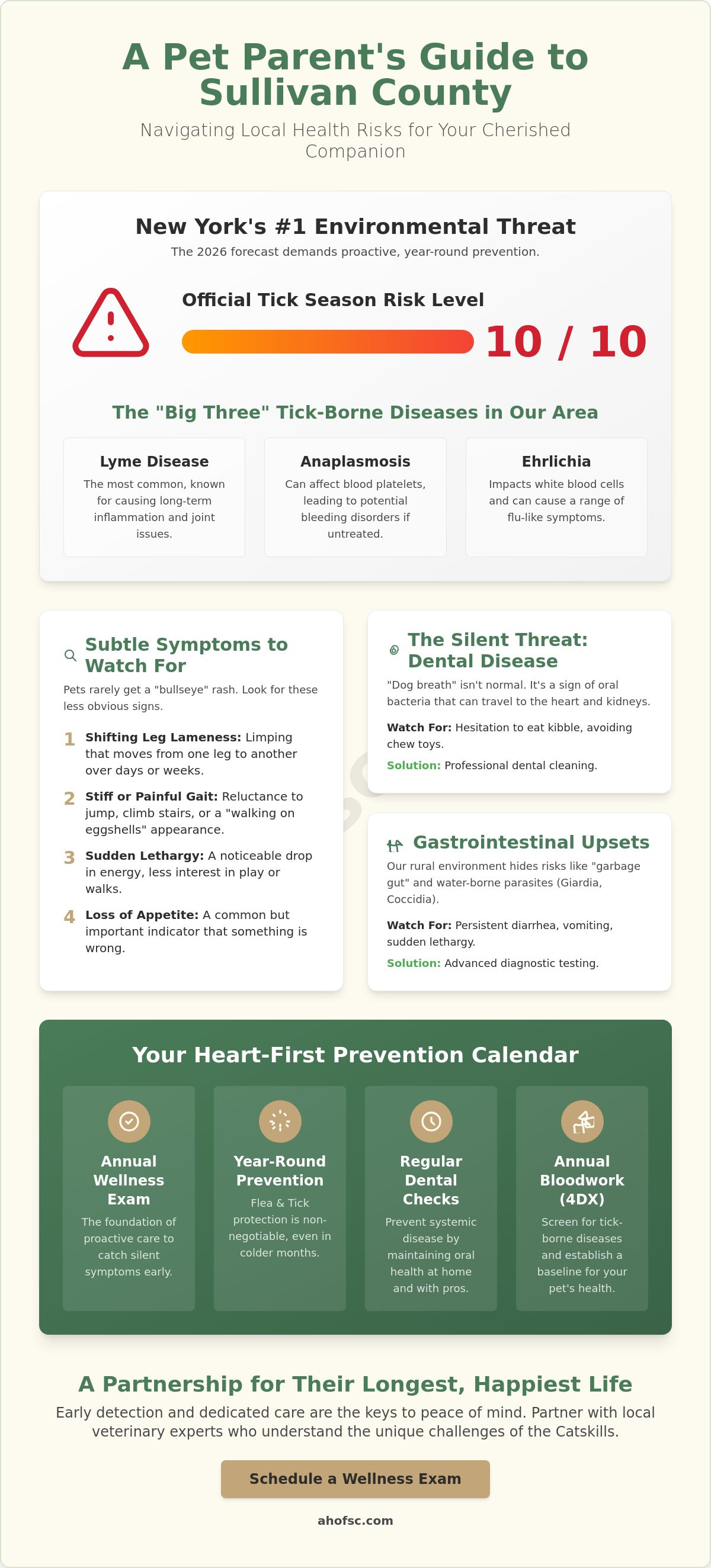
It's a common misconception that "dog breath" is just a fact of life. In reality, persistent oral bacteria acts as a dangerous gateway to more serious systemic issues like heart and kidney disease. When plaque and tartar accumulate, they create a reservoir of infection that can travel through the bloodstream to vital organs. You might notice your cherished friend being more hesitant to eat their dry kibble or perhaps they've stopped playing with their favorite chew toys. These signs of dental pain are frequently mistaken for "slowing down" due to age. They are actually cries for help! A professional dental cleaning for dogs Sullivan County is a powerful way to ensure your pet stays comfortable and healthy for years to come.
Gastrointestinal Upsets in the Catskills Environment
The rural charm of our area offers plenty of space for exploration, but it also presents unique digestive risks. We often see cases of "garbage gut" where curious pets get into compost piles or local wildlife remains. Beyond simple dietary indiscretion, our beautiful local water sources can hide microscopic threats. Parasitic infections like Giardia and Coccidia are common in Sullivan County streams and stagnant ponds. Understanding these common pet illnesses Sullivan County pets face helps you act quickly when something feels off. These infections can cause sudden lethargy, vomiting, or persistent diarrhea. When a tummy ache seems like more than a passing phase, pet diagnostic testing Sullivan County provides the answers we need. We use advanced diagnostics to identify the specific parasite or irritant, allowing us to start the right treatment immediately and restore your pet's comfort.
Regional Risks: Tick-Borne Diseases and Wildlife Encounters
Living in the heart of the Catskills means our backyards are shared with a vibrant array of wildlife and lush landscapes. While this connection to nature is why many of us call this area home, it also makes our region a known "hot zone" for specific environmental threats. In 2026, experts have designated the tick risk in New York as a "10 out of 10," a level that demands our full attention as pet parents. Understanding the common pet illnesses Sullivan County animals face is the best way to keep your cherished family members safe while they enjoy the great outdoors. From the forest floor to the standing water in our fields, risks like Lyme disease and Leptospirosis are part of our local reality.
The "Big Three" Tick Diseases in New York
Ticks are no longer just a summer concern; they are active whenever the temperature is above freezing. While Lyme disease is the most well-known threat, we also frequently see Anaplasmosis and Ehrlichia in our local patients. Unlike humans, pets rarely develop a "bullseye" rash. Instead, they might show subtle signs like shifting leg lameness, a stiff gait, or a sudden loss of energy. Because these symptoms can be vague, we rely on the 4DX snap test during your pet’s annual bloodwork to catch these infections early. Consistent, year-round flea tick prevention Sullivan County is non-negotiable in 2026 to protect your pet from these persistent parasites. These tiny invaders can cause long-term inflammation, which can make managing chronic illnesses much more complicated as your companion grows older.
Wildlife Safety: Rabies and Leptospirosis
Our local foxes, raccoons, and skunks are beautiful to watch from a distance, but they can carry serious health risks for domestic pets. Sullivan County averages four to five laboratory-confirmed rabies cases in animals each year, making the legal and health protections of pet vaccinations Sullivan County NY a top priority for every household. Beyond rabies, Leptospirosis is a "hidden" danger found in local soil and standing water contaminated by wildlife urine. This bacteria can cause severe kidney and liver damage. It's also zoonotic, meaning it can spread from your pet to your human family members. Watching for signs like increased thirst or a yellow tint to the eyes can save lives. If your pet spends time exploring near woods or water, we can help you determine which protective measures are right for your family's lifestyle. Keeping your pet’s defense system strong is a simple, powerful act of love that provides lasting peace of mind.
Internal Health: Managing Chronic Illnesses in Aging Pets
As our pets enter their golden years, the focus of their medical care naturally shifts. While we spend their youth protecting them from sudden infections, senior care is often about managing long-term conditions. These common pet illnesses Sullivan County residents see in older companions require a steady, patient approach. It's about maintaining a high quality of life so you can enjoy every possible moment together. Understanding this transition helps you stay ahead of potential issues before they impact your pet's happiness.
Kidney disease, or renal failure, is a frequent concern for both cat and dog owners in our community. Early warning signs are often subtle and easily missed. You might notice your cat spending more time at the water bowl or find your dog needing more frequent trips outside at night. Diabetes Mellitus is another condition that, while serious, is very manageable in a home setting with the right guidance. Similarly, heart disease often hides behind a persistent cough. Many owners think their pet just has a minor throat irritation, but a cough can actually signify that the heart is struggling to pump effectively. Catching these common pet illnesses Sullivan County pets experience during their senior years allows us to start supportive therapies that extend their comfort and vitality.
Endocrine Health: Thyroid and Adrenal Issues
Hormonal imbalances can significantly change your pet's personality and energy levels. We often see hyperthyroidism in cats, which can make them act restless or ravenous despite losing weight. In contrast, dogs more frequently suffer from hypothyroidism, leading to sluggishness and skin issues. Cushing’s Disease is another adrenal condition that causes excessive thirst and a "pot-bellied" appearance. Regular, specialized pet bloodwork Sullivan County is our best tool for monitoring these hormone levels. It helps us fine-tune medications to keep your pet’s internal systems in balance.
Arthritis and Mobility in the Senior Years
It's difficult to see a once-active dog hesitate at the stairs. Many owners assume their pet is simply "slowing down" because they're old, but this is often treatable joint pain. Our Sullivan County winters can be particularly tough on arthritic joints. The damp, cold weather tends to exacerbate stiffness and makes it harder for pets to get comfortable. Integrating compassionate medical care with tailored senior pet care Sullivan County strategies makes a world of difference. We can help you create a comfort plan that includes specialized supplements and pain management. Your pet's comfort is our priority, and we're here to walk this path with you every step of the way.
A Proactive Approach: Prevention and Early Detection Strategies
Choosing to be proactive is one of the kindest things you can do for your companion. We call this our "Heart-First" philosophy. It's the belief that catching a problem early isn't just good medicine; it's an act of deep love and devotion. By staying ahead of common pet illnesses Sullivan County pets face, you're protecting the sacred bond you share. This approach creates a "diagnostic window" where we can catch subtle changes before they become serious health crises. Utilizing regular pet diagnostic testing Sullivan County allows us to establish a baseline for your pet, making it much easier to spot when something is slightly off. These routine checks are the best way to ensure your cherished family member stays by your side for years to come.
Your Annual Wellness Roadmap
A consistent prevention calendar is your best defense against regional health threats. Every pet's journey is unique, so we tailor our approach to their specific lifestyle, age, and breed. Our roadmap includes three essential steps designed to provide total peace of mind:
- Step 1: The Comprehensive Physical Exam. This is a thorough, nose-to-tail assessment where we check everything from joint mobility to heart sounds and skin health.
- Step 2: Lifestyle-Based Vaccinations. We focus on the core protections your pet needs to stay safe from the specific wildlife and environmental risks found in the Catskills.
- Step 3: Annual Parasite Screening. Regular fecal and heartworm tests ensure your pet isn't playing host to hidden invaders that can drain their vitality.
When to Call the Vet: Triage for Pet Owners
It can be difficult to know when a symptom is a minor fluke or a serious concern. We want to help you feel confident in making that call. If you notice "red flag" symptoms like respiratory distress, sudden extreme lethargy, or persistent vomiting, it's time to reach out. These situations require immediate attention to ensure the best possible outcome for your animal. For these pressing needs, we provide urgent pet care Sullivan County during our regular business hours to get your family member the help they need right away. By staying alert to these common pet illnesses Sullivan County families encounter, you're acting as your pet's strongest advocate. If you're unsure about a change in behavior, don't hesitate to call us. We can help you determine if you need to schedule a sick pet appointment Sullivan County to address lingering concerns before they escalate. Trust your instincts; you know your pet's heart better than anyone else does!
Compassionate Care at Animal Hospital of Sullivan County
For over seven decades, the Animal Hospital of Sullivan County has been a steady, calming presence for families in Ferndale, Liberty, and Monticello. Since 1953, we've treated the bond between you and your animal as something truly sacred. We've seen generations of pets through their first vaccines and their senior years, helping owners manage the most common pet illnesses Sullivan County presents with both skill and sincerity. Dr. B and our dedicated team combine expert medical care with a gentle bedside manner that puts both you and your cherished charges at ease. We believe that high-quality medicine should always come with a neighborly touch! Our goal is to alleviate the anxiety often associated with medical visits by providing a welcoming, heart-first environment where your pet is treated like family.
Advanced Technology, Neighborly Heart
Our facility is equipped with an onsite lab and digital X-rays to provide the fast, accurate answers you deserve. Having these diagnostics under one roof means we can begin treatment sooner, which is vital for many common pet illnesses Sullivan County pets encounter. We also offer a curated selection of pet store products right here for your convenience. Because we're a long-standing family practice, we take pride in knowing your pet's full history. This deep understanding allows us to support your companion through their entire life journey, including compassionate pet end of life care Sullivan County. We even provide an onsite crematorium to ensure your friend stays in our gentle care until the very end. We're here to support the emotional well-being of local families just as much as the physical health of their animals.
Join Our Sullivan County Pet Family
We invite you to become a part of our extended family! Scheduling your first visit at our Ferndale facility is a simple, meaningful step toward a lifetime of health and happiness for your pet. Our commitment to sincerity, expertise, and emotional support is what makes us the best vet Sullivan County NY. We're here to be your partner in care, ensuring every wag and purr is protected with professional skill and neighborly love. We don't just see patients; we see cherished members of your household who deserve the very best. Schedule your pet’s wellness exam today!
Protecting Your Pet's Future in the Catskills
Your journey as a pet parent in our beautiful region is filled with joy, but it also comes with the responsibility of staying informed about regional health threats. We've explored how consistent, year-round vigilance can shield your companions from the rising risks of tick diseases and why monitoring subtle behavioral changes is the key to managing chronic conditions in senior pets. By staying ahead of common pet illnesses Sullivan County owners encounter, you're making a beautiful commitment to your pet’s longevity and happiness. This proactive approach is the ultimate act of love for your cherished family members.
At the Animal Hospital of Sullivan County, we're honored to be your partners in this mission. Serving our community since 1953, our team provides a unique blend of heart-first care and advanced medicine. With onsite diagnostics for fast answers and an onsite crematorium for a dignified journey's end, we're here for every stage of your pet's life. Dr. Barbara Bodolosky and our staff are ready to welcome you with the neighborly empathy and professional skill you deserve! Take the next step in protecting your pet's health today. Schedule a Wellness Exam for Your Pet and let's ensure your friend enjoys many more happy seasons by your side. We look forward to seeing you and your furry family soon!
Frequently Asked Questions
What are the most common signs of Lyme disease in Sullivan County dogs?
The most frequent signs of Lyme disease in local dogs include shifting leg lameness, a stiff gait, and a sudden loss of energy. Unlike humans, dogs rarely develop a bullseye rash, so we look for subtle changes in their comfort and appetite. It is one of the most frequent common pet illnesses Sullivan County veterinarians treat. Because our region is a high-risk zone, we rely on annual screenings to catch these infections early.
Is rabies a significant threat to indoor cats in New York?
Yes, rabies remains a real threat to indoor cats because wildlife like bats or rodents can occasionally find their way into your home. New York State law requires all cats to be vaccinated against rabies regardless of whether they go outside. Protecting your indoor friend ensures their safety and your family’s peace of mind if an unexpected visitor ever slips through a screen or down a chimney!
How often should my pet have bloodwork done if they seem healthy?
We recommend annual bloodwork for healthy adult pets and twice-yearly screenings for our senior companions. These diagnostic tests allow us to establish a healthy baseline and catch internal changes, like kidney or liver issues, before your pet actually feels sick. Early detection is a powerful act of love. It helps your cherished family member live a longer, more comfortable life by your side.
What should I do if my pet encounters a wild animal in the Catskills?
Contact your veterinarian immediately if your pet has a physical encounter with a wild animal, even if you don't see visible wounds. Sullivan County sees an average of 4 to 5 animals test positive for rabies each year, so a booster vaccine is often necessary for safety. Keep your pet away from the wildlife and avoid touching the site of the encounter with your bare hands to prevent any potential exposure.
Can dental disease really cause heart problems for my dog or cat?
Dental disease is a direct gateway to heart and kidney issues because oral bacteria can easily enter your pet's bloodstream. Once there, this bacteria can settle on heart valves, causing inflammation and permanent damage. Regular professional cleanings are essential for preventing these systemic health problems. Keeping their mouth healthy is a vital part of protecting their heart and ensuring they stay comfortable as they age.
Are there specific seasonal illnesses I should watch for in Sullivan County?
Watch for a surge in tick-borne illnesses during our damp spring and fall months when parasites are most active. Summer often brings gastrointestinal upsets from pets drinking from local streams or ponds. Knowing these seasonal patterns helps you stay proactive in managing common pet illnesses Sullivan County pets face throughout the year. Our cold winters also tend to make joint pain much more noticeable for our older, arthritic friends.
What is the most important vaccine for a dog living in a rural area like Liberty or Monticello?
The Rabies vaccine is the most critical for legal and health reasons, followed closely by protection against Leptospirosis. Given the rural landscape of Liberty and Monticello, your dog is more likely to encounter wildlife or contaminated standing water. We customize your pet’s vaccine schedule based on these local environmental risks. This ensures they have the strongest possible defense against the specific threats found in our Catskills backyards.
How do I know if my older pet is in pain or just aging?
Hesitating at the stairs, struggling to stand up, or changes in sleeping patterns are usually signs of treatable pain rather than just "getting old." If your pet is less enthusiastic about their daily walks or seems restless at night, they may be suffering from arthritis or other discomforts. We can help you differentiate between normal aging and treatable pain through a gentle physical exam. Your pet's comfort is always our first priority.


